Sultan Qaboos Grand Mosque: The Complete Visitor Guide
When is Sultan Qaboos Grand Mosque open to non-Muslims?
Saturday to Thursday, 8 AM to 11 AM. The mosque is closed to visitors on Fridays. Modest dress and a headscarf for women are required.
Oman’s Most Magnificent Sacred Space
Sultan Qaboos Grand Mosque stands as the most breathtaking building in Oman, a masterpiece of Islamic architecture that draws visitors from across the world. Built over six years and completed in 2001 as a personal gift from the late Sultan Qaboos bin Said to the people of Oman, the mosque can hold up to 20,000 worshippers at once. For non-Muslim visitors, the mosque opens its doors on select morning hours, offering one of the most memorable cultural encounters available anywhere in the Arabian Peninsula.
Whether you are visiting Muscat for two days or two weeks, the Grand Mosque deserves to be at the very top of your list. Nothing else in the country quite prepares you for the scale, the silence, and the sheer beauty of this place.
Architecture and Design: What Makes It Extraordinary
The mosque covers 416,000 square metres in total, though the main prayer hall itself is more intimate than the grounds suggest. The complex includes the main musalla (prayer hall), a women’s musalla, a library, an Islamic learning centre, gardens, and vast ablution facilities.
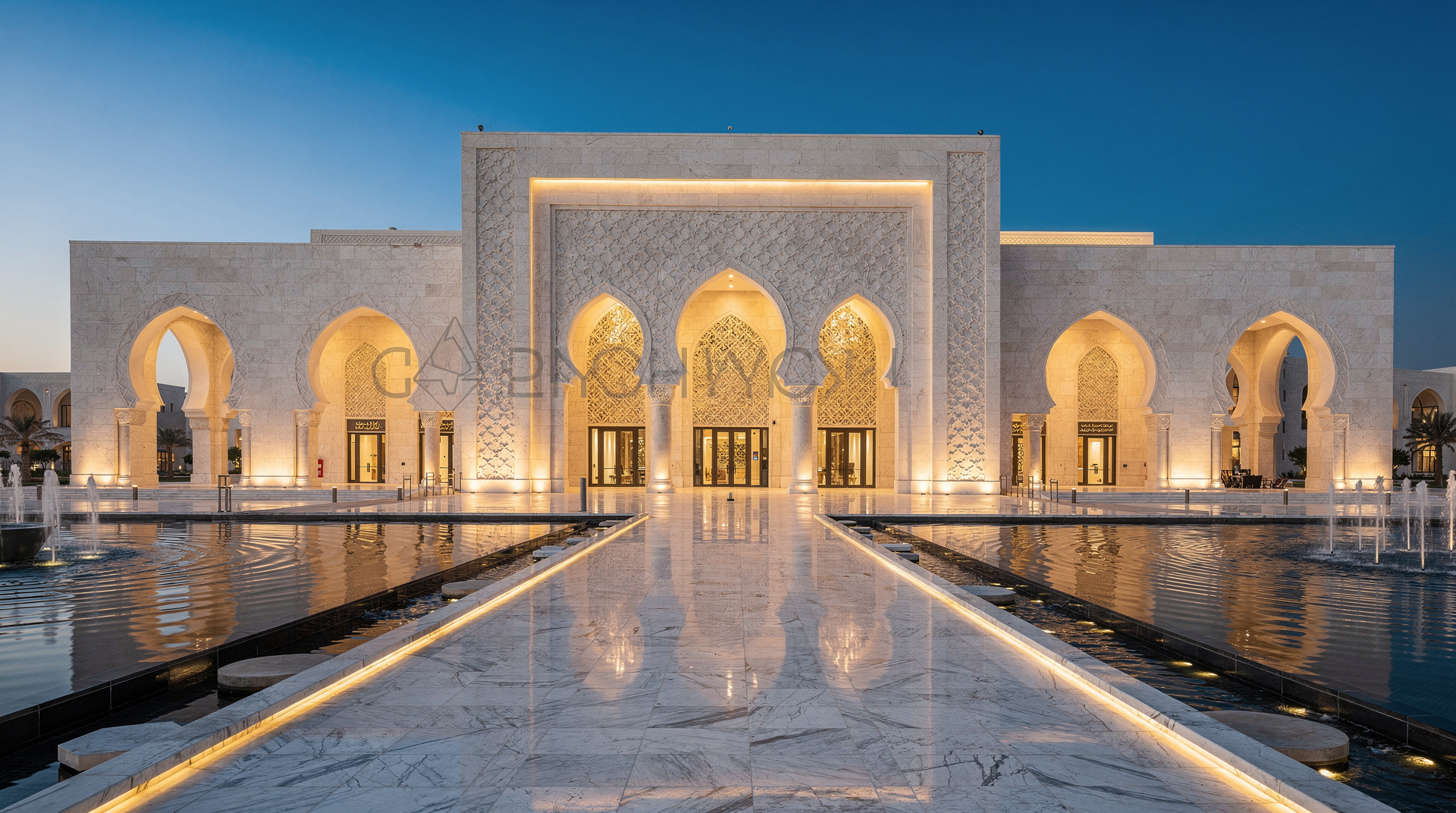
The exterior is built entirely from Indian sandstone, a warm beige-gold that glows under the Omani sun. Five minarets rise above the complex, the tallest reaching 90 metres. The central dome spans 50 metres in diameter. Every surface — from the carved plasterwork to the hand-painted tilework — represents the finest craftsmanship sourced from across the Muslim world.
The Main Prayer Hall
Step inside the main prayer hall and the scale hits you immediately. The space measures 74.4 metres by 74.4 metres and can hold 6,500 male worshippers simultaneously. The women’s section adds capacity for another 750 people, and the outdoor prayer areas extend this further still.
Your eyes will immediately travel upward to the chandelier. This is one of the largest chandeliers in the world, measuring 14 metres in height and 8 metres in diameter. It contains 1,122 light bulbs and is decorated with Swarovski crystals and 24-carat gold plating. The numbers are staggering but standing beneath it, the effect is one of delicacy rather than weight.
The Persian Carpet
The floor of the main prayer hall is covered by a single hand-knotted carpet, one of the largest in the world at the time of its installation. Produced in Iran by approximately 600 women who worked on it for four years, the carpet weighs 21 tonnes and contains roughly 1.7 billion knots. The design incorporates 28 colours and draws on classical Persian floral motifs combined with Islamic geometric patterns.
Walking around the edge of the hall (visitors are asked not to walk on the carpet), you can appreciate how the pattern shifts and deepens depending on your angle of view.
The Library and Courtyard
The mosque complex includes a library holding over 20,000 volumes on Islamic sciences, Arabic language, and history. The marble courtyards connecting the various buildings are beautifully landscaped with date palms, flower beds, and reflecting pools. The interplay of light and shadow across these outdoor spaces is worth taking slowly — resist the urge to rush through.
Practical Visitor Information
Opening Hours
Sultan Qaboos Grand Mosque is open to non-Muslim visitors from Saturday to Thursday, 8 AM to 11 AM. The mosque is closed to non-Muslims on Fridays and during prayer times. Arrive by 10 AM at the latest to give yourself at least an hour inside; 10:30 AM arrivals may find themselves with limited time before staff begin politely asking visitors to leave.
Entry is free of charge.
Dress Code
This is the most important practical point for any visit. Both men and women must be modestly dressed. For women, this means a full-length abaya (long robe) covering the arms and legs, and a headscarf covering the hair. If you do not have an abaya, fabric is sometimes available at the entrance, but supply is not guaranteed — bring your own or hire one nearby. For men, long trousers and a long-sleeved shirt are required; shorts are not permitted.
Shoes must be removed before entering the prayer hall. A clean pair of socks is a good idea.
Photography
Photography is permitted throughout the mosque complex, including inside the prayer hall. During active prayer times, photography is restricted out of respect for worshippers. Drones are not permitted. Be discreet and respectful — the mosque is an active place of worship, not just a tourist site.
Getting There
The mosque is located in the Al Ghubra neighbourhood of Muscat, approximately 8 km from the Muttrah Corniche area. Taxis and ride-hailing apps are the easiest options from most parts of the city. There is a dedicated car park at the mosque for those with their own vehicle or a hired car.
Guided Tours
Visiting with a guide provides significant added value at the Grand Mosque. Knowledgeable local guides explain the symbolism embedded in the tilework and calligraphy, point out details you would otherwise miss, and share the story of Sultan Qaboos and his vision for Omani culture. A half-day Muscat city tour typically includes the mosque alongside the Muttrah Corniche and other key landmarks.
Book a guided Muscat city tour that includes the Grand Mosque with GetYourGuide — one of the most popular half-day excursions in Muscat for good reason.
The Story Behind the Mosque
Sultan Qaboos commissioned the mosque in 1992 and construction began in 1995. The project employed craftsmen from across the Muslim world — calligraphers from Egypt, tile artists from Iran, marble specialists from Italy, chandelier craftsmen from Austria. Sultan Qaboos himself was closely involved in the design decisions throughout the construction period.
The mosque was inaugurated on 4 May 2001, the 31st National Day of the modern Sultanate of Oman. It was the Sultan’s personal gift to his people, funded entirely from his private fortune.
Sultan Qaboos ruled Oman for 49 years, transforming the country from relative isolation into a modern state while carefully preserving its cultural identity. His death in January 2020 marked the end of an era, and the mosque stands as one of his most enduring physical legacies. Visiting it today carries an extra layer of meaning — it is simultaneously a functioning house of worship, a monument to Omani identity, and a statement about the relationship between faith and aesthetic beauty.
Combining the Mosque With Other Muscat Highlights
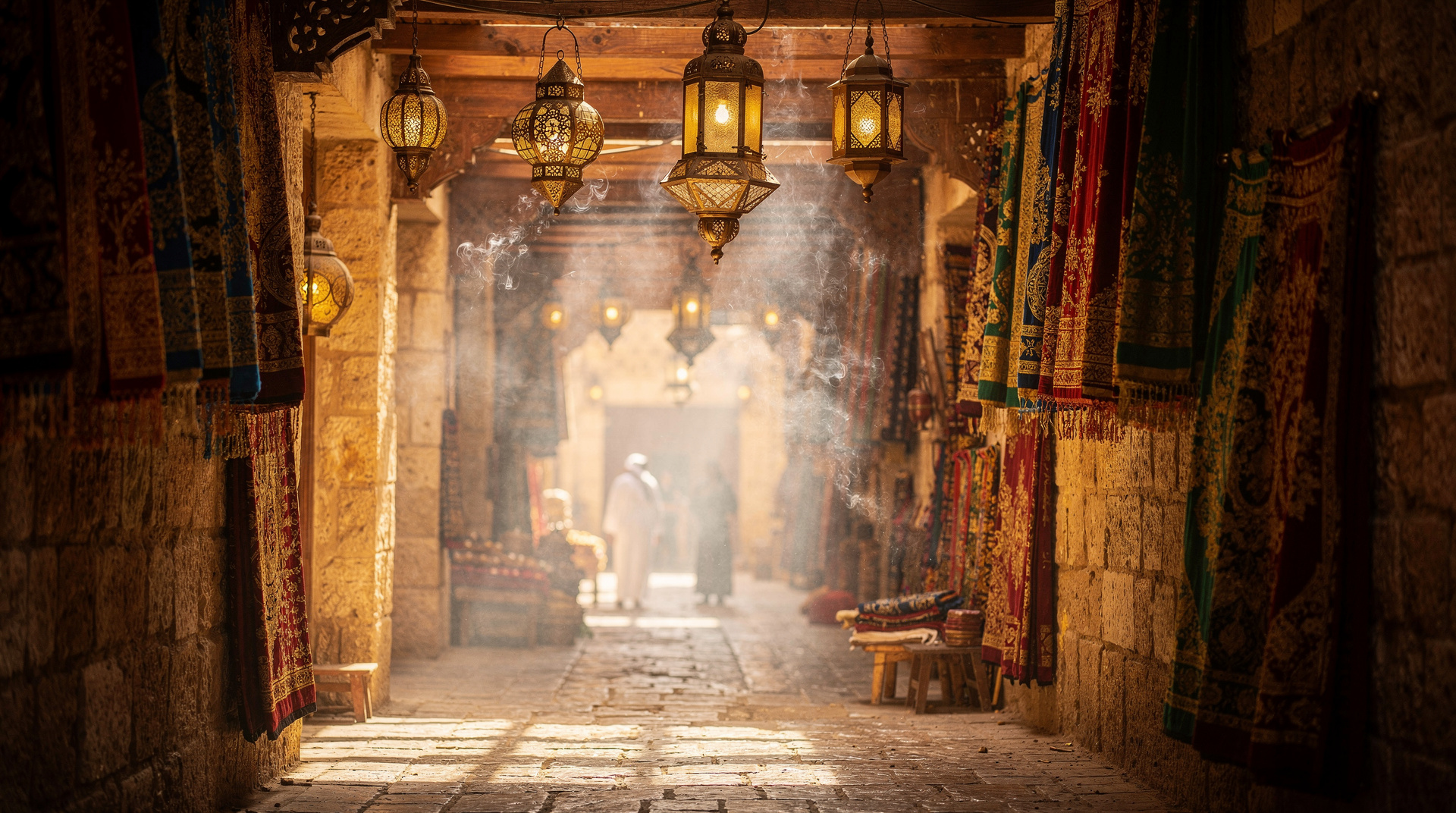
The Grand Mosque pairs naturally with several other Muscat experiences. After your mosque visit, the Muttrah Souq makes for a vivid contrast — from sacred silence to the fragrant, bustling energy of Oman’s oldest market. The two sites together make a full morning.
Alternatively, combine the mosque with a visit to the Royal Opera House Muscat, another architectural landmark built by Sultan Qaboos that reflects his commitment to cultural excellence. Both buildings demonstrate what Oman can achieve when it brings the best international craftspeople together under a single vision.
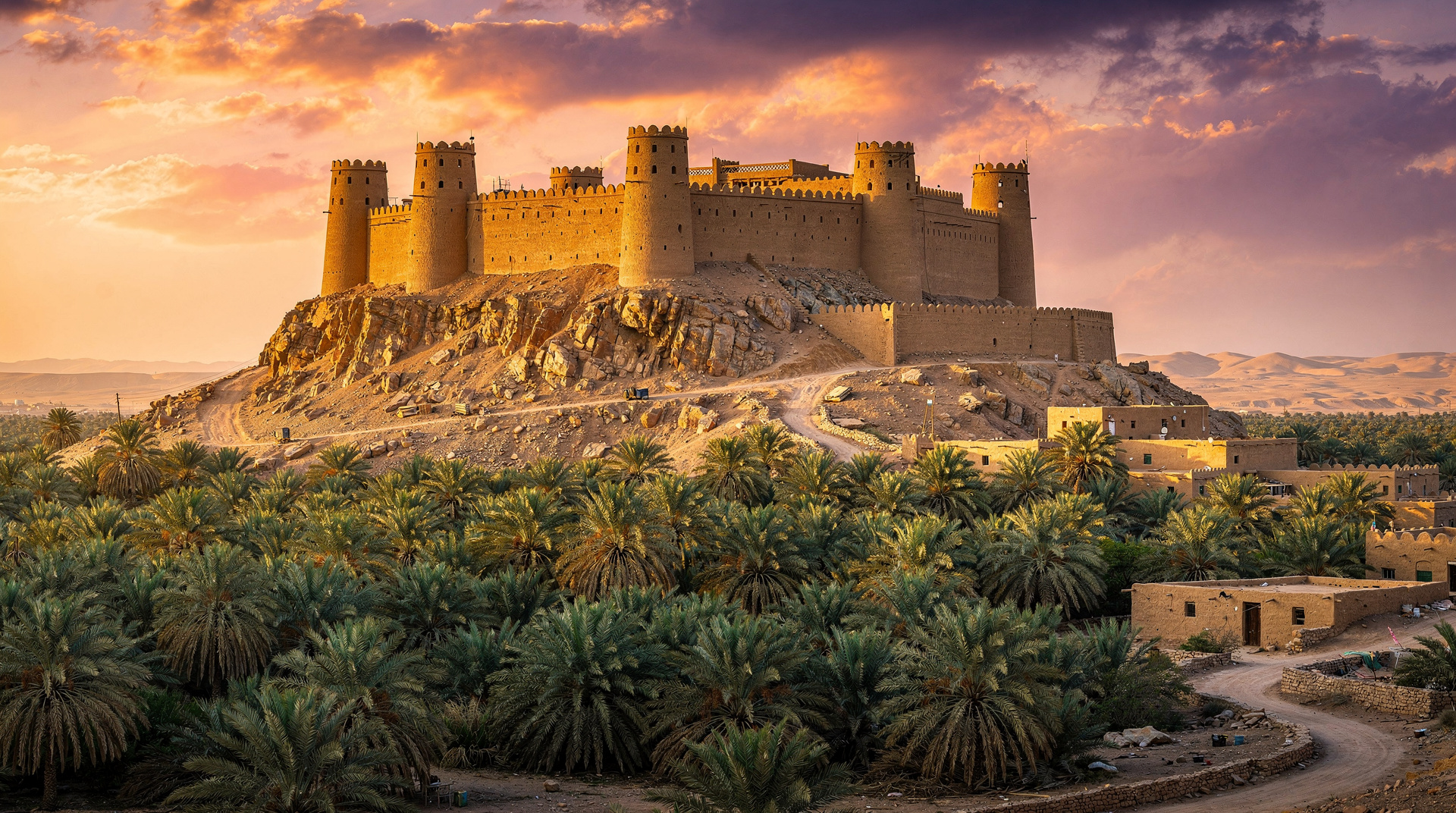
If you are planning a wider Omani cultural itinerary, the mosque is the natural starting point before heading inland to explore Nizwa Fort, Bahla Fort, and Jabrin Castle.
For logistical help, see our 3-day Muscat itinerary and our complete guide to Oman’s forts.
Visitor Etiquette: How to Behave Respectfully
Beyond the dress code, a few additional points of etiquette matter here. Keep your voice low inside the prayer halls — even outside of active prayer times, this is a place of worship and conversation should be conducted quietly. Do not eat or drink inside any of the buildings. Avoid turning your back on the mihrab (the prayer niche indicating the direction of Mecca) when taking photographs.
Female visitors often find it helpful to tie their abaya belt before entering — a loose-fitting robe can feel cumbersome on the marble floors. If you have young children with you, they are welcome, but be prepared to carry them if they become restless to avoid disturbing other visitors or worshippers.
What Visitors Often Overlook
Most guided groups spend 45 minutes to an hour inside the mosque, focusing primarily on the main prayer hall. If you have time to explore independently, the following are worth seeking out specifically.
The women’s musalla is less visited than the main hall but equally beautiful. Its smaller scale makes the decorative work feel more immediate and personal. The Quranic calligraphy painted across the dome of the women’s section is among the finest in the entire complex.
The outer courtyards, particularly in the early morning when the light comes low and golden across the marble, offer photographic opportunities that many visitors miss entirely in their hurry to reach the prayer hall.
The mosque library, though it requires separate access arrangements, holds genuine scholarly interest for anyone interested in Islamic intellectual history.
Seasonal Considerations
Muscat’s climate is extreme by European or North American standards. From May to September, temperatures regularly exceed 40°C, and visiting outdoor spaces even in the early morning is genuinely uncomfortable. The mosque visit itself — mostly in air-conditioned or shaded spaces — remains manageable year-round, but plan your overall Muscat day accordingly.
The ideal visiting months are October through April, when temperatures are warm but not punishing, and the morning light across the mosque’s sandstone exterior is particularly beautiful.
During Ramadan, access hours for non-Muslim visitors may be adjusted. Check locally on arrival if you are visiting during this period.
Frequently asked questions about Sultan Qaboos Grand Mosque: The Complete Visitor Guide
Do I need to book in advance to visit Sultan Qaboos Grand Mosque?
No booking is required for individual visits to the mosque. Simply arrive during opening hours (Saturday to Thursday, 8 AM to 11 AM), dressed appropriately, and entry is free. For guided tours that include the mosque, booking in advance is recommended especially during peak season from November to March.
Can women visit Sultan Qaboos Grand Mosque?
Yes, women are welcome to visit. A full-length abaya covering the arms and legs, plus a headscarf covering the hair, are required. Women visit a separate musalla (prayer hall) from the main hall, though both are open during visitor hours. The women’s prayer hall is notably beautiful and well worth spending time in.
How long should I plan for the mosque visit?
Allow a minimum of 1 to 1.5 hours for the mosque itself. If you are visiting with a guided tour, the guide will pace the visit appropriately. If visiting independently, arrive as early as possible — by 8:30 AM — to have the halls quieter and to allow plenty of time before the 11 AM closing for non-Muslim visitors.
Is the Grand Mosque wheelchair accessible?
The mosque is largely accessible, with ramps and smooth marble surfaces throughout most of the complex. The main prayer hall is on a single level. Some areas of the outer courtyard involve steps. Contact the mosque administration in advance if you have specific accessibility requirements.
What is the best time of year to visit Muscat and the Grand Mosque?
October through April is the most comfortable period climatically. The mosque opens at 8 AM regardless of season, and arriving early gives you the best light for photography and the quietest halls before tour groups arrive from about 9 AM onward.
Can I take a guided tour that includes the Grand Mosque?
Yes, and this is highly recommended. Many half-day Muscat city tours include the Grand Mosque alongside Muttrah Souq and the Old Muscat area. A knowledgeable guide brings the symbolism of the architecture to life in ways that independent exploration cannot fully replicate. See this well-reviewed Muscat city tour for a convenient option.
Is there a dress code for men as well as women?
Yes. Men must wear long trousers (no shorts) and a long-sleeved shirt. Shoes must be removed before entering the prayer hall. Men’s attire requirements are less elaborate than for women, but the modesty standard applies equally to all visitors regardless of gender.