Bahla Fort: Oman's UNESCO World Heritage Fortress
Is Bahla Fort open to visitors and how do I get there?
Yes, Bahla Fort is open daily. It is 45 km west of Nizwa on Route 21. Entry costs around 3 Omani rials. Combine it with Jabrin Castle on a day trip from Nizwa or Muscat.
Oman’s Most Ancient Fortress Rediscovered
Bahla Fort is the oldest and largest of Oman’s historic fortifications, a monumental structure of sun-dried mudbrick that has dominated the Bahla oasis for at least 700 years and possibly much longer. Listed as a UNESCO World Heritage Site in 1987 — the first in Oman — Bahla Fort represents the full arc of Omani defensive architecture: from pre-Islamic earthworks to medieval tower construction to the elaborations and repairs of successive ruling dynasties over many centuries.
The fort suffered from neglect in the 20th century and was placed on UNESCO’s List of World Heritage in Danger in 1988. A comprehensive 20-year restoration programme, completed in 2012, brought it back to a condition that allows visitors to understand both its original grandeur and the complexity of its layered history. Today it ranks as one of the finest historic military sites in Arabia.
The History of Bahla Fort
Pre-Islamic Origins
The Bahla oasis has been inhabited for at least 3,000 years, sustained by one of the most productive falaj (see our aflaj irrigation guide) systems in Oman. The earliest fortifications on the site predate Islam, though the visible structure today is primarily the product of construction and modification from the 13th century onward.
The Banu Nabhan tribe ruled much of the Omani interior from the 12th to 15th centuries, and it was during their reign that Bahla achieved its greatest political and economic prominence. The town was famous throughout the medieval Islamic world as a centre of scholarship, pottery production, and something else entirely: magic. Bahla’s reputation as a city of sorcerers and supernatural activity was widespread enough to be referenced in Arabic literature from many centuries ago, and this reputation persists in Omani folk culture to the present day. Whether this reflects genuine pre-Islamic ritual practices that survived syncretistically, or simply the kind of rumour that attaches to isolated and prosperous places, is unclear — but it adds a distinctive atmospheric quality to a visit.
The Fort Under the Ya’aruba Imams
The Ya’aruba dynasty, which also built Nizwa Fort, carried out substantial reconstruction and expansion of Bahla Fort in the 17th century. They strengthened the towers, expanded the defensive wall circuit, and integrated the fort more thoroughly with the town’s existing earthen walls. This period of investment reflects both the dynasty’s military ambitions and the strategic importance of the Bahla oasis as a waypoint on the routes between the coastal ports and the interior.
What You See Today
The Scale of the Complex
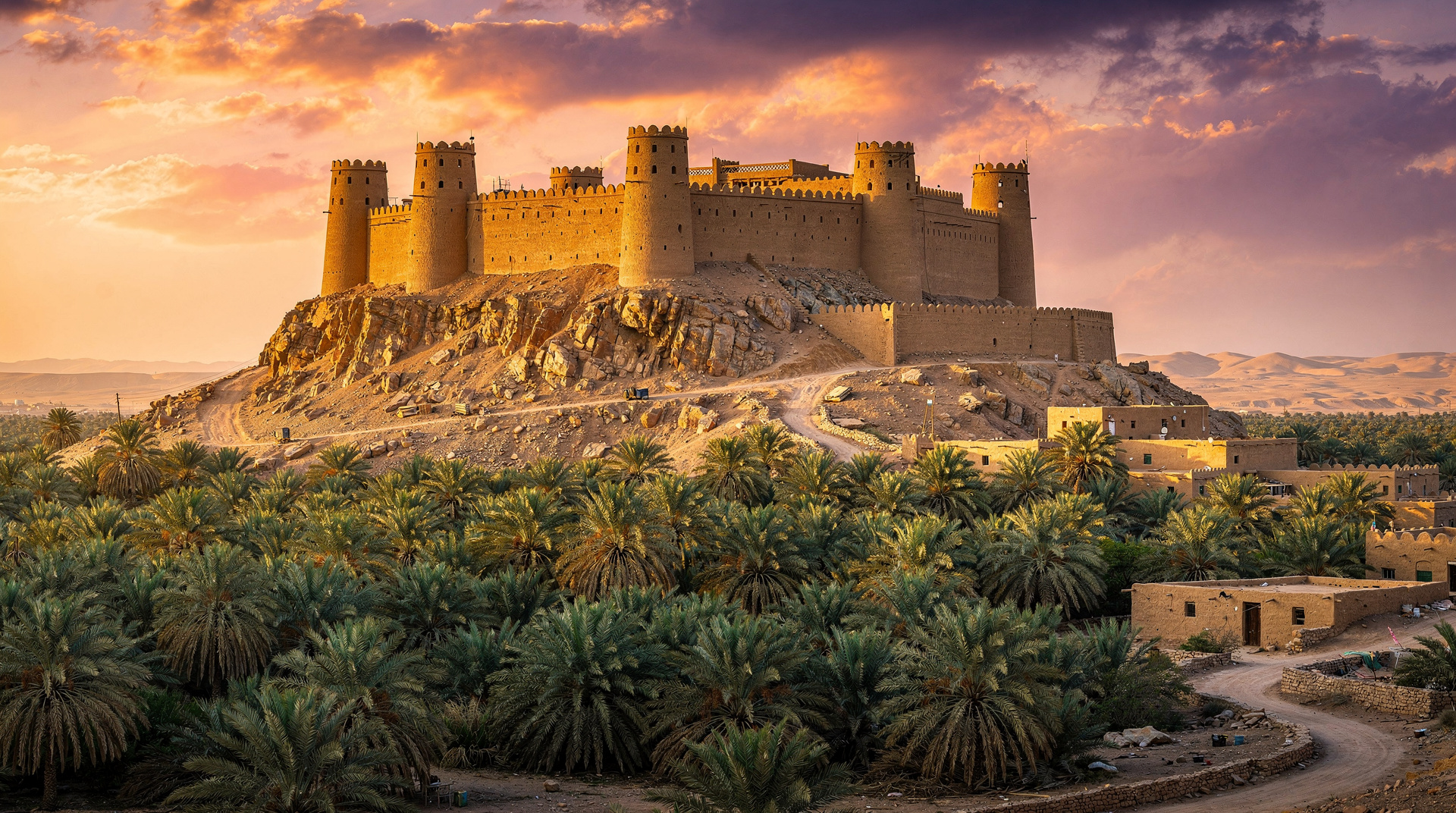
Bahla Fort covers an enormous area. The main fort structure — the raised palatial and military complex on the rocky outcrop above the oasis — is connected to the town by a system of earthen walls that extend for approximately 12 km around the oasis. These walls, built of pisé (rammed earth) construction, are among the longest ancient earthen fortifications in the Arabian Peninsula.
Standing at the main fort entrance and looking out along the circuit of walls disappearing into the date gardens, you get an immediate sense of why this site required a major UNESCO restoration project. The scale of what has been preserved is extraordinary.
The Main Fort Structure
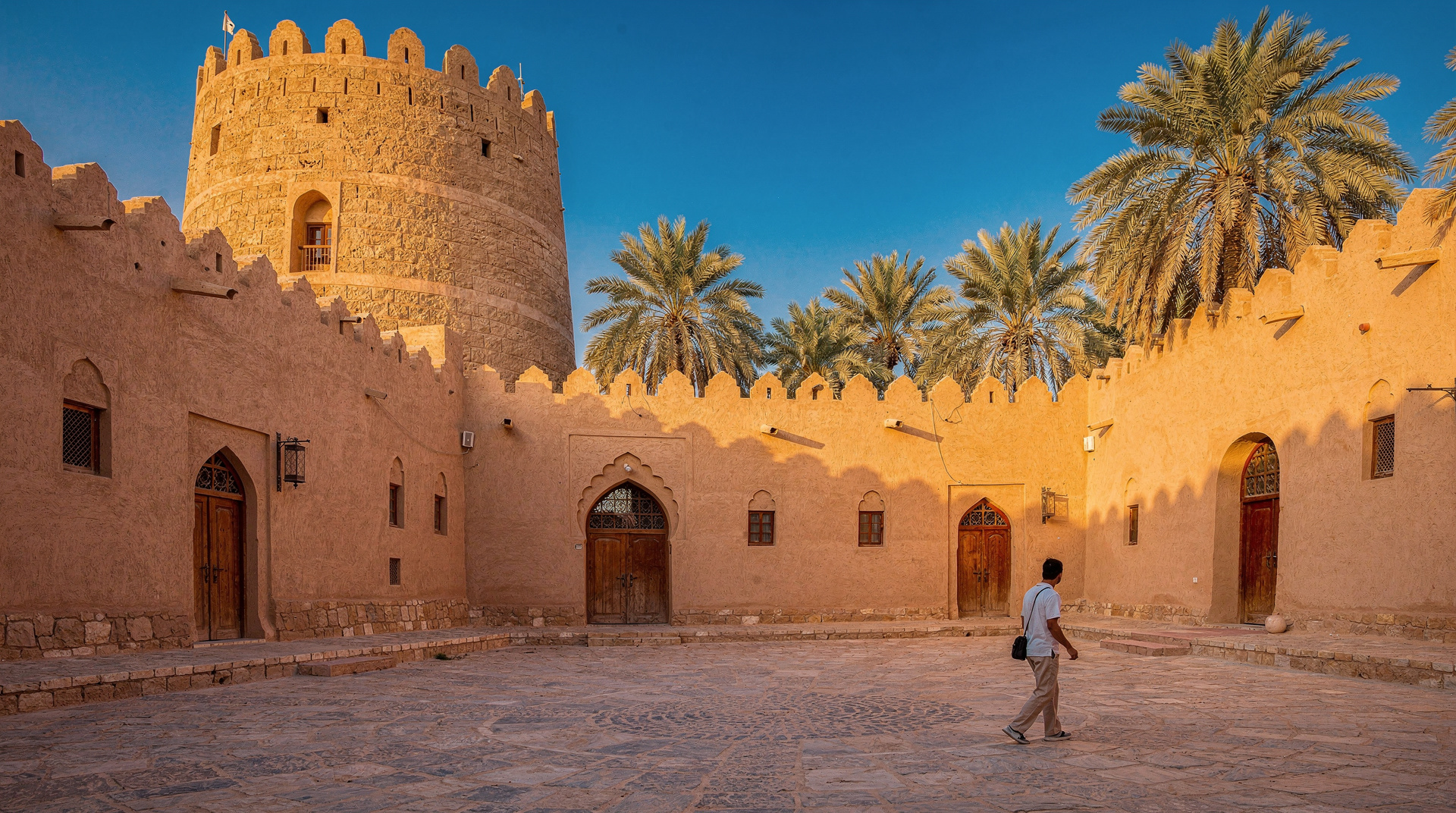
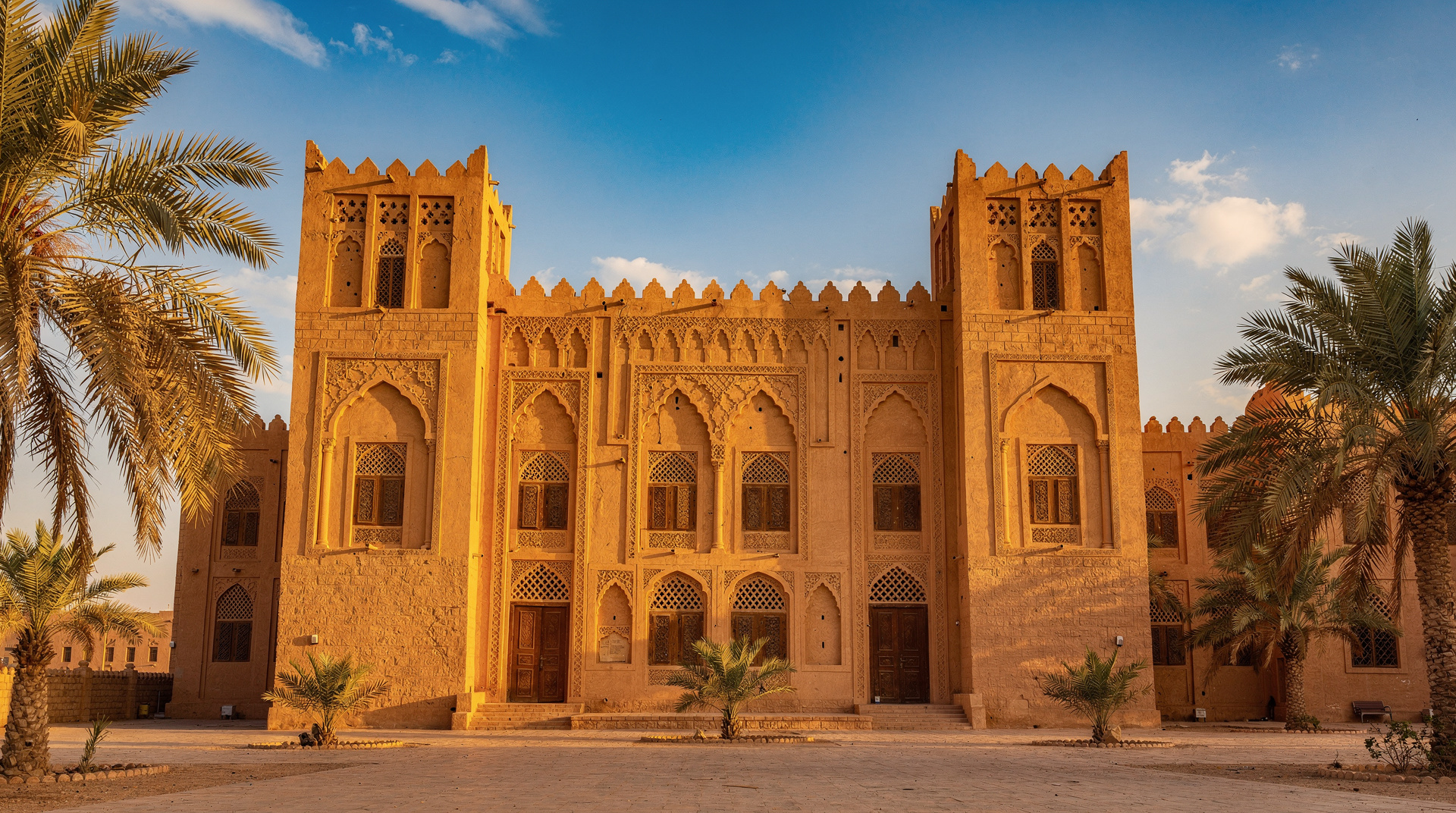
The fort itself is organised around a central courtyard with towers at key defensive positions. The construction is primarily mudbrick plastered with mud render — a building technique perfectly suited to the Omani interior climate but requiring constant maintenance. The restoration programme used traditional materials and techniques throughout, employing Omani craftspeople trained in mudbrick construction to ensure authenticity.
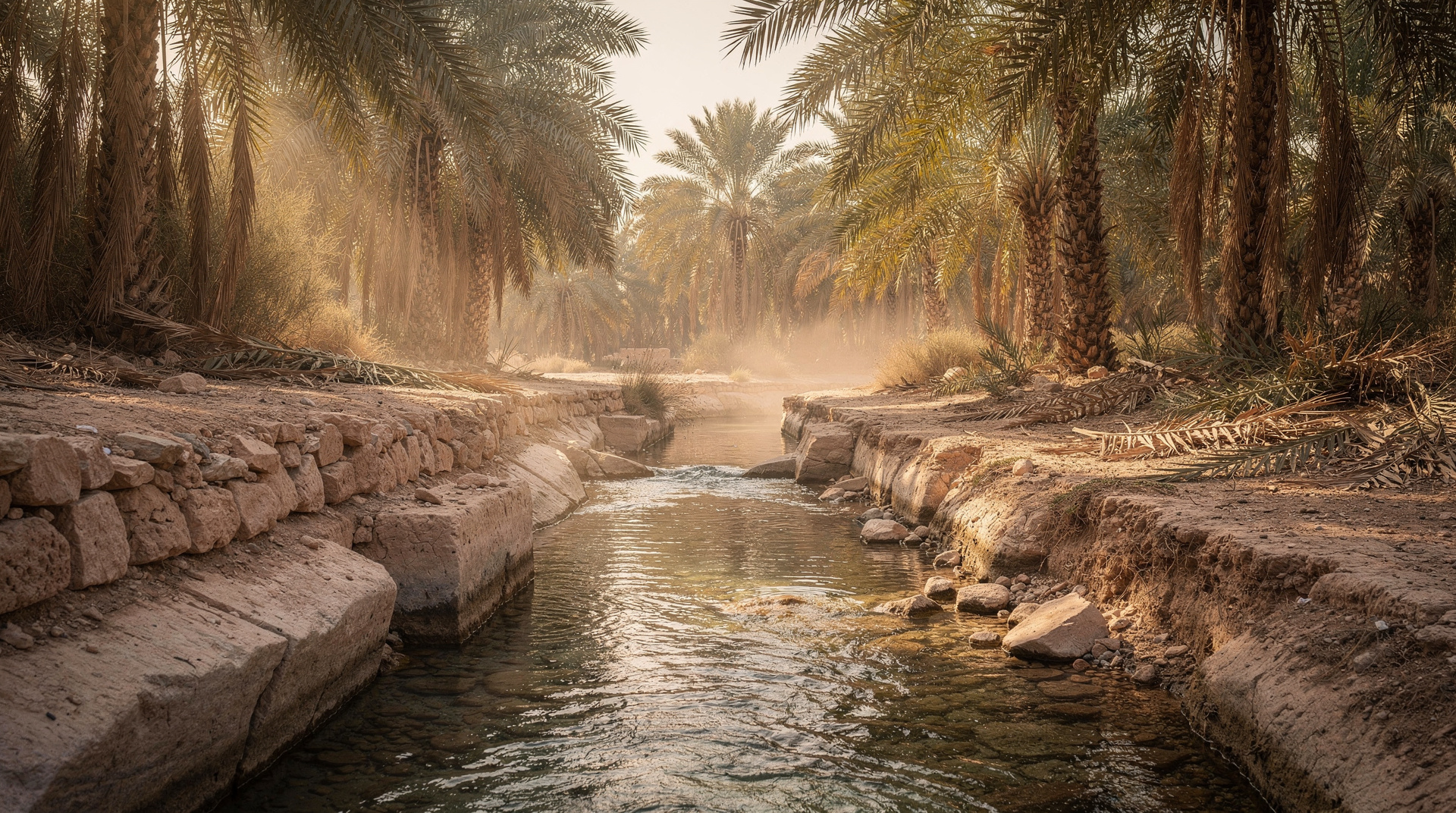
Inside the fort, passages and rooms have been opened to allow visitors to understand the layout. The falaj channel that runs through the fort — providing a reliable water supply during sieges — is visible in several locations. Water management was central to defensive planning in a region where control of water sources was control of survival itself.
The Towers
Bahla Fort’s towers are architectural statements as much as defensive structures. The largest tower, commanding the highest point of the site, would have been visible for many kilometres across the surrounding plain. The machicoulis (overhanging defensive projections) on several towers are particularly well preserved and give a clear picture of the active defensive philosophy behind the construction.
The Archaeological Layers
One of the most intellectually interesting aspects of Bahla Fort for visitors with an archaeological interest is the visible layering of different construction periods. Mud brick from different eras sits alongside stone work; later repairs are distinguishable from original construction. A trained eye can trace the expansion and modification of the fort across several centuries of use.
The Town Walls and Oasis
Beyond the main fort, a walk along surviving sections of the town walls through the date gardens is a rewarding way to spend an additional hour. The falaj channels thread through the oasis here, ancient water infrastructure keeping alive date gardens that have been productive for a millennium. The interplay between the mudbrick defensive walls, the greenery of the date palms, and the arid mountains behind gives the entire Bahla landscape a quality unlike anything else in Oman.
Bahla Pottery
Bahla has been a centre of pottery production for at least a thousand years. The local clay is exceptional in quality, and the unglazed earthenware produced here — water jars, incense burners, cooking pots — has a distinctive character that makes it recognisable across Oman. The pottery quarter of Bahla, adjacent to the souq, still has active craftspeople working traditional kilns. Visiting the pottery section and watching the wheel work is one of the highlights of a Bahla visit.
Bahla pottery makes an excellent souvenir — authentic, locally made, and at very reasonable prices when purchased directly from the production workshops. The small incense burners and water vessels are manageable for travel.
The Bahla Souq
The old souq of Bahla is smaller and less developed for tourism than Nizwa Souq, which makes it in some ways more authentic. Local farmers bring produce, craftspeople sell their work, and the commercial activity is primarily oriented toward the town’s own population. For visitors who find Nizwa slightly too polished for their taste, Bahla’s souq provides a rawer alternative.
The date market in Bahla, particularly in October and November when the harvest season is at its peak, is excellent. The Bahla oasis is one of the most productive date-growing areas in Oman.
Combining Bahla With Nearby Sites
Bahla and Jabrin on the Same Day
The most logical itinerary pairs Bahla Fort with Jabrin Castle, located just 8 km to the south. Jabrin, built in 1670, is in many ways the perfect counterpart to Bahla: where Bahla is formidable and austere, Jabrin is palatial and ornate. The painted ceilings and decorative plasterwork of Jabrin form a vivid contrast to the earth-coloured austerity of Bahla. Spending a morning at both sites before returning to Nizwa for lunch makes for one of the most richly varied cultural half-days available in the Omani interior.
The Full Interior Day Trip
A full day from Muscat or Nizwa can cover Nizwa Fort and Souq in the morning, then Bahla Fort and Jabrin Castle in the afternoon, returning to Muscat by early evening. This is an ambitious but very rewarding day. An organised tour makes the timing and logistics straightforward.
For a well-structured day tour covering Nizwa, Jabrin, and Bahla, this historical day tour from Nizwa is a comprehensive option covering all three sites with an experienced guide.
Practical Visitor Information
Getting There
Bahla is located on Route 21, approximately 45 km west of Nizwa and 210 km from Muscat. The drive from Nizwa takes 35 to 40 minutes. If you are driving from Muscat, the route passes through Nizwa — it is straightforward to stop at Nizwa first before continuing to Bahla.
There is a clearly signposted car park at the fort entrance.
Opening Hours and Entry
Bahla Fort is open daily. Hours follow the standard Omani heritage site schedule: roughly 8 AM to 4 PM Saturday through Thursday, and 8 AM to 11 AM on Fridays. Verify hours locally as seasonal adjustments are possible. Entry costs approximately 3 Omani rials for adults.
What to Bring
Water is essential — there are limited facilities within the fort complex. Comfortable walking shoes with grip are important as some surfaces within the fort are uneven. A hat and sun protection are necessary outside the covered sections. The fort is partially shaded, but the exterior walls and approaches are fully exposed.
Photography
Photography is freely permitted throughout the fort complex. The earthen textures and dramatic tower profiles make Bahla exceptionally photographic in low-angle light — early morning or late afternoon. The view from the main tower across the oasis is one of the finest landscape photographs available anywhere in the Omani interior.
Why Bahla Matters: Cultural Significance
Bahla’s UNESCO World Heritage status reflects more than the architectural achievement of the fort itself. The site represents an entire system of relationships: between a settled community and its water resources, between defensive infrastructure and agricultural production, between political authority and physical space. The 12 km of earthen walls enclosing the oasis were not just military infrastructure but expressed a particular vision of organised community life and communal defence.
Visiting Bahla with this context in mind transforms the experience from a simple sightseeing exercise into a meditation on how civilisations organise themselves in challenging environments. The Omani interior is not rich agricultural land by any objective measure — sustaining a prosperous and cultivated city here required sophisticated management of water, governance of communal resources, and the kind of long-term institutional memory that is embedded in the falaj system and the fort alike.
For broader context on how Oman’s forts fit into the country’s overall history, see our complete guide to Oman’s forts.
Frequently asked questions about Bahla Fort: Oman’s UNESCO World Heritage Fortress
Why is Bahla Fort a UNESCO World Heritage Site?
Bahla Fort was inscribed on the UNESCO World Heritage List in 1987 in recognition of its outstanding universal value as an example of pre-gunpowder fortification in the Arabian Peninsula, its scale and state of preservation, and the associated oasis landscape with its intact falaj irrigation system and traditional settlement patterns.
How long does a visit to Bahla Fort take?
The fort itself takes around 1 to 1.5 hours for a thorough visit. Including a walk along a section of the oasis walls and a visit to the pottery quarter, allow 2.5 to 3 hours total. Combined with Jabrin Castle, Bahla makes for a comfortable half-day excursion from Nizwa.
Is Bahla Fort suitable for families with children?
Yes, though the uneven surfaces within the fort require care with young children. The scale of the site can be impressive for older children with an interest in history. The pottery workshops in the town are an accessible and interesting experience for children of all ages.
What is the legend of Bahla and sorcery?
Bahla has been associated with magic and sorcery in Arabic folklore for many centuries. The town’s reputation appears to derive from its historical isolation, its prominence as a centre of scholarship (which in pre-modern times was associated with esoteric knowledge), and possibly from pre-Islamic ritual practices that survived in the region. Contemporary Omanis often reference the reputation with a mixture of pride and humour. There is nothing threatening about the association for visitors; it simply adds a layer of cultural texture to the experience.
Can I visit Bahla Fort without a guide?
Yes. The fort has clear internal signage and displays in Arabic and English. Independent visitors navigate the site easily. A guide enriches the experience significantly by providing historical context that the on-site displays only partially cover. If you are joining an organised day tour from Muscat or Nizwa, a guide will be included.
What else is there to do in Bahla?
Beyond the fort, the pottery quarter and workshops are the main attraction. The old souq is worth a brief walk-through. The oasis landscape around the fort, with its date gardens and falaj channels, rewards a slow walk if temperatures allow. The drive between Bahla and Jabrin passes through date-palm-fringed scenery that is beautiful in its own right.