Oman Forts: The Complete Guide to 500+ Historic Fortifications
Which forts in Oman are the most worth visiting?
The top five are Nizwa Fort, Bahla Fort (UNESCO), Jabrin Castle, Al Jalali and Al Mirani in Muscat, and Nakhal Fort. Combine Nizwa, Bahla and Jabrin on one day trip from Muscat.
Why Oman Has More Forts Than Any Country in Arabia
The sheer number of historic fortifications in Oman is extraordinary. The Omani Ministry of Heritage has catalogued over 500 forts, towers, and fortified structures across the country — a density that reflects centuries of complex political geography, constant threats from sea-borne raiders and rival inland powers, and the particular Omani genius for defensive architecture.
These structures span more than 2,000 years of history. The oldest fortifications predate Islam; the most recent were built as late as the 19th century in response to European and tribal threats. Between these extremes lies every conceivable variety of defensive architecture: clifftop watchtowers that communicated by fire signal across mountain ranges, massive round towers that dominated provincial capitals, elegant palace-fortresses that combined military function with courtly refinement, and coastal forts designed specifically to counter Portuguese naval power.
For visitors, this concentration of heritage means that virtually any direction you travel from Muscat, a significant fort is within two hours’ drive. Understanding the broad categories and history of these structures transforms what might otherwise be a repetitive sequence of old buildings into a genuinely illuminating journey through Omani history.
A Brief History of Fort Building in Oman
Pre-Islamic Period
The earliest fortifications in Oman were simple defensive towers built from local stone, sited on high ground to command views of surrounding plains and valleys. Archaeological evidence suggests permanent defensive structures were present in parts of Oman from at least the Bronze Age. The arrival of Islam in the 7th century CE did not dramatically change defensive architecture immediately, but it reshaped the political units that built and maintained fortifications.
The Portuguese Period (1507-1650)
The arrival of Portuguese naval forces in the Arabian Sea in the early 16th century had a transformative effect on Omani coastal fortifications. The Portuguese captured Muscat in 1507 and maintained a coastal empire along the Omani coast for nearly 150 years. During this period they built or substantially modified several major fortifications, including the Al Jalali and Al Mirani forts that still dominate the entrance to Muscat harbour today.
The Portuguese influence on Omani fort architecture is visible in the angular bastion design (different from the earlier round tower tradition), in the specific positioning of cannon embrasures, and in the use of certain stonecutting techniques. When the Omanis expelled the Portuguese in the 1650s, they often retained and adapted the Portuguese fortifications for their own use.
The Ya’aruba Dynasty (1624-1741)
The Ya’aruba imams who led the expulsion of the Portuguese subsequently undertook the most ambitious fort-building programme in Omani history. The great round tower of Nizwa Fort, the palatial magnificence of Jabrin Castle, and multiple other major fortifications across the interior date from this period of assertion and consolidation. The Ya’aruba combined military ambition with cultural patronage in a way that produced some of the finest architecture in the Arabian Peninsula.
The Al Said Period (1749-present)
The current Al Said dynasty, which replaced the Ya’aruba following a period of instability and Persian intervention, continued to build and maintain fortifications throughout the 18th and 19th centuries. Forts built during this period tend to be pragmatic rather than palatial — focused on controlling specific routes, resources, or communities. Many of the watchtowers that dot the mountain ridges of the Hajar range were built or maintained during the Al Said period.
The Best Forts to Visit in Oman
Nizwa Fort: The Interior Capital
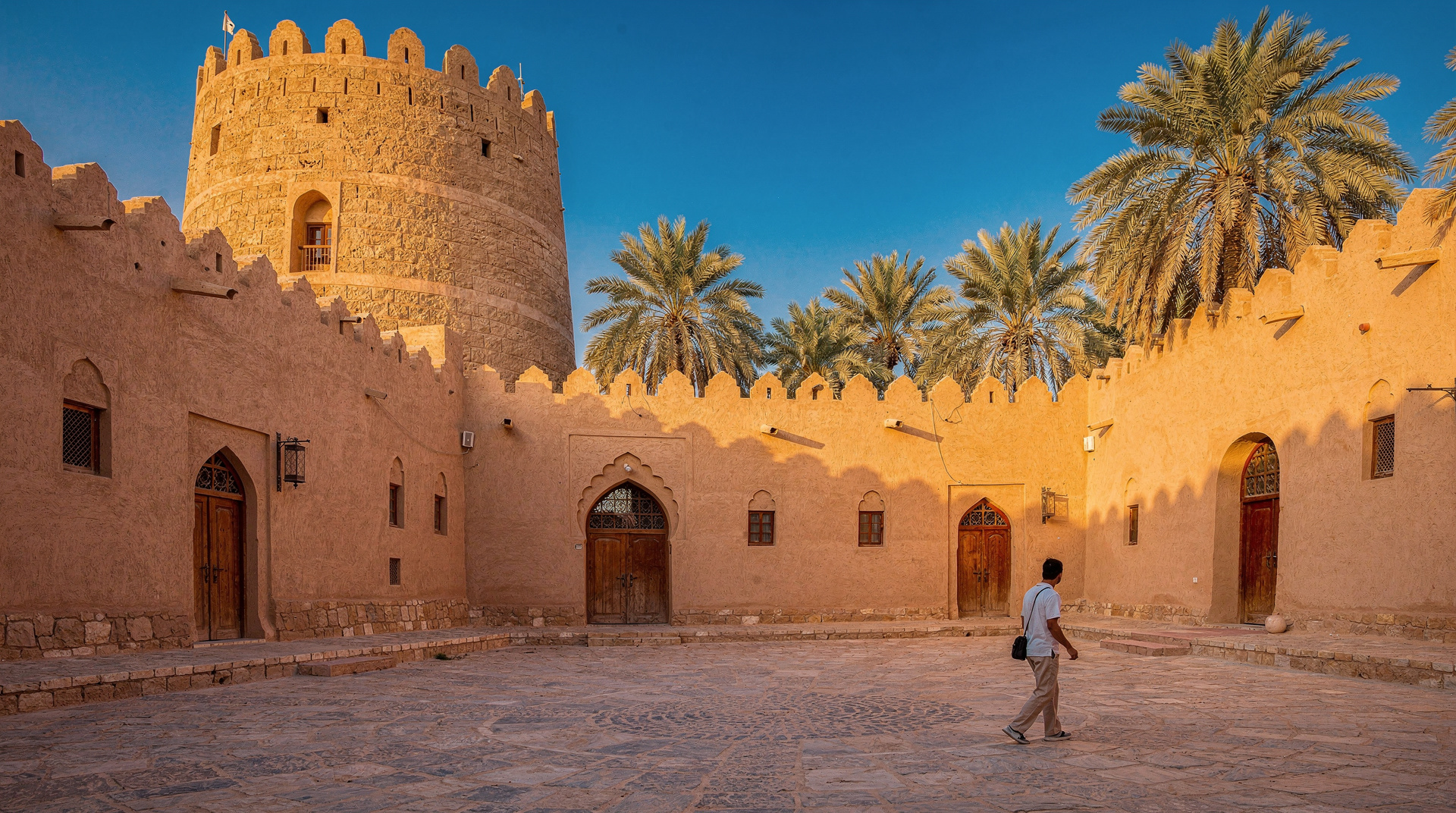
Nizwa Fort is the most visited inland fortification in Oman and deserves that status. The massive round tower — 36 metres in diameter, with walls up to 5 metres thick — dominates the old quarter of Nizwa and is connected to the historic souq and the ancient mosque in a way that gives the entire site a coherent historical character. The fort can be explored thoroughly in 1 to 2 hours, and the rooftop views across the date gardens toward Jebel Akhdar are outstanding.
The adjacent souq is arguably as interesting as the fort itself — the silver market, date stalls, and spice section together paint a vivid picture of what Nizwa was as a trading city. See our dedicated Nizwa guide for full details.
Bahla Fort: UNESCO’s Ancient Fortress
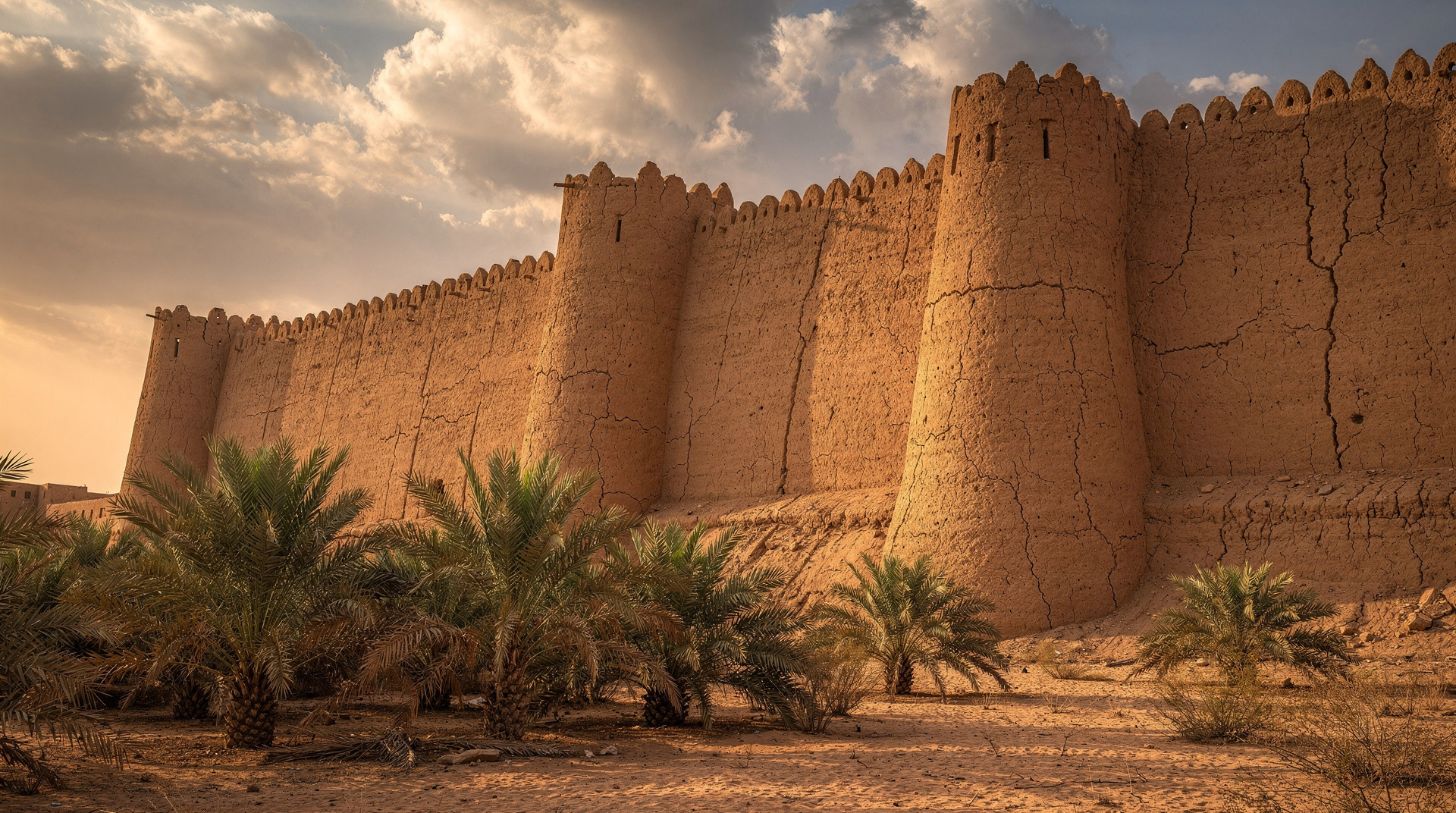
Bahla Fort, 45 km west of Nizwa, is the largest historic fortification in Oman and the first to receive UNESCO World Heritage designation. The main fort sits on a rocky outcrop above the Bahla oasis, connected to an extraordinary 12 km circuit of earthen walls enclosing the entire settlement. The mudbrick construction, the scale of the defensive system, and the association with the legendary sorcery traditions of Bahla town all contribute to an atmosphere that is distinctively different from any other fort in the country.
Jabrin Castle: The Painted Palace
Jabrin Castle is unique among Omani forts in being primarily a palace of scholarship and refinement. The painted ceilings — floral and geometric designs in warm ochre, red, and blue, preserved for more than 350 years — make this the most visually extraordinary interior of any historic building in Oman. It is also where Imam Bil’arab is entombed, giving the building a sacred quality absent from purely military fortifications.
Al Jalali and Al Mirani: Muscat’s Harbour Sentinels
The twin Portuguese-era forts that guard the entrance to Muscat’s natural harbour are among the most photographed images in Oman — gleaming white structures perched on rocky outcrops flanking the inlet. Al Mirani fort dates from 1588 in its current form (built over earlier structures) and Al Jalali from around the same period. Both are visible from the Old Muscat corniche and form a spectacular backdrop to the Sultan’s Palace. Al Jalali is currently used as a state museum and is not generally open to the public; Al Mirani has limited opening hours.
Nakhal Fort: Mountain Drama
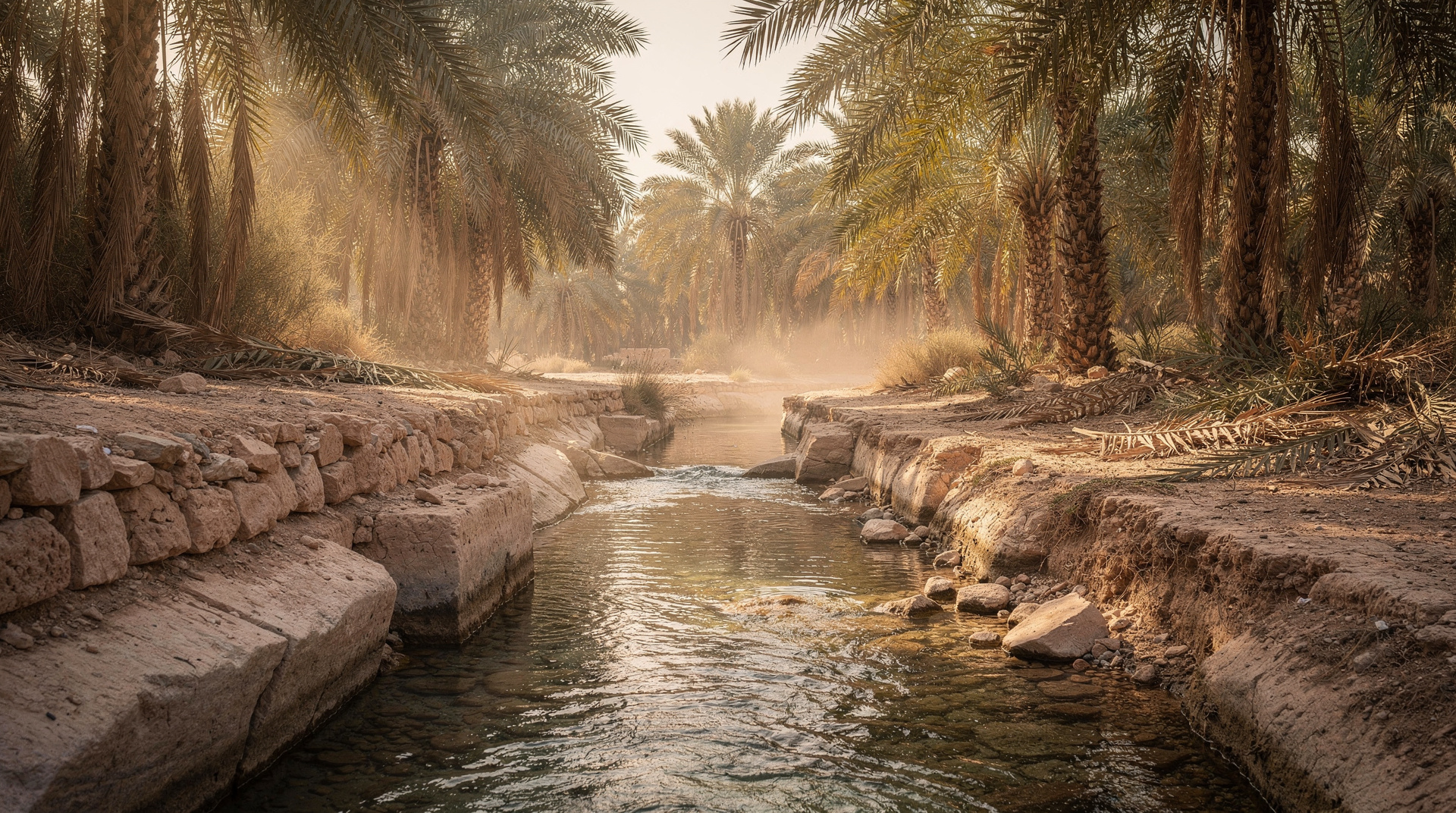
Nakhal Fort, approximately 120 km from Muscat in the Al Batinah foothills, is one of the most dramatically situated forts in Oman. Built into and on top of a substantial rocky outcrop, the fort appears to grow organically from the landscape. The approach through the date gardens of the Wadi Al Abiyad gives one of the most photogenic fort experiences available. The hot springs (ain) below the fort are a pleasant addition to the visit.
Nakhal Fort has been carefully restored and is fully open to visitors. Allow 1 to 1.5 hours for the fort itself, and combine it with the Wadi Al Abiyad date gardens and, if time permits, the Al Hoota Cave further along the same route toward the mountains.
Rustaq Fort: Historic and Undervisited
Rustaq Fort, in the Al Batinah region south of Nakhal, is one of the largest forts in Oman and historically one of the most significant — it served as the capital of Oman for a period during the early Al Said era. The fort features multiple towers of different periods, elaborate defensive passage systems, and an interior of considerable complexity. It receives far fewer visitors than Nizwa or Bahla and rewards those who seek it out with a more solitary experience.
Khasab Fort: Gateway to the Musandam
In the Musandam Peninsula — the enclave of northern Oman separated from the rest of the country by UAE territory — Khasab Fort overlooks the town and harbour of Khasab. Built primarily in the 17th century, the fort gives excellent views of the dramatic fjord scenery that makes the Musandam unique. If you are making the trip to the Musandam for the fjord boat tours and swimming, the fort adds an easy cultural dimension to the visit.
Al Hazm Fort: The Geometric Masterpiece
Al Hazm Fort in the Al Batinah region is less well known than the big names but is architecturally among the most interesting forts in Oman. Built in 1711, it features a highly sophisticated internal plan with two main towers connected by a complex system of defensive passages and rooms. The cannon emplacements, secret doors, and water storage systems are particularly well preserved. Water flows through the fort via the ancient falaj system — a detail that brings the defensive strategy of water-source control vividly to life.
Planning Your Omani Fort Itinerary
Day Trip from Muscat: The Interior Circuit
The most efficient way to see Oman’s finest interior forts is a long day trip from Muscat covering Nizwa, Bahla, and Jabrin. Leaving Muscat by 7 AM, you can reach Nizwa by 9 AM, spend two hours at the fort and souq, drive to Bahla (35 minutes), spend 1.5 hours there, drive to Jabrin (15 minutes), spend 1.5 hours there, and return to Muscat by 7 PM. This makes for a full but entirely manageable day.
For a well-guided version of this day, this full-day Nizwa and Jabrin forts tour from Muscat is highly recommended and includes an expert guide for both major sites.
Al Batinah Coastal Route
The Al Batinah coast west of Muscat has a concentration of forts including Nakhal, Rustaq, Al Hazm, and the ancient city of Al Suwaiq. A two-day loop along this coast, staying one night in Nakhal or Rustaq, allows thorough exploration without the pressure of day-trip timing.
A Multi-Day Heritage Road Trip
For visitors with a week or more in Oman, a heritage-focused road trip can connect the full range of fort experiences: Muscat harbour forts on day one, the drive to Nizwa for day two, Bahla and Jabrin on day three, a rest day at Jebel Akhdar before returning, and the Al Batinah coastal forts on day five. This itinerary represents some of the richest available heritage touring in Arabia.
Photography at Omani Forts
Oman’s forts are extraordinarily photogenic, and with a few practical considerations the photography can be outstanding.
Early morning light on sandstone and mudbrick is warm and revealing, showing the texture of the construction materials at their best. Late afternoon light from the west illuminates the eastern faces of many forts (Jabrin and Nizwa are particularly well positioned for afternoon light).
Interior photography requires patience with low-light conditions. The painted ceilings at Jabrin reward a tripod if you are prepared to carry one.
Most forts permit photography freely. Where there are restrictions (Al Jalali, some military-adjacent areas), these are clearly signed.
Fort Entry Fees and Practical Notes
Entry fees for Omani forts are generally modest — between 2 and 5 Omani rials for most sites. Payment in cash is usual; card payment is increasingly available at the major sites but not universal.
Opening hours vary by site but the standard pattern is 9 AM to 4 PM Saturday through Thursday, with shorter Friday morning hours. Several forts adjust their hours seasonally. Verifying current hours locally on arrival is advisable for any site that is not on the standard tourist circuit.
Water, sun protection, and comfortable walking shoes are essential. Most forts have limited facilities, and the combination of uneven surfaces, bright sun, and reflected heat from stone walls makes physical preparation important.
Frequently asked questions about Oman Forts: The Complete Guide to 500+ Historic Fortifications
How many forts does Oman have?
Oman has over 500 documented historic forts, towers, and fortified structures — more than any other country in Arabia. The density is highest in the interior regions of the Al Dakhiliyah Governorate (around Nizwa) and along the Al Batinah coast.
Which Omani forts are UNESCO World Heritage Sites?
Bahla Fort is the only individual fort on the UNESCO World Heritage List in Oman. However, the Land of Frankincense UNESCO site includes fortified structures at Sumhuram and Shisr. The Al Balid archaeological site also includes significant fortification remains. The Omani aflaj system, which has strong connections to fort sites, is separately UNESCO listed.
What is the best fort to visit with limited time?
If you have only one day for interior Oman and must choose a single fort, Nizwa Fort is the answer. It is the most accessible, the best preserved, the most thoroughly presented, and it comes with the bonus of the adjacent souq and the dramatic Jebel Akhdar backdrop. For a Muscat-based city experience, the view of Al Jalali and Al Mirani from the Old Muscat corniche provides the essential aesthetic of Omani coastal fortification without requiring a full visit.
Are Omani forts accessible for elderly visitors or those with mobility limitations?
Most forts involve significant amounts of stair climbing — typically to the main tower observation deck. The interiors tend to have uneven stone floors and low doorways. Jabrin Castle and Nizwa Fort have some areas accessible to those with mobility limitations, but a full visit to either requires reasonable physical capacity. Bahla is the most challenging for mobility-limited visitors due to the scope of the site.
Can I visit Omani forts independently without a guide?
Yes. Most major forts have well-produced interpretive displays in Arabic and English that make independent visits informative and satisfying. For first-time visitors to Oman, or those with a particular interest in architectural history, a guide adds considerable value — but it is by no means required.
How does fort visiting in Oman compare to Morocco or other Middle Eastern countries?
Oman’s forts are distinctive in several ways. The mudbrick and earthen construction of interior sites like Bahla is unique to the region. The combination of military function with scholarly and palatial use (as at Jabrin) is uncommon. The sheer number and density of fortifications is unparalleled in the region. What Oman lacks (compared to Morocco, for instance) is a long tradition of international tourism around its heritage sites, which means that many excellent forts remain genuinely unspoiled and unencumbered by tourist infrastructure.