Royal Opera House Muscat: A Complete Visitor Guide
Can tourists visit the Royal Opera House Muscat without attending a show?
Yes. The Royal Opera House offers free guided architecture tours on selected mornings (usually Saturday and Wednesday, 9 AM to 12 PM). Check the official website for current schedules.
A Palace of Music in the Arabian Peninsula
When the Royal Opera House Muscat opened its doors in 2011, it announced something significant about Oman’s ambitions. Here was a country of fewer than four million people, building an opera house that could hold its own against the great performing arts venues of Europe in terms of acoustic quality, architectural beauty, and programming ambition. It was, characteristically, a personal decision of Sultan Qaboos bin Said — a man of unusual cultural breadth who had studied at the Royal Military Academy Sandhurst in England and developed a genuine passion for Western classical music alongside his deep commitment to Omani artistic traditions.
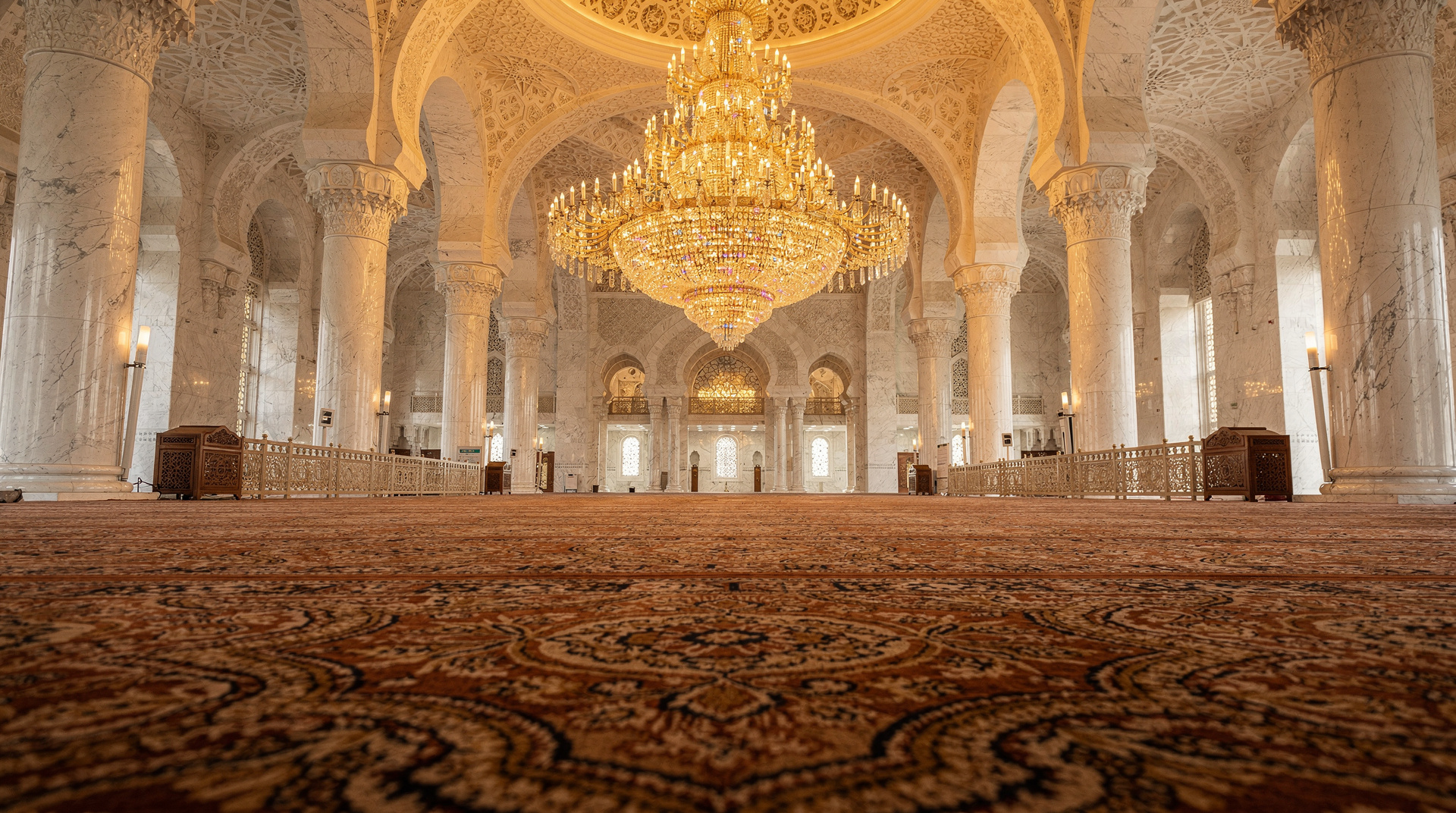
The result is one of the most beautiful buildings in Arabia: a structure that draws on traditional Omani Islamic architecture — arched colonnades, carved mashrabiya screens, marble inlay, carved plasterwork — while housing a world-class opera hall with acoustic technology equivalent to the finest concert halls in Europe. It is worth visiting whether or not you attend a performance, and attending a performance here is an experience that few visitors to Oman anticipate and almost all remember as one of the highlights of their trip.
The Architecture: Tradition and Modernity in Conversation
The Exterior
The Royal Opera House Muscat was designed by a German architectural firm in close collaboration with the Omani government, specifically with the involvement of Sultan Qaboos himself, who reviewed designs at multiple stages and insisted on specific references to traditional Omani architectural elements.
The exterior is built from Indian sandstone — the same warm cream-gold stone used in the Sultan Qaboos Grand Mosque — and the colonnaded facades echo the arcaded architecture of traditional Omani civic buildings. The central dome above the main auditorium references the mosque dome tradition without directly imitating it. The mashrabiya-style carved stone screens on the upper facades manage the intense Omani sunlight while creating deeply shadowed surfaces that read beautifully in the afternoon light.
At night, when the building is illuminated for a performance, the effect is extraordinary. The warm lighting through the carved stone screens, the reflections in the ornamental pools of the forecourt garden, and the soft glow of the colonnades give the building an almost theatrical quality before you have even stepped inside.
The Gardens
The landscaped gardens surrounding the opera house are beautifully maintained and open to the public. The formal gardens include fountains, reflecting pools, date palms, and flowering plantings that soften the approach to the building and provide a pleasant outdoor space in the evening hours before and after performances. Walking through the gardens in the evening — with the opera house illuminated and the sounds of music occasionally drifting from rehearsal rooms — is one of the quieter pleasures of Muscat.
The Main Auditorium
The main auditorium seats 1,100 people and was designed with acoustic precision equal to the finest European opera houses. The interior is all warm wood panelling, red velvet seating, and gold details — a deliberately classic European opera house aesthetic combined with subtle Omani motifs in the ceiling plasterwork and the carved details of the balcony fronts.
The acoustic performance of the hall is exceptional. Productions that have been staged here by major European companies — including the Vienna State Opera, the Metropolitan Opera, the Royal Opera House London — have consistently praised the acoustic quality.
The Smaller Venues
In addition to the main auditorium, the complex includes a smaller 400-seat hall used for chamber concerts, recitals, and smaller-scale performances. There is also an outdoor performance space used for evening concerts during the cooler months. The lobby areas, which feature large-scale traditional Omani crafts including carved wooden panels and silver decorative pieces, function as gallery spaces during the day.
Programming: What’s On at the Opera House
The Performance Season
The Royal Opera House Muscat operates a defined performance season, running from October through to April or May — aligned with Oman’s cooler months when outdoor and social life in the city is at its most active. During the summer months the building is largely dark to performers, though the architecture tours continue.
The programming is genuinely eclectic and ambitious. In a typical season you might find a full-scale production by the Vienna Philharmonic, a recital by an internationally renowned pianist, an Omani traditional music and dance programme, a ballet production by a major European company, and a jazz or world music concert by prominent artists. The mix reflects the opera house’s commitment to serving both Oman’s cosmopolitan expatriate community and international visitors while maintaining a specific commitment to showcasing Omani and Arabic cultural forms.
Omani and Arabic Arts Programming
Alongside the Western classical repertoire, the opera house dedicates a significant portion of its season to Omani traditional music and to Arabic arts more broadly. The zaffa (traditional Omani wedding music and dance), the leiwah (a form of music and possession dance with East African roots brought to Oman by the Omani slave-trade era), and performances of classical Arabic poetry and music are all represented in the programme.
These performances — less well advertised to international visitors than the headline Western classical events — are often among the most memorable things a visitor to Oman can experience. Seeing traditional Omani cultural performance in a world-class venue designed specifically for it is an entirely different experience from watching folk performance at a tourist attraction. The performers are often the finest practitioners of their traditions, performing seriously for an audience that includes their own community.
How to Find Out What’s On
The Royal Opera House website maintains a current events calendar. Checking approximately four to six weeks before your visit gives you the best combination of choice and ticket availability. Major productions from visiting European companies tend to sell out quickly; smaller recitals and Omani cultural performances often have better availability closer to the date.
Getting Tickets
Tickets can be purchased online through the Royal Opera House website or at the box office in person. Ticket prices vary considerably by production and seat category — from around 15 Omani rials for upper balcony seats at smaller events to 70 or more rials for premium positions at major international productions.
Credit cards are accepted online and at the box office. Box office opening hours are typically Sunday to Thursday, 9 AM to 1 PM and 4 PM to 8 PM, with Saturday morning hours. On performance days the box office opens in the afternoon and stays open until shortly after the performance begins.
The ticket office can advise on current availability and sometimes has cancellation returns for sold-out performances. Given the opera house’s capacity and programming quality, a last-minute ticket for a mid-range event is sometimes possible.
The Architecture Tour
For visitors who are not attending a performance, the Royal Opera House offers free guided architecture tours on selected mornings (typically Saturday and Wednesday, usually between 9 AM and 12 PM). These tours cover the main auditorium, lobby areas, and backstage facilities with a knowledgeable guide explaining the architectural design, the commissioning process, and the cultural vision behind the building.
Reservations for the architecture tour can be made through the opera house website or by telephone. As with most things at the Royal Opera House, call ahead to confirm current tour schedules as they do change seasonally.
The architecture tour also passes through the lobby areas where the traditional Omani craft installations — large carved wooden pieces, silver decorative work, and ceramics — are displayed. These provide a high-quality introduction to Omani craft traditions in a context that emphasises their aesthetic rather than their commercial value.
For a broader Muscat city tour that combines the opera house exterior with the Grand Mosque and other major landmarks, this half-day Muscat city tour is a practical option for getting oriented across multiple sites.
Dress Code
The Royal Opera House maintains a formal dress code that is taken seriously. For evening performances in the main auditorium, smart formal dress is required: for men, this means a jacket and tie; for women, formal evening wear. Traditional Omani dress (the dishdasha for men, the abaya for women) is also entirely appropriate and commonly worn.
The dress code is part of the opera house’s commitment to a certain standard of occasion — attending a performance here should feel like a special event, and the dress code contributes to that atmosphere. Visitors who appear in casual clothes (jeans, shorts, t-shirts) will not be admitted.
For architecture tours, smart casual dress is appropriate — no shorts.
Dining at the Royal Opera House
The opera house complex includes several dining options catering to pre-show and post-show dining. The main restaurant, positioned with views over the gardens, serves a menu combining international and Omani dishes. The quality is reliably good and the service is attuned to the rhythm of the performance schedule — meals are paced to ensure you do not miss a curtain call.
A coffee shop and bar area serves lighter refreshments, pastries, and drinks in the lobby. Cocktails are available (Oman permits alcohol in licensed venues).
Several additional restaurants in the immediate vicinity of the opera house serve international cuisine. The area around the opera house is one of Muscat’s more developed dining districts, reflecting the concentration of expatriate residents and hotel guests in the neighbourhood.
The Opera House and Sultan Qaboos’s Cultural Legacy
The Royal Opera House cannot be understood separately from Sultan Qaboos bin Said, who commissioned it, oversaw its design, and saw it as central to his vision of what Oman should be in the 21st century. Like the Grand Mosque, the opera house was a personal project of the Sultan — funded from his personal resources and shaped by his own aesthetic preferences.
Sultan Qaboos had a genuine musical life. He played the pipe organ, studied conducting, and was deeply knowledgeable about Western classical music. His vision for the opera house was not to import a Western cultural institution but to create a specifically Omani institution that could engage seriously with world-class music while simultaneously nurturing Omani cultural forms. The programming of the opera house under his patronage reflected this dual commitment.
His death in January 2020 brought significant uncertainty about whether the opera house would maintain its ambitions under Sultan Haitham bin Tariq Al Said. In practice, the opera house has continued to programme at a high level, a reflection of the institutional depth that Sultan Qaboos’s investment created.
Combining the Opera House With Other Muscat Experiences
The Royal Opera House is located in the Al Shati district of Muscat, approximately 8 km from the Muttrah Corniche and 5 km from the Sultan Qaboos Grand Mosque. An evening performance can be conveniently combined with a daytime visit to the mosque and a walk along the Muttrah Corniche, making for a full and richly varied day.
For logistics, see our Muscat 3-day itinerary for suggestions on how to sequence the city’s major cultural attractions.
Frequently asked questions about Royal Opera House Muscat: A Complete Visitor Guide
Do I need to book tickets to visit the Royal Opera House Muscat?
For performances, yes — book in advance through the website, especially for major international productions. For the free architecture tours, advance reservation is recommended as group sizes are limited.
What is the best production type to see at the Royal Opera House?
This depends entirely on your personal tastes. First-time visitors to the opera house often find the full-scale opera productions by visiting European companies the most spectacular — the acoustic quality of the main auditorium becomes immediately apparent. Equally, Omani traditional music performances offer something genuinely unique and impossible to replicate in any other venue context.
Is the Royal Opera House appropriate for children?
Yes, with appropriate programme selection. The opera house regularly presents family-friendly matinee performances and occasional children’s programming. Ballet performances are well suited to children who enjoy dance. Traditional Omani music performances can be excellent for children given their rhythmic vitality. Full-scale operas sung in European languages may be challenging for young children.
What should I do if performances are sold out?
Check the box office on the day of performance — cancellations and returns are common, particularly for mid-week shows. Alternatively, smaller venues within the complex (the 400-seat hall) usually have better availability than the main auditorium. Recital programmes and chamber music events are often undersold relative to their quality and provide a more intimate performance experience.
Is the Royal Opera House open during summer?
The main performance season runs October through April. During summer (May through September), the opera house is largely dark for performances but the architecture tours may continue on a reduced schedule and the gardens and cafe areas remain accessible. Check the website for current summer programming.
How far is the Royal Opera House from the Sultan Qaboos Grand Mosque?
The two buildings are approximately 5 to 6 km apart, in the same general district of western Muscat. A taxi or ride-hailing app between the two takes 10 to 15 minutes. Visiting both on the same day — the mosque in the morning (it closes to non-Muslim visitors at 11 AM) and the opera house in the afternoon or evening — is entirely practical and provides a wonderful double perspective on Sultan Qaboos’s cultural legacy.