Wadi Bani Khalid: Oman's Year-Round Swimming Oasis
Is Wadi Bani Khalid open year-round?
Yes. Unlike most wadis in Oman, Wadi Bani Khalid has permanent water fed by underground springs. The pools are accessible and swimmable in every season, making it one of Oman's most reliable natural swimming destinations.
Where the Desert Meets Permanent Water
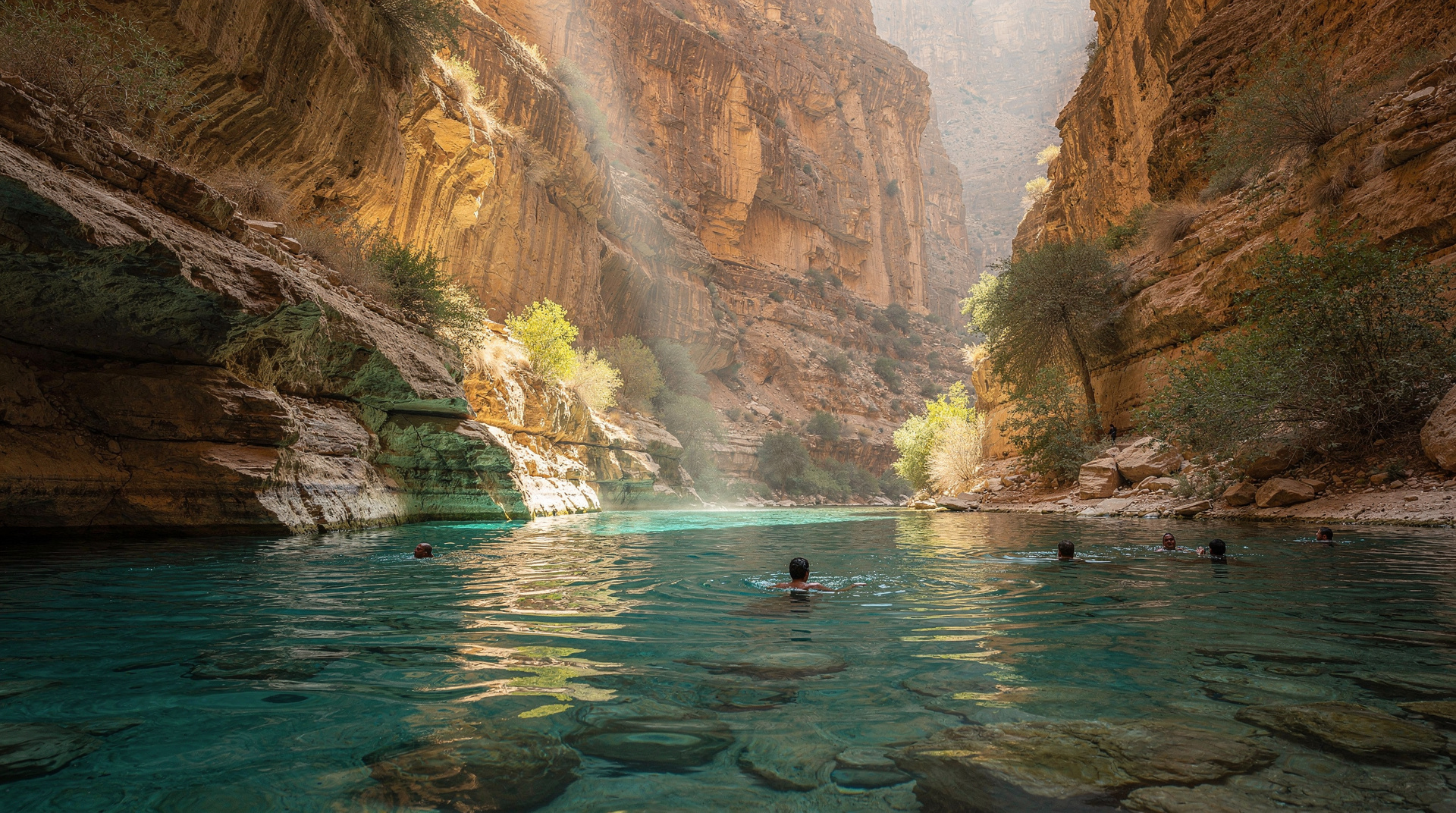
Most of Oman’s famous wadis depend on seasonal rain or underground springs that fluctuate year to year. Wadi Bani Khalid is different. Fed by a reliable system of aquifers in the Eastern Hajar mountains, it maintains permanent flowing water through every season — from the mild days of January to the fierce heat of August. The result is an oasis of palm-fringed turquoise pools in the midst of some of Oman’s most dramatic mountain scenery.
Located in the Al Sharqiyah (Eastern) region, about 120 km from Muscat and 100 km north of Sur, Wadi Bani Khalid sits at the junction of mountain and desert. The approach from the main highway drives through increasingly rugged limestone terrain before the wadi appears — a sudden explosion of green and turquoise that is genuinely startling against the ochre rock surrounding it.
This is one of the most accessible and most beautiful natural sites in Oman. It has facilities that other wadis lack, a well-maintained path to the main pools, and the option of cave exploration for those who want an extra dimension to the visit.
The Pools: What to Expect
The main pools at Wadi Bani Khalid are the draw — clear, cool water in a series of natural basins carved by centuries of spring flow and occasional flooding. The water is typically 20-22°C, refreshing even in winter and genuinely cooling in the Omani summer heat.
The first and largest pool is the one most visitors see — a wide, shallow-to-medium depth basin perfect for swimming and wading. Date palms line the banks and small fish are visible in the shallows. The official site has concrete pathways, small changing room facilities, and a few basic food stalls selling cold drinks and simple snacks — making it far more infrastructure-equipped than Wadi Shab or Wadi Tiwi.
Beyond the first pool, a short trail leads to two smaller upstream pools. These are reached by scrambling over rounded boulders and crossing shallow water sections. The second pool is deeper and more enclosed, with canyon walls pressing closer on either side. The third pool requires some confidence on wet rock to reach and is often uncrowded even when the main pool is busy.
Entry fee: 500 baisa per person (about half an Omani rial). Payable at the main entrance car park.
Parking: 500 baisa per car. The car park is well-maintained and staffed during daylight hours.
Facilities: Toilets at the car park. Basic food stalls near the first pool. No restaurants. No lifeguards.
The Cave: Kahf Wadi Bani Khalid
A short distance upstream from the main pools, a cave cuts into the canyon wall. The cave is accessible at the time of writing without a guide or special permit, though conditions and access rules do change seasonally. A torch (flashlight) is essential for exploring beyond the first chamber.
The cave interior consists of several chambers connected by narrow passages. The main chamber is large enough to stand in and contains interesting limestone formations. Deeper sections require crawling and are best explored with a guide who knows the layout.
Important: The cave floor is uneven and wet in places. Appropriate footwear (closed toe, non-slip) is essential. Never enter the deeper cave sections without a torch and preferably a companion.
The cave is genuinely impressive — it adds a completely different dimension to the Wadi Bani Khalid visit and many travellers consider it the highlight.
Combining Wadi Bani Khalid With the Wahiba Sands Desert
Wadi Bani Khalid’s greatest logistical gift is its position at the edge of the Sharqiyah Sands (Wahiba Sands) — one of Oman’s most dramatic dune landscapes. The dune field begins less than 30 km south of the wadi, and the contrast between the turquoise pools of the oasis and the rust-orange dunes of the desert makes for one of Oman’s most satisfying double-destination day trips.
Most tours covering this region combine both: morning at the wadi for swimming, lunch at a desert camp, and an afternoon of dune driving and camel riding. The Wadi Bani Khalid and Wahiba Sands desert group tour from Muscat is the most popular option, combining swimming at the wadi with an afternoon in the dunes. From around 40-50 OMR per person, this is one of the best-value full-day tours operating out of Muscat.
Getting to Wadi Bani Khalid
By car from Muscat
Take the highway south toward Sur and Al Qabil. From the Al Qabil junction (approximately 100 km from Muscat), follow signs toward Wadi Bani Khalid. The wadi is clearly signposted from the main road. Total drive: approximately 1 hour 45 minutes to 2 hours.
The road to the wadi is fully paved all the way to the car park — no 4WD needed. This makes it one of the most accessible major wadis in Oman for self-driving visitors with standard cars.
From Sur: About 100 km north on the highway. 1 hour 30 minutes.
From Nizwa: About 1 hour east on the inland highway through Al Mintrib.
By organised tour
From Muscat, organised tours to Wadi Bani Khalid typically combine it with either the Wahiba Sands desert or other eastern Oman highlights. The desert combination tour is the most popular. Solo travellers and small groups without a rental car find the tour option particularly good value given the distance.
Best Time to Visit
All year — this is genuinely true of Wadi Bani Khalid where other wadis have seasonal water limitations.
October to April — peak season with comfortable hiking temperatures (22-32°C) and pleasant swimming. The most popular months are December through March.
Summer (May-September) — the pools are busiest during Eid holidays and school breaks when Omani families use the oasis as a heat refuge. Water temperatures in August reach 25°C — still refreshing against the 40°C+ outside. Visit very early (7-8am) or late afternoon to avoid the midday peak.
After rain — exercise caution. While the permanent spring-fed pools remain stable, heavy rain in the Eastern Hajar mountains can cause sudden flooding in the upper reaches of the wadi. The main pool area is relatively protected but the upstream pools and cave should be approached with caution after significant rainfall.
Wadi Bani Khalid Compared to Other Oman Wadis
| Wadi Bani Khalid | Wadi Shab | Wadi Tiwi | |
|---|---|---|---|
| Permanent water | Yes | Yes (spring-fed) | Yes (mostly) |
| 4WD needed | No | No | For upper canyon |
| Entry fee | Yes (1 OMR total) | Boat crossing (1 OMR) | No |
| Facilities | Good (toilets, food stalls) | Basic (car park only) | None |
| Famous cave | Yes | Yes (with waterfall) | No |
| Desert proximity | Very close (Wahiba) | No | No |
| Crowds | Moderate | High | Low |
What to Bring
Despite having better facilities than most Omani wadis, Wadi Bani Khalid still demands preparation:
- Swimwear for the pools (modest cover-up for the walk to and from the water in respect for local families)
- Water shoes or closed-toe sandals with grip
- Torch/headlamp for cave exploration
- Sun protection — the canyon walls provide some shade but the main pool is exposed midday
- Water: at least 1.5 litres per person (food stalls sell cold drinks but at tourist prices)
- Snacks or lunch (no sit-down restaurant at the wadi)
- Dry bag for phone near the pools and in the cave
Wildlife at Wadi Bani Khalid
The permanent water makes Wadi Bani Khalid unusually rich in wildlife by Omani standards. Small fish (primarily freshwater mullet) are visible in the main pool — they are harmless and often approach swimmers curiously. Dragonflies are abundant in the warmer months. Birdlife includes herons, kingfishers, and various waders that use the oasis as a rest stop during migration.
In the early morning, look for the tracks of foxes and sand cats near the pool edges — they come to drink at night. Lizards of various sizes sun themselves on the rocks throughout the day.
The Village of Wadi Bani Khalid
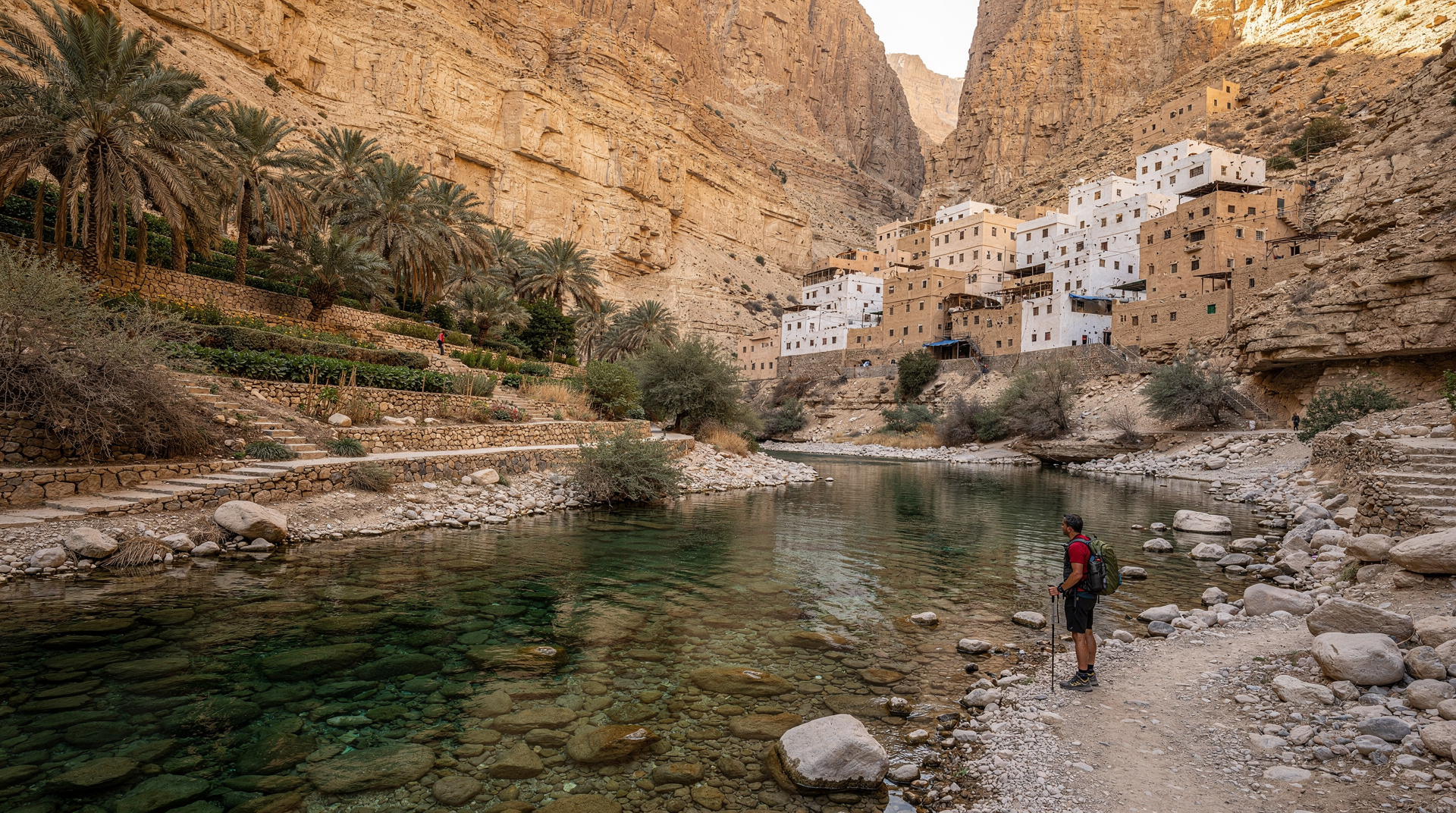
The wadi serves as the water source for a small farming community whose village sits above the canyon rim. Traditional stone buildings, a mosque, and a small school are visible from the main path. The community has managed the falaj water system that feeds the wadi gardens for generations.
If you walk upstream past the main pools, you will pass through working farmland with date palms, limes, and vegetables under cultivation. Stay on established paths and do not disturb the agricultural areas.
Planning Your Inland Oman Circuit
Wadi Bani Khalid makes the most sense as part of a wider eastern and central Oman loop rather than a standalone day trip from Muscat. Its inland position at the edge of the Wahiba Sands is the key: it naturally bridges the coastal wadi experiences of the east with the desert landscape of the south.
A well-structured 3-day loop from Muscat:
Day 1 (coastal south): Drive Route 17 south to Bimmah Sinkhole, then Wadi Tiwi, then Wadi Shab. Stay in Sur.
Day 2 (east to desert): Drive inland from Sur to Wadi Bani Khalid for swimming and cave exploration. Continue to Wahiba Sands desert camp for overnight — camel ride at sunset, stars overhead.
Day 3 (inland return): Drive inland through Ibra toward Nizwa. Stop at Al Hoota Cave and Misfat al Abriyeen village before the highway back to Muscat.
Alternatively, extend Day 3 with an ascent to Jebel Akhdar (requires 4WD) or push on to Jebel Shams for a sunrise Balcony Walk on Day 4. This creates a comprehensive introduction to Oman’s landscape variety: coast, wadis, desert, oasis, cave, and mountain in one logical circuit.
The Desert Approach: Scenery on the Drive
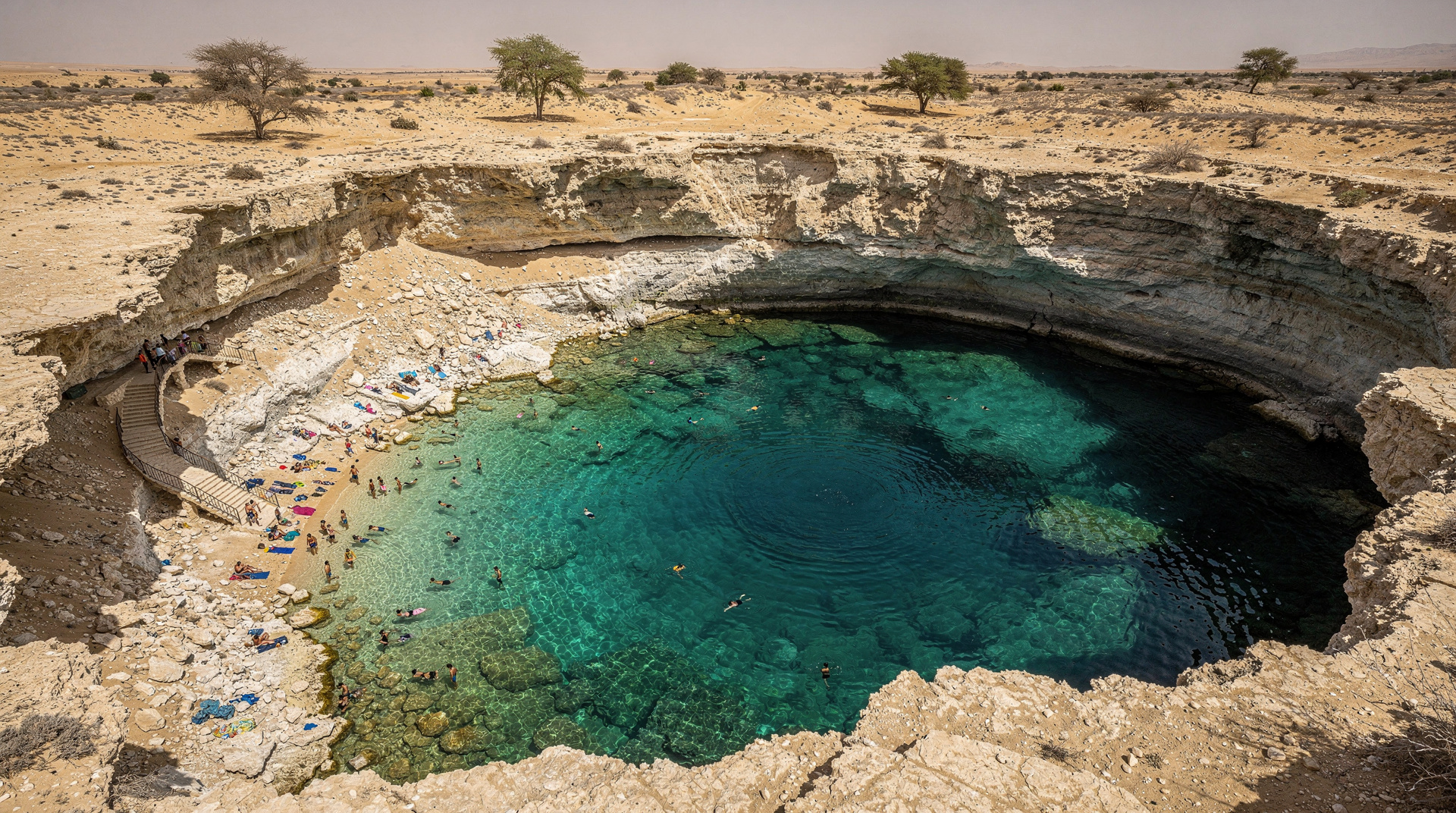
One of the underappreciated pleasures of visiting Wadi Bani Khalid is the drive itself. Coming from Muscat on the inland highway, the road passes through terrain that transitions from the limestone mountains of the Eastern Hajar foothills into gravel plains scattered with acacia trees, then into the zone where the desert begins to assert itself — small dunes building on the windward sides of rocks, vegetation becoming sparser, colours shifting from grey to tan to rust.
The route from the Al Qabil junction toward the wadi takes you through this transition zone. The Wahiba Sands dune fields are visible to the south — a pale horizon of sand that seems to glow slightly in the right light. The road surface is excellent and the drive takes you through several small villages showing the typical architecture of interior Oman: flat-roofed houses in sandy colours, date palms, the occasional domed tomb of a local saint on a hill overlooking the road.
As you approach the wadi, the landscape changes again — the greener vegetation of the wadi itself becomes visible from some distance as a dark green band across the otherwise pale terrain. The date palms marking the wadi course act as a visible signal: water ahead. This transition from arid desert approach to lush wadi vegetation is one of the most satisfying arrivals in all of Oman.
The Wadi Ecosystem in Detail
Wadi Bani Khalid’s permanent water supports an exceptionally rich biological community for this part of the Arabian Peninsula. The spring-fed pools create a stable, year-round aquatic environment that draws wildlife from surrounding desert and mountain terrain.
The fish population in the main pool is dominated by freshwater species adapted to the slightly brackish, mineral-rich spring water. These fish — primarily Garra species — have adapted to water chemistry that would challenge most freshwater fish. They are remarkably unafraid of humans and will investigate hands, feet and waterproof cameras with obvious curiosity.
Above the water, the date palm canopy creates a humid microhabitat supporting bird species unusual for inland Oman. African silverbill and Indian silverbill finches feed on seed heads near the pool edges. Palm doves call constantly from the canopy. During spring migration, the wadi acts as a refuge for exhausted warblers and flycatchers arriving from Africa — it is not unusual to see ten or more warbler species in a single April morning.
The rock surfaces around the pools host several species of agamid lizard, including the spectacular rock agama that turns vivid orange-gold during breeding season. At night, the same rocks are patrolled by geckos hunting the insects attracted to any available moisture.
Nearby Sights to Combine
Wadi Bani Khalid works as an anchor point for a broader eastern Oman itinerary. Natural combinations include:
Wahiba Sands / Sharqiyah Sands — 30 km south. Orange dunes rising to 100+ metres, camel rides, and desert camp experiences. The oasis-to-desert contrast in a single day is one of Oman’s signature travel experiences.
Sur — 100 km south. Oman’s traditional dhow-building port, still building wooden ships by hand. The Sur waterfront and traditional craft heritage is fascinating.
Ras al Jinz — 125 km south. The most important turtle nesting beach in the Arabian Sea. Book night tours in advance. Green turtles nest here year-round, with peak season July-September. Night tours depart from the Ras al Jinz Turtle Reserve. Book well in advance.
For other wadi experiences, the Wadi Shab guide covers the most famous cave waterfall in Oman. The Wadi Tiwi guide covers the best low-crowd alternative nearby. For mountain scenery beyond the wadis, the Jebel Shams Balcony Walk is the defining highland hiking experience. The Jebel Akhdar Green Mountain plateau offers rose gardens and cooler temperatures in a completely different mountain character. For underground exploration, the Al Hoota Cave near Nizwa is a remarkable complement to the surface landscapes. Finally, the Bimmah Sinkhole on the coastal road makes an excellent quick stop if you are driving between Muscat and the eastern wadi region. Adventurous travellers heading north should consider the Jebel Harim mountain safari in Musandam — a completely different Oman from the wadis and desert of the east.
Photography Tips
Wadi Bani Khalid is exceptionally photogenic but the light is challenging:
- Best light: 7-9am (soft morning light on the canyon walls) or 4-6pm (golden hour when the rock walls glow)
- Avoid: Midday direct light which creates harsh shadows and washes out the turquoise water colour in photographs
- Best angle for the main pool: From the large flat rock on the left bank looking upstream, with the date palms framing the shot
- For the cave: A wide-angle lens and slow shutter speed captures the rock formations. A tripod or image stabilisation is essential in the low light
- Drone rules: Drone flight is subject to Oman’s CAA regulations. A permit is required for commercial use. Check current regulations before flying.
Frequently asked questions about Wadi Bani Khalid: Oman’s Year-Round Swimming Oasis
Can I visit Wadi Bani Khalid without swimming?
Absolutely. The main pool area has paved pathways around the water and excellent viewing positions that do not require getting wet. The cave is accessible in regular hiking clothing. Many visitors — particularly in winter — visit primarily for the scenery and cave rather than swimming.
Is the water at Wadi Bani Khalid clean?
The water is fed by natural underground springs and is considered clean by the local standards that have sustained a farming community here for centuries. However, with increasing visitor numbers, pollution from sunscreen, food waste and general human activity is a growing concern. Oman’s Environment Authority monitors water quality at popular sites. Avoid using sunscreen directly in the pool.
Are there snakes or dangerous animals at the wadi?
The Eastern Hajar mountains do have populations of Horned Sand Viper and Arabian Cobra, but encounters at a busy visitor site like Wadi Bani Khalid are extremely rare. Standard precautions apply: do not reach into rock crevices without looking first, wear shoes rather than sandals on rocky paths, and leave any snake you see completely alone.
Can I camp at Wadi Bani Khalid?
Official camping at the wadi site itself is not permitted. Wild camping is possible in the surrounding desert and mountain areas but involves finding your own site and bringing all supplies. The nearest established camping areas with facilities are at desert camps in the Wahiba Sands, approximately 30 km south.
How long should I spend at Wadi Bani Khalid?
Allow 2-3 hours for a comfortable visit including the main pool swimming, the upstream pools, and cave exploration. If combining with the desert, you would typically spend the morning at the wadi (3 hours) and the afternoon in the Wahiba Sands (3-4 hours), making for a full but manageable day from Muscat.
Is Wadi Bani Khalid suitable for non-swimmers?
Yes. The main pool has gradual entry with shallow sections. The upper pools require scrambling on rocks and some wading but not full swimming. The cave can be entered without swimming. Non-swimmers have a full and rewarding experience at this site.
What is the fish in Wadi Bani Khalid?
The small fish visible in the pools are primarily freshwater fish species including mullet adapted to the brackish spring water. They are curious about visitors and completely harmless. They have been present in these pools for as long as local memory recalls and are considered part of the wadi’s natural character.