Al Hoota Cave: Oman's Underground Wonder Near Nizwa
What is special about Al Hoota Cave?
Al Hoota Cave contains a rare underground lake inhabited by blind fish (Garra barreimiae) that have evolved without eyes over thousands of years in complete darkness. The cave also features spectacular stalactite and stalagmite formations accessible on a guided tour.
Into the Mountain: Oman’s Most Dramatic Cave System
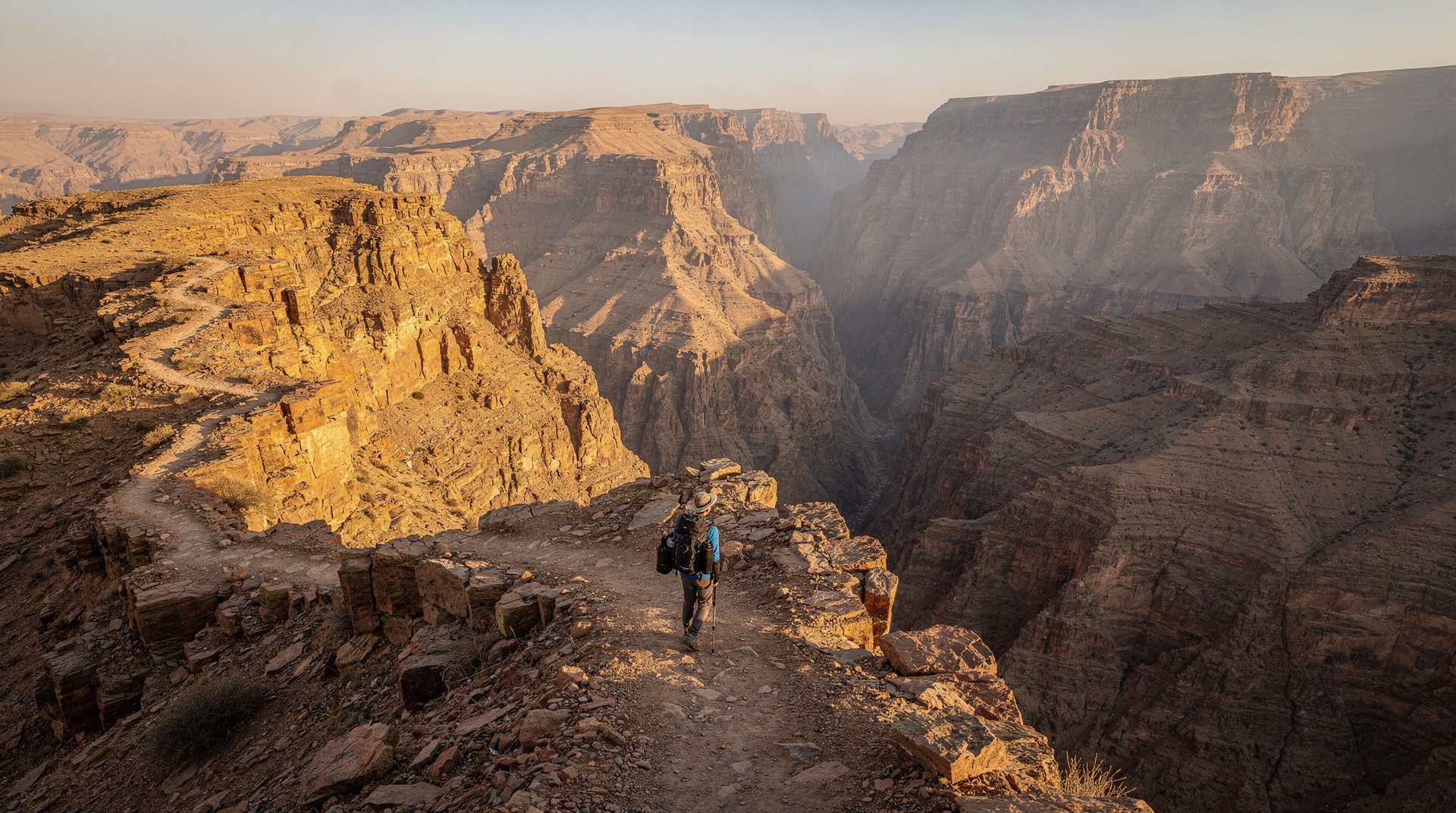
Beneath the Al Hajar mountains, where millions of years of limestone dissolution have carved a labyrinth of underground chambers, lies one of Oman’s most extraordinary natural attractions. Al Hoota Cave sits at the base of Jebel Shams — the same mountain that hosts the Balcony Walk high above — and offers a completely different perspective on the landscape: not from the canyon rim looking down, but from inside the rock itself.
The cave extends for over 4.5 km through the limestone, though the public tour covers a carefully managed 500-metre section that passes through the most visually impressive chambers and culminates in an underground lake. In that lake live fish that have not seen light in thousands of generations — the famous blind cave fish that give Al Hoota much of its mystique.
This guide covers everything you need to know for a visit: tour times and prices, what to expect in each chamber, the science behind the blind fish, and how to combine Al Hoota with the nearby wonders of Jebel Akhdar and Nizwa.
The Blind Fish: Evolution in the Dark
Garra barreimiae is an unassuming creature — a small freshwater fish, typically 5-10 cm long. What makes the Al Hoota population extraordinary is that those living in the underground lake have lost the use of their eyes entirely over thousands of years of evolution in complete darkness.
The eyes of the cave-dwelling population are non-functional and partially recessed. The fish navigate entirely through lateral line sensors — the pressure and vibration detection system that all fish have but that cave fish have developed to extraordinary sensitivity. They can detect the movement of a human hand at several metres’ distance without seeing it at all.
The surface-dwelling relatives of these fish (in nearby wadis and springs) have fully functional eyes. The cave population and surface population are the same species but have diverged sufficiently that their morphology is visibly different — a striking example of evolution responding to environment that you can observe directly through the glass viewing platform above the lake.
The Cave Tour
Tour format
Al Hoota Cave operates as a fully guided experience. Independent exploration of the cave is not permitted. Tours depart at fixed times and are conducted by Oman Tourism-trained guides who explain the geology, history, and biology of the cave.
Tour duration: Approximately 45 minutes to 1 hour
Tour language: Arabic and English tours are available. Check the current schedule as English tour times change seasonally.
Group size: Tours are capped at around 30 people to minimise disturbance to the cave environment.
Physical requirements: The path through the cave is paved and mostly flat with handrails. The temperature inside is a constant 20-21°C (refreshingly cool in summer, potentially chilly in winter — bring a light layer). The main restriction is headroom: several passages require visitors over 170 cm to duck. Claustrophobia may be a consideration in the narrower sections.
Ticket prices
Adult: approximately 7 OMR
Child (6-15 years): approximately 3 OMR
Child under 6: Free
Timing note: Al Hoota Cave closes on Tuesdays for maintenance. Confirm opening before making the drive, particularly if combining with a long day trip.
What You See Inside
The entrance chamber
The first chamber is the largest — a cathedral-like space with high ceilings and the first stalactite and stalagmite formations. The guide explains the basics of how limestone caves form: slightly acidic rainwater dissolves the rock over millions of years, and the dissolved minerals redeposit as dripping water evaporates, building formations one millimetre at a time.
The formations in this chamber include column stalactites (pointing down from the ceiling), stalagmites (growing up from the floor), and several examples of columns where the two have joined. The oldest formations in Al Hoota Cave are estimated to be hundreds of thousands of years old.
The middle chambers
A series of smaller chambers connect the entrance to the lake. These sections have lower ceilings and narrower passages that add to the atmosphere. Lighting is controlled and designed to reveal the texture of the rock formations without disturbing the cave ecosystem.
The guide points out particularly notable formations — one chamber has a large curtain stalactite (a thin, translucent blade of calcium carbonate) that is illuminated from behind to show its remarkable delicacy.
The underground lake
The tour concludes at the underground lake — a still body of water approximately 800 metres into the cave. The viewing platform sits above the water and the guide uses a spotlight to illuminate the lake surface while pointing out the blind fish visible below.
The lake connects to a broader underground water system that runs through the mountain. Water levels in the lake fluctuate with seasonal rainfall in the mountains above.
The Electric Train
A novelty unique to Al Hoota Cave is the small electric train that runs from the visitor centre to the cave entrance — a distance of about 500 metres. The train carries visitors through a tunnel to the cave entry point, an experience that adds a theatrical sense of arriving somewhere unusual. Children invariably enjoy this section enormously.
Visitor Centre and Facilities
Al Hoota Cave has one of the better visitor infrastructure setups in Oman:
Museum: A small but informative geology museum adjacent to the visitor centre covers the formation of Oman’s limestone mountains, the cave system, and the biology of the blind fish. Text is in Arabic and English. Allow 20-30 minutes for the museum before or after the cave tour.
Restaurant: A restaurant at the visitor centre serves Omani and international food. Lunch here before or after the cave is practical. Quality is reliable without being remarkable. Budget 3-5 OMR per person for a meal.
Gift shop: Basic souvenirs including postcards, guidebooks, and cave-themed items for children.
Toilets: Clean facilities at the visitor centre.
Parking: Free car park with ample space.
Getting to Al Hoota Cave
Location
Al Hoota Cave is located near the village of Al Hamra, at the foot of Jebel Shams, approximately 210 km from Muscat. GPS: approximately 23.148°N, 57.356°E.
By car from Muscat
Take the Nizwa highway (Route 15) south from Muscat. From Nizwa, continue west through Al Hamra. Al Hoota Cave is signposted from Al Hamra. Total drive: approximately 2 hours 30 minutes from Muscat. A standard 2WD car is sufficient — the cave is on the valley floor and no mountain road is needed.
From Nizwa
Al Hoota Cave is 45 minutes west of Nizwa. A natural half-day: morning at Nizwa Fort and souq, afternoon drive to the cave.
By organised tour
Most tours combining Jebel Akhdar with the Al Dakhiliyah region include Al Hoota Cave as an optional or included stop. The Jebel Akhdar Green Mountain tour from Muscat combines the mountain plateau experience with regional highlights including Al Hoota Cave. This is an efficient way to cover both sites in a single day from Muscat.
Best Time to Visit
October to April for the most comfortable overall experience in the region.
Al Hoota Cave itself is climate-controlled at 20-21°C year-round. The cave is equally comfortable in July as in January. The surrounding area — and the drive — is affected by seasonal temperature extremes, which is why winter and spring are preferred for the wider Al Dakhiliyah day trip.
Summer: The cave becomes a popular refuge from the heat. Visitor numbers increase significantly in July and August. Book the cave tour in advance during this period.
Avoid Tuesdays: The cave is closed. This catches visitors by surprise frequently enough that it is worth stating twice.
Planning Your Al Dakhiliyah Day
Al Hoota Cave works best when integrated into a broader Al Dakhiliyah day or overnight rather than as a standalone destination. The cave tour itself takes about an hour, which leaves plenty of time for companion sites.
The most efficient single-day structure from Muscat:
- 7:30am: Depart Muscat
- 9:30am: Arrive Nizwa. Nizwa Fort and traditional souq (2 hours)
- 12:00pm: Drive 45 minutes to Al Hamra. Lunch in the village
- 1:00pm: Walk the old quarter of Al Hamra (30 minutes)
- 2:00pm: Misfat al Abriyeen village garden walk (1 hour)
- 3:30pm: Al Hoota Cave tour (1 hour)
- 5:00pm: Optional drive up to Jebel Shams viewpoint for sunset (40 minutes each way)
- 8:00pm: Return to Muscat
For an overnight extension, stay at the Jebel Shams Resort and complete the Balcony Walk at sunrise the next morning. Add Jebel Akhdar on Day 2 for a complete mountain circuit.
The Mountain Setting: Al Hamra and Misfat al Abriyeen
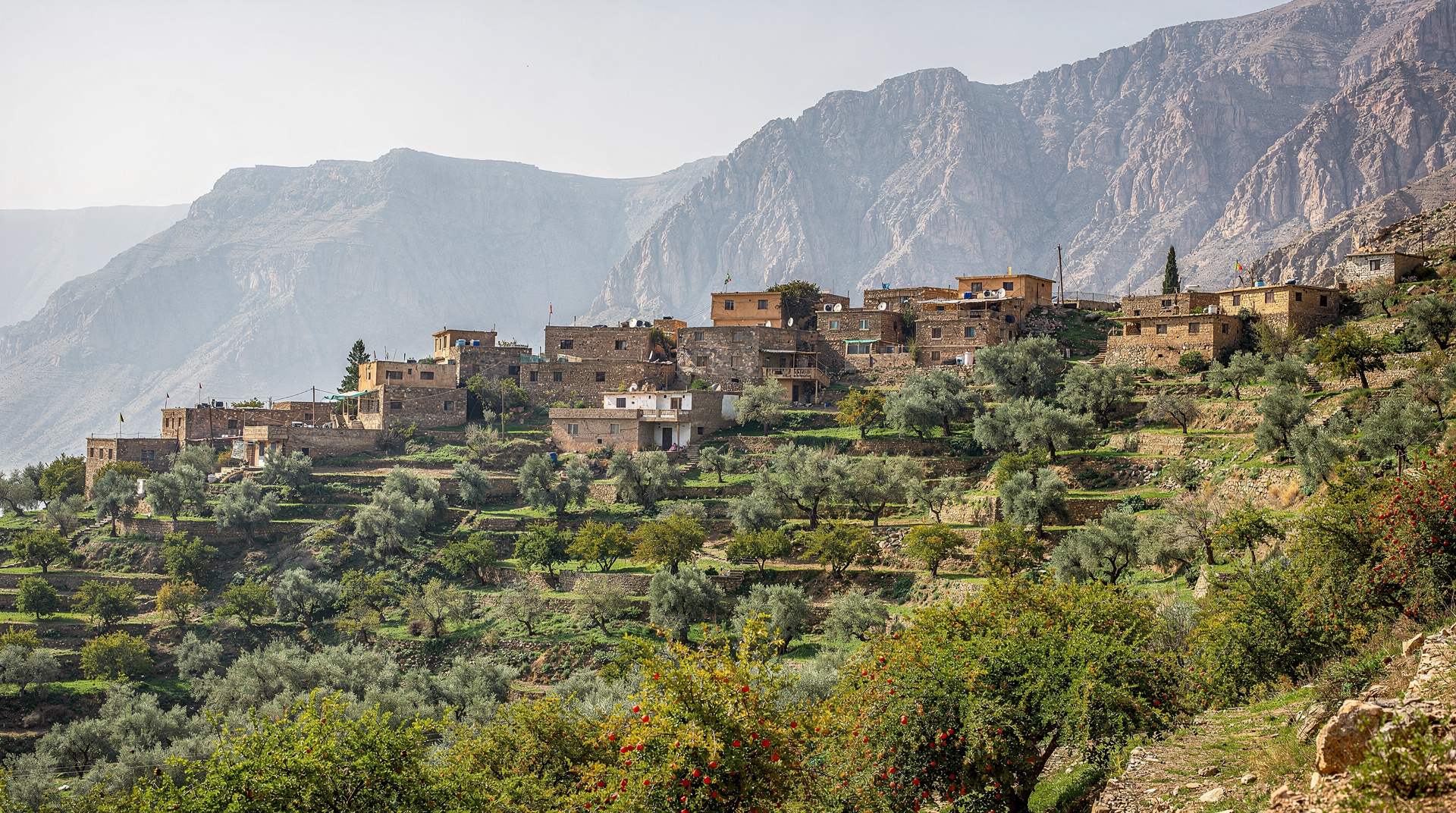
Al Hoota Cave sits in a landscape that deserves exploration beyond the cave itself. The approach from Nizwa passes through Al Hamra, one of the most beautifully preserved traditional towns in the Al Dakhiliyah region. The old quarter of Al Hamra contains mud-brick houses dating back 400 years, built using the natural insulating properties of mud construction to create cool interiors despite the intense summer heat. Several houses have been restored and are open to visitors.
Just above Al Hamra, the village of Misfat al Abriyeen clings to a hillside above a spectacular falaj-irrigated garden valley. The gardens contain date palms, pomegranates, walnuts, and citrus in a riot of green that is startling against the bare limestone behind the village. The walk through Misfat takes 1-2 hours on cobbled paths winding between traditional houses and through working gardens. The village retains a genuine character — residents still farm the plots and maintain the falaj channels as they always have.
Together, Al Hamra and Misfat represent a concentrated encounter with interior Oman’s traditional built environment and agricultural systems. Combining these with Al Hoota Cave makes for an exceptionally rich half-day: geology underground, vernacular architecture in the old town, and living agricultural tradition in the hillside village — each element reinforcing and contextualising the others.
Cave Formation and What You Are Really Looking At
The stalactites and stalagmites of Al Hoota Cave are frequently described simply as beautiful, which they are. But understanding what you are looking at adds a dimension that turns aesthetic pleasure into something approaching wonder.
A stalactite forms as follows: rainwater absorbs carbon dioxide from the atmosphere and soil, becoming weakly carbonic acid. This acidic water dissolves a tiny amount of the limestone it percolates through. When it reaches the cave ceiling and drips into the open air, it loses carbon dioxide to the cave atmosphere. Without the carbon dioxide to keep the calcium carbonate in solution, a microscopic amount deposits on the ceiling surface. One drip at a time, over thousands of years, a stalactite grows.
The rate of growth varies between approximately 0.1 mm and 1 mm per year depending on water flow, carbon dioxide levels, and temperature. The largest stalactites visible in the Al Hoota tour chambers are likely 100,000 years old or more. The delicate curtain stalactites — thin translucent blades of calcium carbonate — form where water flows as a sheet rather than dripping from a point, and can be so thin that light passes through them.
Beyond stalactites and stalagmites, Al Hoota contains several other formation types. Helictites — small twisted formations that grow against gravity due to capillary forces — appear in several chambers. Moonmilk, a soft white deposit of hydrated calcium carbonate that forms in humid cave environments, coats some wall surfaces. Each formation type reflects a slightly different combination of water chemistry, humidity, and geological time. Your guide will point out the most significant examples.
Combining Al Hoota With Other Sites
Al Hoota Cave sits at the base of Jebel Shams and near the entrance to the Jebel Akhdar road. This geographic position makes it a natural anchor for a broader Al Dakhiliyah day or overnight trip.
Jebel Shams Balcony Walk: The canyon rim hike begins 45 minutes’ drive up the mountain above Al Hoota Cave. Full details in the Jebel Shams Balcony Walk guide. Combining the underground experience with the dramatic above-ground canyon on the same day is deeply satisfying — the contrast between the cave interior and the vast open canyon makes both experiences feel more intense. Full details in the Jebel Shams Balcony Walk guide.
Jebel Akhdar: 45 minutes east (with 4WD for the mountain road). The rose terraces, ancient villages, and plateau rim views of the Green Mountain make this a perfect second stop after Al Hoota. Full details in the Jebel Akhdar complete guide.
Wadi Bani Khalid: About 2 hours east via the inland highway. The Wadi Bani Khalid year-round oasis completes a logical inland triangle: Nizwa, Al Hoota, Jebel Akhdar, then east to the oasis before heading toward the coast.
For coastal contrast, the Wadi Shab complete guide covers the most dramatic swim-through canyon in eastern Oman. The Bimmah Sinkhole guide covers the natural karst crater on the coastal highway. For a quieter coastal alternative, the Wadi Tiwi hiking guide details the canyon just 2 km from Wadi Shab with far fewer visitors.
For those interested in dramatic mountain scenery in a completely different part of Oman, the Jebel Harim mountain safari in Musandam is Oman’s northernmost mountain experience.
Nizwa Fort and Souq: 45 minutes east. The most visited historical site in inland Oman. The traditional Friday goat market (held every Friday morning) is one of the most authentic cultural experiences in the country.
Misfat al Abriyeen: A preserved mud-brick village with working falaj gardens, 20 minutes from Al Hoota Cave. The village walk takes 1-2 hours and is particularly beautiful at golden hour.
What to Wear and Bring
The cave temperature of 20-21°C feels cool after the outside heat. Key items:
- Light jacket or fleece — essential even in summer if you are coming from 38°C outside
- Closed-toe shoes with some grip (the cave path is smooth but can be damp in places)
- Camera or phone — photography is permitted throughout the tour except at specific sensitive formations marked by your guide
No specialist equipment is needed. The tour is entirely on lit, paved paths with handrails.
The Geology of Al Hoota
Al Hoota Cave formed in the same limestone belt that underlies the entire Al Hajar mountain range. This limestone was deposited as marine sediment on the floor of the ancient Tethys Ocean approximately 100-200 million years ago. Subsequent continental collision raised the ocean floor to create the Al Hajar mountains.
Rainwater, made slightly acidic by absorbing carbon dioxide from the atmosphere and soil, has been dissolving this limestone since the mountains rose. Over millions of years, the dissolution created the cave system. The rate of stalactite formation is approximately 1 cubic centimetre per century — meaning the large formations visible in the tour chambers represent millions of years of drip-by-drip mineral deposition.
The underground lake is fed by the same aquifer system that feeds the falaj irrigation channels visible throughout the Al Dakhiliyah region. In a very real sense, the water that drips through Al Hoota Cave eventually emerges through the mountain springs that have sustained farming communities in this region for millennia.
Frequently asked questions about Al Hoota Cave: Oman’s Underground Wonder Near Nizwa
Do I need to book Al Hoota Cave in advance?
Advance booking is recommended during summer (July-August) and public holidays when the cave is busiest. At other times, showing up on the day and purchasing tickets at the visitor centre usually works, though you may need to wait for the next available English-language tour. Check the official Al Hoota Cave website or call ahead to confirm tour times.
Can children visit Al Hoota Cave?
Yes. The cave tour is excellent for children, particularly the blind fish at the underground lake and the electric train ride. The path is fully accessible without technical difficulty. The moderate darkness and enclosed sections of the cave may unsettle very young children (under 4-5) who are sensitive to closed spaces. The museum with fish displays and interactive geology exhibits is designed partly with younger visitors in mind.
Is Al Hoota Cave accessible for people with mobility limitations?
The main cave path is paved and mostly flat with handrails. Some passages have low ceilings requiring a slight duck. Wheelchair access is limited due to the cave entrance passage. Contact the cave management directly for current accessibility information and to check whether adapted tours are available.
How cold is it inside the cave?
The cave maintains a constant 20-21°C. This feels notably cooler than the outside air in summer (when external temperatures reach 38-42°C) and only slightly cooler than outside in winter. A light layer is almost always welcome.
Are there other caves to visit near Al Hoota?
The Al Hajar mountains contain numerous cave systems, most of which are unexplored or accessible only to experienced cavers with technical equipment. Al Hoota is the only developed show cave in Oman with regular public tours. Cave divers have explored several underwater sections of the broader Al Hoota system that are off-limits to the public.
Why are the fish blind?
Cave environments create evolutionary pressure to eliminate metabolically expensive traits that provide no benefit in darkness. Eyes require significant biological resources to develop and maintain. In a completely dark environment, fish with genetic mutations reducing eye development did not suffer any disadvantage — and in fact gained a slight metabolic efficiency. Over thousands of generations, non-functional eyes became the norm in the cave population. The lateral line system (pressure detection) simultaneously became more sensitive as a compensating adaptation.
How far is Al Hoota Cave from Muscat?
Approximately 210 km and 2 hours 30 minutes by car. This makes it a feasible day trip from Muscat, especially when combined with one other stop (Nizwa Fort, Misfat al Abriyeen, or Jebel Shams viewpoint). An overnight stay in Nizwa or at one of the Jebel Shams lodges allows a more relaxed two-day exploration of the region.