Oman in Winter: October to March Travel Guide
Is Oman good in winter?
Winter (October to March) is the absolute best time to visit Oman. Temperatures are mild (18–30°C), all outdoor activities are accessible, and the desert is at its finest.
Why Winter Is Oman’s Golden Season
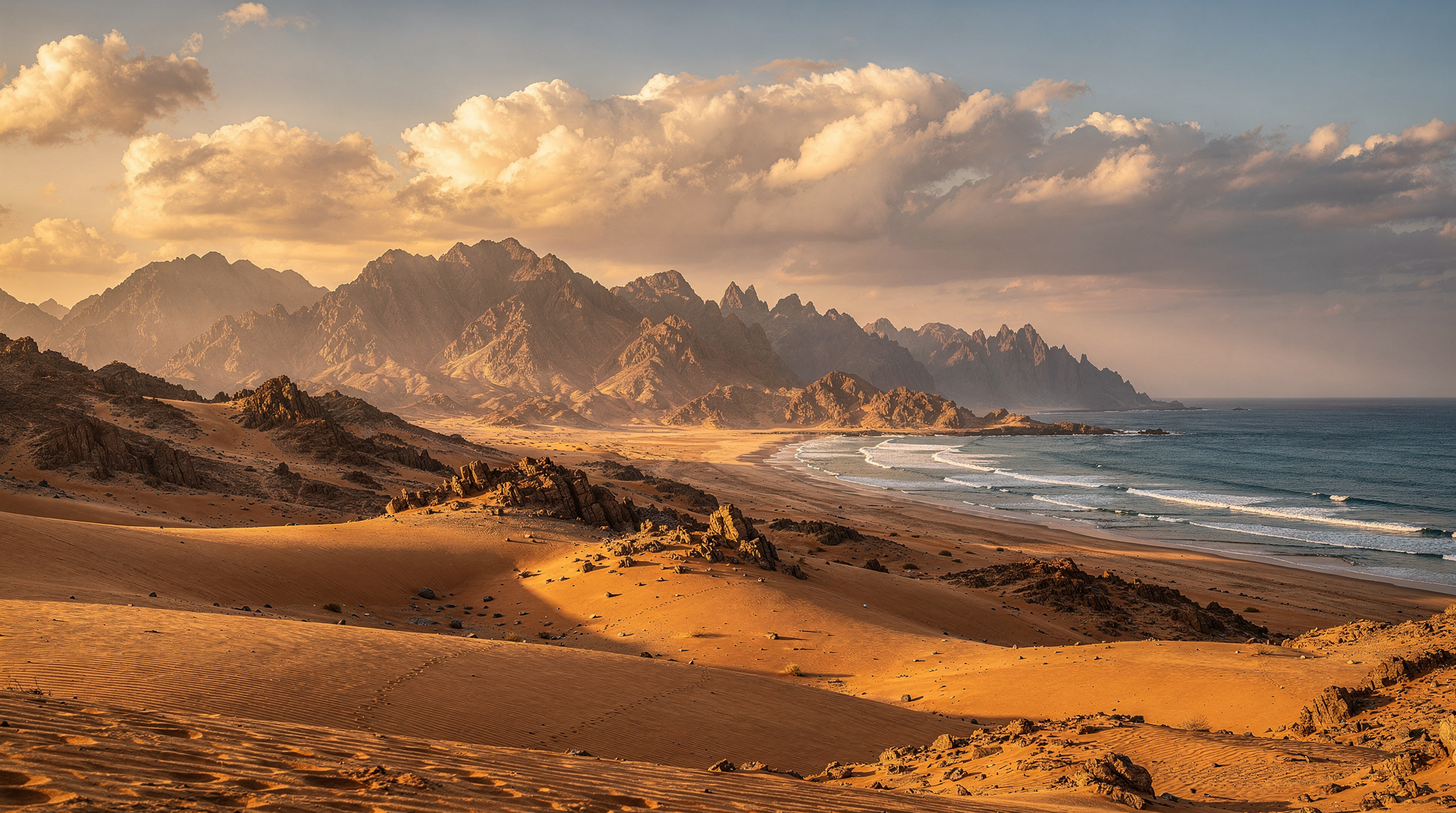
If you are researching when to visit Oman, the answer is simple: winter. The six months from October through March represent the country at its finest — accessible, manageable, and visually extraordinary in a way that the summer months, with their extreme heat, simply cannot match.
This is the season when Oman’s most celebrated experiences are not just possible but actively enjoyable: sleeping in a desert camp under the Milky Way without being too hot to sleep; hiking along a wadi gorge in the morning cool; driving mountain roads as the low winter sun illuminates the red rock of Jebel Akhdar; watching sea turtles emerge from the moonlit Indian Ocean.
This guide covers each month of Oman’s winter season, what to prioritise, what to pack, mountain cold warnings, specific festivals, and how to make the most of the conditions.
October: Shoulder Season at Its Best
October is the transition month — summer heat fading, the landscape still carrying the memory of warmth but with increasingly comfortable afternoons. By the end of October, daytime temperatures in Muscat drop from the mid-30s to a more manageable 30–32°C, with evenings falling to a pleasant 25°C.
What works in October:
- All outdoor activities are feasible in morning and evening, with some midday heat
- Wadi swimming is excellent — the water temperature is warm, the heat makes it refreshing rather than chilly
- Desert camping is comfortable but still warm at night — no blanket needed yet
- Wadi Bani Awf mountain drive is accessible and dramatic
- Muscat city tourism without extreme heat management
Crowds and prices in October: October is genuinely shoulder season. Popular sites have a fraction of December’s visitor numbers. Hotel prices are 20–35% below January peak rates. Desert camps have easy availability without advance booking. This combination of good weather and low costs makes October one of the most underrated months to visit.
What to note about October: Daytime heat in the first half of October is still significant, and serious wadi hikes or prolonged desert exposure require heat precautions. The cool evenings that define the January experience are not yet present.
Temperatures in October:
- Muscat: 28–35°C daytime, 24–28°C evenings
- Wahiba Sands: 30–38°C daytime, 22–26°C night
- Jebel Akhdar: 20–26°C daytime, 14–18°C at night
- Salalah: 26–30°C (post-Khareef, green landscape still visible)
November: The Underrated Month
November is arguably Oman’s finest month for travel, and one of the most overlooked by international visitors planning around school holidays. By mid-November, daytime temperatures in Muscat are routinely 27–29°C — warm but entirely pleasant for outdoor activity at any hour of the day, not just morning and evening.
November highlights:
- Oman National Day (November 18): Military parades, spectacular fireworks, and celebrations throughout the country. Muscat becomes festive and patriotic, with the Corniche area particularly lively. A wonderful time to witness national pride. Hotels in Muscat fill up around this date — book ahead if travelling in mid-November.
- Wadi hiking in full comfort: By November, full-day wadi hikes are manageable without extreme heat precautions. Wadi Shab, Wadi Bani Awf, and Wadi Bani Khalid are all superb.
- Desert camping: Nights cool to 18–22°C — comfortable with a light sleeping bag. The sky is clearer than in the shoulder months.
- Mountain driving: The Jebel Akhdar and Jebel Shams views are spectacular with low November light. Mountain nights drop to around 10–14°C — bring a warm layer.
November deals: Most years, November sees hotel rates at their lowest for the entire tourist season. Booking a Muscat luxury hotel in November versus January can save 40–50% on the same room. Adventure tour operators have full availability.
What to pack for November: A light fleece or zip-up jacket for evenings, one pair of long trousers, and standard warm-weather clothing. See our Oman packing list for the complete kit recommendation.
December and January: Peak Season
These are the two months when Oman receives the most international visitors — school holidays in Europe and North America align with perfect weather conditions. December and January are genuinely exceptional.
Daytime temperatures:
- Muscat: 24–27°C
- Nizwa: 22–26°C
- Jebel Akhdar (2,000m): 10–18°C (cold at night — to 5°C or below)
- Jebel Shams (3,000m): 5–15°C daytime, 0–5°C at night — genuinely cold
- Wahiba Sands: 22–28°C by day, 12–16°C at night
- Sur and eastern coast: 22–26°C
Mountain cold warning: Jebel Akhdar and particularly Jebel Shams in January are cold by any standard. Visitors who arrive in light tropical gear are regularly surprised. January nights on Jebel Akhdar can drop to 3–5°C. If you are staying at a mountain resort or camping anywhere above 1,500 metres, bring a proper warm jacket, thermal base layers, and a sleeping bag rated to 0°C. The dramatic weather — mist, wind, occasional frost on the rocks — adds to the atmosphere, but arriving unprepared is genuinely uncomfortable.
Desert camping: The definitive time. Nights are cool enough to need a blanket, cool enough to make the Milky Way viewing genuinely immersive rather than sweaty. The golden desert light at sunrise is extraordinary. A 3–4°C rated sleeping bag is ideal for January nights in the Wahiba Sands.
Mountain experiences: Jebel Akhdar in winter is stunning. The terraced villages, the canyon rim at Wadi Ghul, and the wild mountain plateau feel like a different planet from the coast. Night temperatures at altitude are bracing — stay at a mountain lodge or bring serious warm layers. The Alila Jabal Akhdar guide and the Anantara resort on Jebel Akhdar are worth reading before booking.
Wadi hikes: Perfect conditions. Wadi Shab, Wadi Bani Awf, and Wadi Bani Khalid are all at their most accessible and enjoyable. Note that after heavy winter rain (December to February), some wadis run with water from mountain rains — wadi swimming can be murky after floods but spectacular when clear.
Turtle watching: Green turtle nesting season is winding down by December at Ras al Jinz, but hatching season peaks. Guided visits continue throughout winter. See our turtle watching at Ras al Jinz guide for timing.
Booking in advance: December and January require early booking, particularly for:
- Cliff-edge resorts on Jebel Akhdar (Anantara, Alila — often fully booked 2–3 months ahead)
- Desert camp private tents
- Ras al Jinz Turtle Reserve accommodation
- High-end Muscat hotels over Christmas and New Year (December 23–January 3 is the busiest window)
For guided tours, joining a half-day Muscat city tour on arrival gives you an efficient introduction to the capital before heading into the country’s interior.
Christmas and New Year in Oman: Oman does not officially celebrate Christmas, but tourist hotels mark the occasion with special dinners and decorations. New Year’s Eve events at major Muscat hotels are popular and book out. The atmosphere is celebratory but without the commercial saturation of many Western destinations — pleasant for visitors who want the season without the crowds.
February and March: The Rose Season
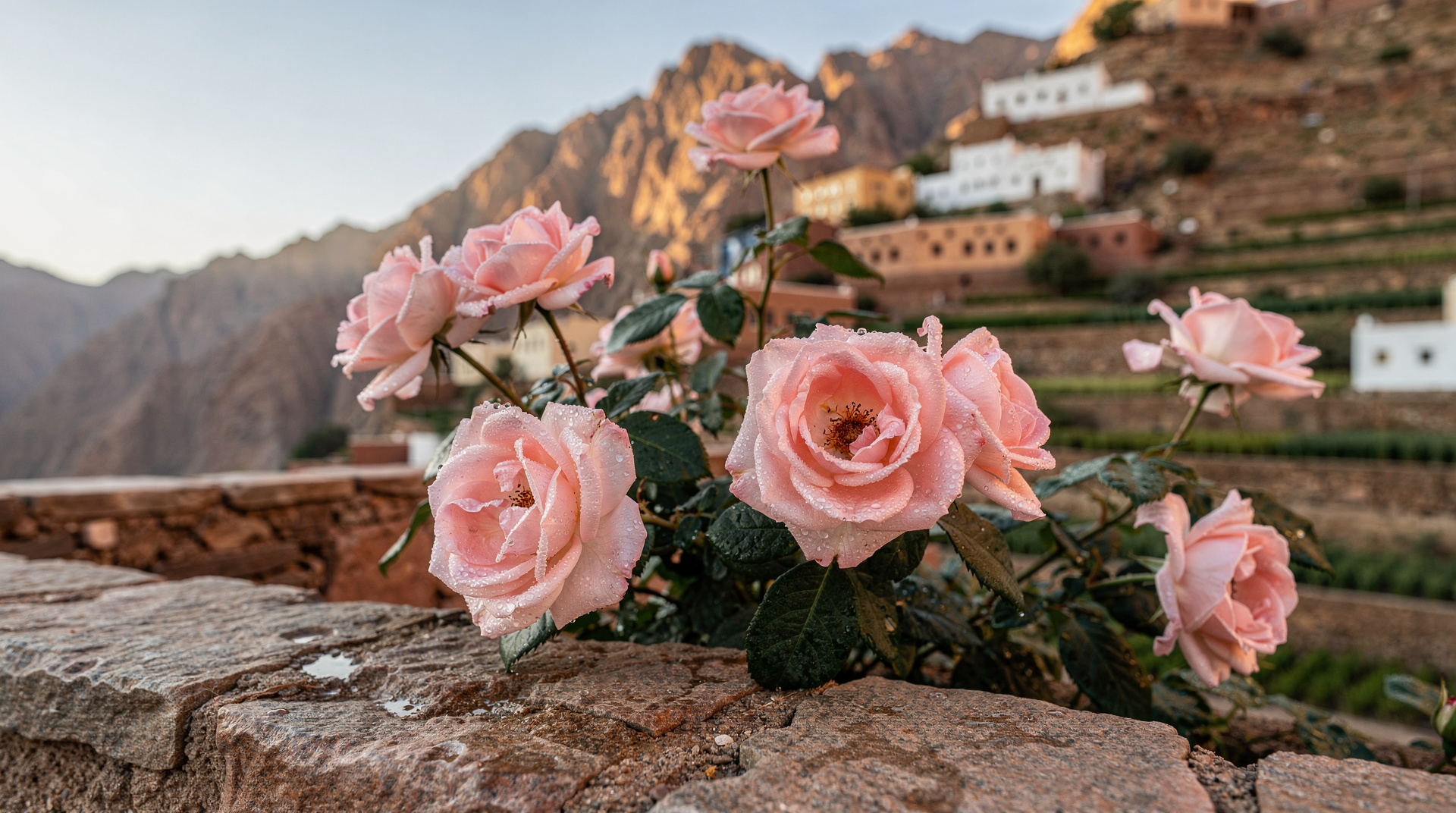
February continues the excellent conditions of January, with days warming slightly and the mountains increasingly spectacular in low early-spring light. February is when the Damask rose bushes on Jebel Akhdar begin to bud.
February temperatures:
- Muscat: 22–26°C — some of the finest weather of the year
- Jebel Akhdar: 12–18°C, nights 6–10°C
- Wahiba Sands: 20–26°C by day, 10–14°C at night
March is the month of roses. The famous rose harvest on Jebel Akhdar — terraced hillside gardens of pink Damask roses that have been cultivated here for centuries — is in full bloom during March. The harvest is one of Oman’s most photographed spectacles. See our dedicated Jebel Akhdar rose season guide for timing, logistics, and the best villages to visit.
Turtle watching at Ras al Jinz: by March, green turtle nesting season begins its next cycle. Visits are highly recommended.
What makes February special: The combination of near-perfect temperatures, low crowds relative to December–January, competitive hotel rates, and the approaching rose season makes February arguably the wisest month for an Oman visit in terms of value and conditions combined.
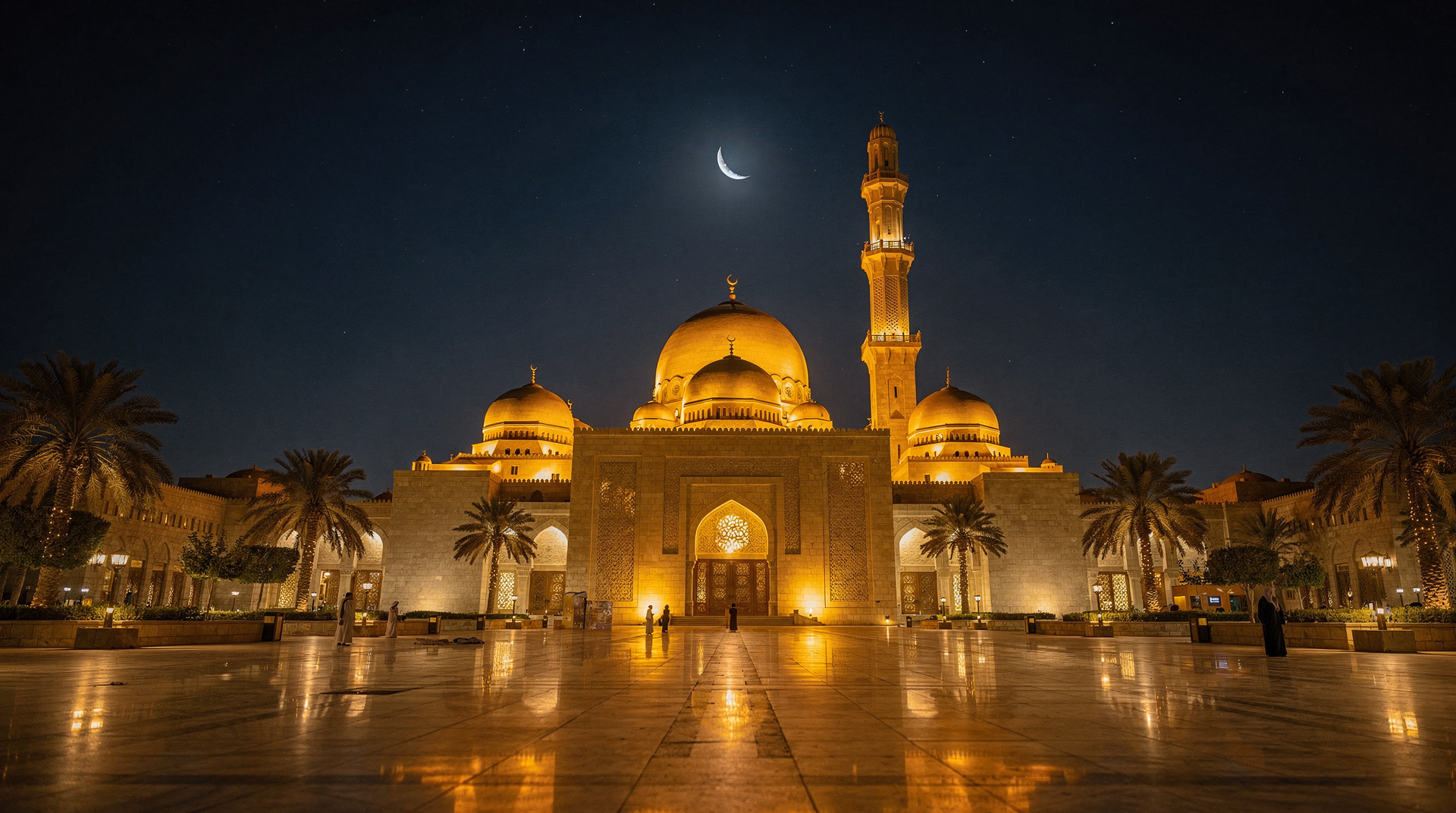
Ramadan note: In 2026, Ramadan falls in mid-February to mid-March. If this coincides with your travel dates, see our Ramadan travel guide for how this affects your trip — restaurant availability, cultural etiquette, and the unique atmosphere of travelling during the holy month.
What to Pack for Oman in Winter
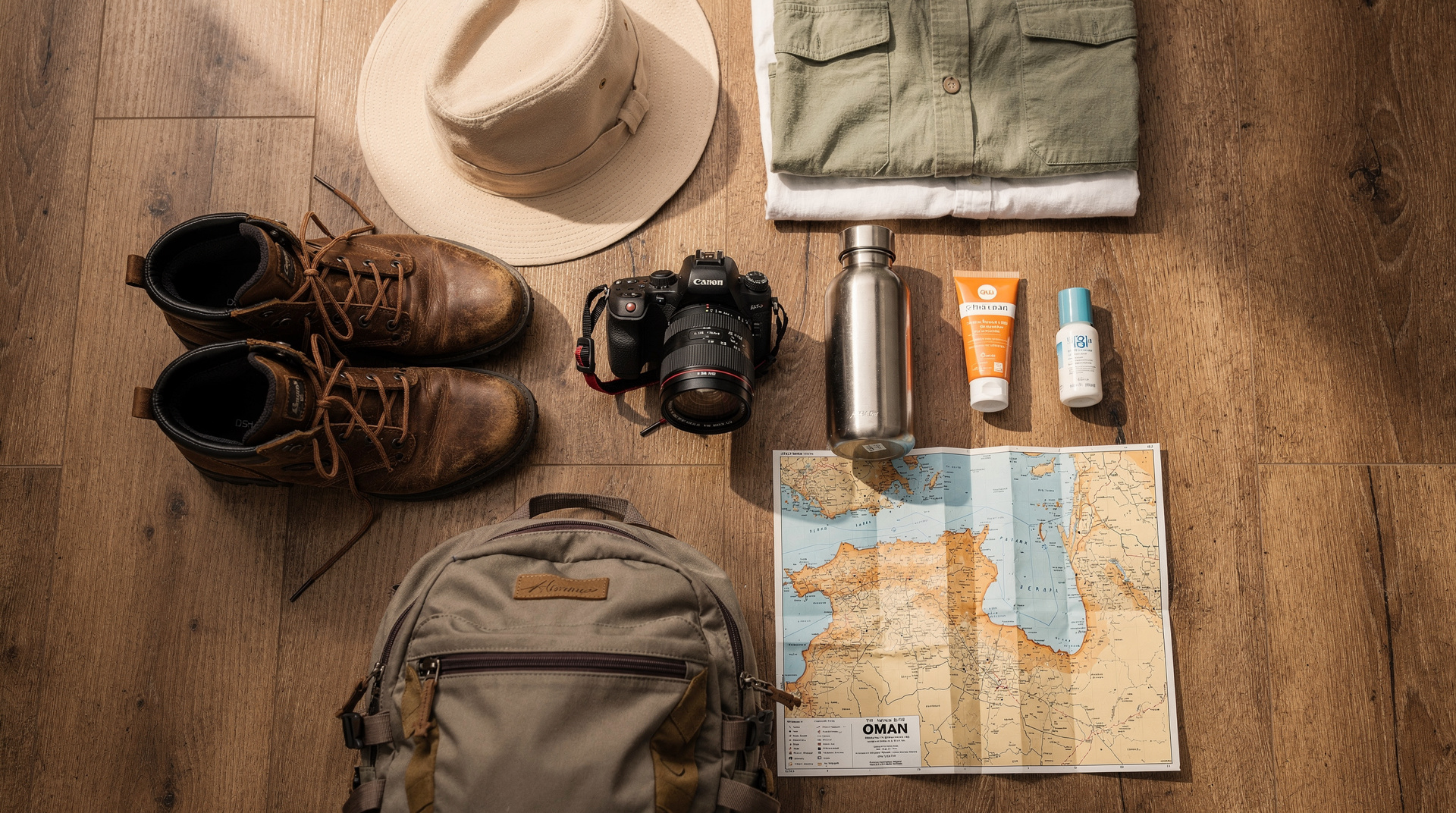
Light layers are the essential strategy — warm days but potentially cold nights, particularly in the mountains.
Core items (7-day winter trip):
- 3–4 lightweight breathable shirts or tops for daytime
- 2 pairs of lightweight long trousers — essential for modesty and versatility
- 1 mid-weight fleece or zip-up jacket — essential for mountain evenings (Jebel Akhdar nights require this)
- 1 windproof or light waterproof shell — for January and February mountain driving, and for occasional coastal rain
- 1 modest outfit for mosque and cultural site visits (women: headscarf essential for mosque entry)
- Swimwear for wadis and hotel pools
- Sun hat and SPF 50+ sunscreen — UV is still intense even in cool winter weather; Oman’s sun should never be underestimated
- Sturdy sandals or trail shoes for wadi hikes
For mountain visits (Jebel Akhdar, Jebel Shams in December–January):
- Thermal base layers (top and bottom)
- Heavier jacket or down vest — Jebel Shams at night is 0–5°C in January
- Sleeping bag rated to 0°C if camping
- Wool or fleece hat and gloves for early morning mountain exploration
For the complete packing breakdown including brand recommendations and what not to bring, see our full Oman packing list.
Winter Festivals and Events
Oman’s winter season has a growing calendar of events that can enhance your trip.
National Day (November 18): Military displays, fireworks, and nationwide celebrations. Muscat is the best base.
Muscat Festival (January–February): A recurring cultural festival in Muscat with traditional crafts, food stalls, music performances, and heritage exhibitions. Dates vary year to year — check the official Muscat municipality calendar.
International Book Fair (February): Oman hosts a significant annual book fair in Muscat. Cultural event attended by Omani families — an interesting window into the country’s intellectual life.
Khareef Festival in Salalah (July–August): While technically summer, it is worth noting here for planning purposes — Salalah is always warm season regardless of northern Oman’s winter.
Best Day Trips from Muscat in Winter
For visitors based in Muscat who prefer day trips over a road circuit:
Wadi Shab and Bimmah Sinkhole: 5–6 hours return drive. The definitive Oman coastal day trip. Perfect winter conditions.
Wahiba Sands desert day trip: Book a guided day excursion that includes desert driving and dune photography — the winter light is extraordinary on the orange sand.
Muscat city tour: A half-day Muscat city tour with a guide covers the Grand Mosque, Muttrah, and Old Muscat efficiently on arrival day.
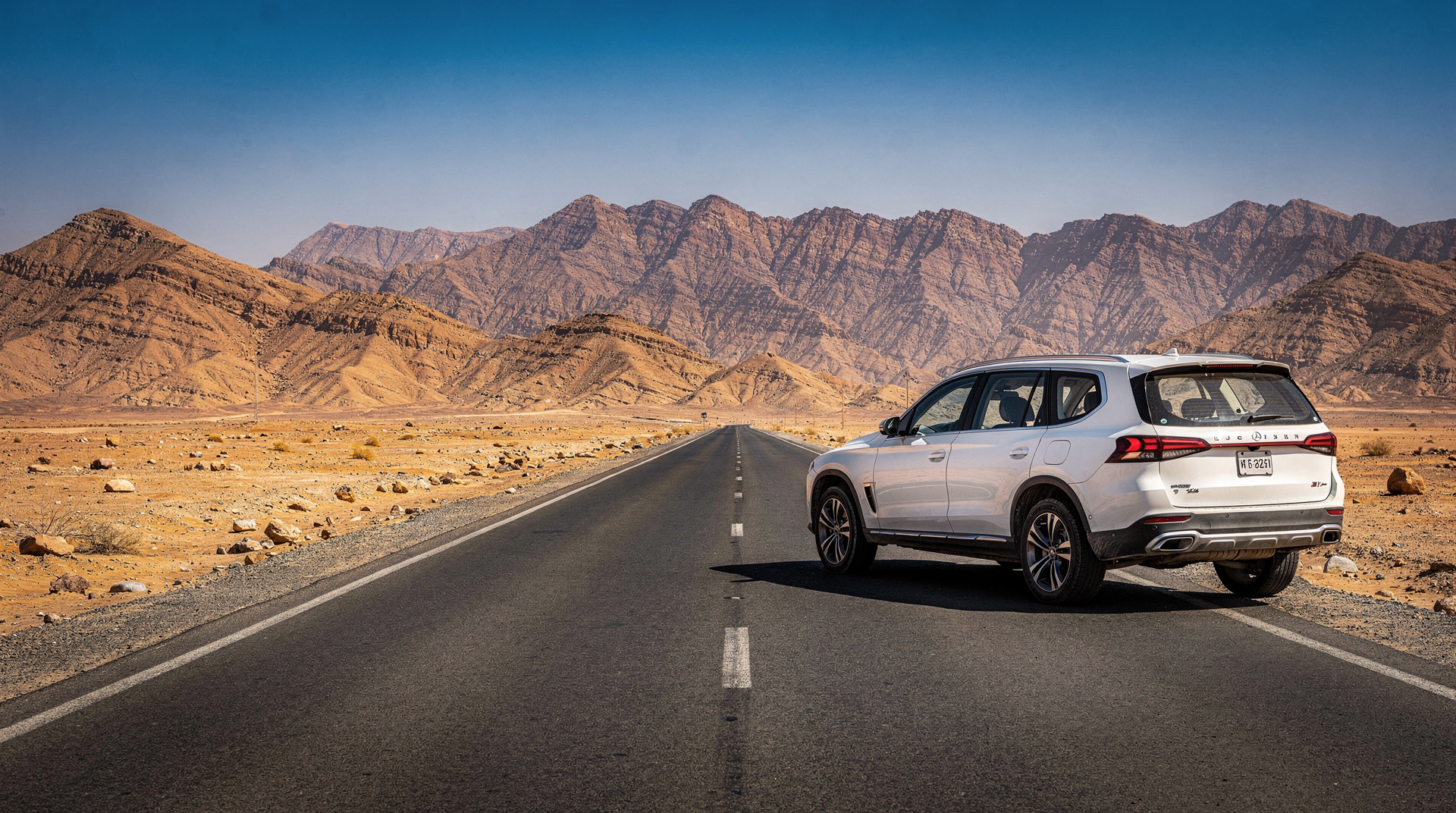
Nizwa day trip: 4 hours return drive on a paved highway. Fort, souq, and nearby falaj irrigation systems. Perfect for a self-drive day in a saloon car. If arriving on a Friday, the livestock souq at Nizwa is a remarkable traditional market.
Jebel Akhdar overnight: Worth at least one night to fully appreciate the canyon and mountain scenery — a day trip does not do it justice. Book at a cliff-edge resort or mountain guesthouse.
Best Itinerary for Winter Oman: 10 Days
Days 1–2 — Muscat: Grand Mosque morning visit, Muttrah Souq afternoon, National Museum. Day 2: Old Muscat heritage walk, Corniche evening, seafood dinner at a waterfront restaurant.
Days 3–4 — Nakhal and Jebel Akhdar: Drive west to Nakhal Fort and the natural hot springs at Ain Al Thawwarah. Then take the mountain road up to Jebel Akhdar. Sunset at the canyon rim. Day 4: terraced village walk, rose distillery visit (March), mountain plateau drive.
Day 5 — Nizwa and Bahla: Descend to Nizwa — fort visit and the Friday souq livestock market if timing permits. Continue to Bahla Fort (UNESCO World Heritage) and Jabrin Castle.
Days 6–7 — Wahiba Sands: Drive east to the desert. Afternoon dune activities, sunset sandboarding, Bedouin-style dinner at the desert camp. Day 7: sunrise in the dunes, camel ride, then continue east to Wadi Bani Khalid for swimming.
Day 8 — Sur and Eastern Coast: Drive to Sur, visit the traditional dhow boatyard where wooden fishing boats are still hand-built, continue to Ras al Jinz for afternoon check-in and evening turtle watching.
Days 9–10 — Wadi Shab and Return: Morning at Wadi Shab (arrive early for uncrowded pools — the boat crossing runs from around 7am). Bimmah Sinkhole afternoon swim. Drive the coastal highway back to Muscat. Final dinner overlooking the Gulf of Oman.
For transport and car rental advice for this itinerary, see our renting a car in Oman guide and getting around Oman guide.
Frequently asked questions about Oman in Winter: October to March Travel Guide
Is Oman cold in winter?
Oman’s lowlands (Muscat, coastal areas, desert) are warm in winter — typically 18–27°C. Cold is relative, but it is not what most people would call cold. The mountains are genuinely cool — Jebel Akhdar in January can drop to 3–5°C at night, and Jebel Shams can touch freezing. Pack proper warm layers for any mountain accommodation. The coast and desert are comfortably mild.
Can I swim in the sea in Oman in winter?
Yes. Sea temperatures stay around 22–25°C in winter — warm enough for comfortable swimming for most people. The Gulf of Oman is calmer in winter than summer. Beach and wadi swimming are both popular winter activities. Wadi water temperatures vary — some mountain-fed wadis run cold, while sinkholes like Bimmah maintain comfortable temperatures year-round.
Is December crowded in Oman?
December, particularly from mid-month through to early January, is the busiest period of the year. Popular desert camps, mountain resorts, and Muscat luxury hotels book out. Booking 2–3 months in advance is strongly recommended for any quality accommodation. For family travel to Oman, Christmas and New Year timing is especially busy — school holiday dates drive significant demand.
Does it rain in Oman in winter?
Oman receives minimal rainfall overall, but the winter months (December to February) see occasional rain from Mediterranean fronts — brief but sometimes heavy. Wadi flash floods are the associated risk; always check forecasts before wadi activities. Snow occasionally falls on the highest peaks (Jebel Shams) in January, which is a rare and spectacular sight. The Dhofar mountains in winter are dry, as the Khareef has ended.
What is the best month to visit Oman overall?
November and March are arguably the finest months — excellent weather, manageable crowds, competitive prices, and the natural world at its most active (March brings the rose season on Jebel Akhdar). December and January offer perfect conditions but with more crowds and higher prices. October is good but slightly hotter. All are far superior to summer months in northern Oman.
Is January or February better for Oman?
Both are excellent. January is slightly cooler and the peak of the tourist season — busier and more expensive. February is marginally warmer, less crowded, and in 2026 coincides with the beginning of Ramadan (late February) — a consideration if you prefer full dining flexibility. See the Ramadan travel guide for specifics. Rose season begins in late February on Jebel Akhdar, adding a particular beauty to mountain visits.
What should I pack for a winter trip to Oman?
For lowland visits (Muscat, desert, coast): light summer clothes plus a fleece or light jacket for evenings. For mountain visits: add thermal layers, a heavier jacket, and proper warm layers — Jebel Akhdar and Jebel Shams in January require real cold-weather gear. Our detailed Oman packing list has season-specific recommendations and specific brand suggestions for each environment.