Renting a Car in Oman: The Complete Guide
Do I need a 4WD to drive in Oman?
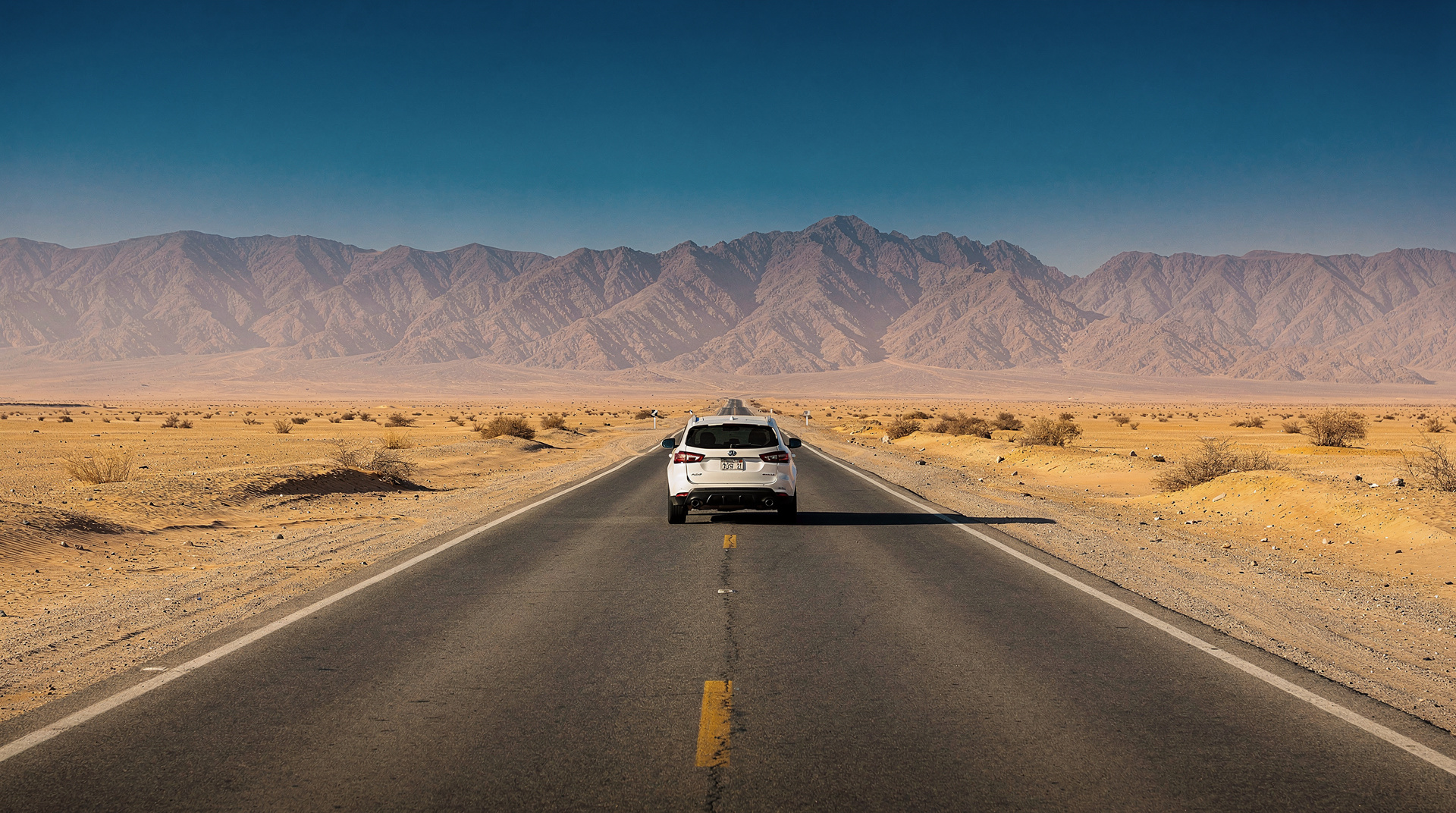
Not for paved roads — a saloon car handles Muscat, Nizwa and the main highways. But for Wadi Bani Awf, Jebel Shams access roads, or the Wahiba Sands, a 4WD is essential.
Why a Rental Car Is Essential for Seeing Oman Properly
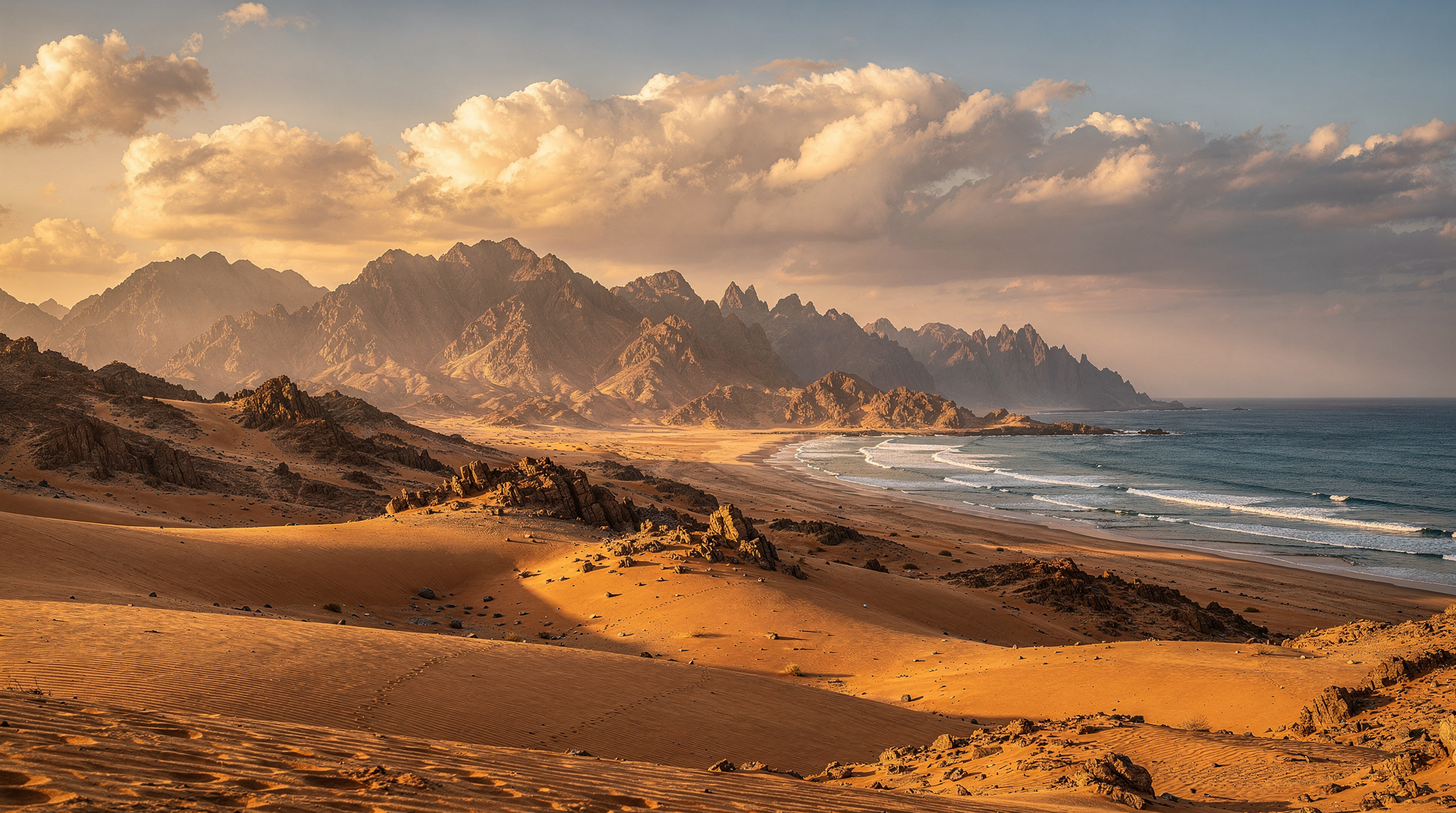
Oman is a country designed, whether intentionally or not, for road trips. The landscapes change dramatically over short distances — a two-hour drive from Muscat can take you from sea-level coast to 2,000-metre mountain plateaus, through incised wadi canyons, across gravel plains dotted with frankincense trees.
Public transport outside of Muscat is minimal. Intercity buses run to major towns but not to the wadis, forts, mountain villages, or desert camps that define the Oman experience. Taxis and app-based rides exist in the capital but become unreliable and expensive in the interior.
The conclusion: to see Oman properly, you need a car. This guide tells you exactly how to get the right one, how much to pay, and how to drive it safely and legally.
Saloon Car vs 4WD: How to Choose
The single most important decision in renting a car in Oman is whether to get a standard saloon (2WD) or a four-wheel drive.
When a Saloon Car Is Fine
The main highways in Oman are excellent — smooth, wide, well-maintained, and often better than roads in many European countries. A saloon car handles:
- Muscat city driving and airport transfers
- The main highway south to Salalah (Highway 31/32)
- Nizwa, Bahla, and Jabrin Fort on paved roads
- The Sur highway to the eastern coast
- Sohar, Barka, and the Batinah coast
- Most town-to-town driving on paved routes
If your itinerary consists mainly of city visits, coastal resorts, and heritage sites accessible from paved roads, a saloon car is sufficient and significantly cheaper.
When You Absolutely Need a 4WD
Several of Oman’s most spectacular destinations require a proper four-wheel drive vehicle with good clearance:
- Wahiba Sands (Sharqiyah Sands): You need 4WD to enter the main dune areas. Even driving to the desert edge and back to the camp requires 4WD capability on sandy tracks.
- Wadi Bani Awf (Snake Canyon): One of Oman’s most dramatic drives, this wadi route involves rocky riverbeds and loose gravel that will high-centre or damage a saloon.
- Wadi Ghul access to Jebel Shams: The approach to the rim of Oman’s Grand Canyon is on a deteriorating unpaved track — 4WD essential.
- Jebel Harim in Musandam: Some access roads to the peninsula’s highest point require 4WD.
- Wadi Darbat during Khareef: The seasonal tracks around Salalah’s waterfalls during the monsoon season are frequently muddy and require 4WD.
- Jebel Akhdar village tracks: While the main road to Al Ain is paved, side tracks to traditional villages and terraced gardens benefit from 4WD.
The most versatile vehicle for Oman is a mid-size SUV or pickup truck with high-road clearance and 4WD capability. Toyota Land Cruiser Prado, Nissan Patrol, and Toyota Fortuner are the preferred local choices — you will see them everywhere.
How Much Does Car Rental Cost in Oman?
Rental prices vary significantly by vehicle class, rental company, duration, and season. The following ranges are approximate for 2026 and do not include insurance add-ons:
- Economy saloon (Kia Picanto, Toyota Yaris): 10–18 OMR per day (26–47 USD)
- Mid-size sedan (Toyota Corolla, Nissan Altima): 15–25 OMR per day (39–65 USD)
- Compact SUV 2WD (Toyota RAV4, Nissan Qashqai): 20–35 OMR per day (52–91 USD)
- Mid-size 4WD SUV (Toyota Fortuner, Mitsubishi Pajero): 30–50 OMR per day (78–130 USD)
- Full-size 4WD (Toyota Land Cruiser, Nissan Patrol): 45–80 OMR per day (117–208 USD)
Weekly rates typically offer a 15–25% discount versus daily rates. Monthly rates are dramatically cheaper if you are staying long term.
Fuel is inexpensive in Oman by European or North American standards. Petrol costs approximately 0.18–0.22 OMR per litre (47–57 US cents). A full tank on a Land Cruiser costs around 30–40 OMR depending on tank size.
Insurance: What You Need to Know
Every rental car in Oman comes with basic third-party liability insurance included in the rental price. This covers damage you cause to other vehicles and property, but not damage to the rental car itself.
Collision Damage Waiver (CDW): Reduces your liability for damage to the rental vehicle. Strongly recommended. Typically costs 3–8 OMR per day.
Super CDW / Zero Excess: Reduces your liability to zero for most damage scenarios. Worth it for off-road driving.
Personal Accident Insurance: Covers medical costs for you and passengers in an accident. Many travellers have this covered by travel insurance or credit card benefits.
Off-Road Damage: This is crucial. Most standard rental agreements exclude damage that occurs off paved roads. If you plan to drive in the Wahiba Sands or on wadi tracks, ensure your rental agreement specifically permits off-road use and that your insurance covers it. Ask explicitly — do not assume.
Some rental companies rent specialised off-road vehicles with comprehensive coverage specifically for off-road use. These cost more but provide peace of mind.
Which Car Rental Companies Operate in Oman?
Both international brands and local operators serve the market. Each has advantages.
International brands (Hertz, Avis, Budget, Europcar, Sixt): Available at Muscat airport and major hotels. Higher per-day rates but standardised procedures, often better vehicle quality, and easier dispute resolution. Credit card holds are standard.
Local and regional companies (Oman Rent A Car, Al Injaz, Desert Car Rental): Often significantly cheaper, particularly for 4WD vehicles. Quality varies more widely. Read reviews carefully. Some offer more flexible off-road policies.
Online aggregators (Rentalcars.com, Kayak, Expedia): Useful for comparing prices across multiple companies. Always read the full terms — some very cheap deals have enormous excess liability or exclude off-road use.
Booking in advance vs on arrival: Booking online in advance consistently yields better prices, especially in peak season (December–January). Walk-up rates at airport desks are often significantly higher.
Driving Licence Requirements
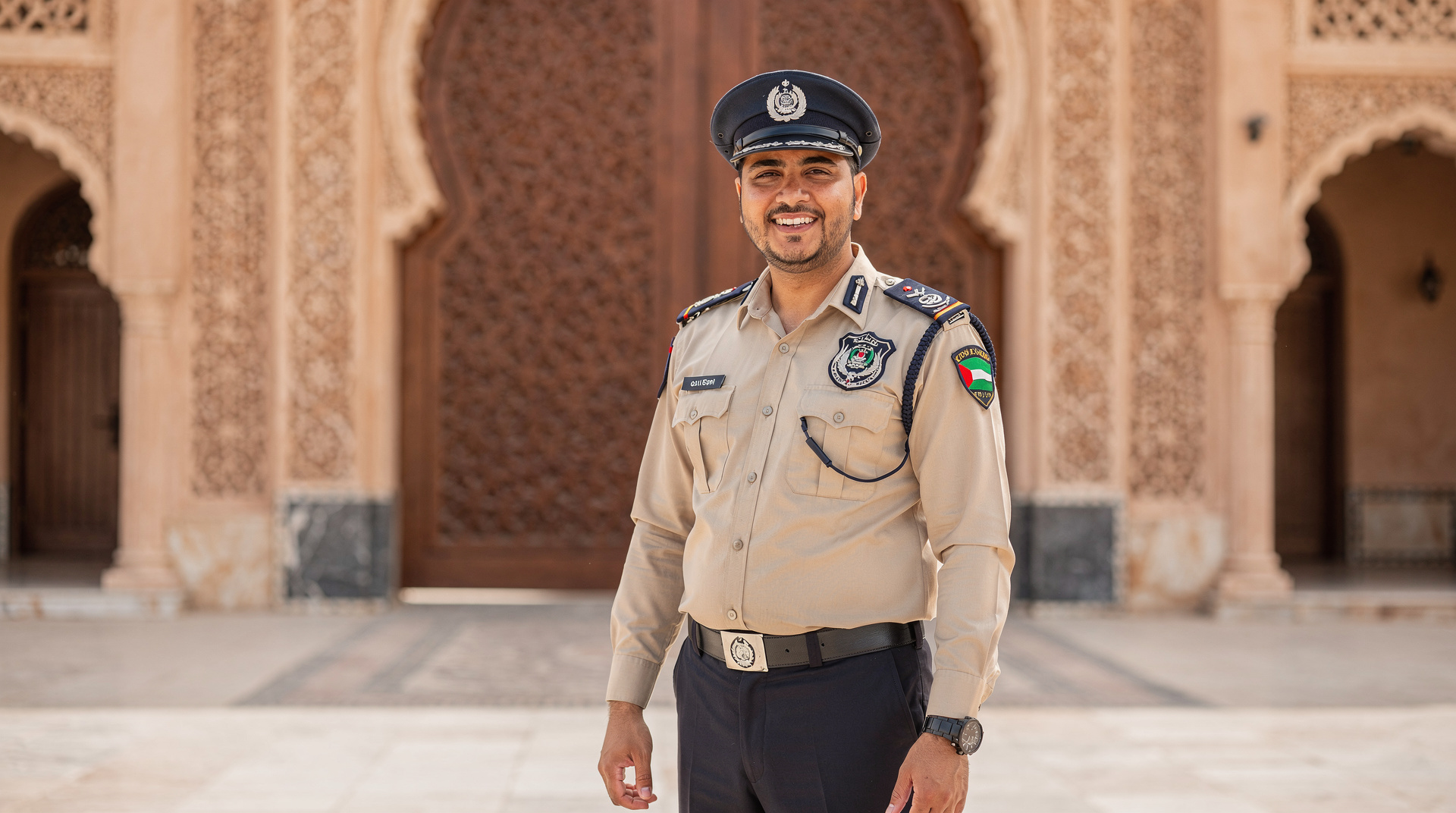
Most Western driving licences are accepted in Oman for tourist stays. Citizens of GCC countries, the EU, UK, US, Canada, Australia, New Zealand, Japan, and South Korea typically drive on their home licence for up to 30 days.
An International Driving Permit (IDP) is recommended as a backup — rental companies and police checkpoints occasionally request one, particularly for unusual licence formats or languages. IDPs are cheap and easy to obtain in your home country before travel.
Road Rules in Oman
Oman drives on the right side of the road. Speed limits are clearly signed and enforced by numerous speed cameras across the highway network:
- Urban areas: typically 60 km/h
- Dual carriageway highways: 100–120 km/h
- Residential areas: 40 km/h
Seatbelts are mandatory for all occupants. Mobile phone use while driving is illegal. Alcohol and driving: Oman has zero tolerance — do not drink and drive under any circumstances.
Speed cameras are everywhere, and fines are levied electronically against the vehicle registration. Rental companies pass these fines directly to you, often with an administrative surcharge. Driving at or slightly below the posted limit is the smart approach.
Roundabouts are common and Oman follows the standard rule of giving way to traffic already on the roundabout. Be cautious at poorly marked rural roundabouts.
Fuel and Petrol Stations
Oman has a good network of petrol stations on all major routes. In Muscat and along the main highways, you will rarely go more than 30–40 km without a station. In remote areas — the deep interior, Musandam, or remote Dhofar routes — gaps between stations can be 100+ km. Fill up before setting off into remote territory.
Fuel types:
- Unleaded 91 (regular) — most petrol stations
- Unleaded 95 (premium) — available at many stations
- Diesel — widely available; required by many 4WD vehicles
Petrol stations in Oman do not always have attendants — some require self-service card payment at the pump.
Navigating in Oman
Google Maps works well throughout Oman and is the most reliable navigation option. Apple Maps is functional but occasionally lacks detail on minor roads and wadi tracks.
Download offline maps before heading into remote areas where mobile signal is unreliable. Remote wadis and mountain routes often have no signal.
Road signage in Oman is generally good on paved highways — signs are in both Arabic and English. Off the main roads, signing becomes sparse. A GPS unit or downloaded offline maps are invaluable in the interior.
For wadi driving and off-road navigation, some travellers use specialist apps like Maps.me or OsmAnd with OpenStreetMap data, which includes more wadi track detail than Google Maps.
Fuel Tips for Desert and Off-Road Trips
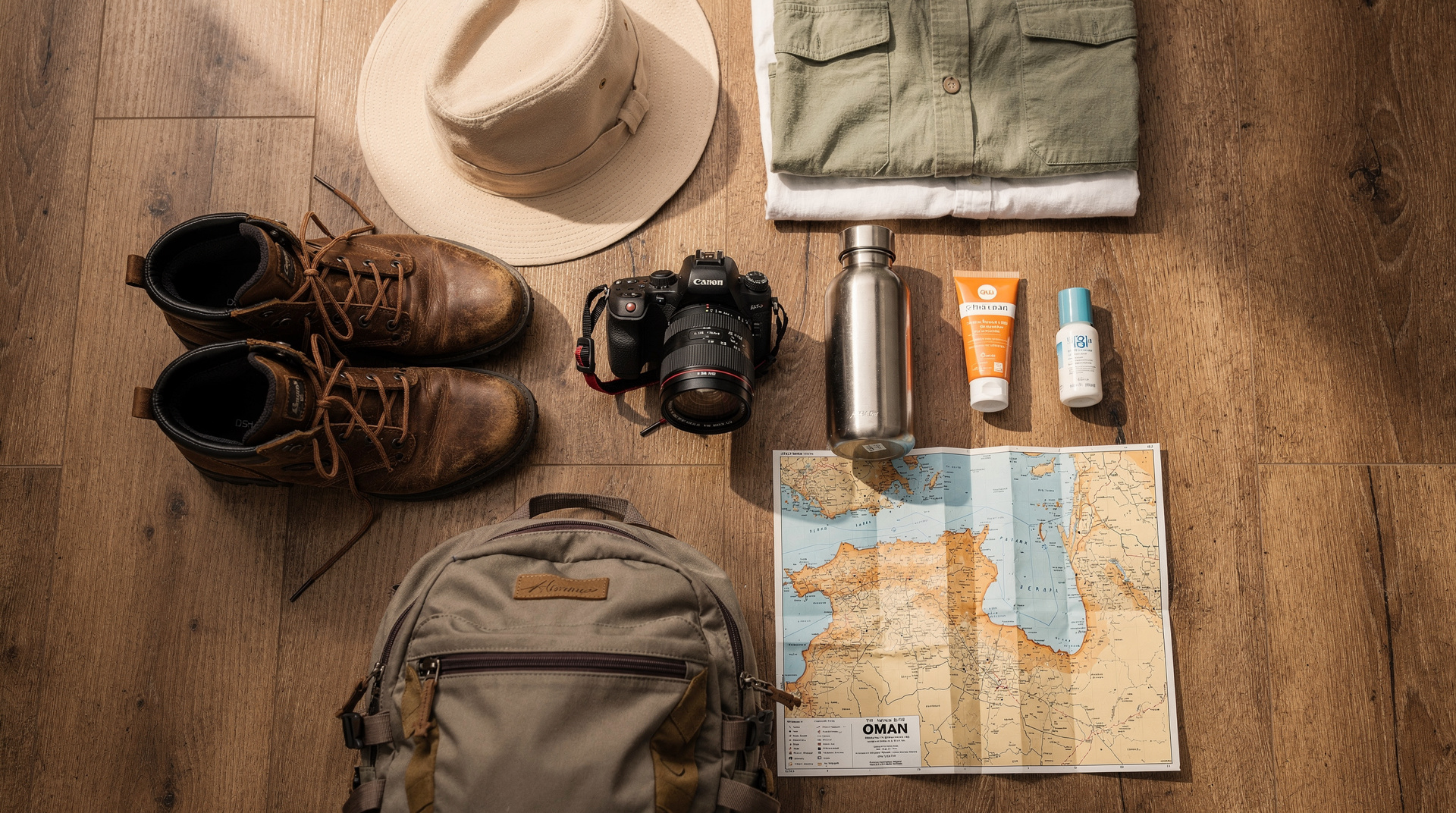
Carry extra water in the vehicle — at least 10 litres per person for desert or remote mountain trips. A breakdown in summer heat is a life-threatening situation without water.
For serious off-road trips, carry a basic recovery kit: a tow rope, traction boards (sand ladders), a tyre pressure gauge, and a portable compressor. Reducing tyre pressure to 1.2–1.5 bar dramatically improves traction in sand but must be re-inflated before returning to paved roads.
Tell someone your planned route and expected return time when heading into remote areas. Oman Search and Rescue is well-resourced but requires a general area to search.
The Best Self-Drive Routes in Oman
The Classic Northern Circuit (7–10 days)
Muscat — Barka — Nakhal — Wadi Bani Awf — Al Hamra — Jebel Akhdar — Nizwa — Bahla — Jabrin — Ibra — Wahiba Sands — Wadi Bani Khalid — Sur — Ras al Jinz — Wadi Shab — Bimmah Sinkhole — Muscat
This route covers the greatest hits of northern Oman and requires a 4WD for Wadi Bani Awf, the Wahiba Sands, and the Jebel Akhdar side tracks.
The Muscat Day-Trip Loop (1 day)
Muscat — Bimmah Sinkhole — Wadi Shab — Tiwi — Muscat. Doable in a saloon car via the coastal highway. Stunning scenery with minimal off-road driving.
The Muscat to Salalah Drive (2–3 days)
An epic 1,100 km road trip through the Arabian desert, passing through Nizwa, Adam, the edge of the Empty Quarter, and Thumrait before descending to Salalah. Most of the route is paved dual carriageway. A saloon can manage it, though a 4WD adds options for detours.
Musandam Peninsula Circuit
Khasab is the base — accessible by ferry from Shinas or by flying from Muscat. Dhow cruises around the fjords are the main attraction. Some mountain tracks in Musandam require serious 4WD. See our getting around Oman guide for Musandam logistics.
Parking in Muscat
Parking in Muscat is generally easy and often free. The main tourist areas — Muttrah Corniche, Old Muscat, the Grand Mosque — have dedicated car parks. Multi-storey parking is available in the city centre. Illegal parking fines are issued, particularly near government buildings.
If you book a Muscat city tour on your first day, you can orient yourself without worrying about where to park — a useful approach before setting off independently in a rental car.
Combining Rental Car with Guided Tours
Some travellers prefer to rent a car for independent stretches and book guided experiences for specific activities. A guided Wahiba Sands desert day trip includes an experienced 4WD driver for the sand driving sections — a practical option if you are not confident with sand driving and do not want to pay for a 4WD rental for your full itinerary.
Frequently asked questions about Renting a Car in Oman: The Complete Guide
Do I need an international driving permit for Oman?
Most Western licences are accepted, but an International Driving Permit is recommended as backup. Some rental companies and police checkpoints request one. Obtain an IDP before leaving your home country — they are inexpensive and widely available.
Can I cross from Oman to UAE in a rental car?
This depends entirely on your rental agreement. Most standard rentals prohibit cross-border driving. Some companies offer UAE/GCC cross-border coverage for an additional fee. Ask your rental company explicitly before attempting to cross the border — driving across in a non-permitted vehicle can result in significant penalties and stranded situations.
Is driving in Oman safe?
The road infrastructure is excellent. The main risks are speeding (which is common among local drivers on highways), unexpected camels on rural roads, and flash floods in wadis. Drive defensively, obey speed limits, and check weather forecasts before entering any wadi. Night driving in rural areas warrants particular caution due to unmarked camels on roads.
What happens if I get a speeding fine in a rental car?
Speed cameras record the vehicle’s licence plate. The fine is processed against the rental company’s registration, which then charges your credit card — often with an administrative fee of 5–15 OMR on top of the original fine. Fines accumulate and must be paid before leaving the country.
How much fuel should I budget for a road trip in Oman?
Fuel is cheap compared to Europe — roughly 0.18–0.22 OMR per litre. A 7-day northern circuit covering approximately 1,200 km in a mid-size 4WD consuming 12 litres per 100 km would cost around 25–32 OMR in fuel total. Budget 5–8 OMR per day for fuel on an active road trip itinerary.
Can I rent a car with a debit card in Oman?
Most rental companies require a credit card for the security deposit, which can be substantial (100–500 OMR blocked on your card). Some local companies accept debit cards, but this varies. International brands at Muscat airport almost universally require a credit card with sufficient available credit for the hold.
What is the minimum age for renting a car in Oman?
Most rental companies require drivers to be at least 21 years old. Some premium vehicles, including large 4WDs, require drivers to be 25 or older. Young driver surcharges (typically 3–5 OMR per day) apply to drivers aged 21–25 at most companies.