Rose Season on Jebel Akhdar: March and April Guide
When is the rose season on Jebel Akhdar?
The Damask rose blooms on Jebel Akhdar from late February to mid-April, peaking in March. The exact timing shifts 1–2 weeks each year depending on rainfall and temperature.
The Rose Mountain: Oman’s Most Photogenic Season
In a country of extraordinary landscapes, the Damask rose harvest on Jebel Akhdar stands apart. For four to six weeks each spring, the terraced gardens of mountain villages on Oman’s Green Mountain turn pink and white with rose blooms — thousands of hand-planted Damask rose bushes that have been cultivated on these ancient hillside terraces since at least the 10th century.
The experience is multi-sensory: the visual spectacle of pink terraces in sharp morning light, the scent of rose water drifting from small family distilleries, the sound of water running through the ancient falaj irrigation channels that feed the gardens, and the remarkable cultural context of a harvest tradition practised continuously for over a millennium.
This guide covers when to go, which villages to visit, how to see the distilleries, and everything practical for planning your Jebel Akhdar rose season trip.
The Damask Rose: Oman’s Fragrant Heritage
The rose grown on Jebel Akhdar is Rosa damascena — the Damask rose, originally cultivated in Damascus and brought to Oman via the Persian Gulf trade routes centuries ago. It found in the Jebel Akhdar plateau an almost perfect environment: high altitude (around 2,000m), mild temperatures, and the ancient falaj irrigation network that delivers water to the terraced gardens from mountain springs.
The Omani Damask rose produces the finest rose water (ma’ al ward) in the Arabic-speaking world. It is used in Omani coffee (qahwa), in sweets and halwa, in religious rituals, in weddings, and as a luxury fragrance. Omani rose water has been exported across the Gulf and to East Africa for centuries.
The rose harvest is an intensely practical agricultural event as much as it is a spectacle. Families begin picking at dawn — the flowers must be collected before the heat of the day diminishes their oil content. The petals are immediately processed in copper distillation stills, producing the rose water by a method essentially unchanged for centuries.
When Does the Rose Season Peak?
The exact timing of the Jebel Akhdar rose season varies each year by approximately 1–2 weeks, depending on the preceding winter’s rainfall and temperature patterns.
General timing:
- Late February: First buds appear in the lowest and warmest terraces
- Early to mid-March: Bloom begins in earnest across most gardens
- Mid to late March: Peak bloom — most gardens at maximum colour
- Early April: Later-blooming gardens still showing; harvest continuing
- Mid-April: Season ends; petals falling
In a good rainfall year with a mild winter, blooms can begin as early as mid-February. In a dry or cold winter, peak bloom may shift to early April.
2026 prediction: Based on typical seasonal patterns, peak bloom is expected around March 10–25, 2026. Plan for the week of March 15 as your target, with flexibility to adjust by a few days based on conditions reported closer to your travel dates.
Local tourism offices and the Jebel Akhdar resorts (Anantara, Alila) publish season updates on their social media as the bloom approaches — follow them for real-time information.
The Best Villages for Rose Watching
Al Ain Village
Al Ain is considered the heart of Jebel Akhdar’s rose country and is where the most extensive terraced gardens are concentrated. The village sits on the plateau at around 2,000 metres, surrounded by hundreds of terraced plots planted with Damask roses, pomegranates, almonds, and apricots.
In rose season, the terraces turn a soft pink that deepens in the morning light. The narrow paths between the garden walls are where you want to be at 7am — before other visitors arrive and while the pickers are still working.
The falaj channels running between the terraces are one of the best-preserved traditional water distribution systems in Oman. Walking the falaj path through Al Ain gives you intimate access to the garden terraces and views over the canyon below.
Ash Sharayjah
Adjacent to Al Ain, this smaller village has a more intimate feel and slightly fewer visitors during peak season. The rose gardens here are particularly photogenic with the Hajar mountain backdrop.
Wadi Bani Habib
A deserted village of extraordinary atmosphere — old stone houses slowly crumbling among the rose garden terraces, with the great canyon of Wadi Ghul visible in the distance. Some families still maintain the rose gardens here despite the village being largely uninhabited. The combination of ruins and blooming roses is uniquely atmospheric.
Al Aqar and Surrounding Plateau Villages
The plateau above the main resort area has multiple smaller villages with garden terraces, accessible on foot or by 4WD track. These see fewer visitors and offer a more authentic encounter with the harvest in progress — families working quietly in their gardens, distillery smoke rising from small courtyards.
The Rose Water Distilleries
Watching rose water distillation is one of the most memorable cultural experiences Jebel Akhdar offers during the season. Small family distilleries — some operating with equipment that has been in continuous use for over a century — process the morning’s harvest into rose water within hours.
The process: rose petals are loaded into a large copper still, water is added, and the still is heated over a wood fire. The steam, carrying the rose’s volatile oils, passes through a copper coil cooled with cold water, condensing into the fragrant rose water (hydrosol) that drips into collection vessels.
The rose water produced by individual families is generally available for sale directly. Buying a bottle directly from a family distillery costs considerably less than the same product in Muscat souqs or hotel shops. The quality is often superior — fresher and more concentrated.
Etiquette at distilleries: Ask before entering a working distillery — most families are happy to show visitors the process and offer tea, but arriving unannounced in someone’s working courtyard requires sensitivity. A guide from your hotel or a local guide from the village is the smoothest way to arrange a proper visit.
What Else to Do on Jebel Akhdar During Rose Season
The Canyon Rim Trail
Wadi Ghul — the canyon below Jebel Akhdar — is sometimes called Oman’s Grand Canyon, and the comparison is not entirely hyperbolic. The terraced canyon walls drop over 1,000 metres to the wadi floor. Walking the rim trail above Al Hajar village in the morning light, with the canyon in shadow below, is spectacular.
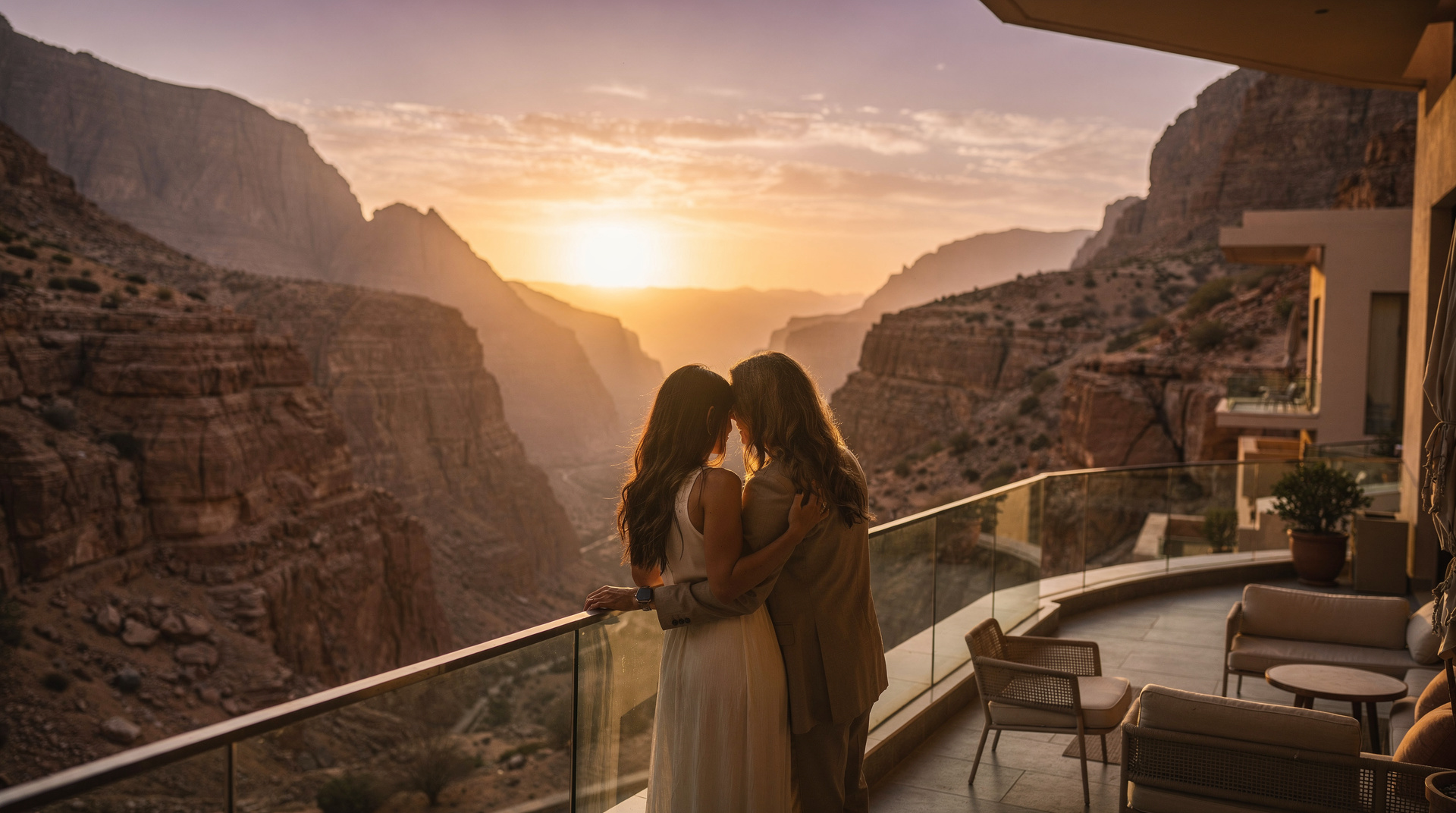
The luxury resorts (Anantara and Alila) are located directly on the canyon rim. Non-guests can walk the rim trail independently. The views from the trail are among the most dramatic in Oman.
Jebel Shams and the Balcony Walk
Jebel Shams — at 3,009 metres, Oman’s highest peak — is accessible from Jebel Akhdar via a mountain road. The famous Balcony Walk is a dramatic trail carved into the cliff face above Wadi Nakhr, with sheer drops and extraordinary views. March conditions are ideal — cool temperatures and clear air.
A 4WD is needed for the Jebel Shams access road.
Village Crafts and Souvenirs
Beyond rose water, Jebel Akhdar villages produce pomegranate juice and molasses, almond products, wild honey, and traditional woven baskets. Small market stalls appear in rose season, and buying directly from village producers supports the local agricultural economy.
The best souvenirs from Jebel Akhdar during rose season:
- Rose water (ma’ al ward) — family-distilled, in traditional glass bottles
- Rose petal jam
- Dried rose petals
- Pomegranate molasses
- Jebel Akhdar wild honey
Where to Stay on Jebel Akhdar
Luxury Options
Anantara Al Jabal Al Akhdar Resort: The benchmark cliff-edge resort, with an infinity pool overlooking Wadi Ghul. Rose season is one of its peak periods — book 2–3 months in advance. Arranges guided rose garden walks and distillery visits during the season.
Alila Jabal Akhdar: Competing directly with the Anantara for the same extraordinary canyon views and a slightly more design-forward aesthetic. Also organises rose season experiences.
Both resorts are fully worth the splurge during rose season — the experience of watching sunrise over pink rose gardens from a canyon-edge terrace is genuinely unforgettable.
Mid-Range Options
Several smaller guesthouses and lodges operate on the plateau, offering simple but comfortable accommodation from 30–60 OMR per night. The Jebel Akhdar Hotel is a reliable mid-range option. Booking in advance during March is advisable — the mountain plateau fills up.
Day Trip from Muscat
Jebel Akhdar is 3 hours from Muscat on paved roads. Day trips during rose season are feasible but rushed — you lose the spectacular sunrise and sunset conditions. If you can, stay at least one night on the mountain.
Getting to Jebel Akhdar
From Muscat, the drive takes approximately 3 hours via the main highway through Nizwa. From Nizwa, a paved road climbs the mountain, passing through a police checkpoint.
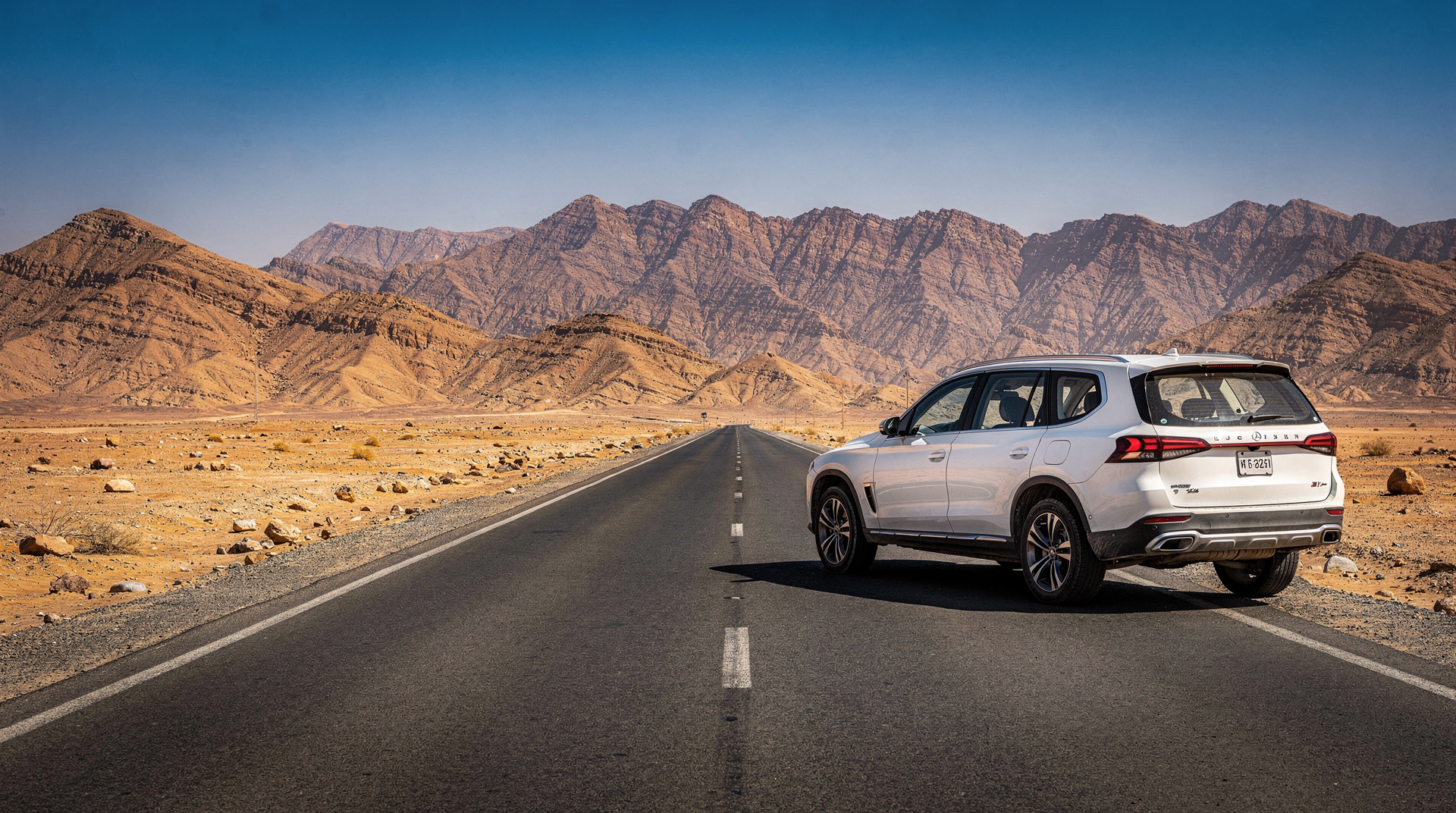
Vehicle requirements: The main paved road to Jebel Akhdar is accessible in a standard saloon car — the police checkpoint used to require 4WD but this restriction has been relaxed for the paved road. However, side tracks to the canyon rim, village access roads, and the route to Jebel Shams require 4WD. If you plan to explore beyond the main road, rent a 4WD.
For visitors without a car, joining a guided day trip or multi-day tour that includes Jebel Akhdar is the easiest option. A 4-day Oman highlights tour from Muscat typically includes Jebel Akhdar as a key stop.
Photography Tips for Rose Season
The terraced gardens photograph best in early morning (7–9am) and late afternoon (4–6pm) light, when the sun is low and the pink tones of the roses are most saturated. Midday sun creates harsh shadows in the terraces and washes out the colour.
A wide-angle lens captures the terraced landscape context. A telephoto compresses the tiers of terraces dramatically. For macro detail of individual rose blooms, any lens capable of close focus works — the roses are accessible at arm’s length on the lower garden walls.
The combination of rose terraces with the canyon behind is the iconic Jebel Akhdar composition — found from viewpoints above Al Ain village and from the canyon rim trail.
Frequently asked questions about Rose Season on Jebel Akhdar: March and April Guide
When exactly is the rose season on Jebel Akhdar?
The Damask rose blooms from late February to mid-April, with peak bloom typically in mid-to-late March. The exact dates shift 1–2 weeks each year based on winter weather. Follow the Anantara Al Jabal Al Akhdar Resort’s social media for real-time bloom updates.
Can I visit Jebel Akhdar in rose season without staying at a luxury resort?
Yes. The terraced gardens, the falaj paths, and the canyon rim trail are all publicly accessible. You do not need to stay at the Anantara or Alila to see the roses — you can drive up for the day or stay at a mid-range guesthouse. The luxury resorts add curated experiences and extraordinary views, but the natural spectacle is free to access.
Do I need a 4WD to visit Jebel Akhdar?
Not for the main paved road to the plateau and the resort area. However, village access tracks, the route to Wadi Bani Habib, and the road to Jebel Shams require 4WD. A saloon car covers the essentials; a 4WD unlocks more.
What is rose water used for in Oman?
Omani rose water is a culturally significant product used in Omani qahwa (coffee), in preparing sweets and halwa, in religious rituals (mosques are sprinkled with rose water on important occasions), and in traditional perfumery. It is also used cosmetically. Buying it directly from family distilleries on Jebel Akhdar is the best way to get authentic, high-quality rose water.
How long should I spend on Jebel Akhdar during rose season?
A minimum of two days and one night to properly experience the sunrise on the rose terraces, walk the falaj paths, visit a distillery, and see the canyon rim. Three days allows a Jebel Shams addition and a more relaxed pace.
Is Jebel Akhdar cold during rose season?
March temperatures on Jebel Akhdar range from around 10°C at night to 22°C by day — genuinely cool by Oman standards. A fleece or light jacket is needed for evenings and early mornings. The daytime hiking temperature is pleasant — no heat concerns in March.