Turtle Watching at Ras al Jinz: Oman's Ancient Nesting Beach
When is the best time to see turtles at Ras al Jinz?
Green turtles nest year-round at Ras al Jinz, but the peak season runs from May to September. Night tours offer the highest chance of witnessing nesting females and hatchlings emerging.
One of Earth’s Great Wildlife Spectacles
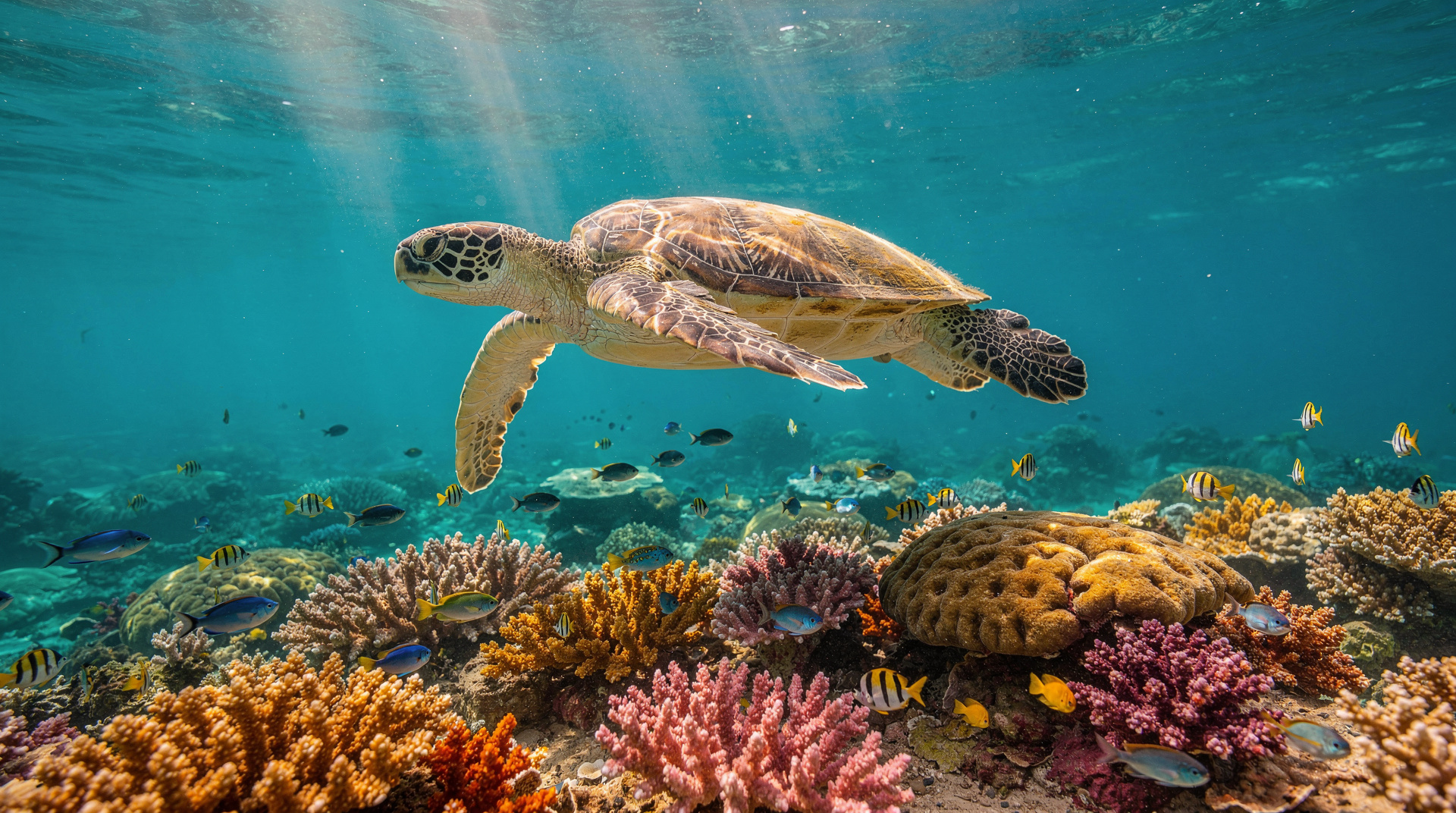
Few wildlife encounters anywhere on earth rival the sight of a 150-kilogram green turtle hauling herself ashore in the moonlight, digging a nest with her powerful flippers, and depositing dozens of soft, white eggs before silently returning to the sea. At Ras al Jinz, on the easternmost tip of the Arabian Peninsula, this drama plays out every single night of the year, on a beach where sea turtles have been nesting for more than a million years.
Ras al Jinz Scientific and Visitor Centre sits at the heart of one of the Indian Ocean’s largest and most important green turtle nesting sites. The beach stretches for roughly five kilometres along a headland of dramatic red cliffs, and the reserve protects not only the nesting beach itself but also feeding grounds, migration corridors, and the broader marine ecosystem that sustains the local turtle population. On a single busy night in summer, more than a hundred female green turtles may come ashore simultaneously.
For travellers who care about wildlife, conservation, and genuine natural experiences, Ras al Jinz ranks among the absolute highlights of any trip to Oman. This guide covers everything you need to know — what to expect, how to book, when to go, and how to make the most of one of the Arabian Peninsula’s most extraordinary wildlife events.
Understanding Oman’s Green Turtle Population
The green turtle (Chelonia mydas) is listed as endangered by the International Union for Conservation of Nature. Once hunted extensively across the Arabian Sea for their meat and eggs, populations declined sharply through the twentieth century. Oman, to its considerable credit, recognised the significance of its coastal turtle populations early and established comprehensive legal protections. Today, Ras al Jinz is one of the few places on earth where green turtle numbers are considered stable and possibly recovering.
Female green turtles display extraordinary fidelity to the beaches where they were born. A turtle that hatched at Ras al Jinz fifty years ago will return to that same stretch of sand to lay her own eggs, guided by the earth’s magnetic field across thousands of kilometres of open ocean. They typically nest every two to five years, laying multiple clutches of eggs in a single season before returning to their feeding grounds — often as far away as the coasts of Somalia, India, or Pakistan.
A single female may lay between 100 and 130 eggs in each nest. The incubation period lasts roughly 55 to 60 days, after which the hatchlings — rarely more than five centimetres long — must scramble to the sea in one of nature’s most perilous journeys. Only an estimated one in a thousand hatchlings will survive to reach adulthood. Understanding this context gives the experience at Ras al Jinz a deeper resonance: you are not simply watching an interesting animal, you are witnessing an act of survival that has continued almost unchanged since the age of the dinosaurs.
The Ras al Jinz Scientific and Visitor Centre
The reserve and its visitor centre opened in 2008 and has since become a model of responsible wildlife tourism in the Arab world. The centre combines education, research, and carefully managed visitor access in a way that keeps the turtles’ welfare firmly at the centre of every decision.
The visitor centre itself is an impressive piece of architecture — low-slung, built from local materials, and designed to blend into the headland landscape without creating significant light or noise pollution. Inside, you will find excellent displays explaining the life cycle of green turtles, the history of the reserve, ongoing conservation research, and the threats turtles continue to face from plastic pollution, climate change, and boat strikes.
The centre employs a team of trained naturalist guides who lead all beach visits. Independent access to the nesting beach is not permitted, and flash photography is strictly prohibited. These restrictions exist entirely to protect the turtles — a female disturbed during nesting may abandon her nest and return to the sea without completing the process, and hatchlings rely on the natural light of the horizon to orient themselves toward the water. Bright lights disorient them fatally.
Accommodation at the centre includes comfortable chalets and a restaurant, making it easy to stay on site for the evening and dawn tours without the need to drive long distances in the dark.
Tour Options and What to Expect
All beach visits are conducted as guided tours departing from the visitor centre. There are two main options: an evening tour and a dawn tour.
The evening tour typically departs around 9 pm, after dark, and lasts approximately 90 minutes. Groups are small — usually no more than 12 to 15 people — and guides use dim red-light torches to navigate the beach without disturbing the turtles. Depending on conditions, you may witness a female arriving from the sea, the nesting process itself, or, if you are very fortunate, hatchlings emerging from a previously laid nest.
The dawn tour departs before sunrise and catches the last females of the night returning to the sea. Hatchling emergences are also more common at dawn, as the cooler sand temperatures encourage clutches to break surface. Many experienced wildlife travellers rate the dawn tour even more highly than the evening option.
For travellers arriving from Muscat who want a structured experience with transport included, a guided adventure tour is an excellent option. The Journey to Ras al Jinz Turtle Reserve Adventure Tour from Muscat takes care of transport, guide commentary, and reserve entry, making it the most convenient way to combine the drive along Oman’s dramatic eastern coast with a fully guided turtle experience.
For an even richer two-day adventure, the 2-day Oman adventure combining Wadi Shab, turtle watching, and desert packs Oman’s most iconic eastern experiences into a two-day itinerary — the Wadi Shab canyon swim, a turtle night tour at Ras al Jinz, and a desert experience, all linked by a logical route from Muscat. Those specifically focused on the Ras al Hadd area and a full eastern coastal experience can book the 2-day, 1-night Ras al Hadd tour from Muscat, which combines the turtle reserve with an overnight stay in the area and the broader coastal scenery of Oman’s easternmost point.
Getting to Ras al Jinz Independently
Ras al Jinz lies approximately 230 kilometres south of Muscat, a drive of roughly three hours via the coastal route through Sur. The road is excellent and fully surfaced throughout. Most visitors combine the journey with stops at Wadi Bani Khalid, the historic town of Sur (famous for its traditional dhow building), and the Bilad Sur Lagoon, which supports a good population of wading birds.
From Sur, it is a further 20 kilometres south to the reserve. The road is clearly signposted. Petrol stations exist in Sur, so fill up before continuing to the reserve, as there are no fuel facilities on the final approach.
If you are arriving for an evening tour, plan to reach the centre by late afternoon to check in, explore the exhibits, eat dinner, and attend the pre-tour briefing. Trying to arrive for a tour without adequate time beforehand is stressful and not recommended.
Staying at the Reserve
Overnight accommodation at Ras al Jinz Scientific and Visitor Centre is strongly recommended. The chalets are simple but comfortable and clean, with air conditioning, private bathrooms, and terraces overlooking the surrounding landscape. Staying overnight allows you to attend both the evening and dawn tours, dramatically increasing your chances of an exceptional sighting.
The on-site restaurant serves reliable Omani and international food. Portions are generous. Given the remote location, there are no other dining options nearby, so plan to eat at the centre. Booking well in advance — particularly for the peak season between May and September — is essential, as the limited accommodation fills quickly.
Conservation and Photography Ethics
The rules at Ras al Jinz are non-negotiable and enforced respectfully but firmly by all guides. No flash photography. No selfie lights. No video with visible light sources. Keep your voice low. Follow your guide’s instructions without question. Do not touch the turtles. Do not approach a nesting female from the sea side.
Modern smartphone cameras are capable of taking reasonable images in very low light without flash. If photography is important to you, a camera with a good high-ISO sensor and a fast lens will perform well. However, be honest with yourself: the experience of standing beside an ancient creature the size of a car tyre, listening to the rhythmic effort of her flippers moving sand, breathing the salt air of the Indian Ocean coast — that experience is not improved by trying to capture it. Let yourself simply be present.
The reserve also accepts volunteers for turtle tagging and nest monitoring programmes. If you are travelling for an extended period and have a genuine interest in conservation, contact the centre directly about volunteer opportunities.
Wildlife Beyond the Turtles
The headland at Ras al Jinz supports a broader community of wildlife that rewards early risers and patient observers. The rocky shoreline and tidal pools harbour crabs, sea urchins, and occasional octopus. Reef fish are visible in the clear shallows. Sooty falcons nest on the red cliffs in summer, and the area is well worth scanning with binoculars for seabirds including brown boobies, red-billed tropicbirds, and various tern species.
The surrounding coastal scrub is home to Oman’s characteristic reptile community: desert monitors, various skink species, and Arabian sand boas. At dawn, before the heat builds, scanning the sandy ground around the visitor centre often yields interesting reptile sightings.
Planning Your Visit: Practical Information
The reserve is open year-round. Temperatures at Ras al Jinz are moderated by the sea breeze and rarely reach the extremes found inland, though summer nights can still be warm and humid. The most comfortable visiting conditions are between October and April, when temperatures are mild and evenings are pleasant.
Wear dark, non-reflective clothing for the beach tours. Light colours can create visual disturbance for the turtles. Bring a light jacket even in summer — evenings on the coast can be cooler than expected. Closed shoes are recommended for the beach, as the terrain can be uneven.
Bookings for tours and accommodation must be made directly with the reserve or through an authorised tour operator. Tour spaces fill quickly, especially on weekends and during Omani and Gulf public holidays. Book at least two to three weeks in advance for peak season visits, and earlier if possible.
Combining Ras al Jinz with Sur and the Eastern Coast
The stretch of coast between Muscat and Ras al Jinz is one of the most scenically rewarding drives in Oman, and it rewards a pace that allows for stops. The town of Sur is a highlight in its own right: the old dhow-building yard at Surm al Ayjah still builds and repairs the traditional wooden vessels that once dominated Indian Ocean trade, and watching craftsmen work with adzes and hammers on a half-constructed hull is a genuinely atmospheric experience.
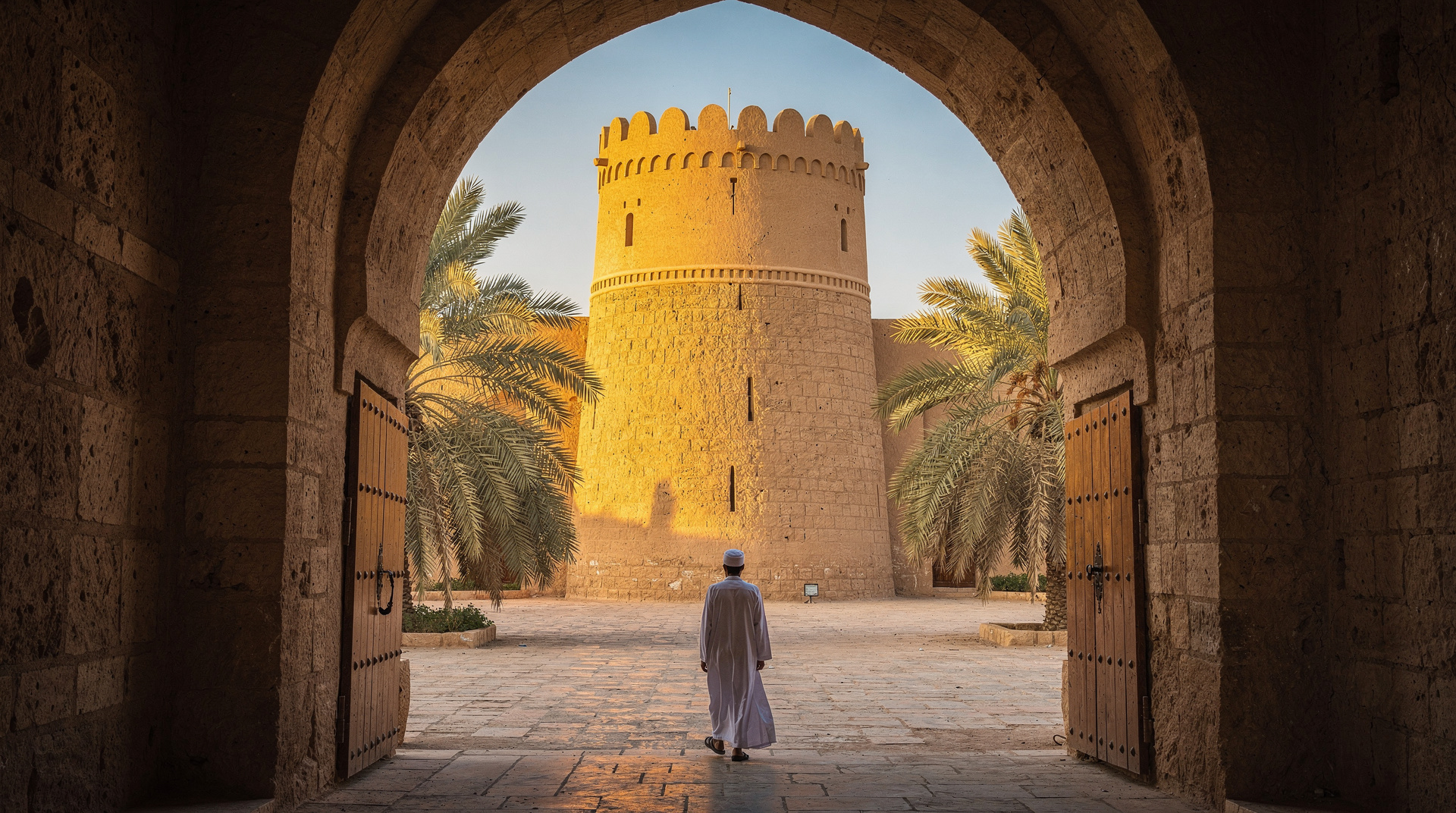
The Sur Lagoon — a protected tidal inlet just north of the town — is an excellent birding site, particularly for flamingos, herons, and waders. The old watchtower at the lagoon entrance provides a good elevated viewpoint over the whole area.
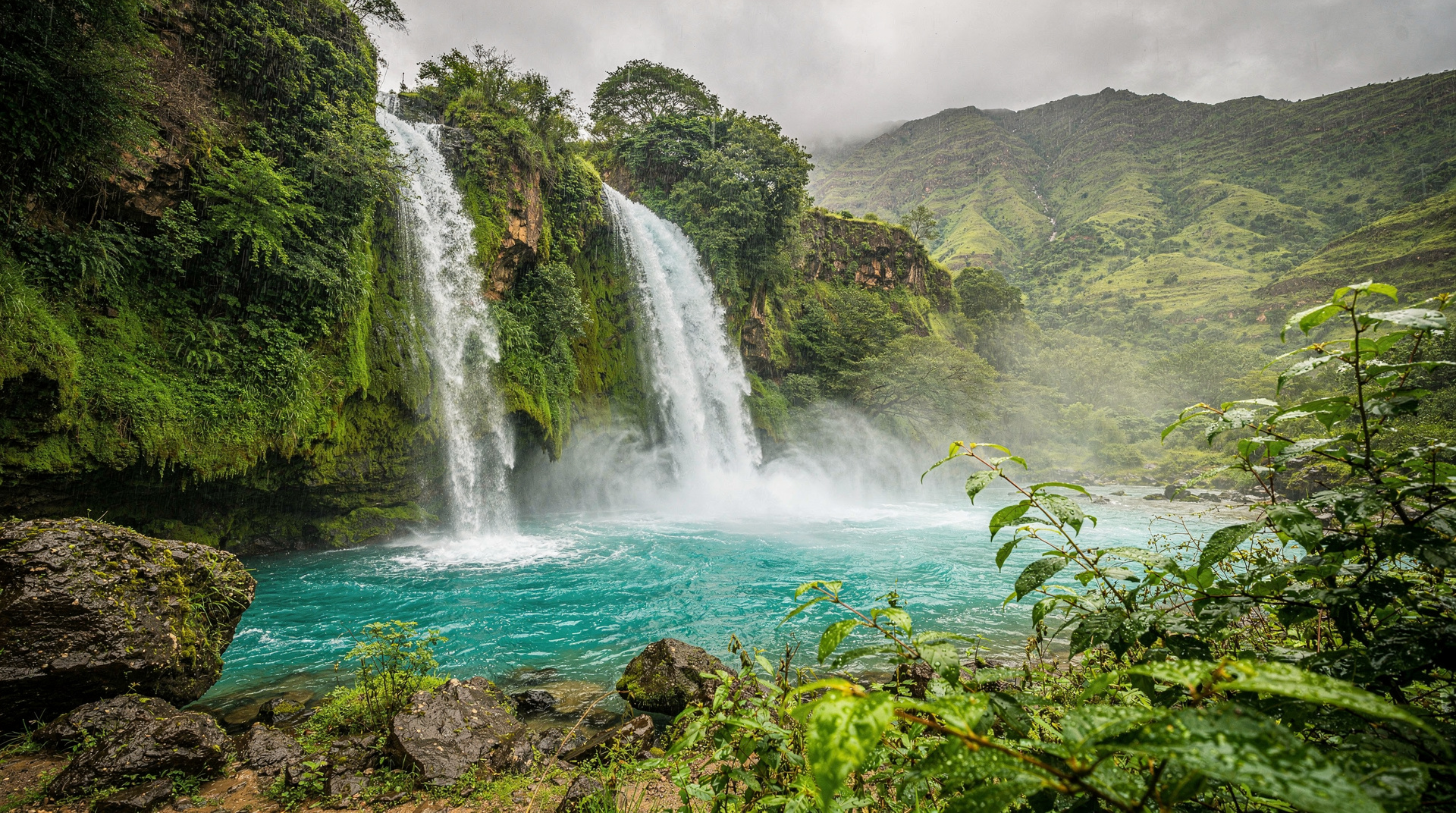
For a Wadi Darbat waterfall and Salalah nature experience or details on marine life in Oman, the southern coast offers further extraordinary wildlife encounters for those willing to extend their journey.
Frequently asked questions about Turtle Watching at Ras al Jinz: Oman’s Ancient Nesting Beach
Do turtles nest at Ras al Jinz every night?
Yes. Green turtles nest at Ras al Jinz on every night of the year, though frequency varies significantly by season. Peak nesting activity occurs between May and September, when it is common to see dozens of females in a single night. Outside peak season, sightings are still reliable but numbers are lower, with a typical evening yielding perhaps five to fifteen individual turtles.
Is there a minimum age for the turtle tours?
The visitor centre recommends that children be at least five years old for the evening tours. Younger children can struggle with the late timing, the requirement for silence, and the duration of the walk on uneven sandy terrain in low light. Children who are old enough to understand and follow the behavioural guidelines generally have a wonderful experience that they remember for years.
How far in advance do I need to book?
During peak season (May to September) and on weekends, booking two to four weeks in advance is advisable. Last-minute spaces do sometimes become available due to cancellations, but relying on this is risky. For accommodation, advance booking is even more important, as the limited chalet capacity fills very quickly.
Can I visit Ras al Jinz without staying overnight?
Yes, day visitors can attend the evening tour and then drive back to Sur or Muscat overnight. However, staying on site is strongly recommended — it allows you to attend both the evening and dawn tours, which significantly improves your chances of an exceptional sighting. The dawn tour in particular is rated very highly by experienced wildlife travellers.
What happens if conditions prevent the tour from running?
The tours run in almost all weather conditions. Occasional exceptions include extreme weather events, which are rare on this coast. If a tour is cancelled for any reason, the reserve will reschedule or refund. Night tours are conducted rain or shine — a light shower actually creates beautiful conditions, as the wet sand reflects the moonlight.
Are there hatchlings to see as well as nesting females?
Hatchling emergences occur year-round and cannot be predicted precisely, as they depend on the timing of individual nests laid 55 to 60 days previously. However, during peak season the probability of witnessing hatchlings is reasonably high, particularly on the dawn tour. Your guide will have current information about which nests are close to emergence.
Is it possible to touch or photograph the turtles?
Touching the turtles is strictly prohibited at all times. Photography without flash is permitted, but guides will instruct you on appropriate distances and angles. The prohibition on light-emitting devices extends to video lights on cameras and the screens of phones and tablets. Some visitors find that the ban on technology actually enhances the experience — without a screen between you and the turtle, the encounter becomes far more intimate and memorable.
How does Ras al Jinz compare to other turtle watching destinations?
Ras al Jinz is consistently rated among the top three or four green turtle nesting beaches in the entire Indian Ocean region, alongside Tortuguero in Costa Rica and Ras al Hadd. What distinguishes it is the combination of reliable year-round nesting, genuinely professional guides, excellent infrastructure, and the wider cultural and landscape context of the Oman coast. For travellers based in Europe or Asia, it is also far more accessible than many comparable sites.