Why Rent a 4x4 in Oman — and When a Sedan Is Absolutely Fine
The Question Every Oman Road-Tripper Asks First
Before almost any other logistical decision, visitors planning an Oman road trip arrive at the same fork: do I need a 4x4, or can I save money and get a sedan? The answer depends almost entirely on where you plan to go — and the gap between “4x4 essential” and “sedan perfectly fine” is wider than most travel articles suggest.
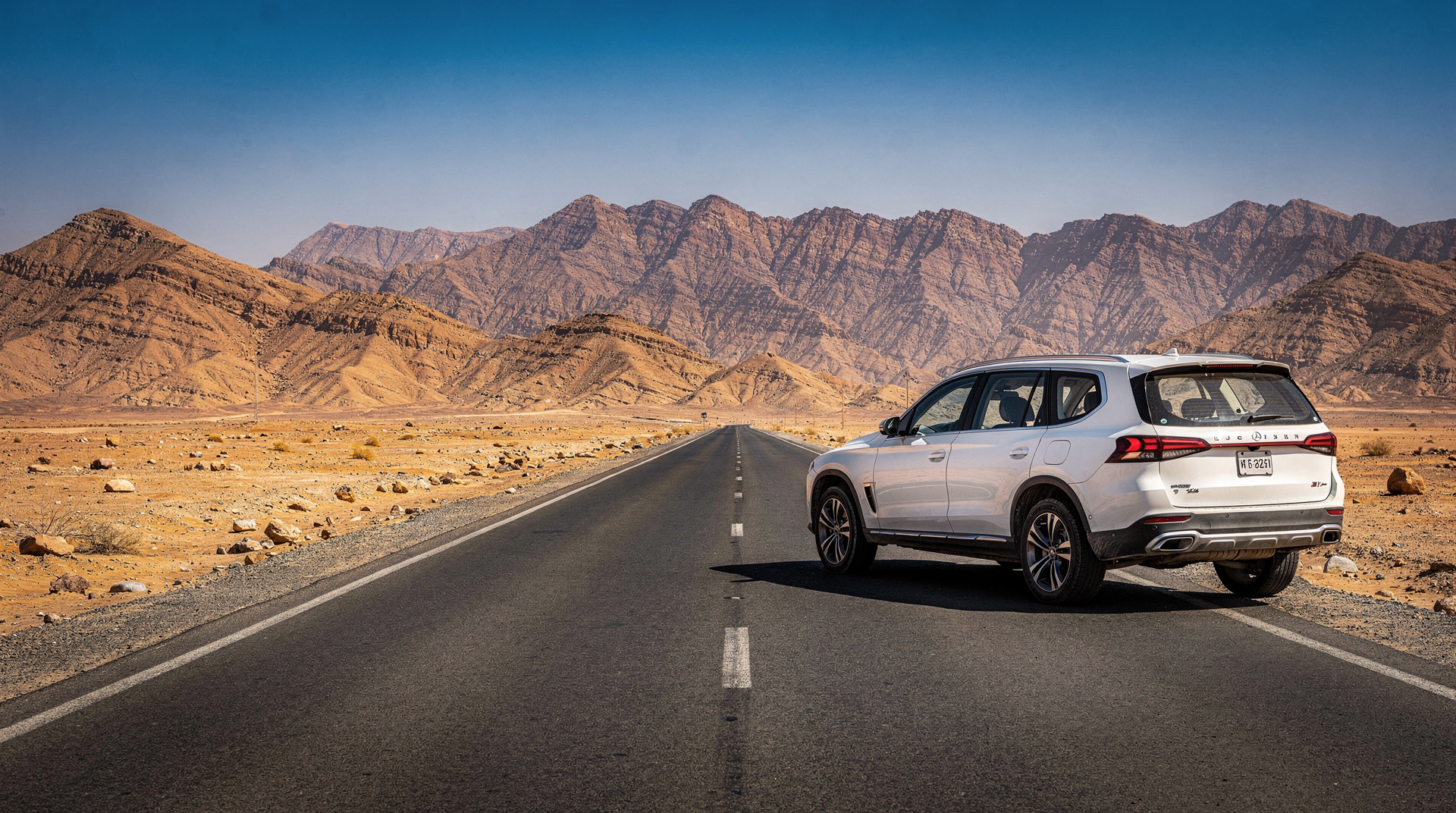
Oman has invested heavily in road infrastructure over the past two decades. Major highways linking Muscat to Nizwa, Sohar, Sur, and Salalah are modern, well-maintained dual carriageways. Paved roads reach into corners of the country that would have required serious off-road capability a decade ago. A sedan can handle the vast majority of Oman’s tourist circuit without any issue.
But there are specific places — and they are among the most spectacular — where not having a 4x4 means not going. And in some of those places, getting it wrong can strand you somewhere remote with no mobile signal.
This guide cuts through the confusion and tells you exactly what you need, where, and why.
What Driving in Oman Actually Looks Like
Oman’s road network divides into three broad categories. First, there are the main highways: multi-lane, GPS-navigable, and as easy to drive as any European motorway. The Muscat–Nizwa highway, the coastal road south toward Sur, and the route from Muscat to the UAE border via Sohar all fall into this category. Any vehicle handles these without effort.
Second, there are sealed secondary roads that reach villages, forts, and regional towns. These are typically single-lane tarmac roads in decent condition, often with tight bends on mountain sections. A sedan manages these well, though aggressive driving is inadvisable.
Third, there are graded gravel tracks, sandy desert routes, and wadi riverbeds. These are where the calculation changes completely.
Where a Sedan Works Perfectly
The main Muscat circuit: The Grand Mosque, Muttrah Souq, the Royal Opera House, the Corniche, Nizwa Fort, Bahla, and Jabreen Castle are all reachable on tarmac roads in a standard sedan. The Muscat–Nizwa highway is one of Oman’s finest drives — smooth, wide, and lined with dramatic mountain scenery.
The Batinah coast: The coastal highway running northwest from Muscat toward Sohar and the UAE border is entirely paved. Nakhal Fort and the Rustaq hot springs are accessible on sealed roads, though some hot spring sites have short gravel approaches manageable in sedan.
Sur and the eastern coast: The road south from Muscat to Sur via the coastal route is paved and passes through spectacular mountain scenery. Sur itself, Ras al Hadd, and the Ras al Jinz turtle reserve are all accessible without 4x4.
Salalah and Dhofar: The city of Salalah and most Khareef-season destinations — Wadi Darbat, the Ayn Athum spring, the frankincense souq at Salalah — are reachable on sealed roads. The Dhofar mountains have improved dramatically in terms of paved access.
Jebel Akhdar main access road: The main road up to Jebel Akhdar from Birkat al Mawz is paved, though steep. However — and this is important — the police checkpoint at the bottom requires all vehicles attempting the ascent to be 4x4. This rule is enforced.
Where a 4x4 Is Non-Negotiable
Jebel Akhdar: As noted above, the police checkpoint enforces a 4x4-only rule for the ascent due to the gradient and road conditions. You will be turned back in a sedan, no exceptions. If Jebel Akhdar is on your itinerary — and it should be — book a 4x4 rental from the start.
Wahiba Sands: Driving into the Wahiba Sands desert requires a 4x4, full stop. Sand driving on dunes with a sedan ends in immediate deep-sand burial. Even experienced off-road drivers reduce tyre pressure and travel with a second vehicle for safety. If you want to sleep in the desert under the stars, you need the right vehicle. Some desert camps can arrange 4x4 transfers from the main road if you do not want to drive yourself.
Wadi Shab on foot is fine, but the approach road has variants: The paved road to the Wadi Shab car park is accessible in a sedan. However, if you want to explore further along Wadi Tiwi or reach certain trailheads that require crossing wadi riverbeds, a 4x4 is needed. See our wadi comparison guide for specific route details.
Jebel Shams and the Balcony Walk: The road to Jebel Shams base area is mostly sealed, but the final approach to the cliff-edge camps and the trailhead for the Balcony Walk involves unpaved, rocky sections where a 4x4 is strongly advised. Some rental companies will specify that the Jebel Shams route voids sedan insurance.
Musandam: If you are driving to Musandam independently (requiring an Oman visa that permits the UAE to Oman cross), much of the interior is accessible only via gravel mountain tracks. A 4x4 is essential for anything beyond the main Khasab town area.
Remote areas and off-the-beaten-path routes: Wadi Bani Awf, the Balad Seet approach, the route through the Hajar Mountains toward Al-Hamra via back roads — these are all 4x4 territory that rewards properly equipped travellers with extraordinary scenery and near-total solitude.
The Insurance Consideration
This point is frequently overlooked and can be financially significant. Most rental agreements in Oman contain clauses that void collision damage waiver coverage for sedans driven on unpaved roads. If you drive a sedan into a wadi riverbed, get stuck, and damage the vehicle, you may be liable for the full repair cost regardless of what insurance you purchased.
Read your rental agreement carefully. If there is any chance you will drive on unsealed surfaces — even for short distances — either rent a 4x4 from the beginning or confirm in writing with your rental company that the relevant surfaces are covered.
When a 4x4 Rental Makes Sense Even If You Could Manage With a Sedan
Beyond the places where 4x4 is mandatory, there is a strong pragmatic argument for renting one even for routes that technically do not require it.
Flexibility is the main reason. An itinerary that looks tarmac-only on paper frequently produces a detour opportunity — a gravel track to a viewpoint, a shorter route through a wadi, a local’s suggestion to check out a pool that requires crossing a rocky riverbed. With a 4x4, you can take those chances. With a sedan, you cannot.
Peace of mind is another factor. Knowing you can handle the unexpected — a washed-out road, an opportunity to explore off the main route — reduces stress on a road trip considerably.
Finally, ground clearance matters on some paved mountain roads in Oman. Low-slung sedans can ground on rocky sections of secondary roads that a higher-clearance 4x4 handles without a second thought.
Cost Difference: What to Expect
At reputable Muscat rental agencies, the price gap between a basic sedan and a mid-range 4x4 like a Toyota Fortuner or Nissan Patrol runs to approximately 20–35 USD per day. Over a ten-day road trip, that differential amounts to 200–350 USD — meaningful but not enormous in the context of an Oman holiday.
Budget rental companies offer cheaper rates but frequently impose stricter off-road exclusion clauses and carry older vehicle fleets. For an itinerary that includes significant off-road driving, investing in a reputable agency with good insurance terms is worthwhile.
Fuel costs are relatively low in Oman compared to European standards. Petrol prices are regulated and broadly affordable, so the higher fuel consumption of a 4x4 versus a sedan does not dramatically affect the overall trip budget.
Practical Advice for 4x4 Driving in Oman
If you are not an experienced off-road driver, several important practices apply before venturing into the desert or up wadi riverbeds.
Tyre pressure reduction is essential for sand driving. Deflate to around 18–20 PSI for soft sand, and carry a portable compressor to re-inflate before returning to tarmac. Driving on paved roads with low-pressure tyres damages the tyres and reduces handling.
Never drive alone into remote areas. Mechanical failure or getting stuck in a remote wadi with no mobile signal and no second vehicle is genuinely dangerous, particularly in summer.
Share your route with someone before departing. Mobile coverage in Oman’s remote interior is patchy. Let your hotel know your expected route and return time when driving off the main roads.
Carry more water than you think you need. Two litres per person per hour of outdoor activity is the standard desert recommendation, and a 10-litre emergency reserve in the vehicle is not excessive.
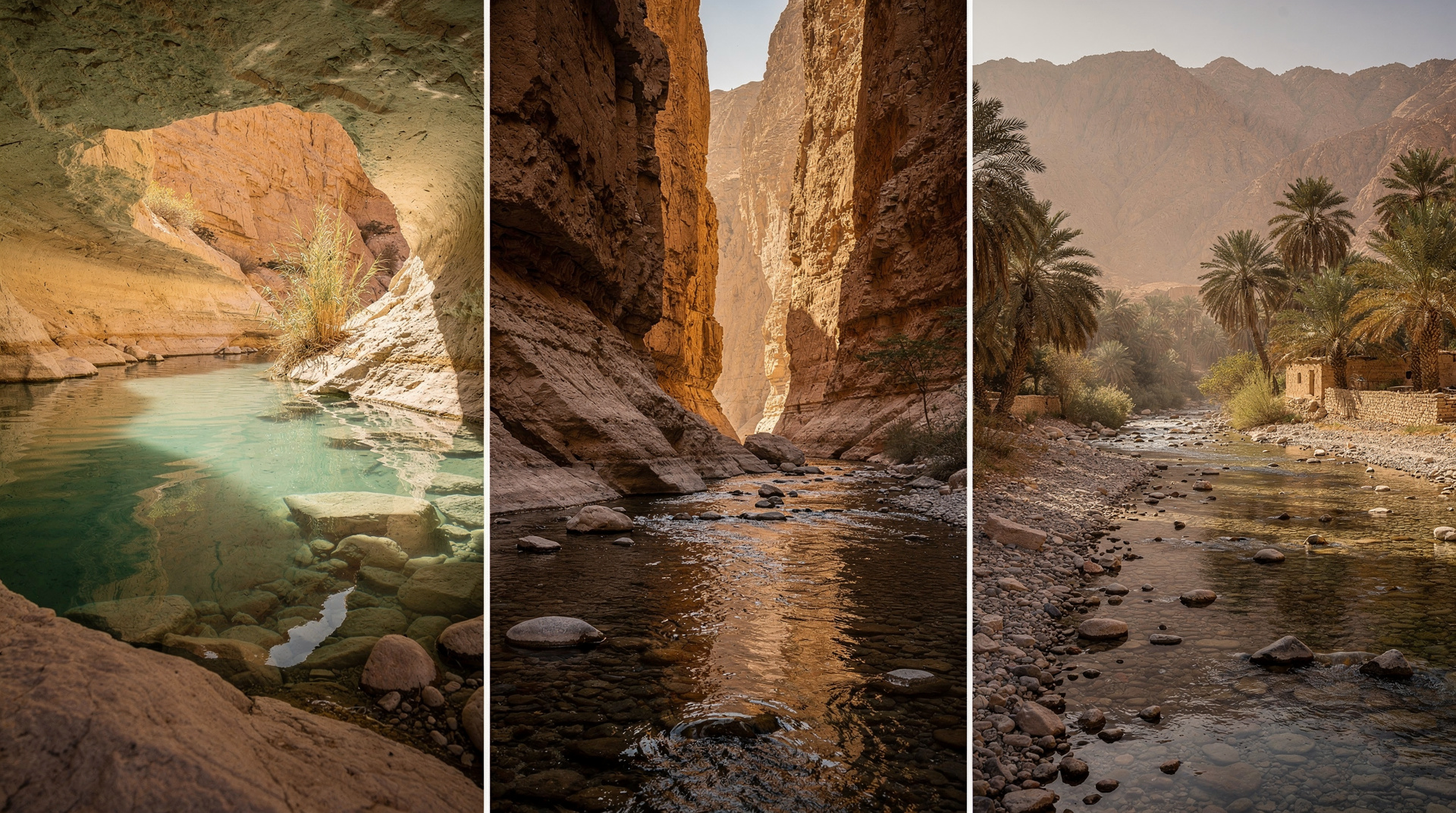
Check wadi conditions after rainfall. Flash floods can sweep through wadi riverbeds with little warning, and wadi beds that look dry can turn to raging torrents in minutes after rain in the mountains. Never camp in a wadi bed.
The Honest Summary
If your Oman itinerary consists of Muscat, Nizwa, the coastal road to Sur, and Salalah, you do not need a 4x4 and will save money with a sedan.
If your itinerary includes Jebel Akhdar, any desert driving in the Wahiba Sands, significant wadi exploration, Jebel Shams, or the Musandam interior, a 4x4 is either mandatory or strongly advisable.
If you are uncertain, rent the 4x4. The cost difference is modest, the flexibility gain is substantial, and the peace of mind on Oman’s more adventurous roads is worth every extra dollar.
For full rental logistics — including which companies to use, what documentation you need, and how to handle the insurance correctly — read our complete car rental guide for Oman. And for timing your road trip to take advantage of the best weather conditions, check the month-by-month seasonal guide.
Common Questions About Vehicles in Oman
Can I cross into UAE from Oman in a rental car? Some rental companies permit UAE crossings with advance notification and an additional fee. Confirm this before booking if your itinerary involves crossing into Musandam from the UAE side or visiting Abu Dhabi/Dubai during your Oman trip.
Is automatic or manual transmission better for Oman driving? Automatic is strongly preferred for off-road and mountain driving. Manual gear changes in soft sand or on steep mountain tracks are technically demanding. Most 4x4 rentals in Oman offer both; request automatic if given the choice.
Do I need an international driving licence? Yes. Citizens of most countries need an international driving permit (IDP) in addition to their national licence. Some European Union licences are accepted without an IDP, but verify before arrival. Rental agencies at Muscat International Airport will check your documentation at pickup.
What happens if I break down in a remote area? Reputable rental companies provide roadside assistance numbers. Save the number before departing on remote drives. The Oman Royal Police operate throughout the country and are generally helpful to tourists in difficulty. Having a local SIM card with data is extremely useful for mapping and emergency communication.