7-Day Oman Adventure Road Trip: Canyons, Dunes and 4x4 Tracks
Oman’s Wild Side: A 4x4 Adventure Across the Interior
This itinerary is not for everyone — and that is precisely the point. If you come to Oman for the adrenaline of dropping into a canyon, sleeping under stars at 2,000 metres, launching off dunes in a 4x4, or swimming through underground tunnels, this is your week. The routes below use a mix of paved mountain roads, graded gravel tracks, and genuine off-road terrain. A capable 4WD with high clearance is not optional — it is essential.
Vehicle requirement: Book a Toyota Land Cruiser or similar full-size 4WD with locking differentials. This costs approximately 50–80 OMR per day from reputable companies including Mark Tours, Desert Rose Tourism, or Al Ghazal Rent A Car. Inform the rental company of your planned routes — some restrict off-road driving, so clarify terms before signing. Budget for the comprehensive insurance option (approximately 8–12 OMR extra per day).
Physical fitness: This itinerary rates as challenging. Canyoning in Snake Canyon involves swimming in cold water, climbing over rocks, and rappelling down a 20-metre waterfall. The Jebel Shams Balcony Walk involves 9 km of rocky terrain. Wadi Bani Awf requires multiple water crossings in your vehicle. Assess honestly.
Season: October through March is ideal. April is warm but manageable. Avoid May through September — heat in canyon environments reaches extreme levels and flash flood risk increases significantly in the wadis.
Day 1: Muscat — Gear Up and Wadi Reconnaissance
Arrive in Muscat, collect your 4WD, and use Day 1 strategically. Adventure days begin early, so use the afternoon to:
Muscat expedition shopping:
- Petrol station fuel up (keep a full tank before every mountain or desert section)
- Supermarket provisions: energy bars, dates, dried fruit, nuts, electrolytes
- A Lulu Hypermarket or Carrefour (Al Mouj or Qurum) will have everything needed
- Camping gas canisters if you carry your own stove
Technical gear check: If you didn’t bring your own gear, Desert Discovery near the airport and Gulf Crest Trading in Ruwi hire out camping equipment, wetsuits and buoyancy aids for canyoning. Arrange wetsuits specifically for Snake Canyon — the water is cold year-round.
For a late afternoon orientation, drive the Muscat Corniche and walk the Muttrah waterfront for an hour. Dinner at Automatic Restaurant in Ruwi — the mixed grill and hummus are exceptional, 4–6 OMR per person. Sleep well. Tomorrow is a full-commitment day.
Stay: Al Falaj Hotel Muscat (25–30 OMR/night) — no-frills, solid, 5 minutes from the highway west. Or the Ramada by Wyndham Muscat (35–50 OMR/night) for more comfort.
Day 2: Wadi Bani Awf and Snake Canyon
Drive: Muscat to Snake Canyon (120 km, 2 hours)
Depart 6 AM without fail. Take the Rustaq road northwest from Muscat, then follow Route 13 into the Al Hajar mountains. The turn-off for Wadi Bani Awf is signposted from the town of Nakhl — stop at Nakhl Fort (3 OMR) briefly if time allows; it’s one of the most beautifully situated forts in northern Oman, built into a rock face above a hot spring.
Wadi Bani Awf is widely regarded as the most spectacular wadi drive in Oman. The track drops through a narrow canyon where the walls rise hundreds of metres on either side, passes through ancient stone-built villages, and emerges through the dramatic Snake Gorge — a slot canyon where you drive through water-filled passages and under overhanging cliffs. A standard car cannot do this. You will cross water at varying depths and navigate boulder fields. The full wadi drive from Nakhl to Nizwa takes 3–4 hours.
Snake Canyon Canyoning
Snake Canyon is Oman’s most famous canyoning route, a 4-hour descent through a narrow slot canyon involving swimming, scrambling, jumping into pools and — the signature moment — a 20-metre abseil down a waterfall. The canyon is technically straightforward for anyone who is comfortable in water and heights, but requires professional guide assistance.
Book the guided canyoning experience in advance: Wadi Bani Awf — Snake Canyon Canyoning Adventure (from 75 USD per person, 2026, including guide, harness, helmet, and rope equipment). Wetsuits are provided or can be hired.
The canyon route takes 4–5 hours from entry to exit. You will be cold, wet, and exhilarated at the end. The guide team provides hot tea and snacks at the exit point — possibly the most welcome cup of tea of your life.
Evening: Drive to Nizwa or Camp
From the Snake Canyon exit, continue the Wadi Bani Awf track to emerge near Nizwa (if following the full route), or retrace to Nakhl and drive back east. If camping, the flat ground near the wadi exit makes for an excellent wild camp. Bring your own water — no facilities exist.
Stay: Nizwa Hotel (30–40 OMR/night) if you prefer a bed, or wild camp at the wadi mouth. Wild camping is legally and culturally accepted in Oman on government land — avoid private farmland and always leave absolutely no trace.
Day 3: Nizwa and Drive to Jebel Shams
Morning: Nizwa Fort and Supplies
Even on an adventure itinerary, Nizwa Fort (5 OMR) deserves 90 minutes. The fort is extraordinary and its souq directly adjacent is the best place outside Muscat to buy supplies and have a proper breakfast.
Fuel up in Nizwa — there are no petrol stations on the Jebel Shams plateau.
Drive: Nizwa to Jebel Shams (100 km, 1.5 hours)
Take Route 21 west through Al Hamra, then the mountain road up to the summit plateau. The road is paved all the way to the rest house. The Jebel Shams Balcony Walk (W6 Trail) deserves an early start tomorrow rather than an afternoon arrival today — use the afternoon to set up camp, acclimatise to the altitude (2,000+ metres), and walk the short section nearest the trailhead. Alternatively, if you prefer a fully guided mountain day, the Jebel Shams Day Trip from Muscat (from 65 USD, 2026) handles transport and guide logistics.
Jebel Shams Summit Camping
Camping on the Jebel Shams plateau is one of the great experiences of any Oman trip. The air is cool and dry, the stars are extraordinary, and the canyon is a black void below you. Wild camping on the rim is permitted at designated areas near the trailhead. The Jebel Shams Resort (70–110 OMR/night) has comfortable chalets if you prefer beds — some with direct canyon views.
Carry all food and water up the mountain. Temperatures drop to 5–10°C at night November through February; bring a sleeping bag rated to at least 0°C.
Day 4: Jebel Shams — Full Canyon Day
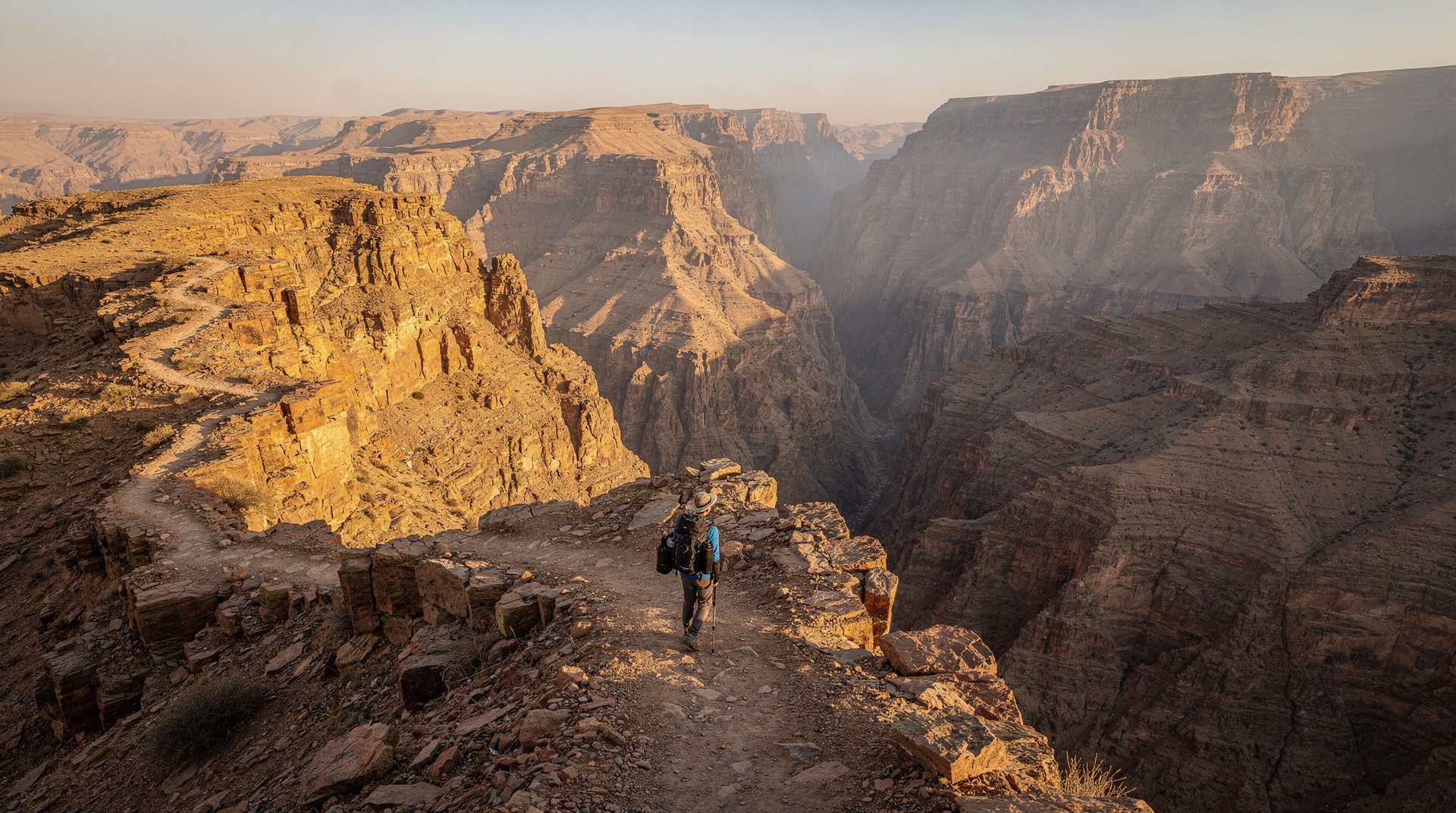
Balcony Walk (W6 Trail): 9 km Return
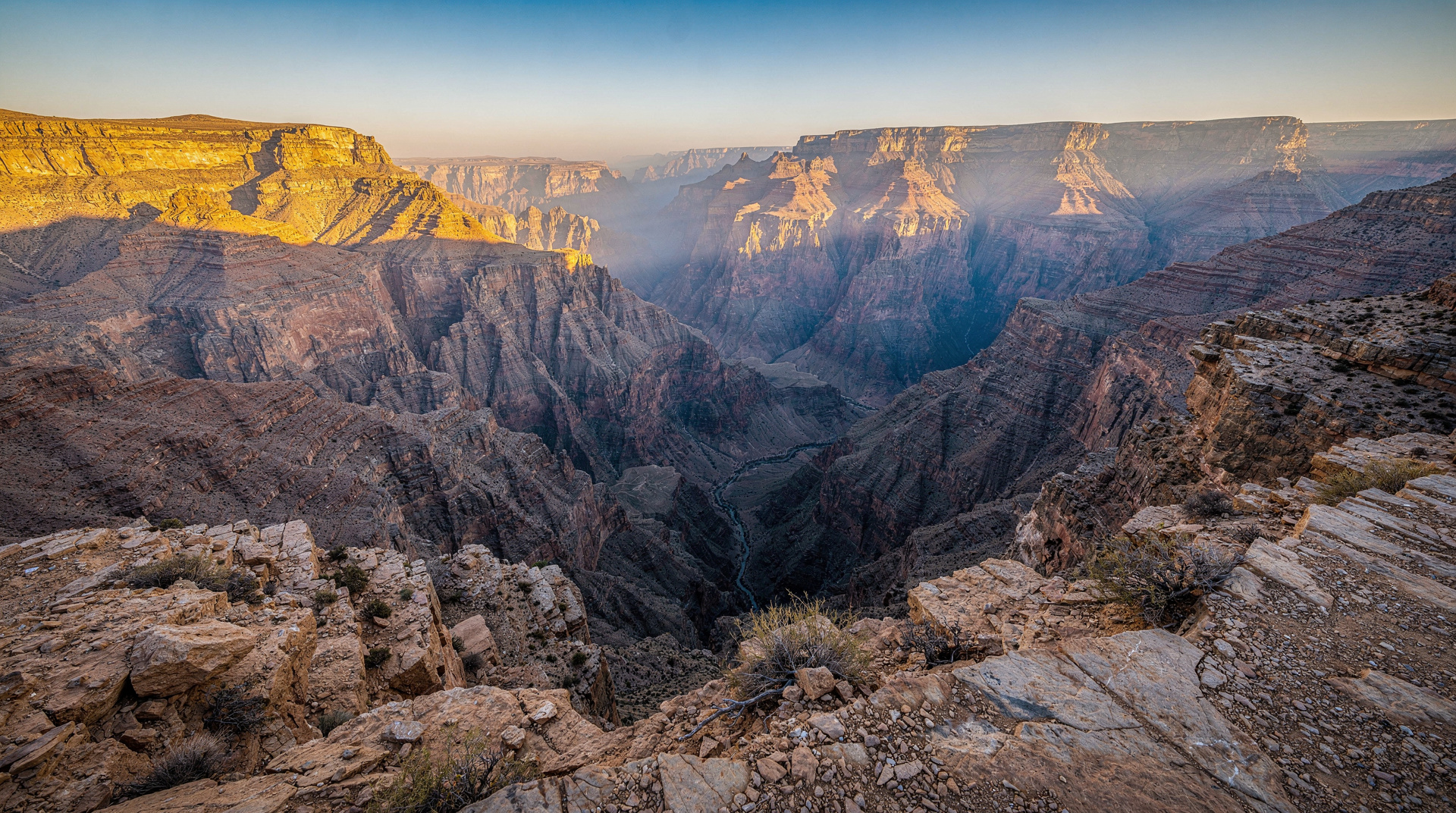
Start at sunrise — ideally 6 AM. The Balcony Walk tracks the rim of Wadi Nakhr eastward, passing the abandoned mountain village of Ghul, cut into the cliff face like something imagined rather than real. The final viewpoint overlooks 1,000 metres of vertical canyon wall — Oman’s deepest and most dramatic gorge.
Allow 4 hours for the full return walk. Carry 3 litres of water per person. The trail is well-marked with cairns but the drops are unguarded — do not approach the edges casually.
W4 Trail: Alternative Harder Option
For stronger hikers, the W4 Trail descends into Wadi Nakhr itself — a significantly more demanding route requiring ropes and a full day. Most adventurous visitors do the W6 on Day 4 and save energy for the dunes on Day 6.
Afternoon: Al Hamra Village
Descend to Al Hamra in the afternoon. Bait Al Safah is a living heritage museum within an old mudbrick house where elderly local women demonstrate traditional practices including cooking on wood fires, spinning, and weaving. Entry with guide 4 OMR. The house itself — with its falaj water channel, cool earthen rooms, and date-palm ceilings — is a masterpiece of Omani vernacular architecture.
Stay: Jebel Shams Resort for a second night on the plateau, or descend to Nizwa.
Day 5: Drive to Wahiba Sands — Sinaw Market
Drive: Jebel Shams area to Wahiba Sands (200 km, 2.5 hours)
Pass through Nizwa and continue east on Route 23. If it is Thursday, the weekly market at Sinaw is a genuine living tradition — camels, livestock, silverware, and produce traded in the old manner. The Sinaw livestock section is one of the last places in Oman where you can see old-fashioned Arabian horse and camel trading.
Arrive at the Wahiba Sands by early afternoon. Check into camp and prepare for the dune experience.
Dune Bashing
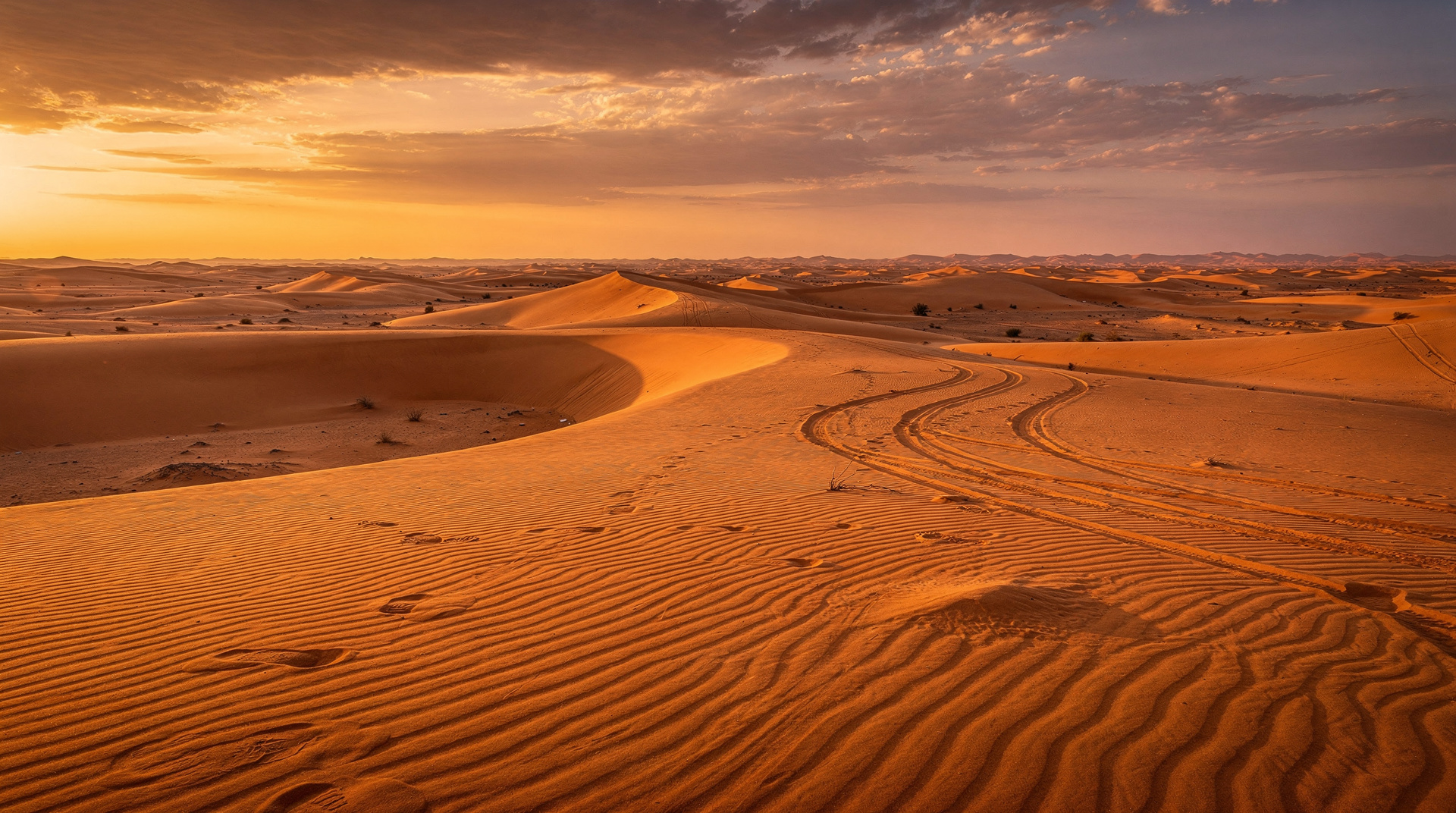
This is the high-intensity version of the desert experience. Camp guides take you out in 4WDs (they use their own vehicles — park your rental) and drive the dunes at speed, climbing to the tops of 100-metre dunes and descending near-vertical faces at full tilt. It is genuinely thrilling and genuinely safe in experienced hands. Most camps run 90-minute dune bash sessions at 15–20 OMR per person.
For a more self-directed dune experience, dune buggies allow you to drive yourself: Wahiba Sands Dune Buggy Self-Drive — 1 Hour Adventure (from 45 USD, 2026). No licence required; brief training provided. The buggies reach the top of substantial dunes and the experience is visceral and memorable.
Stay: 1000 Nights Camp or Sama Al Wasil Camp (65–120 OMR including meals). Book the adventure-focused camps that offer early morning dune walks and optional hardship desert nights under just blankets rather than tents.
Day 6: Wahiba Sands to Wadi Shab via Wadi Bani Khaled
Morning: Sunrise Dune Walk
Wake at 5 AM and walk out onto the dunes alone in the hour before sunrise. The silence and the colour progression from grey to amber to burning orange is something no photograph fully captures. This is the meditative counterpoint to yesterday’s adrenaline.
Wadi Bani Khaled (120 km northeast)
Drive northeast from the sands to Wadi Bani Khaled — the most accessible permanent freshwater wadi in Oman. Swimming in the main pools is easy; following the canyon further in requires scrambling over rocks but opens progressively more remote and beautiful pools. Allow 2 hours.
Wadi Shab (60 km north of Wadi Bani Khaled)
The afternoon belongs to Wadi Shab. After the short ferry crossing (1 OMR), follow the canyon path for 45–60 minutes to the swimming pools — cold, emerald green, enclosed by 200-metre limestone walls. Press on to the cave waterfall if energy allows (strong swimmers only, phone-free section). If you haven’t pre-arranged the Wadi Bani Khaled stop and want a guided full-day tour covering both Wadi Shab and Bimmah Sinkhole from Muscat, the Full-Day Tour: Wadi Shab and Bimmah Sinkhole from Muscat (from 45 USD, 2026) is an excellent option for this section of the route.
Stay near Wadi Shab: The small Wadi Shab Guesthouse (15–20 OMR/night) or drive to Qurayyat for better options.
Day 7: Bimmah Sinkhole and Return to Muscat
Morning: Bimmah Sinkhole
Bimmah Sinkhole (Hawiyat Najm Park, 1 OMR entry) is the final water experience of the trip — a collapsed coastal cavern filled with brackish turquoise water, connected underground to the sea. Steps descend to swimming level. The combination of geological drama and swimming opportunity makes it an excellent final morning stop.
Return to Muscat (130 km, 1.5 hours)
Return your 4WD. Wash and dry all gear before returning rental equipment. If flight allows, final lunch at Bait Al Luban in Ruwi or The Junction in Qurum for a proper sit-down meal after a week of camp food.
Equipment Checklist
Vehicle essentials:
- Full spare tyre (check it is inflated before leaving Muscat)
- Tyre repair kit and pump
- Tow rope
- Shovel (for sand self-recovery)
- Recovery boards if going deep into the Wahiba on your own
- Jerry cans with extra fuel (minimum 10L extra for Wadi Bani Awf and Jebel Shams sections)
- 10 litres of drinking water minimum at all times
Personal kit:
- Wetsuit or thick rashguard (Snake Canyon water is cold)
- Waterproof dry bag for electronics
- Head torch with spare batteries
- First aid kit
- High SPF sunscreen (reef-safe)
- Lightweight sleeping bag (October–March nights are cold at altitude)
- Quick-dry clothing
Navigation:
- Download offline maps via maps.me or OsmAnd covering all routes — mobile data is unreliable in remote wadi areas
- Screenshots of key GPS coordinates for canyon entry/exit points
Safety Non-Negotiables
Flash floods are the primary danger in Omani wadis. Check the forecast before every wadi day — even rain 50 km away can send a wall of water down a dry canyon in minutes. If you see any sign of approaching rain, exit the wadi immediately and move to high ground.
In remote areas, always tell your hotel or camp manager your planned route and expected return time. Rescue services exist but response times in remote mountain areas can be several hours.
Never enter a canyon or wadi solo. The minimum group size is two people.
For more mountain route context, see our Jebel Shams Balcony Walk guide and Jebel Akhdar destination page.
Adventure Oman: The Technical Details
Canyoning in Oman — Beginner’s Guide
If Snake Canyon is your first canyoning experience, here is what the activity actually involves:
What is canyoning? A combination of hiking, swimming, scrambling over rocks, jumping into pools, and occasionally abseiling (rappelling) down waterfalls. No climbing experience is required — abseiling involves descending a fixed rope with your body weight, which guides teach in 10 minutes.
Snake Canyon specifics: The canyon is approximately 3 km long and takes 4–5 hours to descend. Water temperature varies from 18–24°C depending on season — cold by Omani standards but bearable with a wetsuit. The famous 20-metre abseil is the crux — the rope is fixed, the route is straightforward, and guides descend first and wait at the bottom. The biggest challenge for most first-timers is the trust required to walk backward off a cliff edge. Once committed, the mechanical advantage of the rope makes the descent easy.
Physical requirements: You must be able to swim 100 metres in open water. You should be comfortable with heights — not fearless, but able to function. Some bouldering (scrambling over and under large rocks) requires upper body strength. There is no minimum age but guides typically require participants to be at least 12 years old and physically fit.
What guides provide: All technical equipment — harness, helmet, rope, descenders. Usually also wetsuits (verify when booking). Your guide leads the route and manages all technical sections. Never attempt Snake Canyon or similar routes without an experienced guide with proper rescue certifications.
Wadi Bani Awf Driving — Technical Assessment
Wadi Bani Awf is rated as one of the most difficult wadi drives in Oman that remains accessible to visitors without specialist off-road training. Here is what the route involves:
Water crossings: Depending on recent rainfall, there are 5–15 water crossings of varying depth. The typical maximum depth is 40–60 cm. Engage 4WD low ratio before entering. Approach at walking speed. If in doubt about depth, wade the crossing on foot first. Never cross if water is moving fast — wait or turn back.
Rock terrain: Between crossings, the track traverses boulder fields where ground clearance is essential. A standard SUV with 200mm+ clearance manages most sections. The track narrows in places to vehicle width — you cannot pass an oncoming vehicle and must coordinate.
GPS coordinates for key waypoints: Download the route on maps.me or OsmAnd before departure. Cell signal is absent for most of the wadi drive. The route runs: Nakhl — Snake Canyon entrance (N23°27’ E57°34’) — Wadi Bani Awf through route — Ghubrah — Nizwa. Allow 4–6 hours driving time excluding stops.
When to avoid: After heavy rainfall, wadi levels rise significantly. Check weather forecasts for the entire Al Hajar range before driving — rain at Jebel Shams or Jebel Akhdar affects water levels in all the wadis draining from those mountains.
Jebel Shams Camping: Practical Setup
Camping on the Jebel Shams plateau at altitude requires more preparation than camping at sea level. Here is the practical setup:
Temperature management: October through March, night temperatures on the plateau drop to 5–12°C. A sleeping bag rated to -5°C is comfortable for all conditions. April is warmer (12–18°C at night). May through September, the plateau is warm enough for a 3-season bag.
Water: No water sources exist on the plateau. Carry all water from Nizwa — minimum 4 litres per person per day (for drinking and cooking). The Rest House at the summit sells water but at higher prices.
Camping spots: Several flat areas near the W6 trail start point are used for camping. There are no formal facilities — no toilets, no bins. Dig cat holes for toilet use (away from water and trails). Pack out all rubbish.
Cooking: Gas canisters (standard thread) are available in Nizwa supermarkets. A simple one-burner stove is sufficient. Cook away from canyon edges in windy conditions.
Wildlife at altitude: Rock hyraxes (small rabbit-like mammals) are common on the plateau and become bold around camp. Store food in sealed containers. Arabian wolves have been recorded in the Jebel Shams area — never camp near a kill site and do not leave food accessible overnight.
Off-Road Oman: Best Wadi Drives for 4WD
Beyond the main itinerary, Oman offers some of the finest 4WD wadi driving in the Arab world. These are the most celebrated routes for future reference or extensions:
Wadi Bani Awf / Snake Gorge: Covered in this itinerary. The benchmark wadi drive. Nakhl to Nizwa via the gorge, approximately 60 km, 4–6 hours. Challenging.
Jebel Akhdar access road: Paved but steep, with 25% grades in places. The plateau above is accessible for further off-road exploration with appropriate maps. Regulation: 4WD mandatory beyond the checkpoint.
Wadi Ghul (near Jebel Shams): Short descent into the upper canyon from the Jebel Shams plateau road. Technical in places; requires a local guide. 2 hours roundtrip.
Wadi Dayqah: Near Qurayyat, southeast of Muscat. A narrow canyon drive with multiple water crossings. Less known than Wadi Bani Awf but technically interesting. 3 hours.
Sharqiyah Sands deep crossing: Driving through the Wahiba Sands from Qabil to Al Ashkharah on the coast. A full day of dune driving requiring two vehicles and sand recovery equipment. Not recommended solo.
Wadi Sahtan: Northwest of Nizwa, an alternative mountain wadi with multiple villages accessible only by 4WD. Less dramatic than Wadi Bani Awf but more remote and less visited. 4 hours.
Adventure Budget: Seven Days
| Category | Cost per person (OMR) |
|---|---|
| 4WD rental (7 days, Land Cruiser) | 350–560 |
| Fuel | 30–45 |
| Snake Canyon guided tour | 29 OMR (~75 USD) |
| Dune buggy or dune bashing | 17 OMR (~45 USD) |
| Accommodation (6 nights, mix of camps and hotels) | 200–360 |
| Food (all meals, self-catered some days) | 70–100 |
| Entry fees and permits | 20–35 |
| Camping gear hire (if needed) | 15–30 |
| Total per person | 731–1135 OMR (1900–2950 USD) |
Budget tip: sharing the 4WD rental with a travel partner cuts the largest single cost in half and makes this itinerary significantly more economical.
Related Guides and Itineraries
The Jebel Shams Balcony Walk guide is essential reading before Day 3 and 4 of this itinerary — it includes detailed trail maps, GPS coordinates, and advice on conditions at different times of year. The Jebel Akhdar destination guide covers the Green Mountain as an optional extension to the adventure circuit for those with extra time.
For the cultural grounding that enriches any adventure trip, spend Day 1 in Muscat and visit the Sultan Qaboos Grand Mosque before heading into the mountains.
Less intense alternatives for the same landscapes: the 7-Day Classic Oman road trip covers much of the same ground at a moderate pace suitable for most fitness levels. The 5-Day Highlights provides a compressed version for shorter stays. Families with children should use the Family Oman itinerary which replaces canyoning with gentler wadi swims. For the polar opposite experience — maximum comfort, minimum exertion — the Luxury Oman itinerary visits many of the same landscapes from five-star properties with private guides.