Best Photography Spots in Oman: Golden Hour Locations
A Country Built for Photographers
Oman is a photographer’s country. This is not a claim that travel writers make about every destination — but in Oman’s case it is genuinely earned. The combination of dramatic landscapes, architectural beauty, cultural richness, and light quality creates conditions for photography that are rare at this level of consistency.
The quality of light in Oman — a function of the region’s dust, humidity levels, and geography — is particularly exceptional at dawn and dusk. The golden hours here last longer than at higher latitudes and produce a warmth and depth of colour that makes even ordinary compositions look extraordinary. Find the right spot and wait for the right light, and Oman will give you images you will be proud of for years.
This guide covers the best locations and the compositions that work at each one.
1. Wahiba Sands at Sunrise
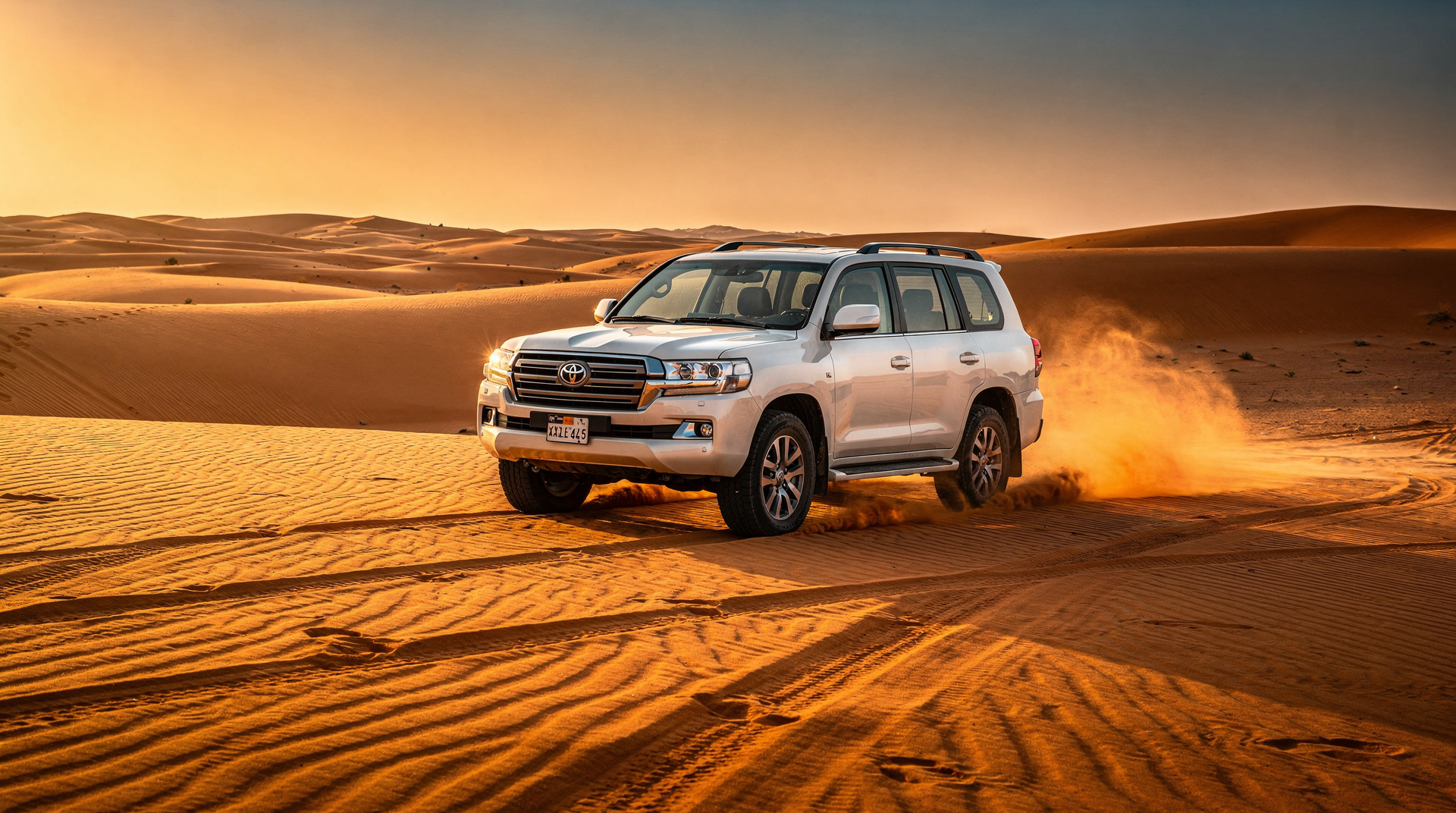
What makes it exceptional: The combination of red dunes, long shadows, and the particular warmth of the desert sunrise creates conditions that landscape photographers dream about. The absence of vegetation means composition is entirely about form and light — the curves of the dunes, the texture of the sand, the human figure as a scale reference.
When to go: Arrive at the dune crest you want to shoot from at least 30 minutes before sunrise. The colour on the eastern horizon begins before the sun appears and the pre-dawn blue light on the dunes has its own quality worth capturing.
Best compositions: Shoot from high dune ridges looking east or northeast for the most dramatic shadow play. A lone figure at the base of a dune provides scale. Long ridge lines that cut diagonally across the frame are a classic and effective approach. The period 10–20 minutes after sunrise — when the sun is low and the shadows very long — is the sweet spot.
Practical notes: Getting to the Wahiba Sands for sunrise means sleeping in or near the desert the night before. Desert camps handle this naturally — tell the camp you want to wake for sunrise and most will ensure an alarm call.
2. Jebel Shams at Sunset
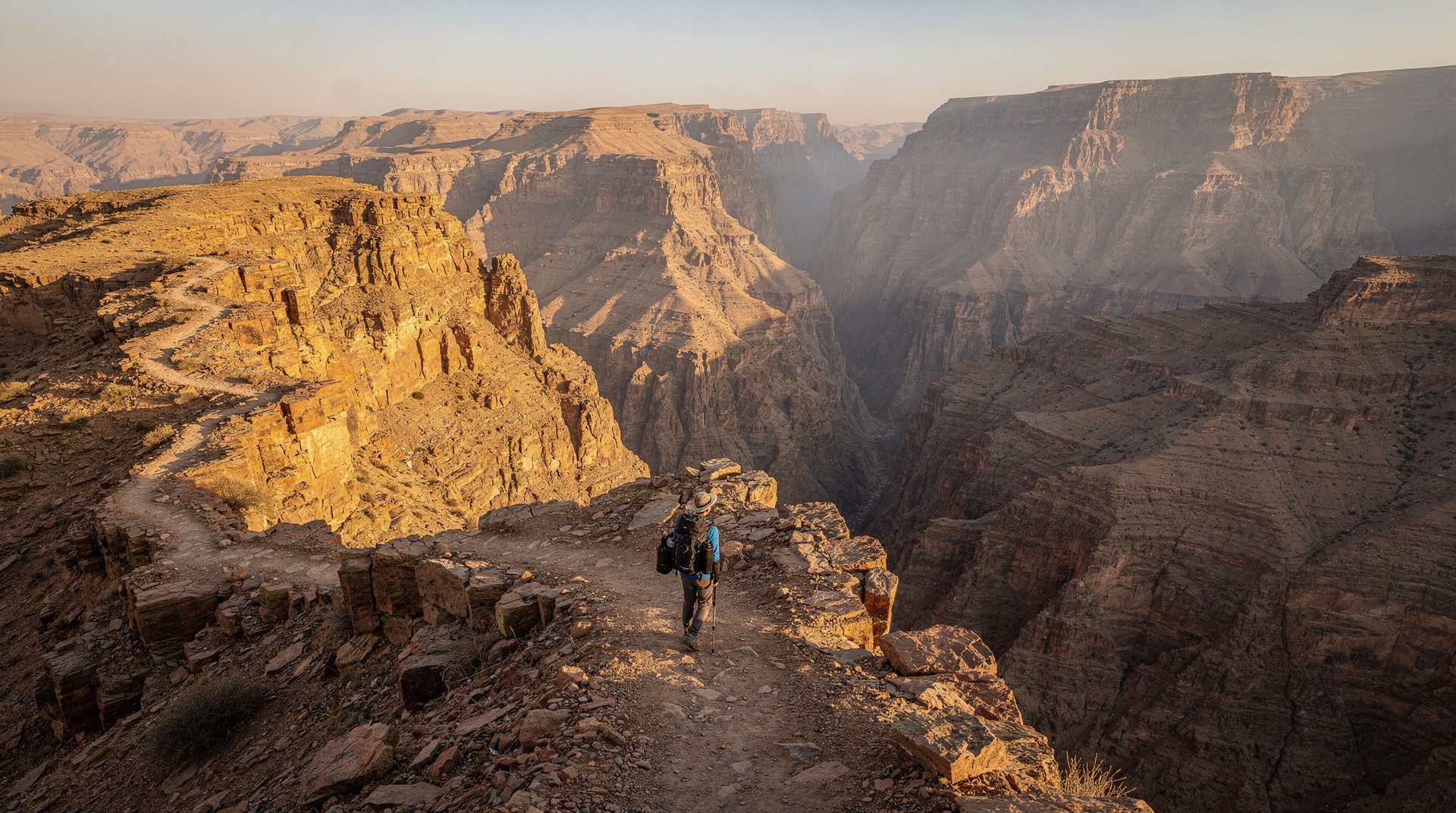
What makes it exceptional: The canyon at Jebel Shams — sometimes called the Grand Canyon of Arabia — is at its most dramatic in the late afternoon when the low sun catches the canyon walls and fills the depths with shadow. The sheer scale of the gorge (dropping over 1,000 metres) means that wide-angle shots capture the vertiginous drama, while telephoto compression reveals the texture and layering of the exposed rock.
When to go: Arrive at the main viewpoints on the rim walk by 4pm in winter or 5pm in summer to have an hour of good light before the sun drops behind the western rim. The canyon floor falls into shadow before sunset — the most dramatic moments are when the upper canyon walls are still lit while the depths are dark.
Best compositions: The Balcony Walk trail offers multiple viewpoints with different angles on the canyon. The view from above the hanging village of Sab is particularly striking. Include the path itself winding along the rim edge for depth and scale.
Practical notes: Staying overnight at one of the guesthouses or camps on the Jebel Shams plateau means you can shoot both sunset and sunrise without rushing. The morning light on the east-facing canyon walls is equally beautiful.
3. Muttrah Corniche at Golden Hour
What makes it exceptional: Muscat’s oldest waterfront is beautiful at any time, but the golden hour transforms it. The dhows moored along the water catch the warm light. The mountains rise behind the city. The Muttrah Souq facade — whitewashed walls, blue shutters, intricate plasterwork — glows.
When to go: The hour before sunset for warm light on the water. Early morning for the fish market activity and the soft pre-sunrise blue hour light. The souq itself opens early and the activity inside in the first hour of morning is some of the most characterful photography Oman offers.
Best compositions: The long corniche promenade works as a leading line toward the mountains. The traditional dhows reflected in calm evening water. The view from the hilltop behind the Muttrah Fort looking down over the entire bay — this elevated angle reveals the geography of the old port in a way that street level cannot.
Practical notes: Some vendors in the souq prefer not to be photographed. Always ask first — a smiled request is almost always accepted warmly and the resulting portrait is better for the connection it creates.
4. Nakhal Fort at the Blue Hour
What makes it exceptional: Oman has hundreds of forts, but Nakhal stands out as a photographic subject because of its position. It rises directly from a rocky outcrop above the falaj-irrigated date palm gardens of the Batinah plain, with the Al Hajar Mountains filling the background. At the blue hour — the 20-minute window after sunset when the sky holds a deep blue-purple while the fort is lit — the composition is simply stunning.
When to go: Arrive an hour before sunset to scout positions. The hill behind the fort offers an elevated angle; the falaj channels in front offer a foreground reflection element. The blue hour is brief — be in position and ready before the sun sets.
Best compositions: Include the date palm gardens as a foreground element against the fort and mountains. The interior courtyard, lit by slanting late afternoon sun, is excellent for architectural detail shots. The fort reflected in the falaj channels when they are flowing is a classic composition.
5. The Sultan Qaboos Grand Mosque
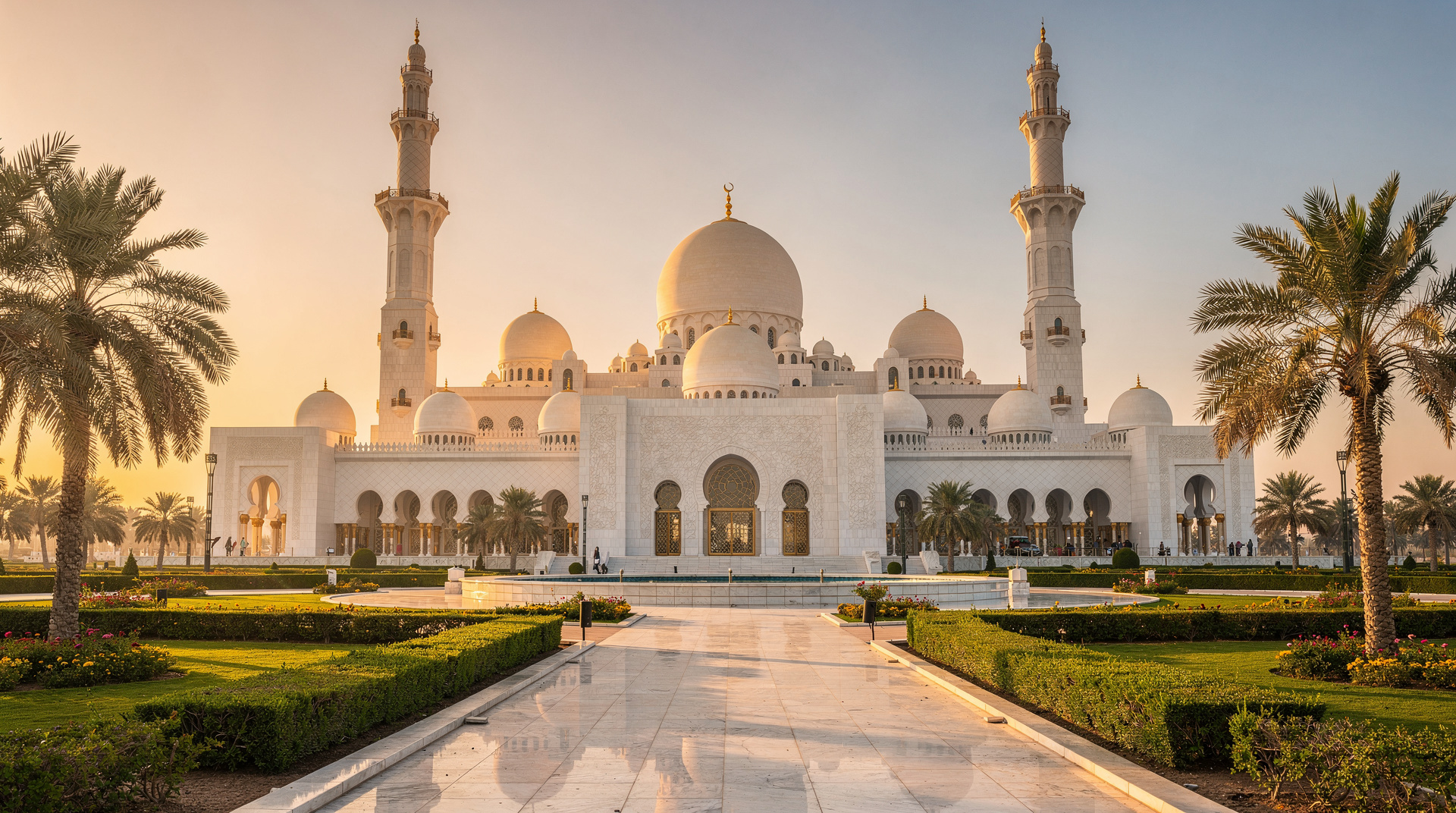
What makes it exceptional: The Sultan Qaboos Grand Mosque is Oman’s finest architectural achievement — a masterpiece of Islamic design that photographs magnificently under any conditions but is at its best in the early morning light, when the white marble of the outer walls glows and the prayer hall is relatively quiet.
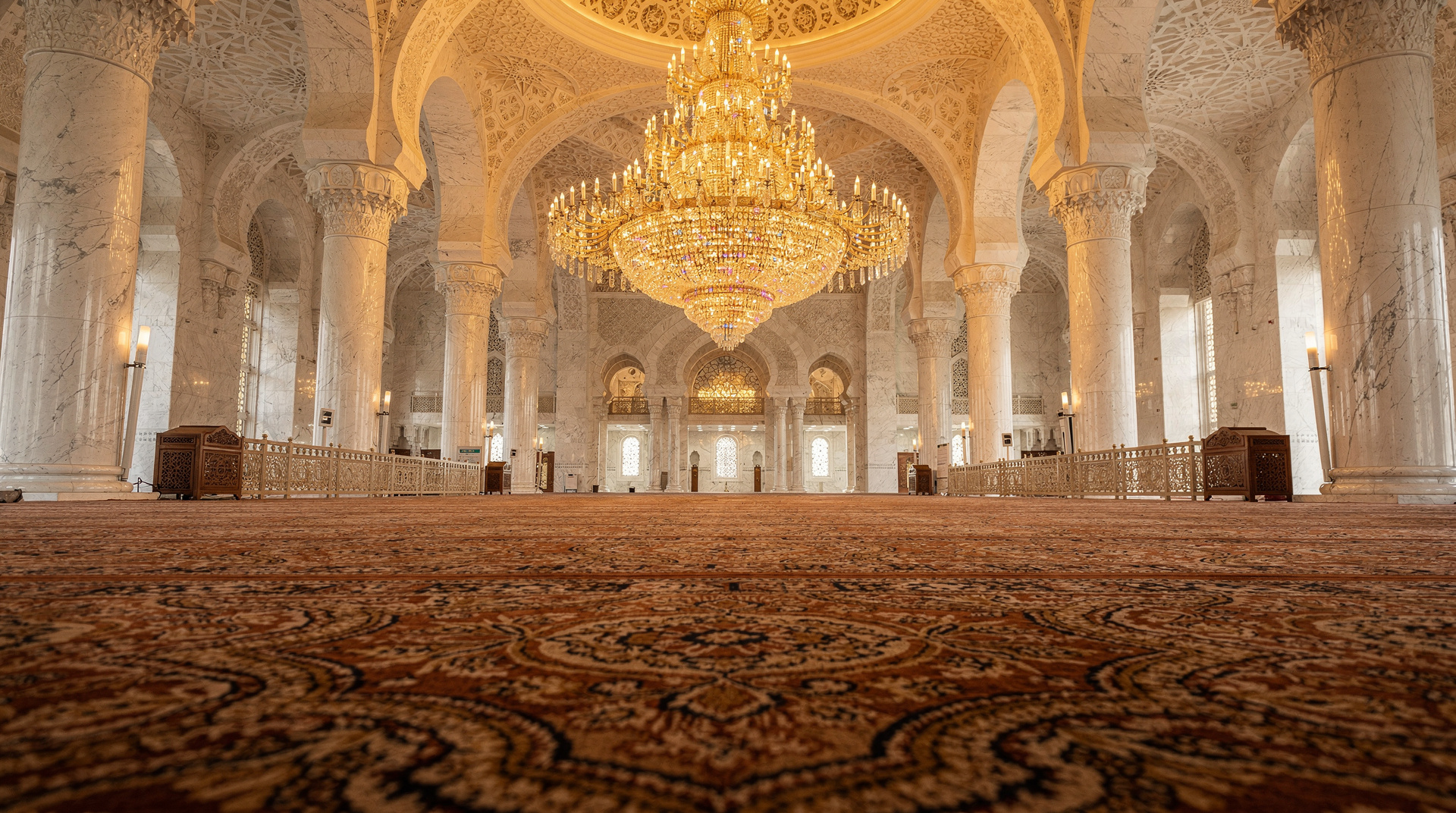
When to go: Opening time (8am Saturday through Thursday) for the best light and the smallest crowds. The prayer hall is open to non-Muslim visitors during visiting hours and the enormous carpet (hand-knotted over four years by 600 women) and the Austrian crystal chandelier are both extraordinary photographic subjects.
Best compositions: The outer courtyard and the main entrance gate are classic wide-angle subjects. The interior prayer hall benefits from the natural light entering through the skylight — position yourself to use this as a backlight on the carpet’s geometric patterns. The prayer hall columns receding into the distance make strong leading-line compositions.
Practical notes: Photography is permitted throughout the mosque during visiting hours. Tripods may be restricted — check current rules at the entrance. A wide-angle lens (16–24mm equivalent) is most useful for the interior.
6. Bimmah Sinkhole
What makes it exceptional: The sinkhole is a natural swimming hole of extraordinary blue-green colour, surrounded by limestone walls that drop sharply to the water. From above, looking down into the pool, the colour contrast between the turquoise water and the grey-white rock is immediately arresting. The challenge is finding a composition that avoids the crowds present at peak times.
When to go: Early morning — before 9am on weekdays — for the fewest visitors and the best light angle on the water. The sun reaches the bottom of the sinkhole from around 9am in summer; in winter the interior remains partially shaded for longer.
Best compositions: The overhead view from the rim is the classic shot. A wide-angle lens captures the full circle of the sinkhole with the water in the centre. Including a swimmer in the frame provides both scale and a sense of the place as a living, accessible feature.
7. Wadi Shab
What makes it exceptional: The turquoise pools of Wadi Shab are among the most photogenic natural features in Oman. The narrow canyon walls create dramatic side-lighting at certain times of day, and the reflections in the still pools double the visual impact of the canyon above.
When to go: Mid-morning (9am–noon) for the best light angle within the canyon. The sun enters the canyon from above and creates dappled light effects on the water and walls that are impossible to predict exactly but invariably beautiful.
Best compositions: Shoot into the canyon from pool level to capture the reflection of the walls in the water. Long exposures (if you can keep the camera still) smooth the water surface into glass. The junction pools where two canyon arms meet are particularly dramatic.
Practical notes: Waterproof your camera or use a waterproof case — the hike involves river crossings and the risk of drops is real. A wide-angle lens is most useful in the narrow canyon sections.
8. Ras al Jinz Turtle Beach
What makes it exceptional: Photographing green sea turtles at night, or at dawn as they return to the sea, is an experience unlike anything else in Oman. The turtles are large — a mature female can weigh 150kg — and photographing one in the pre-dawn blue light with the ocean behind it is genuinely moving.
When to go: The guided night tours depart after 9pm; the dawn return is between 5am and 7am depending on the season. Photography rules at Ras al Jinz are strict — no flash photography, no direct torch light on the turtles, specific distances must be maintained. These rules exist to protect the turtles, not to impede photography. Work within them.
Best compositions: Shoot in available moonlight or very low ISO at slow shutter speeds to capture the natural darkness of the setting. Include the stars or the foam of the waves for context and mood.
General Photography Tips for Oman
Protect your gear from dust: The desert wind in Oman carries fine dust that penetrates camera bags and lens mounts. Use zip-lock bags inside your camera bag and change lenses with your back to the wind.
Carry extra batteries: Heat reduces battery life significantly. In summer or in the desert, keep spare batteries in a shirt pocket (body heat keeps them warmer and more effective than a camera bag).
Use a polarising filter: The intensity of light in Oman means polarising filters dramatically improve sky and water colour without over-saturation. Essential equipment.
Golden hour is everything: The midday light in Oman is harsh and flat — it flattens textures and drains colour from landscapes. Plan your most important shots for the first and last hours of daylight and fill the middle of the day with driving, eating, and exploring.
Ask before photographing people: Omani culture values privacy and modesty. A genuine smile and a gesture toward your camera is all it takes to ask — and almost always results in consent. The portraits that result from permission and connection are always better than candid shots taken from distance.