Omani Halwa and Sweets: A Guide to Oman's Beloved Confections
What is Omani halwa?
Omani halwa is a dense, jewel-toned sweet made from sugar, ghee, rose water, saffron, and nuts. It is served with Omani coffee at all social occasions and is the country's most iconic confection.
The Sweet at the Heart of Omani Hospitality
Every culture has a confection that encapsulates its spirit — a sweet whose preparation and presentation speaks to something deeper than flavour. In Oman, that confection is halwa. Dense, jewel-toned, saturated with rose water and saffron, glittering with the shapes of whole almonds and pistachios, halwa is not merely a sweet to eat. It is an expression of welcome, of celebration, of the taste that Omanis associate with home.
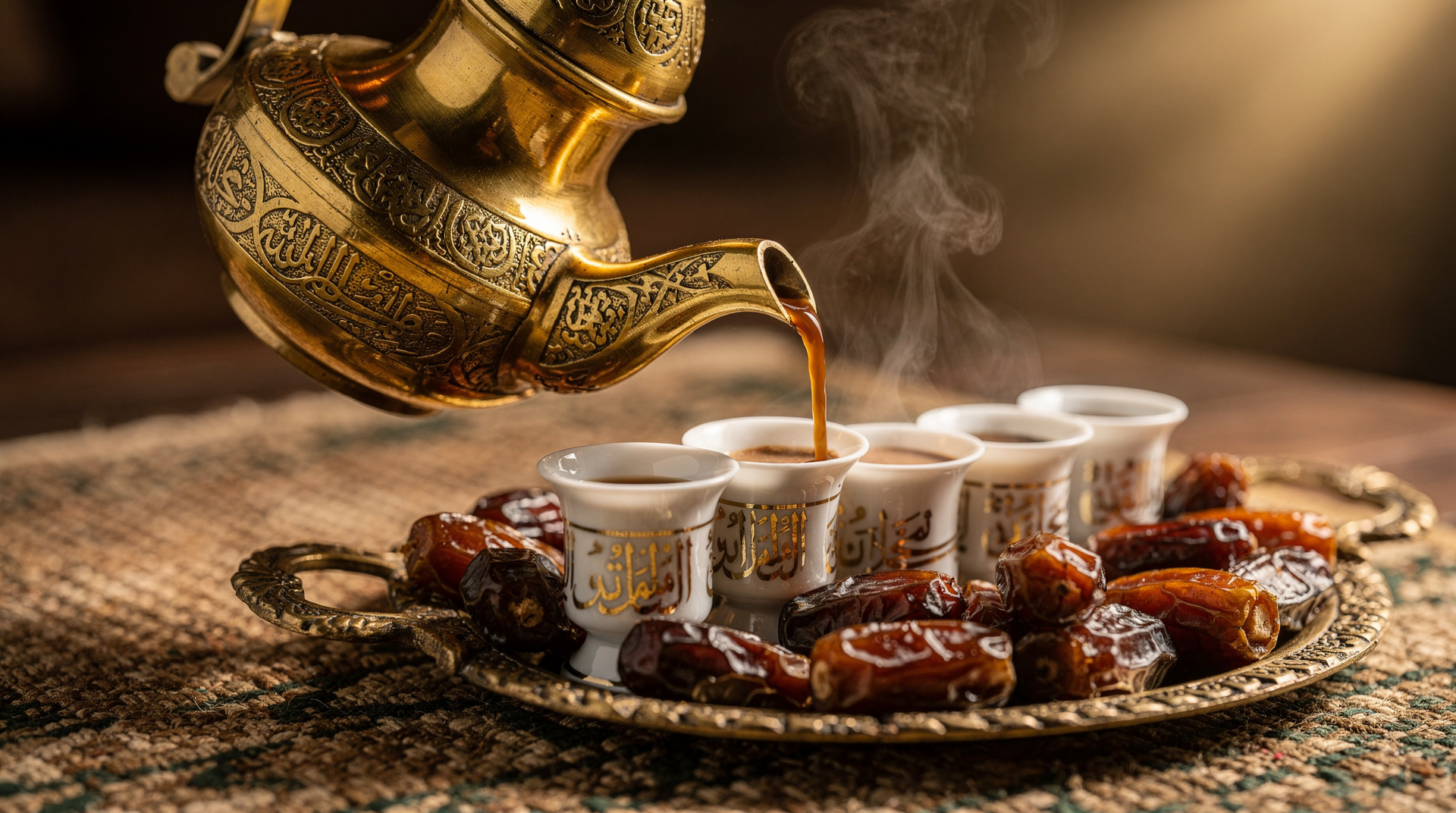
Omani halwa is presented alongside the first cup of kahwa coffee whenever a guest arrives in an Omani home. It appears on the table at weddings, at naming ceremonies, at Eid celebrations, at the conclusion of business meetings, and at the end of any significant meal. No other country’s confection plays quite the same social role — not baklava in Turkey, not maamoul in Lebanon, not kunafeh in Palestine. Halwa in Oman is not dessert; it is ritual.
This guide explores halwa in all its variety, alongside the other traditional sweets of the Omani confectionery tradition, and tells you where to find the finest examples and what to look for when you do.
Understanding Omani Halwa
The word “halwa” (sometimes spelled “halva” or “halwa”) exists in various forms throughout the Middle East, Central Asia, and the Indian subcontinent, describing different preparations in different regions. The sesame-based halva of Israel and Turkey, the semolina halwa of India, and the Omani version are all related in name and in the concept of a sweet preparation, but they are very different in texture, ingredient, and character.
Omani halwa is made primarily from a base of starch (traditionally wheat starch or cornstarch), sugar, water, and generous quantities of ghee (clarified butter). The base is cooked over low heat, stirring constantly, until it thickens into a smooth, semi-translucent paste. At this stage, the aromatics and flavourings are added: rose water, saffron (which gives the characteristic amber-to-orange colour), cardamom, nutmeg, and often a small amount of saffron-infused milk. Finally, whole nuts — typically almonds, walnuts, and pistachios — and sometimes seeds are folded through.
The result is a substance with a unique textural character: softer than Turkish sesame halva, denser than Indian semolina halwa, neither chewy nor crunchy but something in between — yielding to the spoon but pulling back slightly, releasing its flavour slowly as it dissolves. The ghee content gives it a richness that sustains the long aftertaste of rose water and saffron.
Traditional halwa is stirred continuously over an open fire for two to three hours — a process that develops the characteristic colour, texture, and flavour through careful heat management. The best halwa makers manage this process with an expertise that takes years to develop: too high a heat and the starches scorch and become grainy; too low and the consistency never develops properly.
Regional Varieties of Omani Halwa
While all Omani halwa shares the same basic character, regional variations in spicing, colour, nut content, and consistency have developed across the country over centuries.
Muscat halwa is typically the most refined in presentation — the smoothest in texture, the most even in colour, and the most generous in saffron use. The capital’s halwa shops compete fiercely for reputation, and the best establishments have been in operation for generations, some for over a century.
Nizwa halwa, from the ancient interior capital, tends to be darker in colour (sometimes approaching a deep mahogany from the use of date syrup alongside sugar), richer in ghee, and more intensely spiced. It is arguably the most complex of the regional varieties.
Dhofar halwa, from the Salalah region, sometimes incorporates locally grown spices including dried turmeric that gives it an almost yellow tint. The southern version is frequently less sweet than northern varieties, with a more prominent aromatic character.
Batinah halwa, from the agricultural coast north of Muscat, often uses local date varieties in the base alongside sugar, creating a slightly caramel-like undertone that distinguishes it from the purer sugar base of Muscat preparations.
Luqaimat: Oman’s Beloved Street Sweet
If halwa is the formal confection of the Omani tradition, luqaimat is its joyful, casual counterpart. These small, golden dough balls — deep-fried until crisp outside and fluffy within, then drizzled with date syrup and sometimes dusted with sesame seeds or ground cardamom — are the sweet most associated with Ramadan evenings and casual street celebrations.
The name means “small bites” in Arabic, and the preparation is irresistibly simple: a yeasted batter is allowed to ferment briefly, then spooned in small blobs into hot oil and fried until the balls puff and turn a deep golden brown. The outside develops an audible crispness that shatters against the slight resistance of the soft interior. The date syrup drizzled over them at the point of service creates a bittersweet contrast with the neutral dough.
At their best, served piping hot from the fryer with a generous pour of good Omani date syrup, luqaimat are one of the most immediately pleasurable eating experiences in the country. Seek them out at evening street stalls, at Ramadan food markets, and at traditional festival celebrations. Several good Muscat restaurants also serve them as dessert.
Dates: The Ancient Sweet Foundation
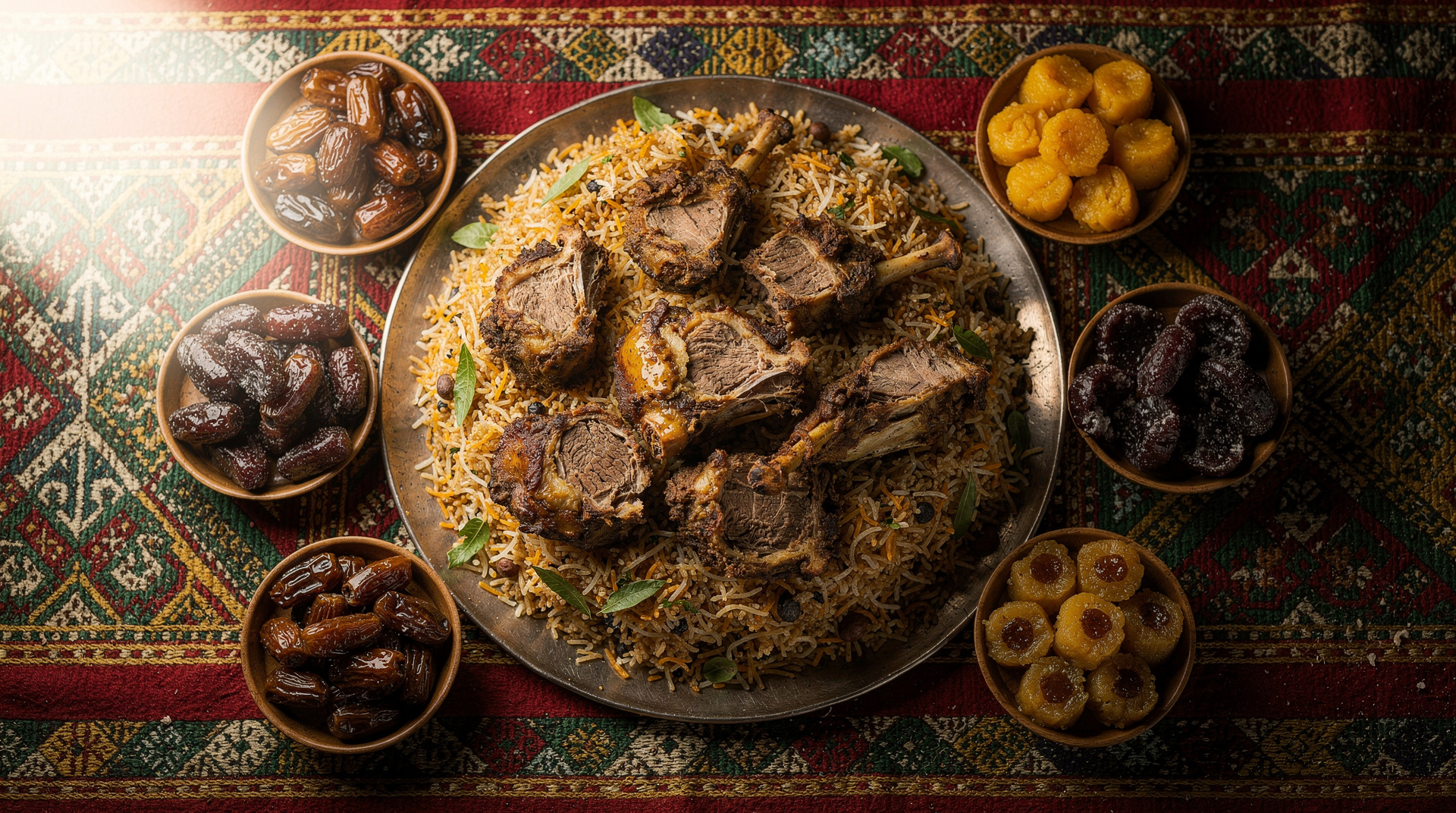
Before halwa, before luqaimat, before any confection requiring refined sugar, Oman had dates. The date palm is the foundational agricultural crop of the Arabian Peninsula, and Oman produces over 250 distinct varieties of the fruit, ranging from the large, soft, intensely sweet Fard date to the drier, nuttier Khasab variety of the Musandam Peninsula.
Omani dates are genuinely exceptional. The combination of low humidity, high temperatures, alkaline soil, and centuries of careful cultivation has produced varieties of remarkable quality and flavour diversity. The Fard date — perhaps the most prestigious variety — has a honey-like sweetness and a smooth, almost creamy texture. The Khalas date, with its amber colour and intense caramel-like flavour, is popular throughout the Gulf. The rare Khuwaidali date, grown only in specific wadi locations, is small, dark, and packed with concentrated sweetness.
Dates are the first food offered to any guest in an Omani home, always alongside kahwa coffee. They are eaten at every meal in traditional households, at breakfast with bread and cream, at the breaking of the Ramadan fast (following the Prophetic tradition), and as a natural sweet with tea throughout the day.
Date products beyond the fresh and dried fruit are important in Omani food culture. Date syrup (dibs) is used as a cooking sweetener throughout the country. Date vinegar, aged in clay pots, adds a complex sourness to marinades. Date paste is used as a natural sweetener in traditional sweets and as a filling in biscuits.
Omani Cookies and Biscuits: The Festive Tradition
The Omani biscuit tradition is less internationally known than halwa but is deeply embedded in festive and social culture. Several traditional preparations appear primarily at Eid and celebration seasons.
Kahk are ring-shaped butter cookies, subtly sweetened and aromatic with cardamom and sometimes rose water. They are filled with date paste, with ground nuts sweetened with sugar and spices, or left plain. Their tender, slightly crumbly texture makes them the ideal partner for coffee or tea.
Shirini are small, melt-in-the-mouth sweets made from chickpea flour roasted in ghee and sweetened with icing sugar — the Omani version of a preparation found throughout the Indian subcontinent, reflecting the deep culinary connections created by the Indian Ocean trade.
Madfoun are stuffed cookies made from a sesame-based dough enclosing a filling of spiced dates, and they represent one of the most intriguing intersections of Omani and East African culinary traditions.
Muhallebi: The Elegant Milk Pudding
Muhallebi is a delicate, trembling milk pudding — made from milk, cornstarch, and sugar, scented generously with rose water and orange blossom, garnished with ground pistachios and a sprinkling of cinnamon. It is served cold, in small glasses or bowls, and its flavour is one of the most immediately pleasing in the Omani dessert repertoire — cool, perfumed, milky, and gentle.
Muhallebi has a long history throughout the Middle East and Turkey, but the Omani version is distinctive for its particularly pronounced rose water character and for being served as part of the formal conclusion to a meal rather than as an everyday sweet. At some traditional Omani restaurants in Muscat, muhallebi appears as the dessert course alongside halwa and dates.
Where to Buy the Best Halwa in Oman
Muscat’s main halwa shopping district is centred around the Mutrah Souk and the adjacent streets of the old city. Dozens of halwa shops compete here, and the best have been operating for generations. Look for shops where the halwa is made on the premises — you can often see the vast copper cauldrons and the stirring process through the shop window or open front. The freshest halwa, made that morning, is significantly better than halwa that has been sitting for several days. A half-day Muscat city tour covering Old Town and Muttrah Souq walks visitors directly through the halwa-shopping streets and into the wider souk, where knowledgeable guides can point out the best producers and explain the regional varieties.
Outside Muscat, every town in Oman has its halwa shops, often clustered near the main souk or the central mosque. Nizwa’s halwa shops are worth a specific visit — the town’s historical importance as an interior trading centre is reflected in its reputation for quality confectionery. When making a day trip from Muscat to Nizwa, allocate time to visit the halwa market adjacent to the main souk.
For taking halwa home as a souvenir, look for shops that sell it in sealed plastic containers or wax-paper-wrapped blocks. Halwa keeps well for two to three weeks at room temperature and longer in the refrigerator, making it a practical food gift. Avoid purchasing halwa that is clearly old, dried out, or grainy in appearance — freshness is essential to quality.
The Ritual of Serving Halwa
Understanding how halwa is properly served illuminates something important about Omani social culture. The traditional presentation is a small communal dish of halwa placed on a low table alongside the coffee set. Each guest takes a small piece using their right hand or a small spoon, eating it in one or two bites before taking a sip of coffee. The combination of the rich, rose water-saffron sweetness of the halwa with the bitter, cardamom-spiced coffee is one of the great food pairings of the Arabian Peninsula — each element perfect alone, each made better by the other.
The complete guide to Omani coffee culture explores the kahwa tradition in full, with the understanding that halwa and coffee are best understood as a single experience rather than two separate ones. For the full culinary context, the Omani food guide situates halwa within the broader hospitality traditions that make eating in Oman such a distinctive experience.
Frequently asked questions about Omani Halwa and Sweets: A Guide to Oman’s Beloved Confections
What does Omani halwa taste like?
Omani halwa has a rich, dense sweetness dominated by rose water and saffron, with cardamom warmth and the slight nuttiness of whole almonds or pistachios. The ghee gives it a savoury depth that prevents it from being cloyingly sweet despite the high sugar content. The texture is uniquely yielding — softer than sesame halva, firmer than jam — and releases its flavours slowly.
Is Omani halwa suitable for people with dietary restrictions?
Traditional Omani halwa contains ghee (clarified butter), making it unsuitable for vegans and people with dairy allergies. It is naturally gluten-free if made with cornstarch, though some versions use wheat starch. It contains significant quantities of sugar. Most varieties contain tree nuts. People with any of these dietary concerns should ask specifically about ingredients before purchasing.
How long does halwa last?
Fresh halwa purchased from a quality Omani shop will keep for one to two weeks at room temperature in a sealed container, or up to a month in the refrigerator. The high sugar and fat content are natural preservatives. However, halwa that has been sitting for several days begins to dry slightly and loses its freshness. Buy it as close to your departure as practical if taking it home as a souvenir.
Can I watch halwa being made?
Several halwa shops in Muscat’s Mutrah area are open-fronted and allow visitors to observe the production process. The large copper or stainless-steel cauldrons, the constant stirring, and the gradual colour change as the halwa cooks are genuinely fascinating to watch. Some shops are happy to talk visitors through the process, particularly in the early morning before the tourist crowds arrive.
Is there a luqaimat shop I can visit in Muscat?
Luqaimat are primarily a street and festival food rather than a restaurant menu item in Muscat, but several traditional Omani restaurants and food stalls in the Mutrah area serve them, particularly in the evenings. During Ramadan, dedicated luqaimat stalls appear throughout the city. The weekend evening market at various Muscat locations is the best reliable source outside of Ramadan.
What is the difference between Omani and Turkish halva?
They are fundamentally different preparations that share only a name and the concept of being a sweet confection. Turkish/Israeli halva is made primarily from tahini (ground sesame paste) and sugar, giving it a crumbly, powdery texture and a strong sesame flavour. Omani halwa is made from starch, ghee, and sugar, producing a smooth, dense, yielding preparation with a completely different flavour profile dominated by rose water, saffron, and cardamom. Both are excellent; they simply share a category rather than a character.