Omani Coffee Culture: The Complete Guide to Kahwa Tradition
What is Omani kahwa coffee?
Kahwa is Omani coffee made from lightly roasted green beans spiced with cardamom and sometimes rose water or saffron. It is served in small handleless cups at every social occasion as a symbol of Omani hospitality.
The Cup That Defines Omani Hospitality
In Oman, coffee is not a caffeinated morning necessity or a productivity tool. Coffee is a social contract, a cultural expression, a statement of welcome and trust that is extended to every visitor — friend, stranger, or guest — who crosses the threshold of an Omani home. Refusing the cup of kahwa offered by an Omani host is not merely declining a drink; it is declining the hospitality itself.
This understanding transforms the act of drinking Omani coffee from a pleasurable sensory experience (which it certainly is) into something more interesting: a form of cultural participation that connects you to one of the Arabian Peninsula’s oldest and most deeply felt social traditions.
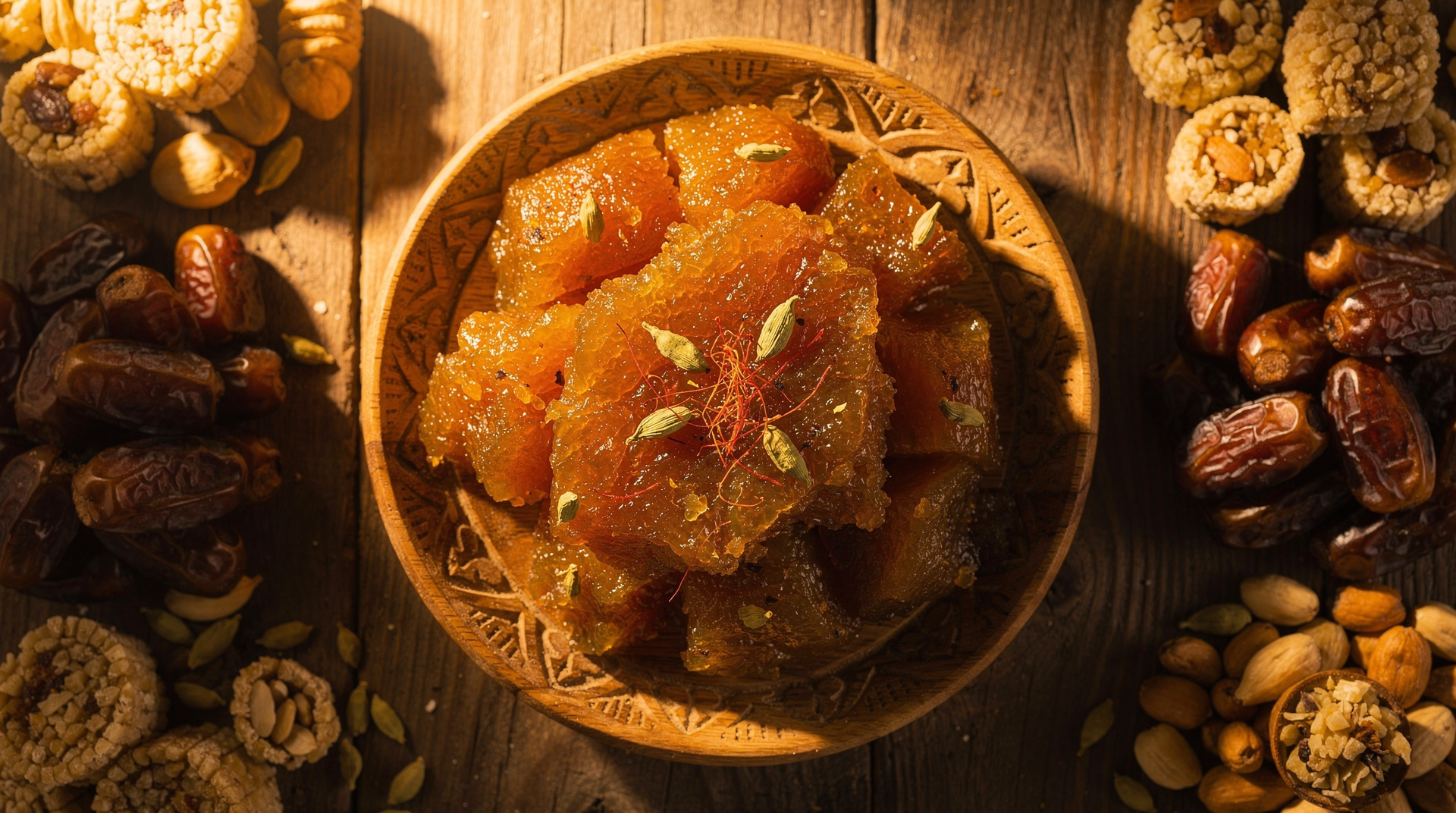
Kahwa — the Omani word for coffee, though the same term is used across the Arabian Peninsula for similar preparations — is made from lightly roasted green coffee beans spiced with cardamom and sometimes flavoured with rose water or saffron. It is served in small, handleless porcelain cups called fenjan, always accompanied by dates and, at more formal occasions, by Omani halwa. It is poured by the host from a traditional long-necked pot called a dallah, and the refilling of the cup continues until the guest signals they have had enough by making a small rocking motion with the cup.
The History of Coffee in Arabia
Coffee’s journey from its origins in the highlands of Ethiopia to its central place in Arabian social culture is one of the most important stories in food history. By the fifteenth century, coffee was being cultivated in Yemen and consumed by Sufi monks to sustain their night-time devotional practices. From Yemen, it spread rapidly through the Arabian Peninsula and into Persia and the Ottoman Empire, arriving in Europe through Venetian merchants in the sixteenth century.
Oman’s position as the dominant maritime trading power in the western Indian Ocean meant that Omani merchants were among the earliest and most consistent traders in coffee, carrying Yemeni and later Ethiopian beans throughout their trading network. The coffee culture that developed in Muscat and Omani port cities was sophisticated and cosmopolitan from its earliest days — influenced by Persian tea-house culture, Indian chai traditions, and the specific refinements of the Arabian Peninsula context.
The Omani addition of cardamom to coffee — possibly borrowed from Persian cooking, possibly indigenous — created the characteristic flavour that distinguishes Arabian coffee from Ethiopian, Yemeni, or Turkish preparations. The use of only lightly roasted beans (producing a pale, greenish liquor) further distinguishes kahwa from the dark roasted, often intense coffees of other traditions.
How Kahwa Is Made
The preparation of traditional Omani kahwa is a process of considerable care, and the quality of the result is immediately apparent to anyone who has been drinking it for a while.
The coffee beans used for kahwa are roasted to a very light degree compared to European espresso or filter coffee — the beans remain pale yellow-green or at most a light golden colour, with none of the dark, oily surface that characterises intensely roasted beans. This light roasting preserves a delicate, almost grassy flavour in the bean and keeps the caffeine content relatively low — important, since kahwa is consumed throughout the day and into the evening.
The lightly roasted beans are ground to a medium-coarse powder and combined with ground cardamom in a traditional ratio that varies by family tradition — typically between three and five cardamom pods per 30 grams of coffee. Some families add a pinch of saffron threads to the grounds; others add a splash of rose water to the brewed coffee; some add cloves, ginger, or a fragment of dried lime.
The grounds are combined with cold water in the dallah and placed directly over heat, then brought slowly to a simmer and held just below the boil for a prolonged period — sometimes 20 to 30 minutes. This extended, gentle extraction produces a clear, relatively light-coloured liquor with a distinctive flavour that is simultaneously earthy, floral, and warmly spiced. The coffee is then strained through a fine sieve or a traditional palm-fibre filter and transferred to a clean dallah for serving.
Good kahwa has a clarity of flavour that is quite different from the dense, bitter richness of espresso. It is aromatic rather than intense, warming rather than stimulating, and the cardamom lingers in the throat pleasantly for several minutes after drinking.
The Dallah: Form and Function
The dallah — the long-spouted, curved-body pot in which kahwa is brewed and served — is one of the most recognisable objects in Arabian visual culture. Its distinctive silhouette appears on the Saudi Arabian riyal banknote and is one of the most common decorative motifs in Gulf architecture and design.
Traditional Omani dallahs are made from brass or silver, often decorated with intricate engraved patterns and fitted with a woven palm-frond covering on the body to protect the hands from heat. The long, curved spout is designed to allow a steady, controlled pour into the small fenjan cups. The hinge-lid at the top allows grounds to be added and the pot to be sealed during brewing.
Modern Omani households typically use a combination of traditional copper dallahs for formal serving (they are brought out for guests) and more practical stainless-steel or ceramic brewing vessels for daily use. The presentation of coffee from a traditional dallah remains an important symbolic act regardless of whether the actual brewing took place in a modern kitchen kettle.
Collecting antique Omani dallahs has become a significant hobby and investment activity, with particularly fine or old examples commanding significant prices at auction and in the antique shops of Mutrah.
The Serving Ritual
The ritual of serving kahwa is as important as the coffee itself and follows a consistent protocol throughout Oman, varying only in minor regional details.
The host (or the youngest adult in the household, as a mark of respect for guests) stands and pours the coffee from the dallah, moving from guest to guest beginning with the most senior or honoured person present. The fenjan is filled to roughly one-third capacity — never to the top, which would make it difficult to hold and prevent the coffee from being sipped immediately.
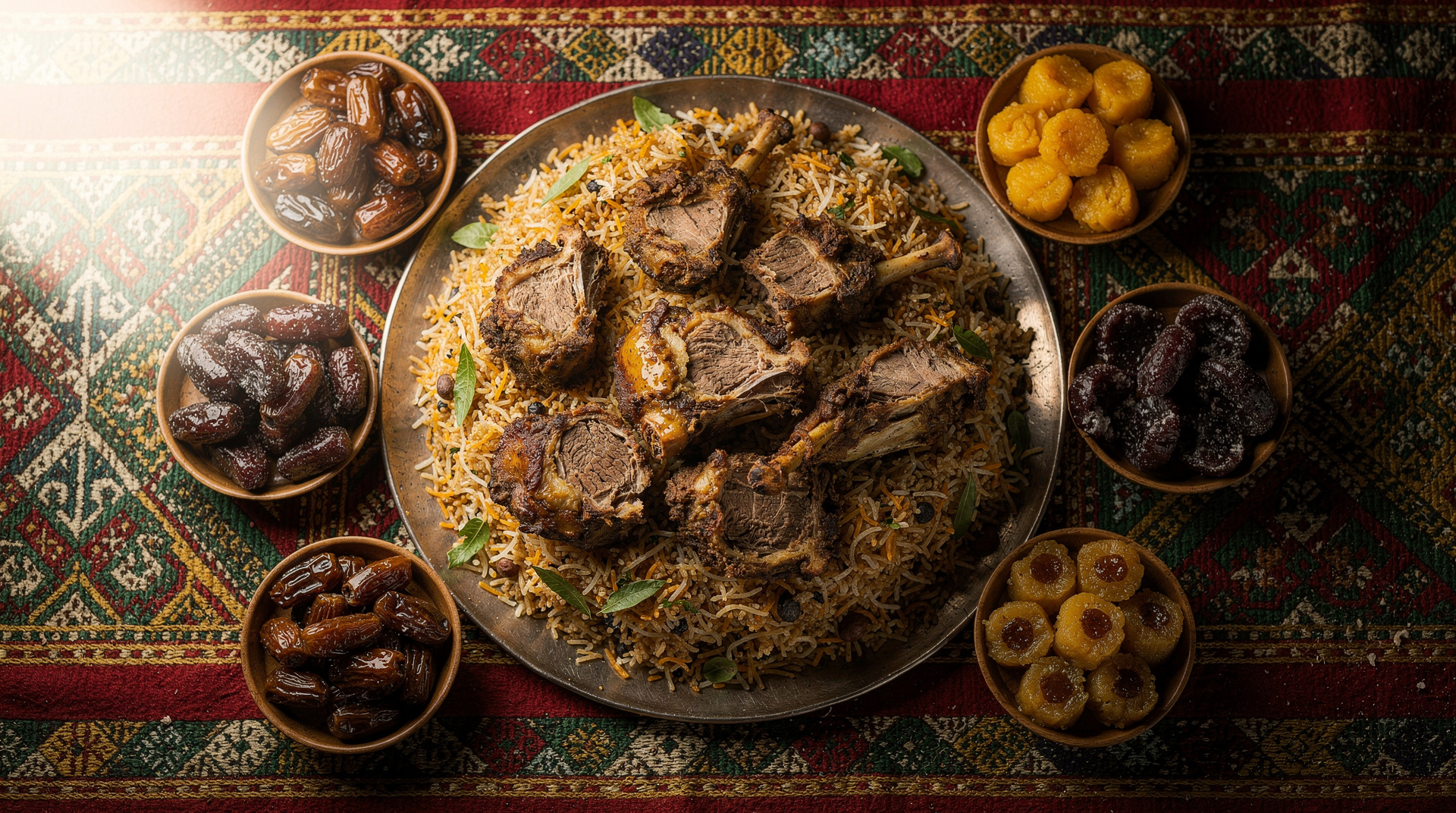
Dates and halwa are placed within easy reach of each guest simultaneously. The conventional sequence is to take a date first, eat it, then drink the coffee, then take a piece of halwa if offered. In practice, many hosts and guests adapt this sequence freely, but the provision of dates and halwa alongside coffee is non-negotiable at any formal occasion.
The host continues to refill each guest’s cup until the guest signals they have had enough. The traditional signal is a small, deliberate rocking or wobbling motion of the cup between thumb and forefinger — a gesture that is universally understood as “thank you, I have had sufficient.” Without this signal, the host will continue to pour, and refusing to signal while continuing to accept refills is considered polite acknowledgement of good hospitality.
At large gatherings, a single designated pourer (often a young male family member) moves continuously through the assembled company, keeping cups filled. This role carries social prestige and requires a certain grace of movement and attentiveness to the guests’ cups.
Coffee in the Souk and Commercial Context
Beyond the domestic hospitality tradition, kahwa has a vibrant commercial culture centred on the souk and the traditional merchant environment. In Omani souks — from Mutrah in Muscat to Nizwa in the interior — small coffee-and-dates stalls operate throughout the day, offering kahwa to shoppers and merchants at minimal cost or sometimes at no cost as a gesture of commercial goodwill.
The tradition of souk coffee reflects the inseparability of commercial and social life in traditional Omani culture. A merchant who offers you coffee while you browse his wares is not simply being hospitable; he is also creating the social atmosphere in which business can naturally and comfortably take place. Negotiating the price of a carpet or a piece of silver jewellery after sharing coffee with the seller is a fundamentally different experience from a purely transactional commercial interaction.
For visitors to Oman, accepting coffee in a souk shop is a pleasant obligation — it commits you to nothing beyond a few minutes of conversation, and the coffee is almost always genuinely good. Being invited to sit and share coffee before any discussion of purchasing is also one of the more reliable indicators that you are in a quality merchant’s establishment rather than a purely tourist-oriented shop. A Muscat half-day cultural city tour typically includes a stop at the Mutrah Souq area where the kahwa tradition can be experienced in its natural commercial setting.
The Modern Coffee Scene and Specialty Cafes
Alongside the traditional kahwa culture, Muscat has developed a sophisticated specialty coffee scene that is entirely contemporary in its character. Several independent cafes in Qurum and Al Mouj serve single-origin filter coffees, carefully prepared espresso-based drinks, and cold brew preparations that would be at home in London, Melbourne, or Seoul.
The contrast between these establishments — bright, minimal, Instagram-optimised, frequented by young Omani professionals alongside Western expatriates — and the traditional souk coffee stall a few kilometres away is striking. Both traditions coexist comfortably in Muscat, without apparent tension. Young Omanis who drink flat whites at specialty cafes also participate fully in the kahwa tradition at home and at family gatherings, and they see no contradiction.
Several specialty cafes have also made thoughtful efforts to bridge the traditions, creating menus that offer both kahwa in traditional style and modern espresso preparations, sometimes using Omani or Yemeni beans for both.
Karak Chai: The Popular Alternative
While kahwa is the traditional Omani coffee, karak chai — a very strong, spiced milk tea of Indian origin — has become enormously popular throughout the Gulf as an everyday beverage, particularly among the large South Asian expatriate communities but also increasingly among Omani families.
Karak is made by simmering black tea leaves (typically strong Assam or similar) with milk, sugar, cardamom, and sometimes ginger, cinnamon, and cloves until the mixture is reduced to a thick, intensely flavoured concentration. The result is very sweet, very strong, and very warming — and enormously addictive to those who acquire the taste.
Karak stalls operate throughout Muscat and every other Omani city, serving tea in small disposable cups at prices that are among the most affordable in the country. The social function of karak — quick, casual, inexpensive — is complementary to rather than competitive with the more formal kahwa tradition.
Coffee as a Souvenir
For visitors interested in taking Omani coffee home, several excellent options exist. The spice souks of Muscat and Nizwa sell ground arabica beans pre-mixed with cardamom for making kahwa at home — these make excellent souvenirs that are practical, long-lasting, and authentically representative of Omani flavour.
Unopened packs of Omani coffee brands (including the widely available Oman Coffee brand and various regional producers) are available in supermarkets throughout the country and travel well in checked luggage. Cardamom pods or ground cardamom purchased separately allow you to adjust the spice level when brewing at home.
Traditional fenjan cups — the small, handleless porcelain cups in which kahwa is served — are sold in souk shops throughout Oman and make elegant and practical souvenirs that are easy to pack. A set of six cups, often sold with a small dallah, is a genuinely useful object for anyone who develops a taste for kahwa.
For the full experience of Omani food culture alongside coffee, the complete Omani food guide provides the broader context in which coffee and halwa traditions are understood.
Frequently asked questions about Omani Coffee Culture: The Complete Guide to Kahwa Tradition
Is Omani kahwa very strong and caffeinated?
No — kahwa is significantly lower in caffeine than espresso or filter coffee, primarily because the beans are lightly roasted and the extraction method is gentle. Many Omanis drink multiple cups of kahwa throughout the day, including in the evening before sleep, without experiencing sleep disruption. This is the primary functional difference from the dark-roasted, intensely caffeinated coffee of European tradition.
Can I make kahwa at home?
Yes, easily. The basic recipe is simple: lightly roasted Arabic coffee beans (sold in most Middle Eastern grocery shops under names like “Saudi coffee” or “Gulf coffee”), ground with cardamom at roughly 4:1 beans-to-cardamom ratio, simmered gently in water for 20 minutes, and strained. Adding a small amount of rose water at the end is optional but adds an authentic dimension. Saffron can be included for special occasions.
Why is kahwa served in such small cups?
The small cup — usually holding 50 to 80 ml — reflects the function of kahwa as a social drink rather than a stimulant beverage. The point is not to consume a large quantity of liquid but to engage in the ritual of offering and accepting hospitality. Multiple small cups are offered and accepted; the social exchange happens over several rounds of pouring and conversation rather than one large serving.
Is it rude to decline kahwa?
In a home or formal setting, declining kahwa outright is considered mildly impolite — the cup is being offered as a gesture of welcome, and refusing it is implicitly rejecting that welcome. The appropriate response if you genuinely do not want coffee is to accept the cup, hold it for a moment, perhaps take a small sip, and then perform the rocking gesture to indicate you have had enough. This signals appreciation for the gesture without requiring you to drink a full cup.
Where is the best place to try authentic kahwa in Muscat?
The most authentic kahwa experiences are in home contexts, but for visitors, the halwa and coffee shops of the Mutrah Souk area are the most reliably good commercial option. Several traditional restaurants including Bait Al Luban and Ubhar serve proper kahwa. During a day trip to Nizwa, the souk coffee stalls offer a particularly atmospheric experience in a traditional interior setting. For broader context on Omani food and hospitality, the Omani food guide explains how kahwa fits into the wider culture of welcome and shared meals.
What is the difference between Omani kahwa and Saudi Arabian coffee?
The preparations are very similar in principle — lightly roasted, cardamom-spiced coffee — but there are meaningful differences in detail. Saudi coffee often uses a higher proportion of saffron, giving it a more pronounced golden colour and saffron flavour. Omani kahwa often has a stronger cardamom profile. Regional variation also exists within both countries, with different households and regions having their own specific spice ratios and traditions.