Hot Air Balloon Rides in Oman: Float Above Desert and Mountains
Where can I take a hot air balloon ride in Oman?
Hot air balloon flights operate primarily over Wahiba Sands (Sharqiyah Sands) desert. Flights depart at dawn from desert camps and last approximately one hour.
Above the Red Desert at Sunrise
The transition from earth to air happens quietly. The envelope fills and rises overhead. The basket lifts from the sand — not with the roar and rush you might expect, but with a gradual, almost imperceptible lightening, as if gravity is simply releasing its claim. The desert floor drops away. The dune ridges that were above eye level a moment ago are now below. And then the horizon expands in all directions until it becomes the full circle it always is but the ground never allows you to see.
Hot air balloon flight over the Wahiba Sands is one of the most distinctive experiences available in Oman — a landscape already spectacular from the ground becomes something else entirely from 300 metres in the air. The dune patterns, invisible from within them, reveal their full geometric logic from above: the crescents and ridges and star forms that the sand has built and the wind maintains in constant slow rearrangement.
This guide covers everything you need to book an Oman balloon flight — the operators currently offering flights, the logistics of the experience, what the morning looks like from preparation to landing, and practical tips for making the most of this genuinely rare opportunity.
Why Wahiba Sands for Ballooning
Hot air balloon operations require specific conditions that not every desert provides. The wind must be light — calm enough at ground level for a safe inflation and landing, predictable enough in direction to plan the flight path, and stable enough at altitude to avoid dangerous turbulence. The terrain must permit a safe landing zone at the end of the flight, which means the spectacular megadunes of the central Wahiba are not suitable as landing areas despite being the most dramatic landscape.
The western margin of Wahiba Sands, where the main desert camps are concentrated, provides the ideal conditions. The dune heights here are substantial — 40 to 80 metres — but the terrain includes enough sandy flat sections between dune ridges to allow controlled landing. The wind patterns in this area during the November through April season are remarkably consistent: light southeast breezes at ground level shifting to a gentle southwest aloft, delivering the balloon back toward the launch area over the course of a flight.
The colour of the Wahiba sand — that deep iron-oxide red that intensifies as the sun rises — is particularly spectacular from the air. The contrast between the red dunes, the occasional green of a wadi floor, and the deep blue morning sky creates aerial views that no other Omani landscape quite replicates.
The Balloon Flight Experience: What to Expect
Pre-Dawn Preparation
Balloon operations begin early. The launch timing is determined by the pilot the previous evening based on weather data, but most Wahiba Sands flights aim to be in the air within thirty minutes of sunrise. This means a wake-up call at 04:30 to 05:00, a brief breakfast in the dark at the desert camp, and a transfer to the launch site in the pre-dawn.
The inflation is the most theatrical part of the pre-flight preparation. The envelope — the balloon fabric — is laid out on the sand and filled first with cold air from a powerful petrol fan. The process transforms a pile of nylon into a structure the size of a small building, held down by the crew while the burner heats the air inside. As the hot air proportion increases, the envelope rises from horizontal to vertical and the basket, still on its side, rights itself and settles onto the sand.
Passengers climb in when the pilot is satisfied with the envelope’s temperature. The basket holds between six and twelve passengers depending on the operator and basket configuration. Most Oman operators run small groups for the quality of the experience.
The Flight
The first ten minutes of a desert balloon flight are spent adjusting to the new perspective. The instinct is to look down at the sand — the dune forms are immediately compelling. Then the horizon appears, and it keeps expanding. By the time the balloon reaches its cruising altitude of 150 to 500 metres, the desert stretches to every compass point and the scale becomes clear in a way that ground-based experience cannot communicate.
The pilot controls altitude using the burner — short, deliberate burns to maintain height, longer burns to climb, allowing the balloon to cool slightly to descend. The lateral movement is entirely determined by the wind at different altitudes, and the pilot’s skill lies in reading these layers and choosing the altitude that delivers the desired flight path.
Desert wildlife is occasionally visible from the balloon. Sand gazelles grazing in the early morning, before the heat rises and they retreat to shade, are a common sighting. Oryx tracks in the sand, visible from above as trails connecting dune bases, give evidence of their nocturnal movements. Once, more rarely, the animals themselves.
The sound of a balloon in flight is the sound of silence interrupted only by the burner. Between burns, the quiet is total — no engine, no wind noise (because the balloon moves with the wind), no ground sounds at 400 metres of altitude. Many passengers describe this silence as one of the most unexpected and affecting parts of the experience.
The Landing
Desert landings are collaborative affairs. The pilot chooses the landing area — a flat section between dunes with sufficient sand for a gentle touchdown — and the ground crew, who have followed the balloon in vehicles throughout the flight, position themselves to assist. The final approach is slow and deliberate.
The basket may drag slightly on sand before coming to rest, or the pilot may achieve a standstill landing in good conditions. Either way, the sensation of touching ground is surprisingly abrupt — the contrast with the silence of flight makes the return to earth feel more dramatic than it is.
After landing, a traditional Omani breakfast is served in the desert. Dates, coffee, fresh bread, and lighter fare are customary. Some operators add a celebratory toast, following the ballooning tradition of marking the first flight with champagne or a non-alcoholic equivalent.
Oman Balloon Operators
Hot air balloon operations in Oman have been established primarily through a small number of specialist operators, and the market has seen some change as the activity has grown. The established name in Omani ballooning is Oman Balloon — an operator with several years of Wahiba Sands experience and a safety record that reflects their operational maturity.
All commercial balloon operators in Oman must be licensed by the Civil Aviation Authority and pilot qualifications are regulated. When booking, confirm that the operator holds current CAA licensing and that the pilot has the required hours and ratings for commercial passenger operations in Oman.
Flights are typically offered exclusively through the operator’s own booking channels or through a small number of authorised resellers. Many Muscat-based tour operators can arrange balloon bookings as part of a desert package.
Pricing and Booking
Hot air balloon flights in Oman are a premium experience, priced accordingly. Expect to pay between 180 and 250 Omani Rials per person (approximately USD 470 to 650) for a standard flight of approximately one hour. The price typically includes hotel or camp pickup and return, the flight, post-flight breakfast, and a certificate of flight.
Booking in advance is strongly recommended. Balloon flights have limited daily capacity — typically one or two flights per day in the season — and the popular winter months book out quickly. A minimum advance booking of two to four weeks is recommended; a month or more for peak season dates in December and January.
Flights are weather dependent. The operator will make a go/no-go decision on the morning of the flight based on current conditions. If a flight is cancelled due to weather, reputable operators offer either a reschedule or a full refund. Confirm the cancellation and refund policy before booking.
Photography from a Hot Air Balloon
The photography opportunities from a balloon over Wahiba Sands are exceptional, and some planning makes the difference between good photographs and outstanding ones.
The best images come in the first fifteen to twenty minutes of flight, when the angle of the rising sun creates long shadows across the dune faces that reveal their full topographic complexity. This window narrows as the sun climbs — by forty-five minutes into the flight on a clear day, the light is already becoming harsher and flatter.
A wide-angle lens (or the wide-angle mode on a phone) captures the full desert panorama. A longer focal length isolates individual dune patterns and detail. Shooting toward the sun in the early minutes, with the dune ridges backlit, creates silhouette effects that work particularly well for the sweeping dune forms.
Stabilise by bracing against the basket wall during burner operations, which create minor vibration. Between burns, the basket is completely still — steadier than any vehicle and requiring no special technique for sharp images.
Protect camera equipment from the balloon’s exhaust — the burner directs heat straight up through the envelope, but the basket and immediate area are clean. Sand, however, is present from takeoff and landing. Keep lens caps on except when actively shooting and use a lens cloth to clear any particles before shooting.
Combining Ballooning with Desert Activities
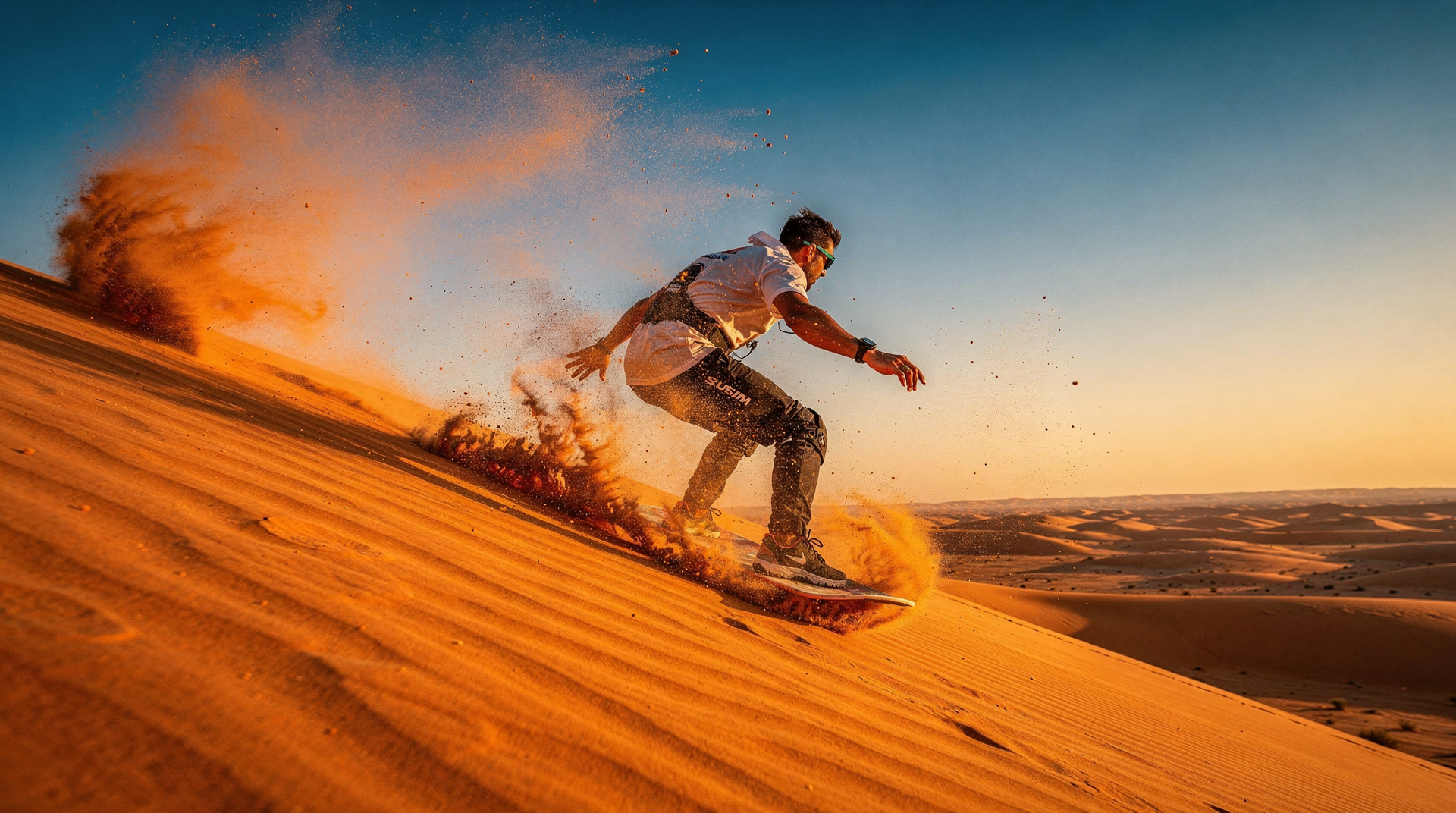
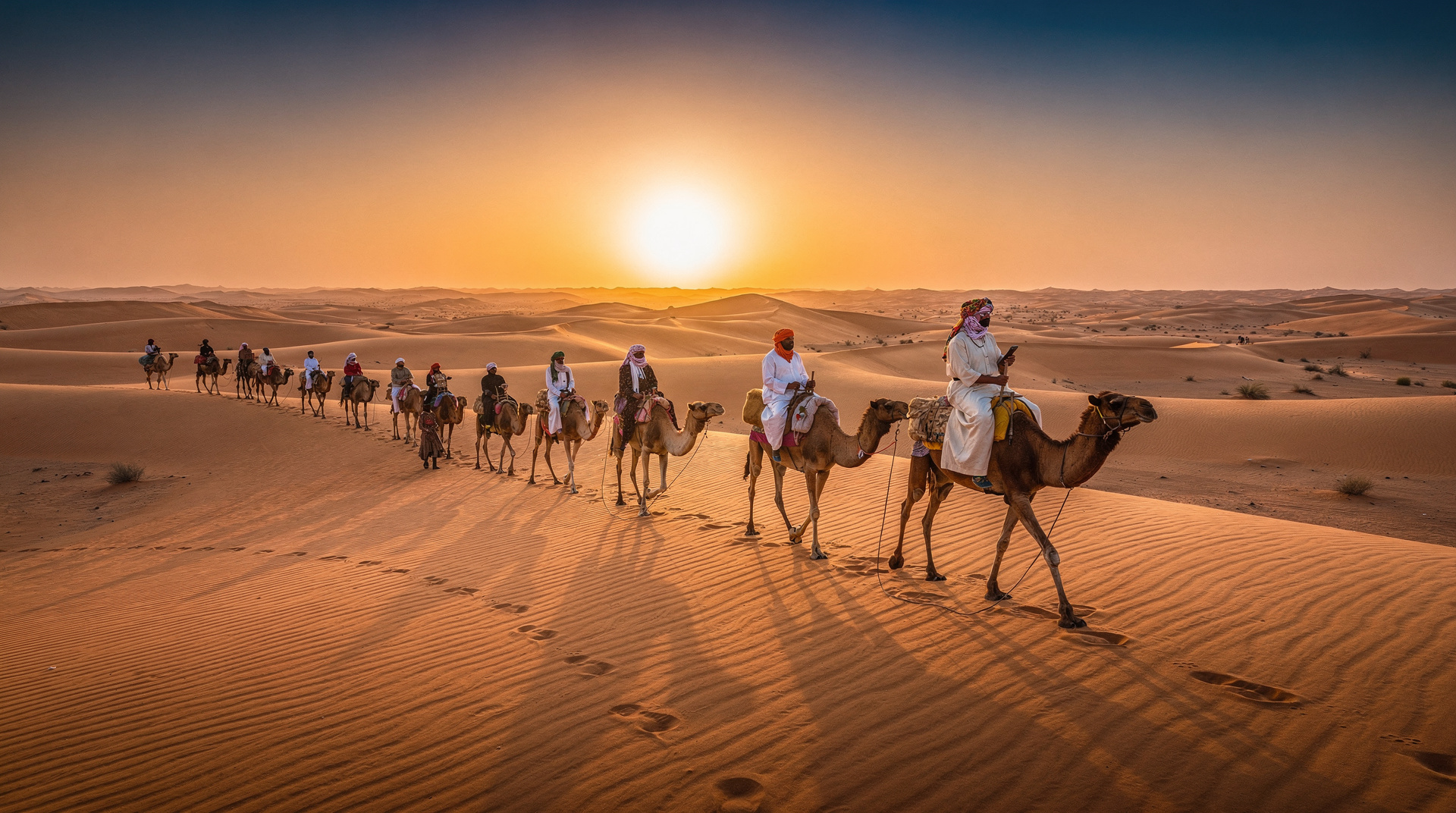
The most immersive way to experience the Wahiba Sands balloon flight is within a two-night desert camp stay that includes the full range of desert activities. A sequence of arriving at the camp in the afternoon, taking a camel ride at sunset, sleeping in the desert, rising before dawn for the balloon flight, and spending the rest of the morning on sandboarding and a 4WD dune safari covers the complete Wahiba Sands experience in forty-eight hours.
See the individual guides to camel riding in Oman and sandboarding in Wahiba Sands for detail on those activities. The guide to desert camping covers the full range of camp options, from basic Bedouin-style to the luxury tented camps that attract a different clientele to the same landscape. Those who prefer a single-day organised experience of the desert without committing to a balloon flight can consider the Wahiba Sands and Wadi Bani Khaled desert day trip from Muscat, which covers dune driving, a desert camp visit, and the turquoise oasis pools of Wadi Bani Khaled in a single full day.
Safety Considerations
Hot air ballooning has a good safety record globally when operated by competent, licensed pilots with well-maintained equipment. The specific risks of desert ballooning are primarily weather-related — a significant change in wind speed or direction, or the development of thermals as the sand heats, can complicate landing. Experienced desert balloon pilots account for these factors in their pre-flight planning and in-flight decisions.
Passengers should follow all crew instructions exactly, particularly during landing. The crew will specify whether to hold on, bend knees, or brace in specific directions — these are not decorative suggestions. The vast majority of desert balloon experiences conclude without incident, but the instructions exist for the situations that do not.
Inform the operator before booking of any relevant health conditions. Ballooning is generally low physical-demand but the basket sides require stepping over to enter and exit, which requires some mobility. Pregnancy and recent surgery are typically grounds for the operator to recommend against flying.
Frequently asked questions about Hot Air Balloon Rides in Oman: Float Above Desert and Mountains
How high does the balloon fly over Wahiba Sands?
Standard flights operate between 100 and 500 metres above the dune surface, with the pilot choosing altitude based on wind conditions and the desired flight path. The panoramic views that make the experience distinctive are established from around 150 metres upward.
Can children go on the balloon flight?
Most Oman operators set a minimum age of around five to six years old and a minimum height requirement for safety harness fitting. Children typically enjoy the experience, though the pre-dawn start and cold morning air require appropriate clothing and preparation. Discuss with the operator when booking.
What happens if my flight is cancelled due to weather?
Reputable operators offer either a reschedule to an alternative date or a full refund for weather cancellations. Confirm this policy explicitly before payment. Weather cancellation is relatively uncommon in the November through March core season but does occur, particularly during the transition months.
Is there a weight limit for balloon passengers?
Most operators set a maximum passenger weight of around 120 kilograms (265 pounds) for safety reasons related to basket capacity and lift calculations. Some operators can accommodate higher weights in specific basket configurations — ask directly when booking.
How far from Muscat are the balloon flights?
The Wahiba Sands launch area is approximately 250 kilometres from Muscat — roughly two and a half to three hours of driving. Most operators offer pickup from Muscat hotels the previous afternoon, overnight accommodation at a desert camp, the early morning flight, and return to Muscat by late morning. This format avoids the logistical challenge of the pre-dawn drive from the capital.
Is the flight operated year-round?
The core season runs from October through April. Some operators do year-round flights, but the summer months of June through September are generally avoided due to heat, unpredictable thermals as the desert surface heats rapidly after sunrise, and the limited suitable weather windows. The November through March period represents the most reliable and comfortable flying conditions.
What the Balloon Reveals: Landscape from Above
The perspective that a hot air balloon provides over Wahiba Sands is not merely a higher version of what can be seen from a dune crest. It is categorically different. From the ground within the dunes, the visual world is dominated by the nearest dune faces — context collapses to the immediate. From a balloon at 300 metres, the dune system becomes comprehensible as a whole — the linear dunes, the star dunes, the interdune corridors, the occasional dark patch where vegetation indicates a buried water source. The mathematics of the landscape is revealed in a way that ground observation never allows.
This aerial legibility of the desert has practical implications beyond the aesthetic. The routes through the dunes that Bedouin families memorised over generations — the paths between dune systems that allow a camel caravan to navigate by landmarks invisible to anyone not already knowing where to look — become partially decipherable from above. The dune ridges that mark the edge of different sand types, and which experienced camel handlers use as navigational references, are visible from the balloon as clear as lines on a map.
Seeing the landscape from this height, with a guide who can point out the navigational logic of the terrain below, is one of those moments in travel that revises understanding rather than simply adding to it.
The Balloon as a Luxury Desert Experience
Hot air ballooning in Wahiba Sands occupies the upper tier of the Omani desert experience market, and the operators who offer it have oriented their service accordingly. The pre-flight pickup from Muscat hotels, the overnight stay at a quality desert camp, the champagne-style post-flight breakfast, and the certificate of first flight are all components of a product designed for the traveller who wants an exceptional rather than merely adequate experience.
For couples celebrating a significant occasion, the balloon flight over the desert at sunrise followed by a private breakfast is among the most distinctive experiences available anywhere in the Gulf region. The combination of the pre-dawn drive to the launch site, the inflation under the stars, the flight through the sunrise, and the post-flight celebration in the desert is a sequence that requires several hours but generates memories disproportionate to the time invested.
Several desert camps offer the balloon flight as the centrepiece of a specifically designed romance package that includes private tent accommodation, sunset camel rides, and a dedicated private breakfast after the balloon lands. These packages are available at a small number of the higher-end camps and should be booked directly with the camp well in advance of travel.