Best Family-Friendly Beaches in Oman: Safe Swimming and Shallow Waters
Which beaches in Oman are safest for young children?
Qurum Beach in Muscat, Al Mouj Beach, and Barr Al Jissah are the best for families with young children — shallow entry, calm water, and facilities nearby. Bandar Jissah and Shatti Al Qurum also have lifeguards during peak season.
Taking the Kids to the Beach in Oman
Oman is an outstanding destination for families, and its beaches form a central part of what makes it work so well for parents travelling with children. The combination of warm, generally calm water from October through April, a national culture that is welcoming toward children, and a range of beach types from fully serviced resort shores to wild natural bays gives families real choice.
The challenge is knowing which beaches actually suit children of different ages. Not every Omani beach is suitable for families — some have powerful surf, strong lateral currents, or no facilities within reach for hours. The beaches listed in this guide have been selected specifically because they combine safe swimming conditions with the practical features that make a beach day manageable when children are involved: shade, clean toilets, food or drinks nearby, and ideally a lifeguard presence during busy periods.
This guide is organised by suitability for different age groups, then by region, so you can match the beach to your children’s ages and your base of operations.
What Makes a Beach Family-Safe in Oman
Before the specific recommendations, it is worth understanding what to look for when assessing any Omani beach for children. The key variables are:
Water entry: A gently shelving sandy bottom that deepens slowly over a long distance is far safer than a beach where the bottom drops away sharply within a few metres of the waterline. Toddlers and non-swimmers need at least 20 metres of shallow water (under one metre depth) to play safely.
Current and surf: Oman’s Gulf of Oman coast is generally calm, particularly in the bays and inlets around Muscat. Exposed beaches on the Arabian Sea coast — particularly those south of Sur and on Masirah Island — can have significant swell and rip currents that make them inappropriate for young children regardless of how beautiful they look.
Shade: The Omani sun is not to be underestimated even in October. Beaches with natural shade from trees or cliffs, or where umbrellas and sun shelters are available, allow significantly longer outings than completely exposed stretches.
Facilities: Toilets, showers (to rinse salt and sand), and nearby food availability transform a two-hour beach trip into a full-day experience. Their absence compresses the timeframe considerably when children are involved.
Lifeguards: Few public beaches in Oman have dedicated lifeguards. Those that do — primarily resort beaches and a small number of public beaches in Muscat during busy periods — represent a meaningful additional safety margin.
Best Beaches for Toddlers and Young Children (Under 6)
Qurum Beach, Muscat
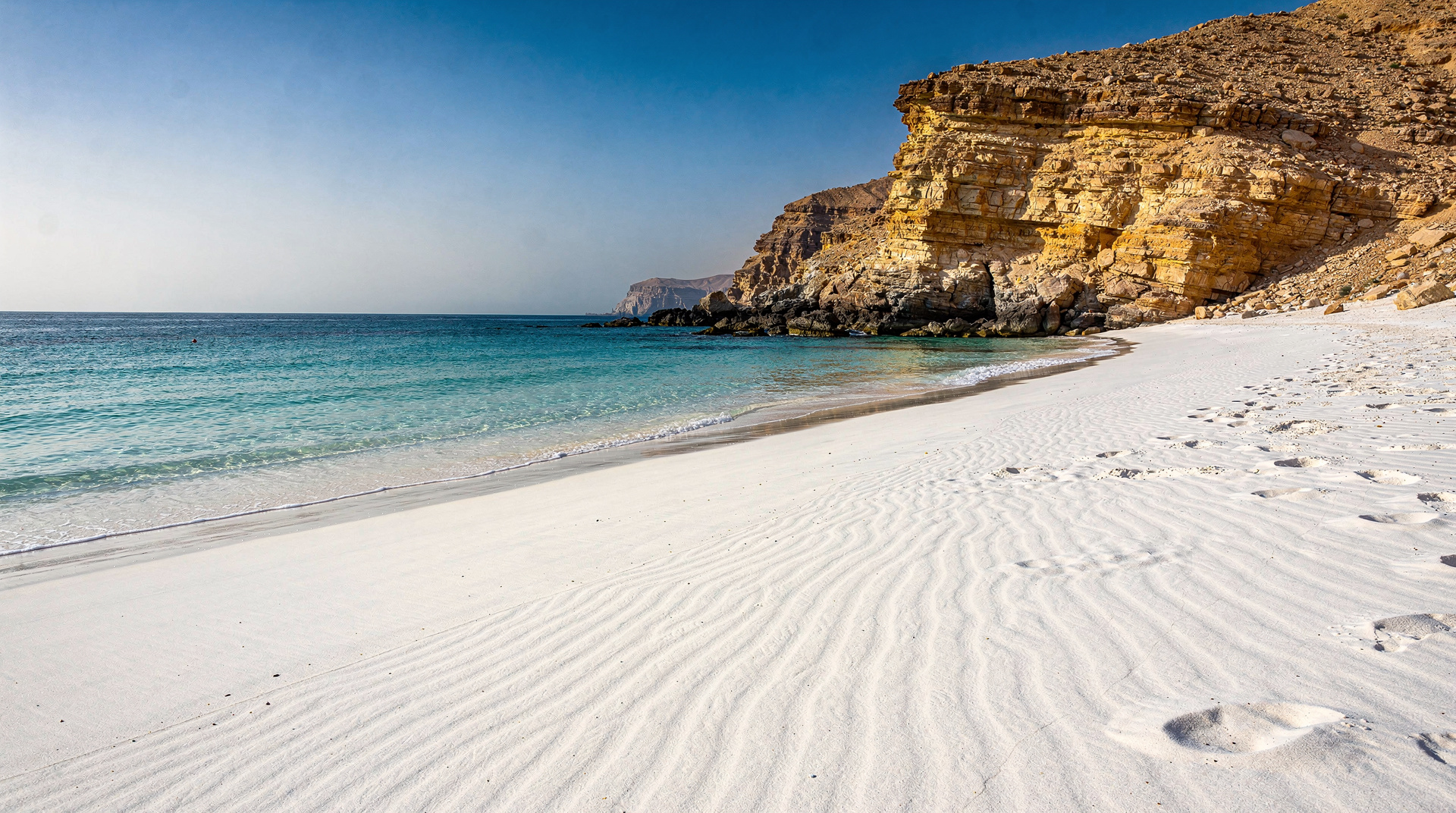
Qurum is the benchmark family beach in Muscat, and for good reason. The entry is exceptionally gradual — a family can walk 30 or 40 metres from the waterline before the water reaches an adult’s knee. This long, shallow wading zone is ideal for toddlers who want to splash and play without being threatened by deeper water nearby.
The beach is cleaned regularly, the sand is fine and soft, and the adjacent Qurum Natural Park provides shade, walking paths, and a children’s play area for when the beach portion of the day is done. Several cafes and small restaurants are within five minutes’ walk. Parking is available along the corniche road.
The one limitation is that Qurum can become crowded on Fridays and public holidays. Arriving before 9am secures a good spot and parking before the rush begins. Weekday mornings in the October to April season are the most relaxed experience.
Shatti Al Qurum
Adjacent to Qurum and sharing similar gentle-entry characteristics, Shatti Al Qurum is slightly more sheltered thanks to its position within the bay. The water here tends to be marginally calmer than at the main Qurum beach, which makes it slightly preferable for the very youngest children.
The strip along the beach has changed significantly in recent years, with several good restaurants and cafes now operating from the buildings that face the shore. This makes the beach far more manageable for a full day — you are not dependent on having packed every meal in advance.
Al Mouj Marina Beach
The beach at Al Mouj (The Wave Muscat) is a private development but access to the beach strip itself is generally possible for day visitors. The advantage is a maintained, clean shoreline with excellent facilities including showers, toilets, and immediate food access at the marina restaurants.
The water entry is calm and the setting is more polished than the public beaches. It suits families who want the beach experience combined with resort-quality surroundings. Check current access arrangements before visiting as policies do occasionally change for non-residents.
Best Beaches for Older Children and Confident Swimmers (6 to 12)
Barr Al Jissah and Bandar Jissah
Twenty-five kilometres east of central Muscat, the Barr Al Jissah area encompasses several small beaches tucked into a limestone bay. The main beach at Bandar Jissah is calm, sheltered, and has the nearby Shangri-La resort as a backdrop — though the beach itself is accessible to non-guests.
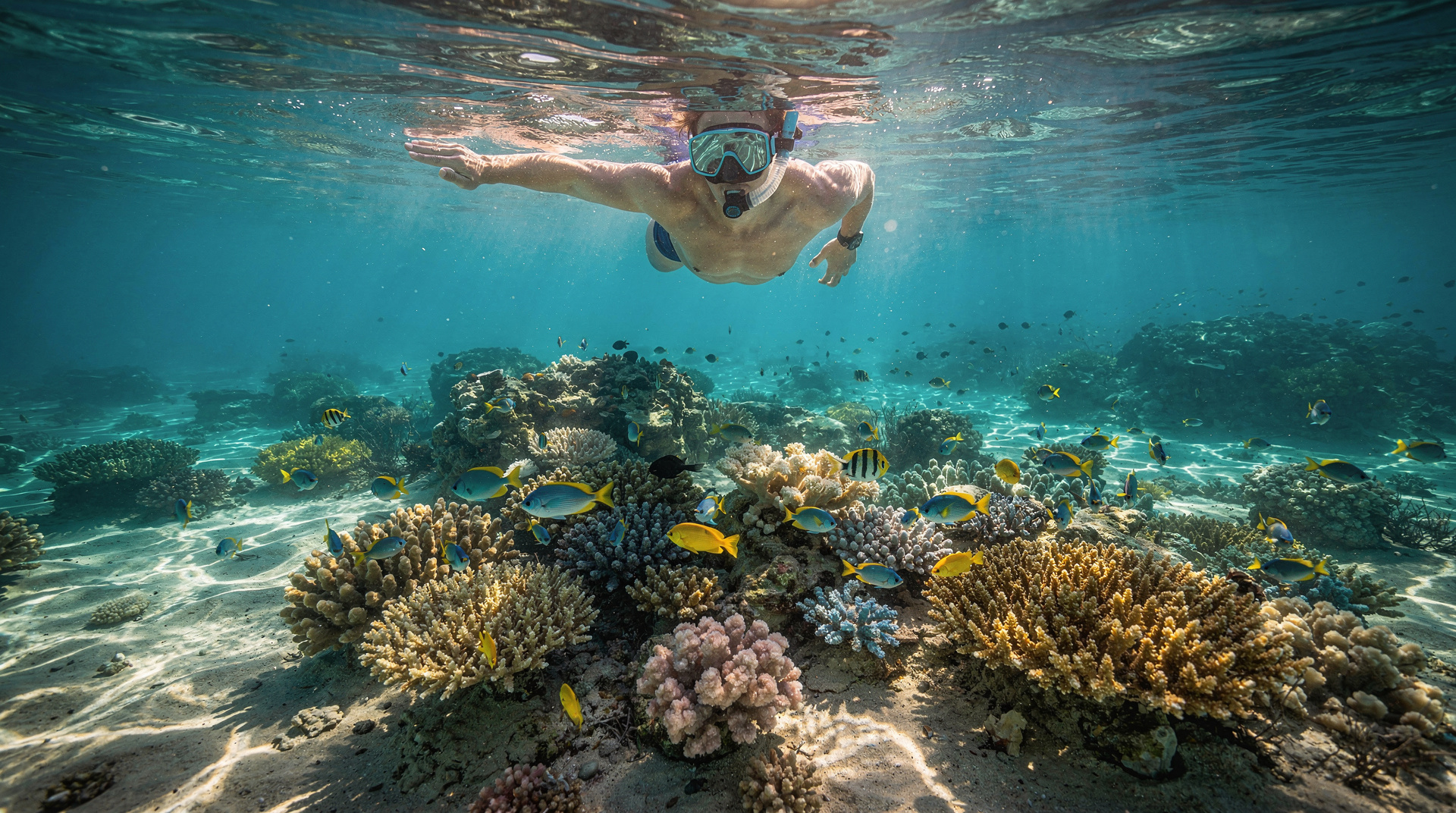
For older children who want to snorkel rather than just paddle, the rocky outcrops at the edges of the bay support coral and fish that respond well to explorers. The area is calm enough for beginning snorkellers. Bring your own equipment or rent from tour operators at the resort.
The approach road passes through dramatic mountain scenery, which adds to the feeling of having arrived somewhere special. The drive from Muscat centre takes around 30 minutes.
Yiti Beach
Continuing along the coast past Bandar Jissah, Yiti offers a longer and wider beach in a more open setting. It is a favourite with Muscat families on weekends and has the feel of a genuine local beach rather than a tourist destination.
The swimming is good for older children who can manage mild surf. The wave action is gentle but present, making it more engaging for children who are ready for something beyond flat, lagoon-like water. Small food stalls operate on weekends. Weekday visits offer more space.
Masirah Island Beaches (North Shore)
For families undertaking a longer journey, the north shore of Masirah Island has beaches that combine excellent swimming conditions with the extraordinary experience of sea turtle nesting activity during the right season. The water on the north shore is calmer than the exposed east coast.
The island requires either a ferry crossing from Shannah or a flight from Muscat. This logistics complexity means it suits families who are specifically seeking a multi-day island experience rather than a day trip. The reward is beaches with almost no other visitors and an atmosphere that feels entirely removed from the tourist circuit.
Resort Beaches With Supervised Swimming
Shangri-La Barr Al Jissah
The most established family resort beach option in Oman, the Shangri-La complex has three pools and beach access with staff presence during operating hours. The resort has a dedicated children’s section with age-appropriate activities. Day passes for non-guests are available at certain periods — contact the resort directly for current pricing.
The beach itself is immaculate, the water entry is managed and safe, and the overall infrastructure — showers, changing rooms, food and beverages, shade structures — is the best available at any beach in the greater Muscat area.
Anantara Al Jabal Al Akhdar and Al Baleed (Salalah)
Families staying in Salalah have resort beach options at Anantara Al Baleed, where the beach is sheltered and the infrastructure excellent. Salalah’s coastline outside the khareef monsoon season (September through May) has good swimming conditions and the beach culture is relaxed.
The Salalah resort beaches suit families combining a Muscat stay with time in the south. For information on the broader Salalah experience, see the guide to the khareef season in Salalah.
Dolphin Watching as a Beach-Day Extension
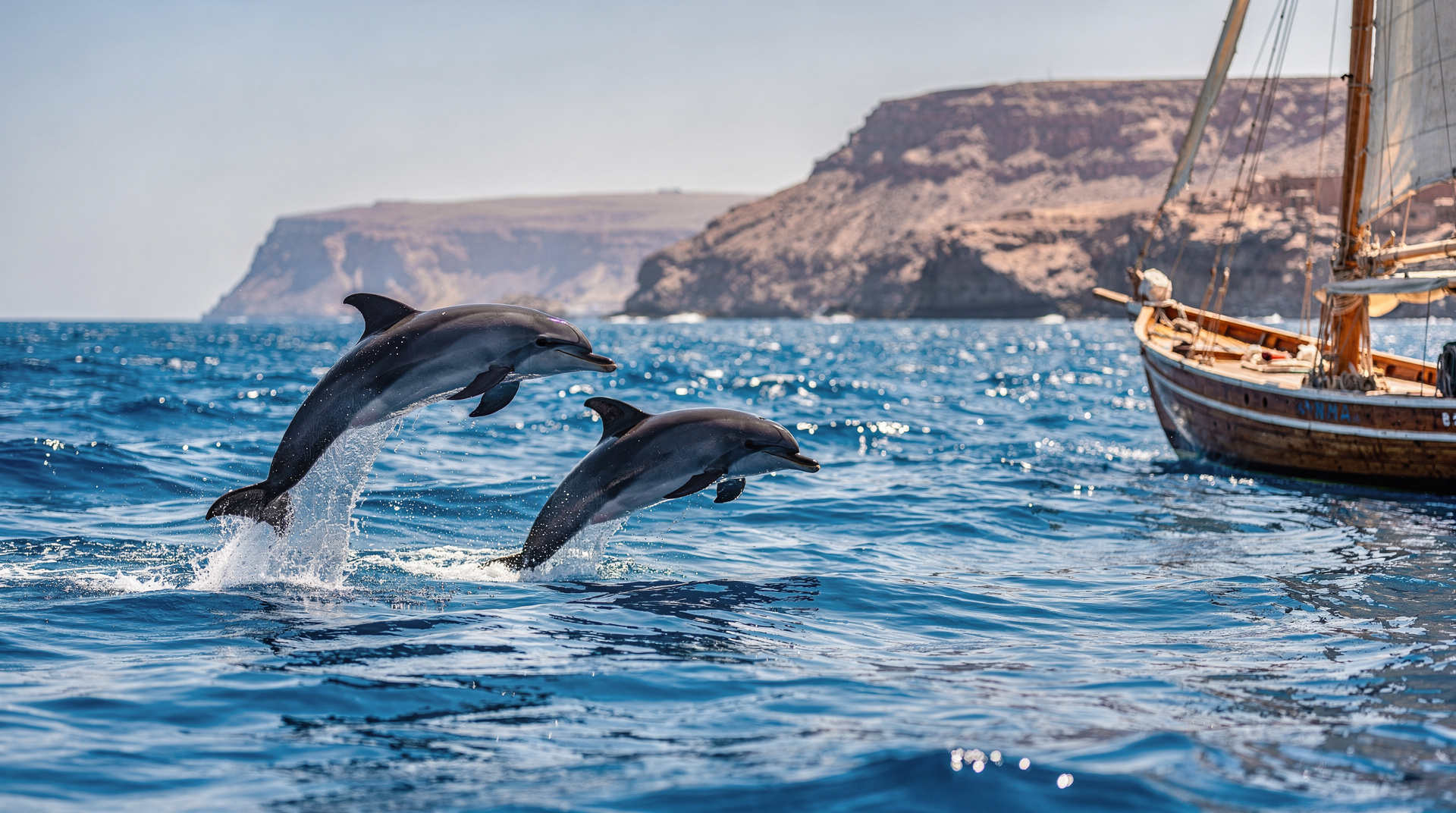
One of the most memorable additions to a family beach day near Muscat is a morning dolphin-watching and snorkelling trip before heading to the beach. Spinner dolphins are extraordinarily common in the Gulf of Oman and boat trips departing from the Muscat area regularly encounter pods of hundreds of animals.
The Muscat dolphin watching and snorkelling tour combines both activities in a single morning departure — typically returning by early afternoon, which works perfectly before a beach afternoon. Children from around age five upwards generally manage the boat element well; the operators are experienced with families.
Practical Tips for Beach Days With Children in Oman
Sun protection: The UV index in Oman is extreme even in winter. Apply SPF 50 before leaving accommodation, reapply every 90 minutes, and cover children in rash vests or UV-protective swimwear. The midday sun (11am to 3pm) is particularly fierce even in February.
Water temperature: Gulf of Oman water temperature ranges from around 22 degrees Celsius in January to 32 degrees in August. For most children, the October through April window offers comfortable swimming temperatures without the oppressive air heat of summer.
Dress codes: While beach attire is entirely normal on Omani beaches, changing into cover-ups for the drive to and from the beach is considerate of local norms and appreciated. Resort beaches are more relaxed; public beaches closer to residential areas warrant more modesty.
Jellyfish: Box jellyfish and other stinging species appear periodically, particularly in summer months. Check locally before letting young children into unfamiliar water. Most beach-using locals are aware of current conditions and will share information readily.
Timing: The best beach hours are 7am to 11am and 4pm to sunset. The mid-afternoon period is uncomfortable regardless of season and should be spent in shade or air conditioning. This two-session structure works extremely well with children who need a midday rest.
What to bring: Ice box with drinks and snacks (beach vendors are inconsistent outside main public beaches), beach tent or large umbrella, reef-safe sunscreen, snorkelling gear for older children, a change of clothes for the drive back, and waterproof bags for wet swimming gear and towels. A first-aid kit with antiseptic wipes and plasters is a sensible addition for families with young children who are likely to collect minor scrapes and sand abrasions over a full beach day.
Getting to Muscat’s Family Beaches
Most of Muscat’s family beaches are accessible by taxi or ride-hailing app (Careem is widely used). The Qurum and Shatti Al Qurum beaches are easily reached from anywhere in the Muscat urban area. Bandar Jissah requires a car and the road out of the city, but the drive is straightforward and the route is well-signed.
For families without a hire car, the best strategy is to combine a morning dolphin-watching boat trip with an afternoon at one of the Muscat city beaches, all reachable by app-based transport. For families with a car, the Barr Al Jissah area and Yiti offer excellent full-day destinations without needing to drive more than 30 minutes from the city centre.
If your family trip extends beyond Muscat to include the interior or desert regions, the contrast between beach days and desert days is one of the great pleasures of an Oman itinerary. Travelling with children between the coast and Wahiba Sands requires some preparation — see the family desert experience guide for what to expect and how to manage the transition between two very different environments. For all transport logistics including hire car options and getting between destinations, the guide to getting around Oman covers the full picture.
Snorkelling-capable older children will get significantly more from a dedicated snorkelling trip beyond the main beaches — the Oman snorkelling guide covers accessible sites for different age groups and experience levels.
Frequently asked questions about family beaches in Oman
Are there lifeguards on Oman’s public beaches?
Most public beaches in Oman do not have dedicated lifeguards. Lifeguard presence is more common at resort beaches (Shangri-La, Anantara) and occasionally at major public beaches like Qurum during busy periods. Never assume a beach has a lifeguard unless you have confirmed it directly.
Which beaches are safe for children who cannot swim?
Qurum Beach and Shatti Al Qurum are the safest for non-swimmers due to their exceptionally gradual entry. The water deepens so slowly that non-swimmers can enjoy the sea while remaining in depths that an adult can stand comfortably beside them in.
Is it safe to swim at Oman’s beaches in terms of water quality?
Generally yes. Oman maintains relatively good water quality at its main beaches. The beaches around Muscat are monitored periodically and major pollution events are rare. More isolated beaches with no development nearby tend to have very clean water. Avoid swimming near harbour entrances or industrial areas.
What age is appropriate for snorkelling at Oman’s family beaches?
Most children from age seven or eight can manage basic snorkelling with practice. Barr Al Jissah and Bandar Jissah have calm enough conditions for beginners. Adult supervision in the water is essential. Fins, mask, and snorkel sized for children are available at dive shops in Muscat.
Can we visit Oman’s beaches during Ramadan?
Yes, beaches remain accessible during Ramadan. However, eating, drinking, or playing loud music on public beaches during daylight hours is inconsiderate of local fasting practices and technically prohibited in public spaces. Modesty of dress is particularly important during Ramadan.
Are there changing facilities and toilets at Oman’s beaches?
Qurum Beach and Shatti Al Qurum have basic public toilet facilities nearby. Resort beaches have full changing rooms. More remote beaches typically have nothing — planning accordingly (packing what you need, including bags for waste) is important.
What is the best month for a family beach trip to Oman?
November through February is ideal — comfortable swimming temperatures, lower air temperatures (mid-20s Celsius), minimal wind, and clear water. March and October are also excellent. April begins to feel warm at midday. May through September is very hot and beach visits become purely early morning affairs.
Are there any dangerous marine animals at Oman’s beaches?
Stonefish (which hide on rocky bottoms) and the occasional sea urchin are the most relevant hazards. Water shoes are a sensible precaution when walking on rocky sections. Sharks are present in Omani waters but incidents involving swimmers at the main beaches are extraordinarily rare. Jellyfish appear periodically in summer.