Oman Food You Must Try: 15 Essential Dishes for Every Visitor
A Cuisine Built on Trade, Spice, and Tradition
Omani food tells the story of a seafaring empire. For centuries, Muscat was one of the Indian Ocean’s most important trading ports, and the spices, cooking methods, and ingredients that passed through left a permanent mark on the national cuisine. You will find echoes of East Africa in the use of tamarind and coconut, of Persia in the saffron and rose water, of the Indian subcontinent in the cardamom and turmeric. The result is a cuisine unlike anything else in the Gulf — complex, aromatic, and deeply satisfying.
Oman is not yet on the global food tourism map in the way that Lebanon or Morocco are, which means eating here still feels like discovery rather than performance. The dishes below represent fifteen reasons to be genuinely excited about eating your way through this country.
1. Shuwa
If there is one dish that defines Omani food culture, it is shuwa. Whole legs of lamb or goat are rubbed with a blend of dried limes, turmeric, cumin, coriander, black pepper, and chili, then wrapped in palm leaves and lowered into an underground sand oven — an earth pit — where they cook for anywhere from twelve hours to two full days.
The result is extraordinary: meat that falls from the bone without any resistance, deeply smoky, fragrant with spice, with a texture that is simultaneously tender and substantial. Shuwa is traditionally prepared for Eid celebrations and major family occasions, which means you will rarely find it on a restaurant menu. The best way to experience it is through a home invitation or a cultural experience with a local guide. Look out for community events during Eid al-Adha in particular.
2. Harees
Harees is ancient, simple, and deeply comforting. Whole wheat grains and meat — usually chicken or lamb — are slow-cooked together for hours until they break down into a thick, smooth porridge. The result looks simple but tastes remarkable: a rich, slightly sticky mass flavoured with cinnamon, saffron, and ghee. It is a Ramadan staple and a standard dish at weddings and celebrations.
The consistency is the thing people either love or need to adjust to. Think of it as a savoury, meat-rich congee. Served with a drizzle of clarified butter on top and eaten with bread, it is genuinely sustaining. Many traditional Omani restaurants serve harees year-round, not just during Ramadan.
3. Majboos
Majboos — also known as kabsa in neighbouring countries — is the rice dish that sits at the centre of Omani daily life. Long-grain rice is cooked in a spiced broth with tomato, dried limes (loomi), cardamom, saffron, and rose water, then topped with slow-braised chicken, lamb, or fish. The dried lime is the key ingredient: it gives the dish a distinctive sour depth that you will not find in similar preparations elsewhere.
Every family has its own version of majboos, adjusted for local spice preferences and available ingredients. The coastal version typically features hammour (grouper) or kingfish. Inland, chicken or goat dominates. You will find majboos at virtually every Omani restaurant, and it is the reliable default order when you are not sure what to choose.
4. Mashakik
Think of mashakik as Oman’s answer to seekh kebab, but distinct in its preparation and spicing. Minced lamb or beef is blended with onion, coriander, cumin, turmeric, and dried chili, then shaped onto flat skewers and grilled over charcoal. The exterior chars lightly while the inside stays moist and fragrant.
Street stalls selling mashakik appear in every souq and market, and they are uniformly excellent. Order them wrapped in khubz (flatbread) with fresh tomato and green chili for the authentic street version. The Muttrah Souq area in Muscat is particularly good hunting ground for these after sunset.
5. Muqalab
Muqalab is one of those dishes that challenges assumptions about offal-averse eating cultures. Lamb’s liver and lungs are sliced, heavily spiced with cumin, turmeric, dried lime, and chili, then cooked rapidly in a hot pan until caramelised on the outside and just-done within. The result is intensely savoury, a little smoky, and unlike anything most visitors have eaten before.
It is typically served as a side dish or mezze-style at traditional restaurants. If you are a confident eater who wants to go beyond the obvious, muqalab is essential.
6. Samak bil Kammun
Fish cooked with cumin — that is the literal translation, and the dish delivers on that directness. Fresh fish, most commonly kingfish or hammour, is marinated in a paste of cumin, garlic, turmeric, dried lime, and coriander, then baked or grilled until the crust caramelises and the flesh flakes perfectly. It is served with rice and a simple salad.
Given Oman’s extensive coastline, fresh fish is everywhere. The fish souq at Muttrah in Muscat opens early morning and represents one of the finest displays of Indian Ocean catch you will find anywhere. Restaurants clustered around fishing ports — in Sur, Sohar, and Salalah — serve fish dishes of exceptional freshness.
7. Qabuli
Qabuli is festive rice at its most celebratory: long-grain rice layered with slow-braised lamb, caramelised onions, raisins, and a generous hand of whole spices. The finished dish is often garnished with fried nuts and presented as a centrepiece. The sweet-savoury interplay — the raisins and onions against the spiced lamb — is what makes qabuli immediately addictive.
It is closely related to the Persian polo tradition and reflects the cultural influence of Oman’s historic trade with Iran. You will most commonly encounter qabuli at family restaurants and during celebratory meals.
8. Bouballam
Bouballam is one of Oman’s most intriguing dishes — a whole stuffed fish where the cavity is filled with a blend of dates, spices, and sometimes rice, then the entire fish is baked until the flesh is cooked through and the stuffing has absorbed all the fish’s natural juices. The combination of sweet dates and savoury fish sounds unusual but is masterfully balanced when done well.
It represents the intersection of Oman’s coastal and agricultural food traditions: fish from the sea, dates from the interior, spices from the trade routes. Finding it requires some searching — it is more a home-cooking dish than a restaurant staple — but dedicated Omani cuisine restaurants in Muscat occasionally feature it.
9. Omani Bread: Khubz, Rakhali, and Maldouf
Bread in Oman comes in multiple forms, each suited to a different occasion. Khubz is the everyday flatbread, thin and soft, used to scoop stews and wrap grilled meat. Rakhali is a thicker, chewier round bread cooked in a traditional clay oven — the Omani equivalent of naan. Maldouf is a date-stuffed pancake, soft and slightly sweet, typically eaten at breakfast or as a snack.
The bread culture extends to luqaimat — small, deep-fried dough balls drizzled with date syrup — which appear as street food and festival snacks throughout the country. Do not leave Oman without eating a plate of fresh luqaimat from a street stall.
10. Halwa
Omani halwa is not to be confused with the crumbly sesame-based halva of the Mediterranean. Omani halwa is a dense, translucent confection made from ghee, sugar, cornstarch, saffron, rose water, and cardamom, studded with nuts and cooked slowly over fire until it achieves a gelatinous, deeply fragrant consistency. It is served in small portions alongside qahwa (Omani coffee) as a welcome gesture to guests.
Halwa is the national sweet of Oman. Every major city has dedicated halwa shops where you can watch it being made in enormous copper pots. The town of Bahla in the interior is particularly famous for its halwa, but every region has its own version with subtle variations in spice and sweetness.
11. Qahwa (Omani Coffee)
Technically a drink rather than a dish, but Omani qahwa is so central to the food culture that it deserves a prominent place on this list. Light green-yellow in colour, qahwa is made from lightly roasted coffee beans blended with cardamom, saffron, rose water, and sometimes a touch of turmeric. It is served without milk in small handleless cups called demitasse and refilled until you signal you have had enough by giving the cup a small shake.
The ritual of qahwa — its offering to guests, the manner of serving and receiving, the accompanying dates and halwa — is one of the most distinctly Omani experiences available to visitors. Accept every offer you receive.
12. Sakhana
Sakhana is a date-based dessert porridge that represents Oman’s agricultural heartland. Dates are cooked with flour, ghee, and whole spices until they form a thick, sweet paste, which is served warm with extra ghee on top. It is rural, deeply traditional, and sustaining in the way that only truly old foods can be.
In date-producing regions like the Batinah coast and the Al-Dakhiliyah governorate, sakhana is eaten for breakfast and as a restorative meal after physical work. It is not common in tourist restaurants but appears at traditional Omani buffets and cultural experiences.
13. Shawarma — the Omani Version
Shawarma exists across the Middle East, but Oman’s version has its own identity. The spice blend is heavier on cardamom and lighter on the garlicky tang common in Levantine versions. Omani shawarma stalls favour chicken as much as lamb, wrap everything tightly in thin khubz, and add their own pickled vegetables and hot sauce combinations.
The best shawarma in Muscat can be found at late-night street stalls in Ruwi and around the old Muttrah area, doing a roaring trade after midnight when the rest of the city is winding down.
14. Haneeth
Haneeth is essentially the oven-roasted sibling of shuwa. Whole sides of lamb are spiced — more lightly than shuwa — and slow-roasted in a tannour (clay oven) until the exterior is golden and the meat is falling-apart tender. It lacks the underground smokiness of shuwa but is more widely available at restaurants, especially during Eid and national celebrations.
The best haneeth comes from restaurants that specialise in nothing else — small, no-frills places where the entire kitchen is oriented around a single oven. Ask a local for their recommendation in any city you visit.
15. Umm Ali
Umm Ali is the Omani answer to bread pudding and the dessert most likely to convert visitors to loving Omani sweets. Layers of flaky pastry or bread are soaked in sweetened milk or cream with cardamom, rose water, shredded coconut, raisins, and a scattering of pistachios and almonds, then baked until golden and bubbling. Served hot, it is indulgently rich and warmly spiced.
It appears on the menus of most traditional Omani restaurants and is the dessert to order when you want something comforting and unambiguously delicious.
Where to Eat Traditional Omani Food
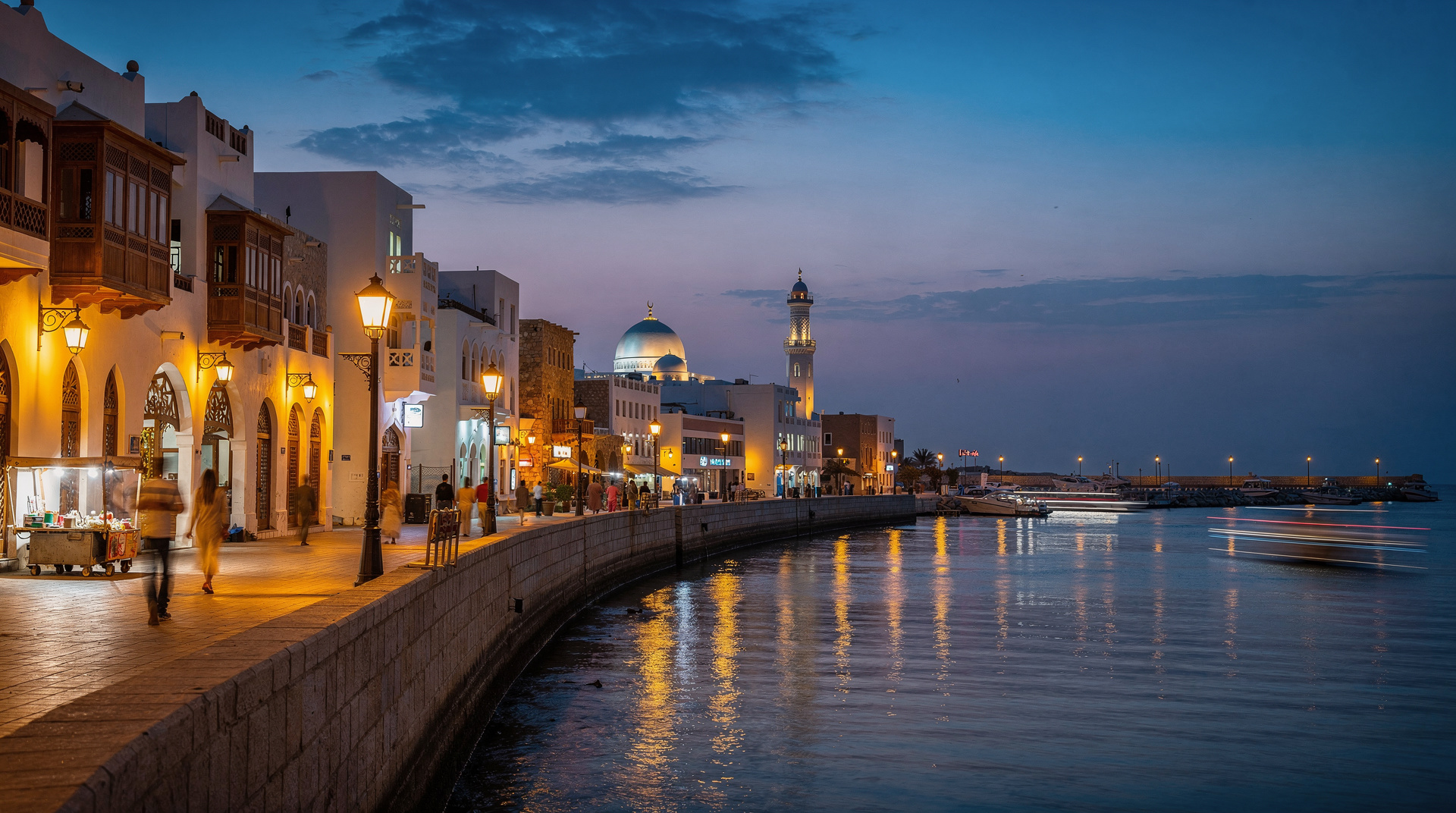
Muscat options: The cluster of restaurants around the Muttrah Corniche serves some of the most reliable traditional Omani food in the country. For a more structured introduction to the cuisine, consider booking a food-focused tour. A half-day Muscat city tour taking in the old town of Muttrah typically includes stops at traditional food stalls and the opportunity to try street snacks in context.
Beyond Muscat: Nizwa’s Thursday morning cattle souq is surrounded by small restaurants serving traditional Omani breakfasts. The date souqs in Bahla and Ibri are the best place to sample different date varieties and accompanying sweets. In Salalah, the cuisine shifts — coconut and tamarind appear more prominently, reflecting the town’s links with East Africa.
Practical Notes for Food Travellers
Oman is a predominantly Muslim country, and pork products are not served at Omani-owned restaurants. Alcohol is available at licensed hotels and some restaurants in Muscat but not at local eateries. Halal meat is universal.
Vegetarians will find Oman manageable but not ideal — the cuisine is heavily meat and fish-oriented. Rice dishes can often be requested without meat, and egg-based dishes are available at most places. Vegan eating requires more effort and advance planning.
Tap water in Oman is treated but many residents prefer bottled water. Restaurants universally serve bottled water.
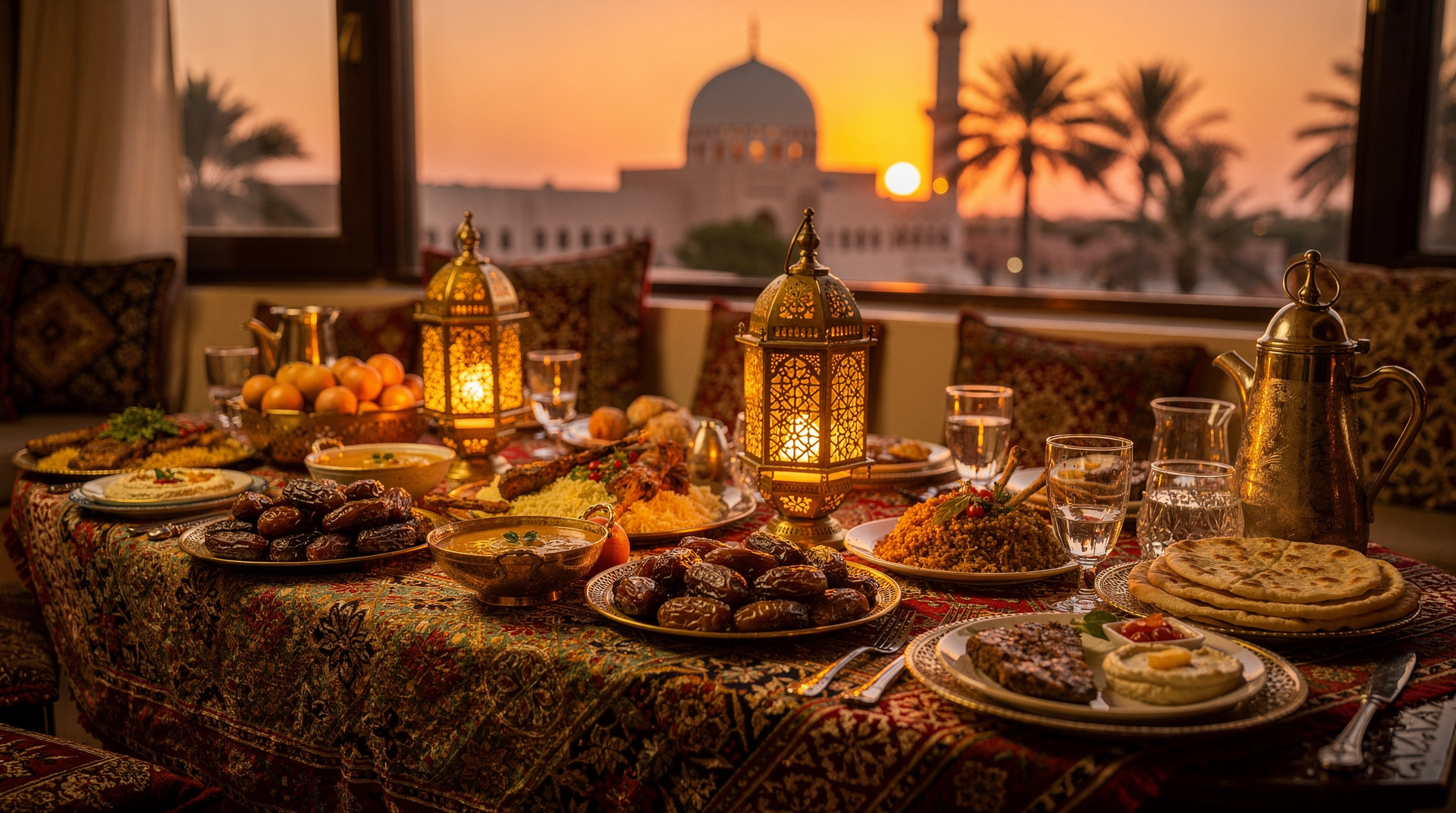
The best way to eat Omani food is the way Omanis eat it: at a long shared table, in generous quantity, with good company. If you receive an invitation to a family meal, accept it without hesitation. It will be the meal you remember longest.
Explore more about planning your Oman trip to align your visit with cultural events where the best traditional food is served, and read our Muscat weekend itinerary for specific restaurant recommendations in the capital.