Diving in Oman: Month-by-Month Conditions and the Best Sites
An Underrated Diving Destination in the Arabian Sea
Oman’s diving credentials are not as widely known as those of the Maldives or the Red Sea, and that obscurity works in your favour. The country’s underwater world is genuinely diverse — from the dramatic fjord diving of the Musandam peninsula in the north to the whale shark aggregations off the Dhofar coast in the south, from coral walls teeming with schooling fish in the Daymaniyat Islands to the cold upwelling waters of the Arabian Sea that draw species rarely seen elsewhere in the Indian Ocean.
Understanding when to dive in Oman, and where, requires navigating a complex interplay of wind systems, upwellings, and regional variation. This guide covers conditions by month, site by site, so you can plan a diving trip that matches what you want to see and the conditions that suit your experience level.
Understanding Oman’s Diving Seasons
Oman’s diving calendar is shaped by two primary weather systems. In the north, the winter shamal winds from the northwest can reduce visibility and increase surface chop in exposed locations, while summer brings calmer seas and better visibility in many areas. In the south, the Indian Ocean monsoon (the Khareef) creates rough, murky conditions off Dhofar from June to September — the exact opposite of the north’s seasonal pattern.
This means Oman effectively has two overlapping dive seasons across its different regions, allowing year-round diving somewhere in the country, though careful planning is needed to match the right site to the right time of year.
Water temperatures range from 20°C in winter months (cold upwelling areas can drop to 17°C) to 31°C in summer in the north. A 3mm wetsuit is appropriate for most winter diving; a shortsuit or skin suit for summer.
Month-by-Month Diving Conditions
January and February
Northern Oman: generally good conditions. The Daymaniyat Islands offer excellent visibility of 15–25 metres in January, with calm seas on most days. Water temperature around 22–24°C. Encounters with whale sharks are possible, and reef fish diversity is at its best. The Musandam fjords are calm and clear, with visibility regularly exceeding 20 metres. Hammerhead sharks, giant schools of batfish, and reef sharks are all possible in the deeper Musandam channels.
Southern Oman (Dhofar): calm, clear conditions. Water visibility can reach 20+ metres off Salalah. The Hallaniyat Islands archipelago in the Arabian Sea offers exceptional diving in winter — hard coral gardens, large schools of pelagics, and the chance of whale shark encounters. This is a long way off the beaten track but rewards the effort.
January and February are among the best months for diving in both northern and southern Oman. Book accommodation and liveaboard vessels early for this period.
March
Transitional month in the north. Conditions generally good but beginning to warm. Water temperature rising toward 26°C in the north. Visibility remains excellent. The Daymaniyat Islands continue to offer excellent diving with increasing water temperature making longer dives comfortable without heavy exposure protection.
March is also the peak of the humpback whale migration along Oman’s eastern coast. While not a conventional dive encounter, whale watching from dive boats and the possibility of hearing humpback song while underwater adds an extraordinary dimension to diving in the Ras al Hadd area.
April and May
Warming waters improve diving comfort significantly. Water temperatures reach 27–29°C in the north, reducing thermal exposure concerns. Visibility remains good to excellent at most sites — 15–20 metres in the Daymaniyat Islands, similar in Musandam.
Whale shark season is well established by May. The seasonal upwelling off the Batinah coast brings nutrient-rich cold water to the surface, triggering plankton blooms that attract whale sharks in significant numbers. Snorkelling tours as well as dive trips in the Daymaniyat Islands area commonly encounter whale sharks in April and May.
This is one of the best periods to combine diving with snorkelling for mixed-ability groups. The warm, clear water and abundant marine life make the experience accessible and rewarding at multiple levels.
June to August
The northern dive season peaks in terms of marine life variety. Water temperatures of 29–31°C create warm, comfortable conditions for divers. However, the summer months bring the Khareef monsoon system that affects the south while leaving the north relatively unaffected.
The Musandam fjords can experience stronger afternoon winds in June and July, making morning dives preferable. The Daymaniyat Islands remain diveable through summer, though exposed outer sites may have occasional surge. Inner bay sites are sheltered year-round.
Note: the summer heat above water is intense (40°C+ in Muscat) even when conditions below the surface are excellent. Plan dives early in the morning to minimise heat exposure between and after dives.
Southern Oman: The Khareef monsoon makes diving off Salalah and the Hallaniyat Islands extremely challenging from June through September. Rough seas, reduced visibility, and difficult boat access make this a no-go period for southern diving.
September
The north remains excellent, with the summer dive conditions continuing. September sees the beginning of whale shark season wind down, but other pelagic encounters including tuna, barracuda, and reef sharks remain reliable.
October and November
Arguably the best overall diving period in northern Oman. Water temperature remains warm from the summer (around 27–28°C), cooling gradually through November. Visibility is exceptional after the summer, often reaching 25+ metres in optimal conditions. Seasonal surge and wind are minimal. Marine life diversity is at its peak as both warm-water and cooler-season species are present simultaneously.
November brings sea temperatures that make a 3mm wetsuit worthwhile for longer dives but not essential for shorter ones — comfort varies by individual. Hammerhead encounters in Musandam increase in frequency as water temperature begins its gradual decline.
December
Excellent conditions across all northern sites. A mild return of shamal winds can affect exposed outer sites on some days, but the majority of the month offers good to excellent conditions. Water temperature approximately 23–25°C in the north — a 3mm full wetsuit recommended.
The Daymaniyat Islands in December offer some of the year’s most reliable encounters with large marine fauna: reef sharks, eagle rays, large schools of bumphead parrotfish, and the occasional whale shark in the outer water column.
Oman’s Best Dive Sites
The Daymaniyat Islands
Located approximately 18 kilometres offshore from the Batinah coast between Muscat and Sohar, the Daymaniyat Islands are an uninhabited archipelago of nine low-lying islands protected as a nature reserve. The dive sites around the islands represent the most accessible high-quality diving in the country.
The islands sit in the path of the seasonal coastal upwelling, which brings cold, nutrient-rich water and drives extraordinary productivity. Coral coverage is good to excellent in sheltered areas, with hard coral domes and table corals providing structure for an exceptionally diverse fish community.
Highlights include: whale sharks (seasonal, best April–May and October), reef sharks, guitar sharks, eagle rays, schools of barracuda and trevally, hawksbill turtles, lion fish, and rich macro life including nudibranchs and pipefish.
Entry to the nature reserve requires a permit, which reputable dive operators include in their trip pricing. An organised scuba diving trip to the Daymaniyat Islands is the most straightforward way to access these sites, with equipment rental, permits, and boat transport all included.
Best months: October to May, with peak visibility and marine life diversity November to February.
Musandam: The Fjords of Arabia
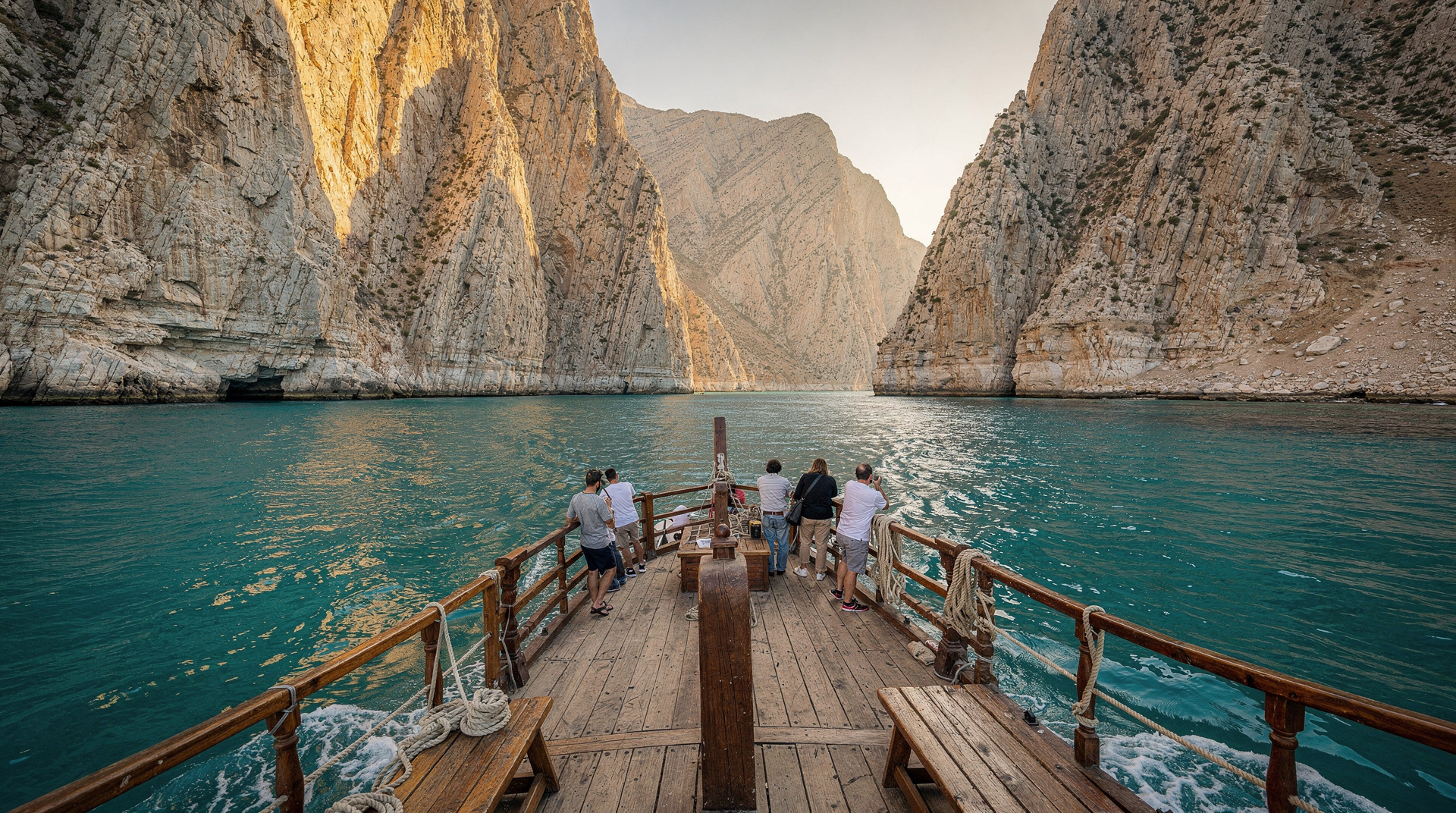
The Musandam peninsula juts into the Strait of Hormuz and offers some of the most dramatic underwater topography in the Indian Ocean region. Steep fjord walls drop from the limestone cliffs into water 50–100 metres deep, creating vertical reef systems colonised by sea fans, black coral, and dense shoals of fish.
The strong tidal currents that flow through the Musandam straits drive exceptional nutrient exchange and attract large pelagic species. Hammerhead sharks are regularly encountered in the deeper channels, particularly in cooler months. Large schools of batfish, barracuda, and kingfish are reliable. The dramatic landscape above the water — towering limestone cliffs, traditional fishing villages accessible only by boat — adds an aesthetic dimension to the dive experience that is genuinely extraordinary.
The closest launch point is the town of Khasab. Liveaboard vessels operating from Khasab allow access to the more remote sites deeper in the fjord system. Day trips from Khasab cover the accessible southern sites. Visitors from Dubai and the UAE can reach Musandam within a few hours — see our guide to visiting Musandam from Dubai for crossing logistics.
Best months: October to April, with November to February offering the best conditions for hammerhead encounters.
Ras al Hadd and the Eastern Coast
The eastern point of Oman, where the Arabian Sea meets the Gulf of Oman, creates a distinctive underwater environment. Productivity is high, driven by the mixing of two water masses. Visibility is more variable than at the Daymaniyat Islands — can be exceptional at 20+ metres or reduced to 8–10 metres depending on current conditions.
The eastern coast is best known for turtle diving. Green turtles nesting at Ras al Jinz spend significant time feeding in the coastal waters, and diving alongside large green turtles in open water is a reliable encounter from October through April.
The area also offers the best chance in mainland Oman of encountering whale sharks outside the Daymaniyat season, with sporadic sightings year-round. Blue and thresher sharks have been recorded in deeper water.
The Hallaniyat Islands (Khuriya Muriya)
This remote archipelago off the Dhofar coast — only accessible in the dry season, October to May — represents Oman’s least-visited but most exceptional diving. The islands sit in the path of the Arabian Sea upwelling and support coral ecosystems at the edge of their viable temperature range.
Large schools of hammerheads, whale sharks, silky sharks, and dogtooth tuna are all reported at the outer island sites. Strong currents require experienced open-water diving skills. Liveaboard access is the practical approach — there is no dive infrastructure on the islands themselves.
Best months: November to March.
Dive Operator Advice
Muscat has a well-established dive operator community concentrated around the Bandar Jissa area and the Bawsher district. Operators offer day trips to the Daymaniyat Islands, courses from beginner to divemaster level, and boat charters for groups.
When choosing a dive operator, verify that they are PADI or SSI affiliated and hold current Oman Ministry of Tourism permits. Check that their equipment is maintained to international standards — ask to inspect regulators and BCDs before committing. For the Daymaniyat Islands, confirm that the nature reserve permit is included in the price.
For beginners, the Daymaniyat Islands offer an accessible introduction to Oman’s marine world with sufficient shelter and clear water for comfortable entry-level diving. Discover Scuba experiences and Open Water certification are offered by most Muscat operators.
Combining Diving with a Broader Oman Visit
Diving pairs naturally with Oman’s other activities. A week-long itinerary might combine Muscat city exploration and cultural sites with day-trip diving to the Daymaniyat Islands, a night in the desert at the Wahiba Sands, and wadi hiking at Wadi Shab. The variety available within a single Oman trip — urban, cultural, desert, coastal, underwater — is one of the destination’s strongest selling points.
See our Oman honeymoon guide for ideas on combining diving with luxury accommodation and sunset experiences, and the seasonal overview for how diving conditions intersect with the broader travel calendar.