Wellness and Spas in Oman: Hot Springs, Hammams, and Desert Retreats
Does Oman have good spa and wellness facilities?
Yes. Oman has world-class resort spas (Alila Jabal Akhdar, Al Bustan Palace), natural hot springs at Ain Razat and Al Thowarah, traditional hammam experiences in Muscat, and a growing desert wellness retreat scene. The combination of natural landscape and luxury facilities is exceptional.
Oman as a Wellness Destination
The concept of wellness tourism has arrived in Oman not as a marketing overlay but as something more organic — the result of a landscape that is inherently restorative (desert silence, mountain air, warm ocean, natural hot water), a cultural tradition of body and mind care in Arab bathing culture, and a new generation of resort properties that have invested seriously in world-class spa facilities.
In 2026, Oman offers wellness experiences across a remarkable spectrum: soaking in natural sulphur springs at the base of the Dhofar mountains, receiving a traditional hammam scrub in a centuries-old bathing tradition, losing yourself in a thermal pool overlooking a 1,000-metre canyon, or practicing yoga on a private terrace above the Arabian Sea at dawn. This guide covers all of it.
Natural Hot Springs: Oman’s Most Accessible Wellness Gift
Ain Razat — Dhofar’s Sacred Spring
Near Salalah in the southern Dhofar region, Ain Razat (sometimes spelled Ayn Razat) is one of the most extraordinary natural sites in Oman — a freshwater spring emerging from the base of the Dhofar escarpment with a flow volume that increases dramatically during and after the khareef monsoon. The water temperature stays remarkably consistent at around 28–30°C year-round: warm enough to be truly comfortable, cool enough not to be tiring.
The spring has been regarded as sacred and restorative for thousands of years. Ancient inscriptions near the site suggest it was an important location in the pre-Islamic Dhofar civilisation. Today it is an open public park: families picnic on the grass banks fed by the spring outflow, children swim in the pools, and visitors from across Oman make pilgrimages during the khareef when the surrounding landscape turns green.
During khareef (July–September), the Ain Razat area is at its most spectacular: the escarpment above the spring is draped in cloud, the stream channels below run full and clear, and the air temperature hovers around 20°C — extraordinary for an Arabian summer. At this time, bathing in the spring with the mountain mist above you is a genuinely transcendent experience.
Practical details: 20 km east of Salalah on the road toward Mirbat. Entry is free. The park can be busy on Friday mornings — arrive before 8 am or after 3 pm for the most peaceful experience. Modest dress is expected (the spring is a public family area, not a resort).
Al Thowarah Hot Springs (Nakhal)
The Al Thowarah hot springs near Nakhal in the Al Batinah region are Oman’s most conveniently located natural thermal waters — just 2 hours from Muscat and less than 30 minutes from the town of Nakhal. The springs emerge at a consistent 45°C in the main upper pools, cooling progressively as they flow downhill through a series of natural terraces to approximately 32–35°C in the lower bathing areas.
The water is high in minerals including sulphur and silica — the slight sulphur smell (familiar to anyone who has visited Iceland’s geothermal pools) signals genuine thermal activity. Local people attribute healing properties to the water, particularly for joint and skin conditions, a belief shared across cultures wherever sulphur-rich thermal springs occur.
The setting is dramatic: the springs emerge beneath the walls of the ancient Nakhal Fort, a perfectly preserved fortress on a volcanic rock outcrop that has been photographed more than perhaps any other landmark in the Al Batinah region. Combining a Nakhal Fort visit with an hour in the hot springs makes for an ideal half-day excursion from Muscat.
Practical details: The upper springs are the hottest and least crowded (most visitors concentrate at the lower pools). Take a mat for sitting on the rough natural rock edges. Arrive early morning or late afternoon for the best temperatures — midday can be uncomfortably hot between the sun and the thermal water. Entry is free. Modest swimwear is appropriate (this is a public, family-oriented site).
From Muscat: The Nakhal road is Route 13 from the Barka interchange. A rental car gives the most flexibility. A combined Nakhal Fort and hot springs day trip from Muscat is approximately OMR 20–25 in taxi (negotiated day rate).
Wadi Bani Khalid Natural Pools
While not technically hot springs, Wadi Bani Khalid deserves inclusion in any Oman wellness guide for what it delivers: permanent, crystal-clear pools of around 22–24°C in a limestone gorge coloured electric green by algae, with the kind of silence and natural beauty that no spa can manufacture. The pools are accessible year-round — a rarity among Omani wadis, which often dry in summer.
Swimming into the deeper chambers of the upper wadi (a 20-minute walk from the car park) reaches pools enclosed by sheer walls where the blue-green light creates an almost hallucinatory calm. Floating in the silence is as restorative as any treatment room.
See the wadi swimming guide for the full range of Oman’s natural pool experiences.
Resort Spas: Oman’s World-Class Luxury Wellness
Alila Spa at Jebel Akhdar — Arabia’s Most Dramatic Spa Setting
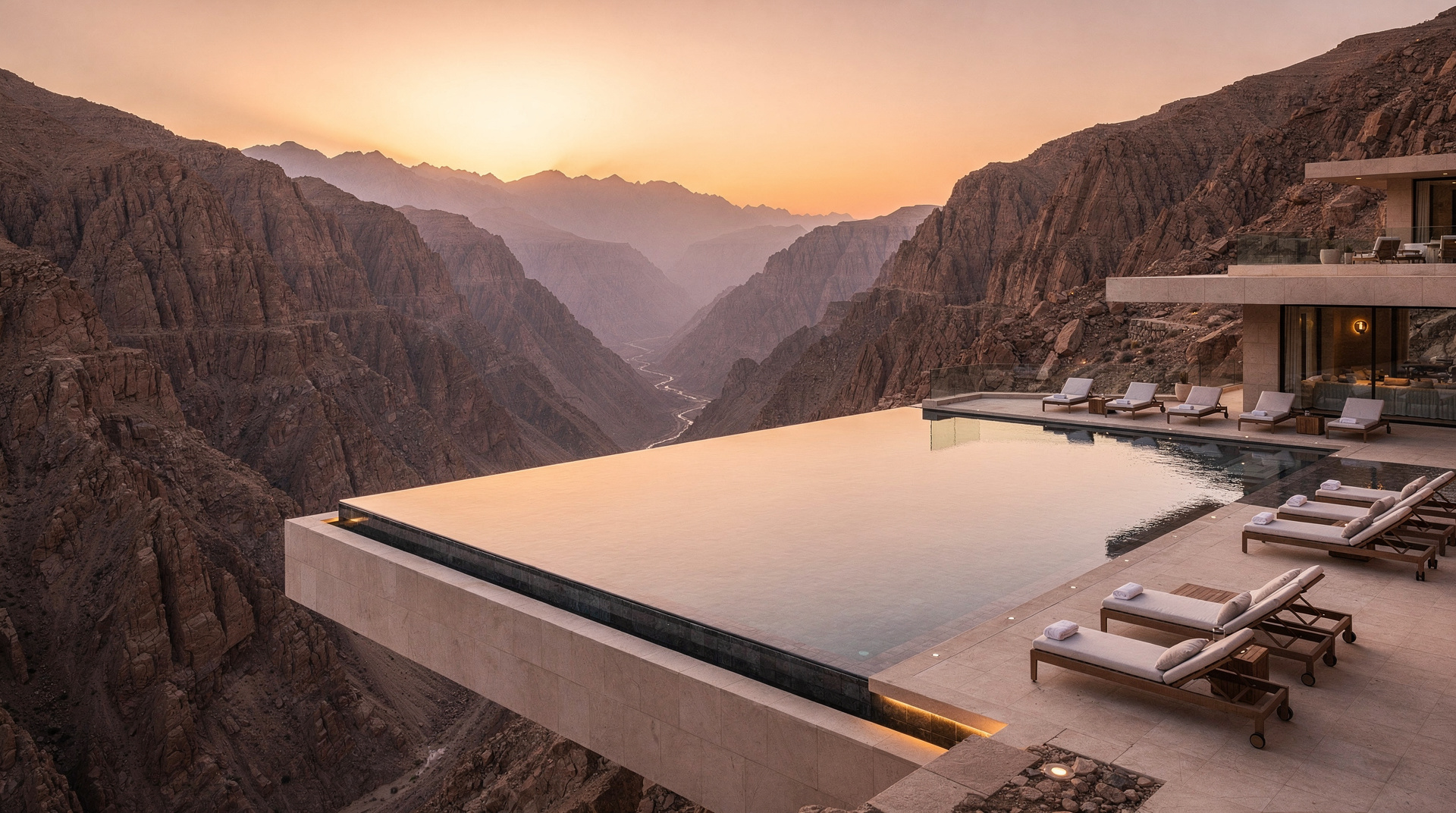
The Alila Jabal Akhdar resort sits on the rim of a 1,000-metre canyon at 2,000 metres altitude — and its spa uses this setting with deliberate artistry. The spa occupies a series of naturally lit treatment rooms cut into the cliff face, with each room’s window or terrace framing the canyon drop and the sun arc across it.
Treatment menus in 2026 include Omani heritage treatments (Omani coffee and cardamom body scrub at OMR 65 for 60 minutes; frankincense hot stone massage at OMR 85 for 90 minutes); traditional hammam experiences (60-minute hammam cleanse at OMR 55); and a full international treatment menu covering facials, body wraps, and couple’s treatments.
The outdoor heated infinity pool at the canyon edge operates year-round. Mountain air temperatures range from 15°C (January) to 28°C (July–August at altitude) — significantly cooler than coastal Oman. The altitude difference makes the air noticeably cleaner and clearer.
See the full Alila Jabal Akhdar guide for accommodation and rates.
Spa access for non-guests: Day spa packages are available for non-residents at OMR 30–50 day pass fee (applied to treatment costs). Book treatments 48 hours ahead; weekends fill quickly.
The Spa at Al Bustan Palace (Ritz-Carlton)
Al Bustan Palace occupies a private bay south of Muscat, and its spa — the Ritz-Carlton Spa — matches the grandeur of the property. The spa has 10 treatment rooms, a hammam suite, a hydrothermal circuit (steam, sauna, and warm pool), and outdoor treatment terraces overlooking the bay.
Signature treatments: the Al Bustan Journey (120-minute full-body treatment incorporating local ingredients — rose otto from Jebel Akhdar, Dhofar frankincense, sea salt — at OMR 95); the Royal Hammam experience (90 minutes, OMR 75); and a full suite of facials using La Mer and Espa products.
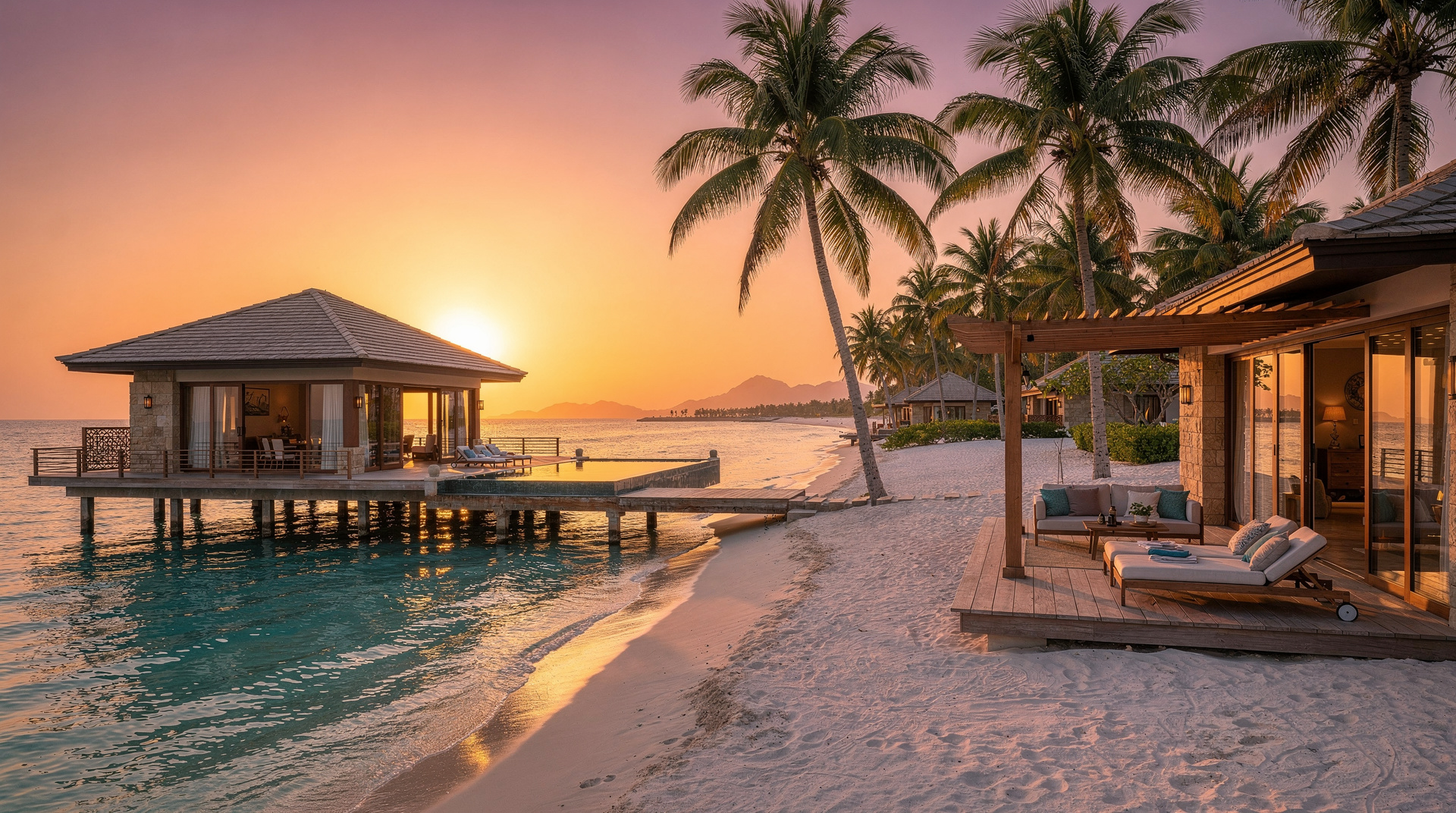
The spa’s location on a private beach means post-treatment access to the beach itself — sitting on a sun lounger with a cold hibiscus drink above the Arabian Sea is a natural extension of the treatment experience.
2026 rates: The Ritz-Carlton Spa does not list full rates on their website; a 60-minute signature massage starts at approximately OMR 55. Packages starting from OMR 130 combine treatments with lunch.
Six Senses Zighy Bay — Oman’s Premier Wellness Destination
Located in the Musandam Peninsula (technically accessible from Oman by speedboat or by 4WD descent from the mountain road), Six Senses Zighy Bay is the most complete wellness destination in the country. The property is built around a private beach bay of extraordinary beauty, and its health and wellness philosophy is the deepest of any resort in Oman.
The Zighy Bay spa runs on the Six Senses “Sleep with Six Senses” programme — a personalised approach to sleep quality as the foundation of wellness. Treatments are preceded by a consultation with a wellness specialist who creates a personalised treatment sequence. The spa menu includes traditional hammam, Ayurvedic treatments, energy healing, sound bath sessions, and a comprehensive sleep programme.
2026 rates: Six Senses treatments range from OMR 70 for a 60-minute massage to OMR 180 for a 3-hour wellness journey. Rooms start from OMR 350 per night — the spa is included in the resort experience as a philosophy rather than an add-on.
Anantara Al Jabal Al Akhdar — The Competitor to Alila
On the opposite plateau from Alila, Anantara Al Jabal Al Akhdar offers a similarly spectacular canyon-edge setting with a spa that rivals its neighbour. The Anantara Spa specialises in Asian-influenced treatments (Thai massage, Balinese techniques) combined with local Omani ingredient integration.
The infinity pool at the Anantara’s canyon edge is arguably the most-photographed swimming pool in Oman — a slender rectangle apparently floating above the gorge. The spa hot pool shares the same orientation.
2026 rates: 90-minute Omani Hammam Experience from OMR 65; 60-minute resort signature massage from OMR 55. Couple’s treatment rooms available.
Traditional Hammam: The Heritage Wellness Experience
The hammam (or hamam) is the quintessential bathing tradition of the Arab world — a steam bath followed by exfoliation, massage, and treatment that has been practised continuously for over a millennium. In Oman, traditional hammam culture is less visible than in Morocco or Turkey but exists through both heritage bathhouses and resort interpretations.
Hammam al Sultan, Muscat: Located near the Muttrah Souq, this is Muscat’s most authentic traditional hammam — a working bathhouse frequented primarily by local men (women’s sessions at specific hours; ask ahead). The experience is raw rather than luxurious: a steam room, a vigorous scrub by an experienced mukayyis (scrubber), and a cold rinse. Cost in 2026: approximately OMR 4–8 for the basic experience. Not for the precious.
Kempinski Muscat Spa Hammam: At the Al Mouj marina complex, the Kempinski spa offers the most refined hammam interpretation in Muscat — a private suite with marble slab, steam, and a systematic sequence of scrub (using a kessa glove and black soap) and treatment. 75-minute Royal Hammam from OMR 68; 90-minute Couples Hammam from OMR 130.
Shangri-La Barr al Jissah — Chi Spa: The Chi Spa at the Al Husn property is one of Muscat’s largest resort spa facilities. The hammam suite uses traditional Morocco-sourced kessa gloves and black savon beldi soap, following an authentic Maghrebi sequence adapted with Omani ingredients. 60-minute hammam from OMR 55.
Desert Wellness: The New Frontier
The most exciting development in Oman’s wellness landscape in 2024–2026 has been the emergence of intentional desert wellness experiences — programmes that use the landscape itself as the primary therapeutic environment.
Wahiba Sands Sunrise Yoga: Several of the established desert camps in Wahiba Sands — Desert Nights Camp, Nomadic Desert Camp — now offer sunrise yoga sessions on platforms built on the dune crests. Watching the sun emerge over 100 kilometres of dune landscape from a yoga mat is a genuinely powerful experience. These sessions are typically included in overnight camp packages or bookable separately for day visitors at OMR 8–12.
Stargazing and Sound Healing at Desert Nights Camp: Desert Nights Camp runs occasional sound healing ceremonies — singing bowl sessions held in the open desert after dark, when the silence and the star density create an optimal acoustic and atmospheric environment. OMR 15 per person; advance booking required.
Jebel Shams Walking Meditation: The Jebel Shams plateau’s Balcony Walk (the 4-km rim trail above the Grand Canyon of Arabia) has been adopted by several Muscat-based wellness practitioners as a setting for guided walking meditation retreats. A slow, intentional traverse of the trail with mindfulness practice woven in typically takes 3 hours and is run by operators including Oman Wellness Journeys and Desert Discovery Tours.
Wellness Travel Tips for Oman
Best season for spa and wellness visits: October through February offers ideal conditions for both outdoor wellness activities and indoor spa experiences. November and December specifically combine comfortable temperature with lower accommodation rates than the peak January–February winter season.
Combining wellness with adventure: Oman’s landscape makes it uniquely suited to alternating intensity and restoration. A day of wadi hiking or dune driving followed by an evening spa treatment and early night is a rhythm that many wellness-oriented travellers find more satisfying than purely passive resort relaxation.
Frankincense: Oman is the world’s primary source of hojari frankincense — the highest-grade variety, grown only in the Dhofar mountains. The therapeutic use of frankincense (as incense, in massage oil, in steam inhalation) is central to traditional Omani wellness practice. Look for hojari frankincense in the Salalah market and Muttrah Souq — approximately OMR 3–8 for 100g of premium-grade resin. Resort spas use it extensively in treatments.
A private private Muscat sightseeing experience can be customised to include cultural wellness elements — visiting traditional frankincense shops, a hammam, and the historical context that makes Omani wellness practices meaningful.
Frequently asked questions about wellness and spas in Oman
Which is the best spa in Oman?
Six Senses Zighy Bay is the most complete dedicated wellness destination in the country, built around a holistic health philosophy rather than simply offering treatments. For sheer dramatic setting, the Alila Jabal Akhdar spa above a 1,000-metre canyon is unmatched. For accessibility from Muscat, the Al Bustan Palace Ritz-Carlton Spa offers the highest standard within a city-adjacent location.
Are the natural hot springs in Oman open to tourists?
Yes. Both Al Thowarah (Nakhal) and Ain Razat (Salalah) are public sites accessible to all visitors. There is no entry fee at either. Both are family-oriented public spaces — modest swimwear is appropriate, and alcohol is not permitted. The springs are at their best in the early morning before crowds arrive.
Is hammam available for women in Oman?
Yes. Resort spa hammam suites (Kempinski Muscat, Shangri-La Chi Spa, Alila, Six Senses) are open to women and offer private suite experiences. Traditional neighbourhood hammams in Muscat typically have separate hours or separate sections for women; call ahead to confirm. All hammam experiences at resort properties are mixed-gender by appointment in private suites.
How much does a spa day in Oman cost?
At top resort spas (Al Bustan Palace, Alila Jabal Akhdar, Anantara), a 90-minute signature treatment costs OMR 65–95, with day access packages from OMR 30–50. Traditional hammam at a heritage bathhouse near Muttrah costs OMR 4–8 for the full experience. A comprehensive spa day with multiple treatments at a luxury resort runs OMR 150–250 per person in 2026.
Can I visit Alila Jabal Akhdar spa without staying at the resort?
Yes, but with conditions. Alila offers day passes to non-guests that include spa access; the pass fee (typically OMR 30–50) is credited toward treatment bookings. Advance reservation is essential — weekends book out quickly. The day pass does not include pool access without treatment booking, so combine both for maximum value.
What is frankincense and how is it used in Oman spas?
Frankincense (locally called luban or oud al dhofari for the premium variety) is an aromatic tree resin harvested from Boswellia sacra trees in the Dhofar mountains. It has been traded from this region for 5,000 years and is Oman’s most culturally significant product. In spas, it is used as essential oil in massage blends, as burning resin in steam inhalation, and as an ingredient in body scrubs and wraps. Hojari frankincense (the translucent pale-green grade) is considered the finest quality globally and is the type used in premium resort treatments.
Is Oman suitable for yoga retreats?
Growing, but not yet a mainstream yoga retreat destination. Several Muscat-based yoga studios (Harmony Wellness Studio, YogaOne Muscat near Al Qurum) offer regular classes. Organised yoga retreats using the Jebel Shams or Wahiba Sands landscape as settings run sporadically through platforms like Retreat.guru and specialist Oman operators. The landscape is extraordinary for outdoor practice; the infrastructure for organised retreat programmes is still developing.