Via Ferrata Jebel Akhdar: Oman's Most Thrilling Mountain Climb
Is the Jebel Akhdar via ferrata suitable for beginners?
Yes, with conditions. The Al Jabal Al Akhdar via ferrata is rated moderate and is accessible to fit beginners with no prior climbing experience. All equipment is provided. Basic upper body strength and a head for heights are the main requirements.
Clipped In at 2,000 Metres: Oman’s Mountain Iron Way
Via ferrata — Italian for “iron road” — is the art of ascending mountain faces using permanently fixed cables, rungs, and bridges. The system allows people with no formal rock climbing experience to tackle routes that would otherwise require years of technical training. At Jebel Akhdar, the Green Mountain of Oman’s Al Hajar range, via ferrata meets some of the most dramatic scenery in the country: sheer canyon walls plunging 300 metres, villages clinging to impossibly narrow terraces, and the scent of rose and fruit orchards drifting up from the gardens below.
The Al Jabal Al Akhdar via ferrata sits at elevations between 1,800 and 2,100 metres. The altitude is not the challenge — the ascent begins from the plateau rather than sea level — but the thinner air and the exposure of the route create a genuinely different physical experience from anything at lower elevations.
About the Route: Al Jabal Al Akhdar Via Ferrata
The Al Jabal Al Akhdar via ferrata experience takes climbers across the canyon face of the Wadi Nakhar gorge — a 300-metre deep slash through the limestone plateau that local people have navigated on foot for centuries using the ancient balcony path (Al Khitaym) cut into the cliff face.
The via ferrata route follows and extends this historical path, adding fixed iron rungs and cables that allow safe passage across sections that the ancient path handles via carved steps and chains. The experience is therefore a fascinating combination of modern adventure infrastructure and genuinely historical mountain travel.
Route statistics:
- Starting elevation: approximately 1,900 metres
- Total climbing distance: 3-4 km (the route is not pure ascent but traversal and partial descent)
- Duration: 3-5 hours depending on fitness and number of photography stops
- Difficulty rating: Moderate (C/D on the standard via ferrata scale)
- Minimum age: 12 years with specific operator assessment
The Jebel Akhdar Landscape
Jebel Akhdar surprises visitors. The name means “Green Mountain” and the plateau lives up to it — this high area of the Al Hajar range receives enough moisture to support proper orchards of pomegranates, apricots, walnuts, peaches, and the famous Omani roses (Al Ward Al Jebeli), from which Oman’s prized rose water is distilled. In spring (February-April), the orchards are in blossom and the mountain smells extraordinary.
The plateau sits at 2,000+ metres and is only accessible via a single mountain road with a military checkpoint. Private vehicles need a permit unless staying at one of the mountain resorts (Anantara Al Jabal Al Akhdar Resort, Alila Jabal Akhdar). Tour operators with via ferrata licences handle the permit automatically.
The canyon itself — Wadi Nakhar — is often called the Grand Canyon of Arabia. The comparison is apt: sheer limestone walls, multiple terraces and formations, a river far below in the wet season, and silence so complete you can hear distant bird calls from across the canyon. Standing on the via ferrata route clipped to the cable, looking across 300 metres of empty air to the far wall, is one of those geographical encounters that resets your sense of scale.
What the Via Ferrata Experience Feels Like
Gear-Up and Briefing
Tours start from the plateau, typically at the car park near the Wadi Nakhar viewpoint. Guides provide equipment: a via ferrata harness fitted properly to your body, a via ferrata lanyard (a Y-shaped system with two carabiners that ensures you are always attached to the cable during clipping transitions), helmet, and gloves. The briefing covers the fundamental technique: always have one carabiner clipped before unclipping the other when transitioning past anchor points.
This technique takes about five minutes to learn intellectually and about 15-20 minutes of actual movement on the route to become instinctive. After the first anchors, it becomes automatic.
The First Section: The Traversal
The route begins on a relatively exposed ledge trail above the upper reaches of the canyon. The path is 50-80 cm wide, the cable runs at waist height, and the exposure to your right — where the ground drops away — is immediately apparent. This section is psychologically the most demanding even though it is technically straightforward. Heights that seem manageable in photographs feel different when you are standing on the actual ledge.
Most people find that after 10-15 minutes, their body adapts to the exposure and the focus shifts from “do not fall” to “how do I move efficiently.” The rhythm of clipping, moving, clipping becomes meditative.
The Climbing Sections
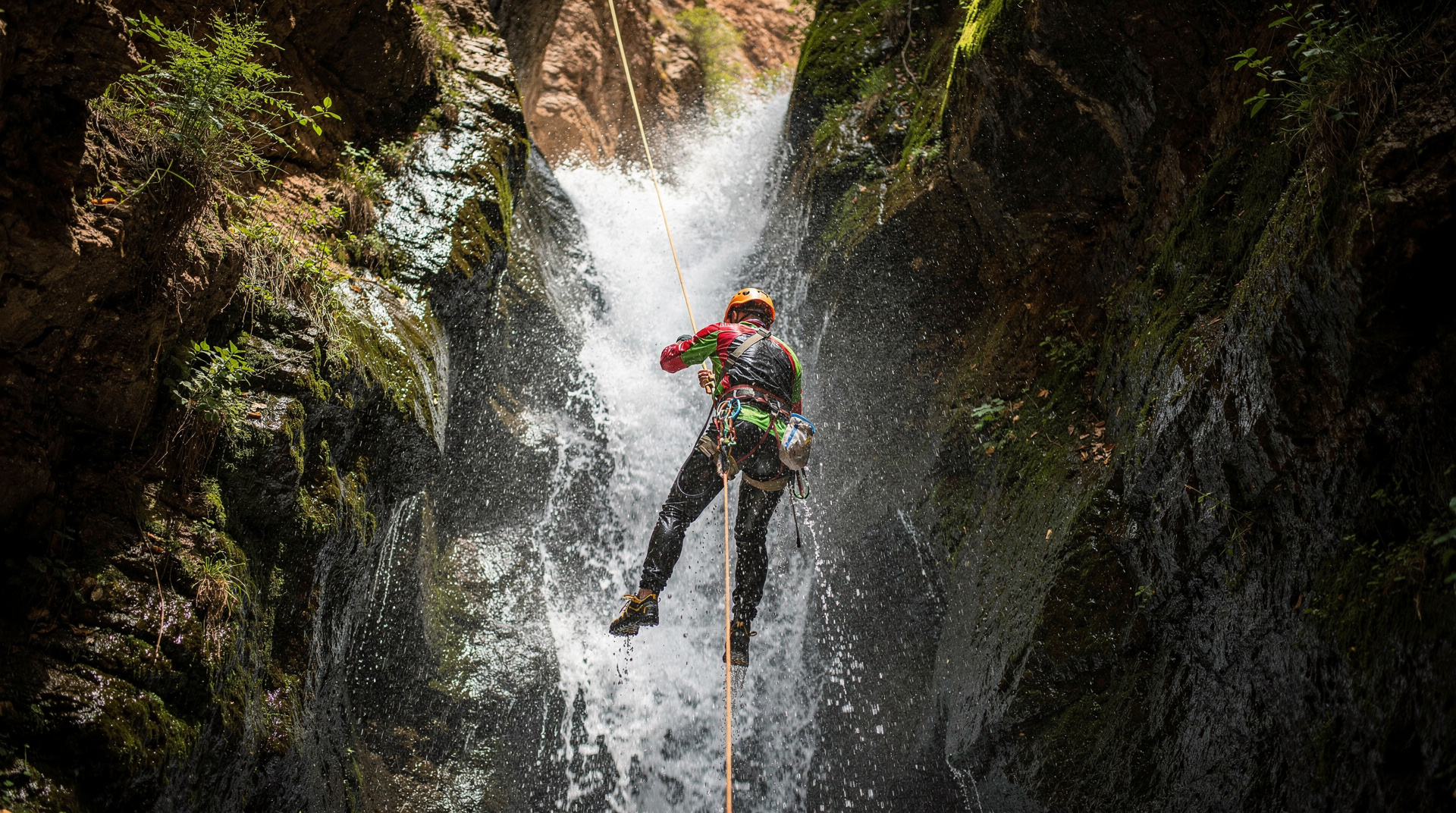
Several sections of the route require genuine upward movement using the iron rungs fixed into the rock face. These feel exactly like climbing a very steep, very exposed ladder. The holds are generous, the cable is always within reach, and guides assist at difficult transitions. The physical effort is real — arms and legs working together on steep sections — but nothing beyond the capability of a person with average fitness.
The most dramatic section for most visitors is a horizontal traverse across an exposed slab, where your feet are smeared against the rock face and the cable is above your head. The cable provides security but not direct support — you have to trust your feet. Guides demonstrate the technique (face the rock, lean slightly back, use the friction of your shoe soles on the limestone) and it works better than it looks.
The Viewpoints
The route is as much about photography and contemplation as physical challenge. Several natural ledges and wider sections of the route provide safe platforms to unhook from forward movement, sit, and look. From these points:
- The canyon view: 300 metres of vertical limestone dropping to the wadi floor below
- The village of Al Aqr: A small farming community on a lower terrace, visible from above, its terraced gardens looking impossibly maintained given the gradient
- The far plateau wall: The opposite canyon rim, where you can see tiny human figures at the viewpoint — a perspective reversal of where you began
- Rose gardens: In season (February-April), the famous Jebel Akhdar rose terraces are visible on the canyon walls, pink patches against grey limestone
The Descent
The route’s exit is via a different path than the ascent — either returning on the balcony trail (the ancient cut path) or descending via a specific route to a lower collection point where vehicles wait. The descent takes 45-60 minutes and legs that have been focused on climbing discover a different set of muscles required for downhill movement on uneven terrain. Trekking poles are useful here if you have knee sensitivities.
Operators and Booking
The via ferrata at Jebel Akhdar is managed through a limited number of licensed operators with access to the mountain plateau. Do not attempt to access the route independently without a licensed guide — the military checkpoint controls access, and independent climbers without the correct permits will be turned away.
Mountain Guide Oman is the longest-established licensed operator and trained the initial cohort of Omani mountain guides for this route. Their guides know every section of the route in detail including variations for different fitness levels.
Oman Adventure Tours runs the via ferrata as part of a broader Jebel Akhdar day tour that includes the mountain drive, village visits, and lunch at the plateau. Good for first-time visitors who want the cultural context alongside the climbing.
Anantara Al Jabal Al Akhdar Resort offers via ferrata excursions as an in-house activity for hotel guests. The convenience is excellent and the quality is high, though pricing is at the premium end.
Combining Via Ferrata with Jebel Akhdar Activities
A full day at Jebel Akhdar can combine the via ferrata with other experiences unique to the plateau:
Morning: Drive up from Nizwa (45 minutes on the mountain road), visit the rose water distilleries in the village of Al Ayn (production peaks March-April), walk through pomegranate orchards
Midday: Via ferrata (3-5 hours)
Afternoon: Visit the Wadi Nakhar viewpoint (Diana’s Point), explore Al Aqur village, buy locally produced honey, dried roses, and pomegranate molasses
Evening: Either return to Nizwa and Muscat, or stay overnight at one of the mountain hotels for a very different perspective at dawn
The combination of rose culture, terraced agriculture, mountain climbing, and canyon geology makes Jebel Akhdar one of the most multi-layered destinations in Oman.
For those who prefer canyon adventures at lower elevation, the Snake Canyon canyoning in Wadi Bani Awf offers a completely contrasting but equally spectacular Al Hajar mountain experience.
Nearby Attractions
Nizwa Fort and Souq
An hour’s drive below Jebel Akhdar, Nizwa is Oman’s most visited historical city. The 17th-century fort has one of the largest circular towers in Arabia. The Friday livestock souq is one of the most authentic market experiences in the country. Plan half a day here before or after the mountain.
Jebel Shams
Oman’s highest peak (3,009 metres) is a 90-minute drive from Jebel Akhdar through the mountains. The summit area offers walking trails and the famous “Grand Canyon of Arabia” viewpoint. It can be combined with the via ferrata for an ambitious two-day mountain circuit.
Bahla Fort
A UNESCO World Heritage Site located 40 km from Nizwa on the road to Jebel Akhdar. The mud-brick fortification is one of the largest in Oman and in an unusually complete state of preservation.
Physical Preparation
The via ferrata requires no specific training but benefits from baseline fitness. If you are booking several months ahead:
- Grip strength: Fundamental for iron rung climbing. Pull-ups or rock climbing gym sessions help, but even regular household activities provide sufficient strength for most people
- Leg strength: Squats and step-ups prepare legs for upward movement on steep terrain
- Cardiovascular: The 3-4 km route at altitude rewards aerobic fitness; any regular cardio activity helps
- Exposure desensitisation: If heights genuinely unsettle you, spending time on elevated viewpoints before the trip helps the brain recalibrate
On the day: eat a proper breakfast, hydrate well (altitude increases dehydration rate), and wear appropriate layers. Temperature at 2,000 metres can be 5-10°C cooler than Muscat even in summer.
2026 Pricing
| Option | Duration | Price (OMR) |
|---|---|---|
| Via ferrata guided tour (shared) | 4-5 hours | 40-60 per person |
| Via ferrata private tour | 4-5 hours | 100-150 for 2 people |
| Via ferrata + Jebel Akhdar day tour | Full day | 55-80 per person |
| Via ferrata from Muscat (with transfers) | Full day | 65-90 per person |
Equipment (harness, helmet, lanyard) is included with all guided tours. Personal hiking boots are recommended; operators may provide if your footwear is unsuitable.
Accommodation note: Staying on the Jebel Akhdar plateau adds significant cost but significant reward. The Anantara Al Jabal Al Akhdar Resort rates start from approximately 150-200 OMR per night. The Alila Jabal Akhdar starts from a similar range. Both are internationally recognised for their canyon-edge infinity pools and dramatic setting.
What to Pack
Wearing on the route:
- Comfortable hiking trousers or shorts (avoid jeans — inflexible and heavy)
- Moisture-wicking base layer
- Light wind/fleece layer (the canyon can be cooler and windier than the plateau)
- Sturdy closed-toe shoes with ankle support — trail running shoes or light hiking boots are ideal
- Sunhat for open sections
In your day pack (small, 10-15 litres maximum):
- Minimum 2 litres of water
- High-energy snacks (nuts, dried fruit, energy bars)
- Sunscreen applied before starting
- Camera with wrist strap or chest harness
- Lightweight waterproof layer (mountain weather changes quickly)
- Gloves if available (iron rungs are cold in winter, rough on hands without protection)
Frequently asked questions about Via Ferrata Jebel Akhdar: Oman’s Most Thrilling Mountain Climb
Do I need any climbing experience for the Jebel Akhdar via ferrata?
No prior climbing experience is required. The via ferrata system is specifically designed to allow access to mountain terrain for non-climbers. The guide-to-guest ratio is typically 1:4 or better, and guides provide hands-on assistance at every technical section.
What fitness level is required?
Moderate fitness is the honest answer. You should be comfortable walking for 3-5 hours on uneven terrain and capable of climbing a steep flight of stairs without becoming winded. Significant upper body weakness or untreated knee problems could make the experience difficult.
Is the via ferrata suitable for children?
Most operators accept children from 12 years of age with parental written consent and an on-the-day assessment of the child’s fitness and psychological readiness. Some older teenagers take to it with great enthusiasm. Children younger than 12 are generally not accepted due to harness sizing limitations and technical demands.
When is the best time to do the via ferrata?
October through April is ideal — daytime temperatures on the plateau are comfortable (15-25°C) and the rock is dry. February and March add the bonus of rose blossom season. Summer months (June-September) see temperatures that are hot even at altitude, though the plateau is significantly cooler than Muscat. Winter mornings (December-January) can be cold with possible frost on exposed sections.
How exposed is the route? Is it suitable for people who are nervous of heights?
The route involves genuine exposure — sections where you are standing on narrow ledges above significant drops. People with moderate height nervousness often manage well because the cable and harness provide clear physical security. People with significant acrophobia (clinical fear of heights) may find the experience genuinely distressing. If you have serious concerns, discuss this with the operator before booking.
Can I access the Jebel Akhdar plateau without joining a tour?
Private vehicles require a permit, which is obtained more easily by staying at one of the plateau hotels (Anantara or Alila). Visiting independently for hiking requires advance permit arrangement with the Royal Guard of Oman checkpoint. Licensed tour operators handle this automatically. Self-driving with a 4WD hired from Muscat is possible with advance planning.
What is Jebel Akhdar known for besides the via ferrata?
The “Green Mountain” is famous for its rose water production (the Omani rose, Al Ward Al Jebeli, is distilled each spring into the precious rose water used in Omani sweets and perfume), its terraced orchards of pomegranates, walnuts, apricots, and peaches, and its ancient villages. The combination of agricultural tradition, dramatic canyon geography, and cool mountain climate makes it one of the most distinctive destinations in the country.