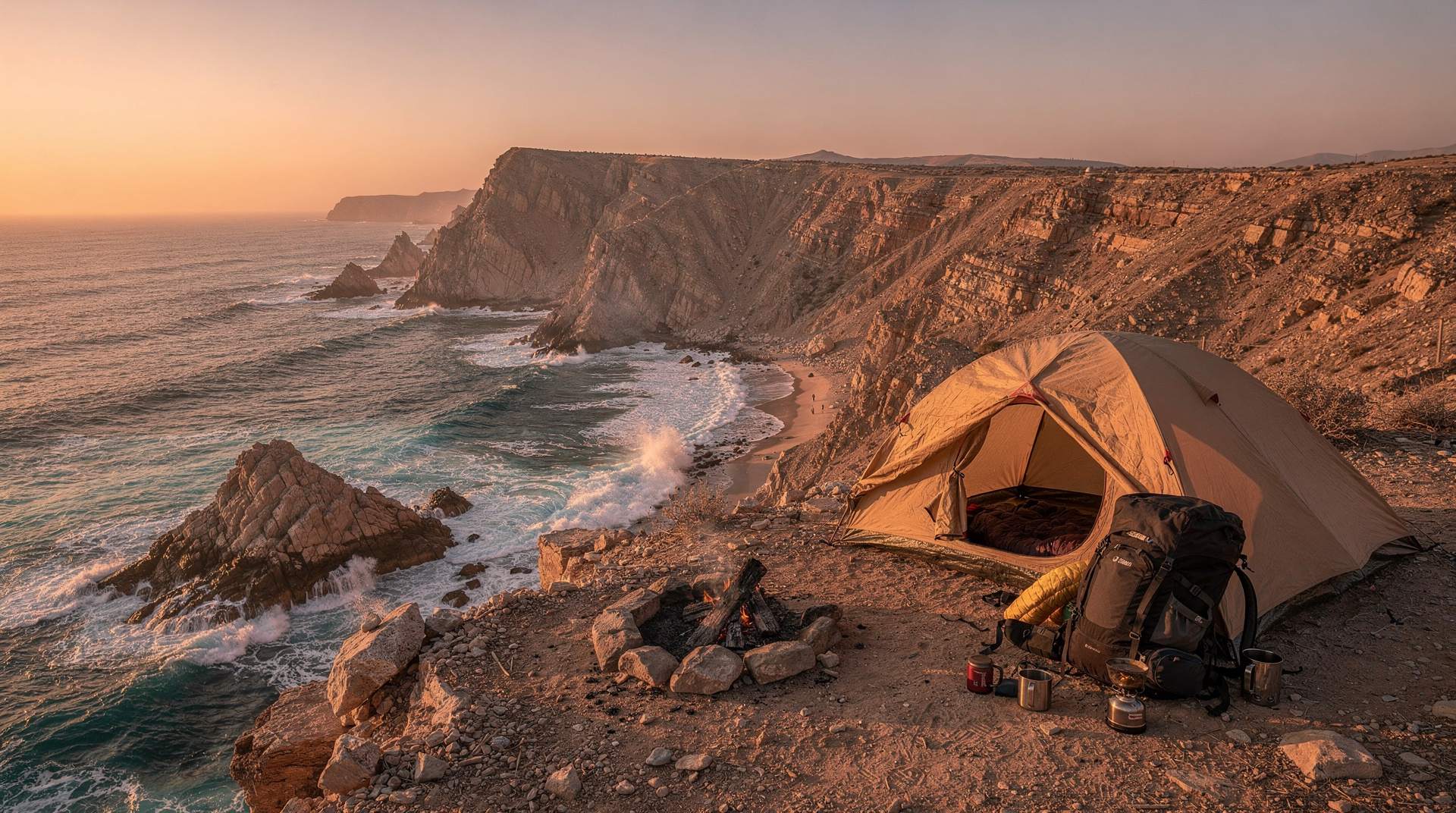
Photography in Oman: Best Spots, Golden Hour Times, and Drone Rules
What are the best photography locations in Oman?
Wadi Ghul canyon at Jebel Akhdar, the Muttrah Corniche at blue hour, Wahiba Sands dunes at golden hour, Bimmah Sinkhole in morning light, and Ras al Jinz turtles at night. Oman's light quality and landscape diversity make it one of the most photogenic destinations in the Arab world.
Why Oman is a Photographer’s Dream
Light, colour, texture, and the human element — photography is essentially the pursuit of these four things combining in satisfying ways, and Oman delivers all four with exceptional consistency. The country sits in a latitude band (22–25°N) where the angle of sunlight creates particularly warm golden-hour tones. The landscape is extraordinarily diverse: rust-red desert dunes, pearl-white limestone mountains, emerald wadi pools, turquoise coastal inlets, and the ancient geometric patterns of falaj irrigation systems laid out across green date-palm gardens.
Oman is also photographically generous in human terms. The Muttrah Souq offers a face-watching environment that rivals any souk in the world; Omani fishermen on the Sur coast maintain traditional practices in traditional dress; Bedouin families in the Wahiba Sands have a physical and aesthetic presence that photographs with extraordinary power.
This guide is organised around specific locations, with the most important information any travel photographer needs: the best time of day and year, what focal lengths to bring, specific challenges to prepare for, and the legal context for drone photography.
Golden Hour and Blue Hour: Timing Your Shots
Oman’s sun rises and sets at broadly predictable times year-round (it sits between 20 and 25 degrees North), with relatively little seasonal variation compared to higher-latitude destinations.
Approximate sunrise times in Muscat:
- January: 6:40 am
- April: 5:50 am
- July: 5:30 am
- October: 5:50 am
Approximate sunset times in Muscat:
- January: 5:55 pm
- April: 6:30 pm
- July: 7:00 pm
- October: 6:10 pm
Golden hour (the 45–60 minutes after sunrise and before sunset) is when desert and mountain landscapes in Oman are at their most dramatic. The warm, low-angle light emphasises texture in sand dunes, creates deep shadow in wadi crevices, and turns the red-ochre mountain walls of the Hajar range to burning orange.
Blue hour (15–30 minutes before sunrise and after sunset) is exceptional for harbour and cityscape shots — the Muttrah Corniche at blue hour, with the illuminated fort walls and the dhow reflections in the dark water, is one of the most reliably rewarding urban photography situations in the country.
For Salalah and Dhofar: during khareef (July–September), cloud cover often softens the light dramatically, creating diffuse, even illumination that is ideal for waterfall and green-landscape photography. The mist rolling over the Dhofar escarpment in this season is atmospheric gold.
Top Photography Locations by Category
Desert and Dunes: Wahiba Sands
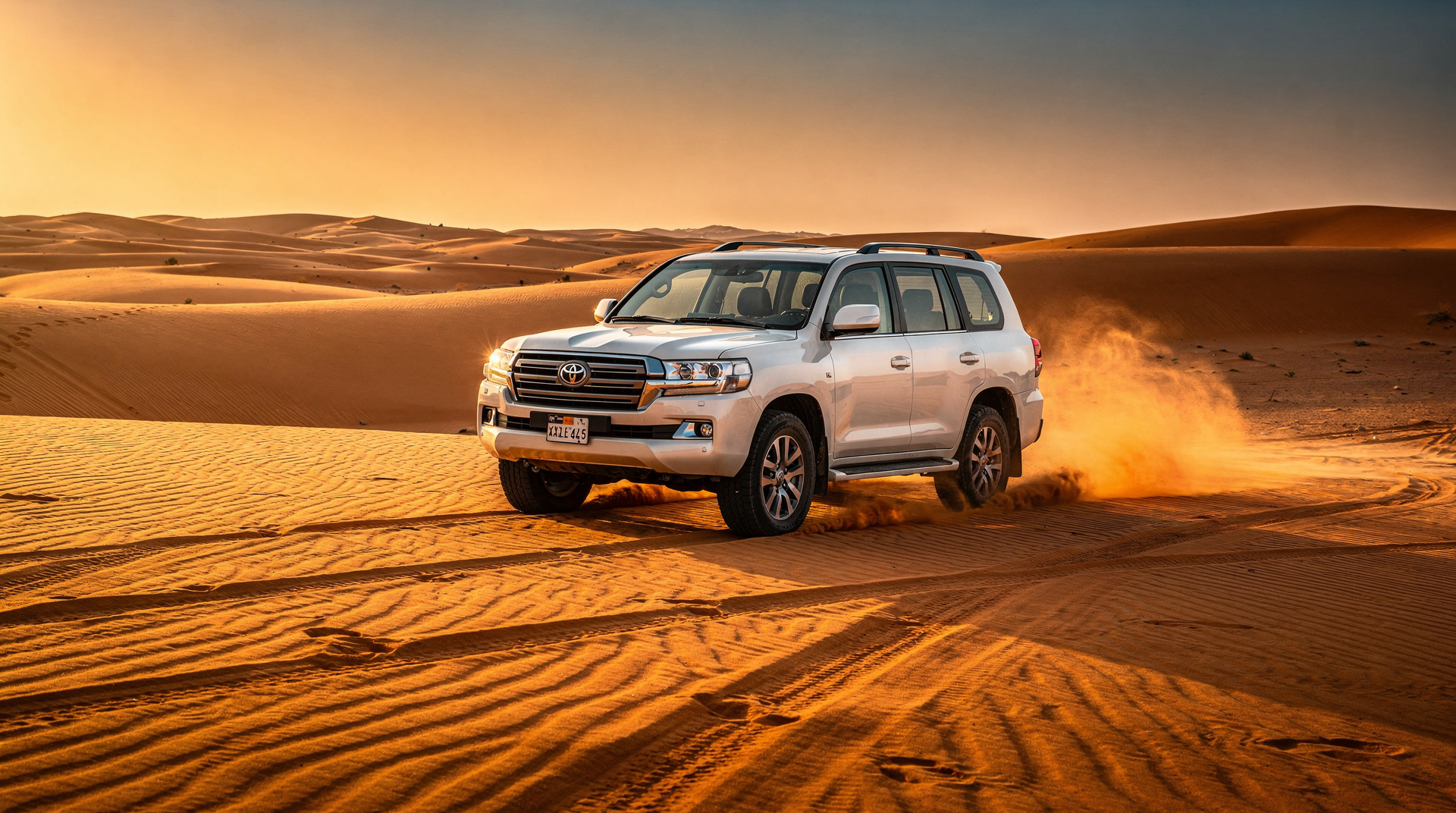
Wahiba Sands is the centrepiece of Oman desert photography. The key insight that distinguishes excellent dune photography from ordinary snapshots is the crest line — shooting along or across the crest of a dune in low-angle light creates the sine-wave repetition of shadow and light that makes Arabian dune photographs iconic.
Best timing: Arrive at the dunes 30 minutes before sunrise. Set up on a dune crest that gives you a westward view — when the first light hits the east-facing slopes, the west-facing shadows deepen simultaneously, creating maximum contrast.
Composition approach: Use the crest lines as leading lines. Include a single human figure or camel at the top of a distant dune for scale reference — the dunes look far more impressive with a scale reference than without. The footprint-free areas of the interior Wahiba Sands (15+ km from the entry gate) offer cleaner compositions than the well-trafficked dunes near the established camps.
Focal lengths: Wide angle (16–24mm equivalent) for grand vistas; 70–200mm for compressing dune layers in the distance, creating that stacked, textured effect.
Evening dhow sunset: For a completely different Oman photography experience, the sunset dhow cruise in Muscat harbour provides a platform for shooting Muscat’s coastal skyline from the water — the forts, the corniche, and the mountains behind in evening light, with the golden reflections on the water in the foreground.
Mountain and Canyon: Jebel Akhdar and Wadi Ghul
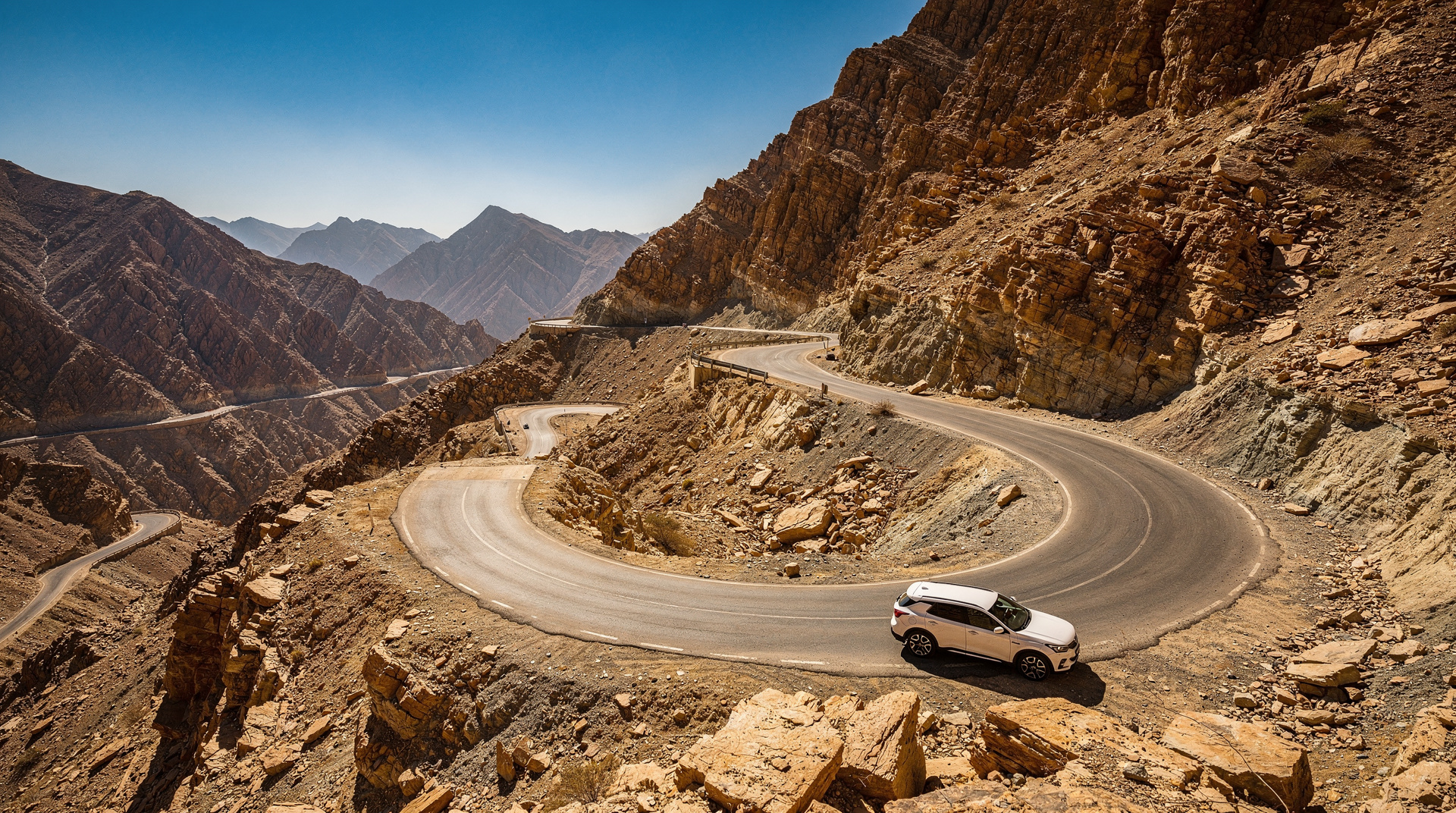
The Wadi Ghul viewpoint on Jebel Akhdar’s plateau rim is Oman’s most famous landscape shot — and it earns its reputation. The canyon drops nearly 1,000 metres from the viewpoint to the wadi floor below; the village of Ghul (visible in the canyon) adds the human scale that prevents it looking like a simulated landscape.
Best timing: Sunrise from the eastern viewpoint, when the morning light enters the canyon from the east and illuminates the far wall while the near wall remains in shadow. Sunset from the western viewpoints for the reverse effect. Blue hour, when the canyon fills with purple shadow while the rim above catches the last warm light, is particularly atmospheric.
Specific spots:
- The main Wadi Ghul viewpoint (signposted from the plateau road, parking area)
- The smaller viewpoint 2 km east, which is less visited and gives a slightly different angle on the canyon
- The Alila Jabal Akhdar pool deck — request permission to photograph from this vantage during the open swimming period
Challenge: Haze on hot days (particularly October and April) can flatten canyon views significantly. Mornings are consistently clearer than afternoons; the best canyon clarity is in December and January.
For the terraced villages: Al Ayn village on the Jebel Akhdar plateau, with its ancient rose gardens and mud-brick houses in terraces above the gorge, is best photographed in March–April when roses are in bloom. Dawn light entering the valley creates a low-angle golden wash across the terraces.
Coastal: Bimmah Sinkhole, Sur Dhow Yard, and Muttrah Corniche
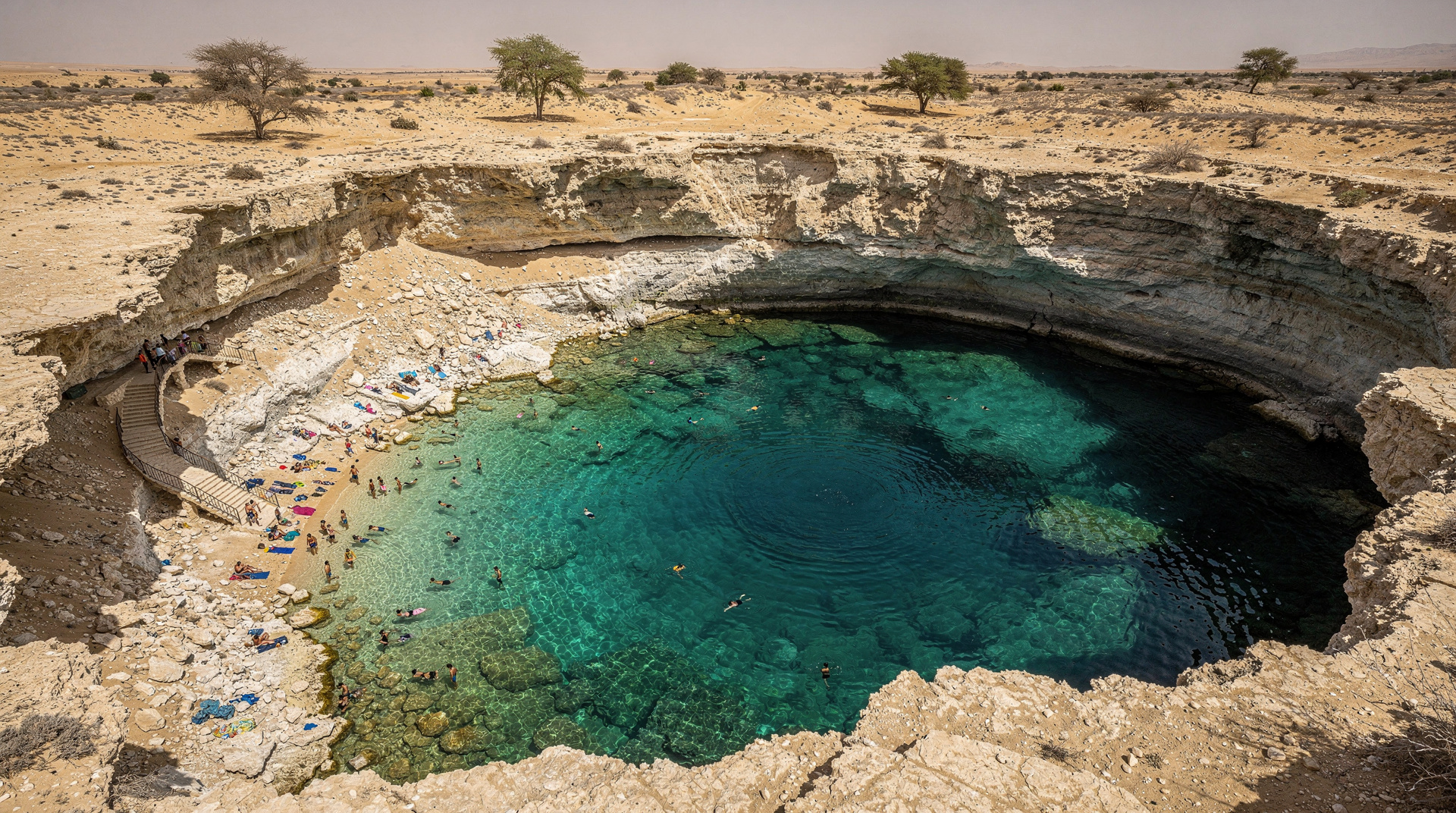
Bimmah Sinkhole: The vivid turquoise of the Bimmah pool is at its most photogenic in morning light — arrive before 8 am before the tour buses arrive, when the light has not yet reached the vertical zenith that bleaches the colour out. The standard high-angle shot from the viewing terrace is excellent; for something different, descend the stairs and shoot back up toward the limestone walls with the pool in the foreground.
Sur Dhow Yard: The most authentic craft photography in Oman. Wooden dhow hulls of various sizes in various stages of construction, craftsmen using hand tools against a backdrop of shaved timber and the harbour. Morning light (7–10 am) enters the yard from the east and creates warm light across the curved hulls. Telephoto shots of craftsmen at work (80–200mm) compress the background and emphasise the traditional tools and techniques.
Muttrah Corniche: The most rewarding urban photography location in Oman. The corniche curve with its illuminated Portuguese forts is best shot from the Al Jalali headland above the harbour or from the breakwater at the far end of the promenade. Blue hour (15–20 minutes after sunset) is the optimal time: the fort walls glow amber from uplighting, the sky retains a graduated deep blue, and the harbour lights create reflections in the still water.
People Photography: Muttrah Souq and Ibra Women’s Market
Muttrah Souq: The lighting inside the covered market is a mix of tungsten artificial light and shafts of natural light entering through vents and doorways — challenging but rewarding. An ISO of 1600–3200 is necessary in the deeper sections. The spice stalls, silver jewellery vendors, and frankincense sellers are the most visually rich subjects. Always ask before photographing a person directly; gesture and smile first.
Ibra Women’s Market (Wednesday mornings): One of the most extraordinary photography opportunities in Oman. Every Wednesday from approximately 6–10 am, Ibra’s traditional market fills with Omani women in full traditional dress selling produce, livestock, and handcrafts. The colour, the light in the early morning, and the density of traditional dress make it exceptional. Ask permission before any close-up portrait work; many women prefer not to be photographed but the vendors are generally comfortable with market scene photography.
A note on photographing Omani people: Oman is a conservative society and photographing people — particularly women — without explicit permission is both culturally disrespectful and potentially legally problematic. Always ask first; in practice, the rejection rate is low and the warmth of permission given creates a far better relationship with subjects than shooting without consent.
Wildlife and Nature: Turtles, Dolphins, and Flamingos
Ras al Jinz Turtle Beach (night photography): Green turtles nesting and hatching at Ras al Jinz require a fundamentally different approach to normal photography — no flash, no visible torchlight, camera set to maximum useable ISO (3200–6400 on modern mirrorless bodies). Lenses with wide apertures (f/1.8–f/2.8) capture available moonlight and the faint ambient light without disturbing the turtles. The results are atmospheric rather than technically sharp — leaning into that grain and blur gives the images a powerful, almost dream-like quality.
Dolphin photography from Muscat harbour: Spinner and bottlenose dolphins are regularly encountered year-round in Muscat’s harbour approaches. A 70–200mm lens (or 100–400mm for more reach) is appropriate from a boat deck. Autofocus tracking modes on modern cameras (Eye AF, subject tracking) handle the unpredictable movement well. Early morning departures (7–8 am) offer calmer seas and better light than afternoon.
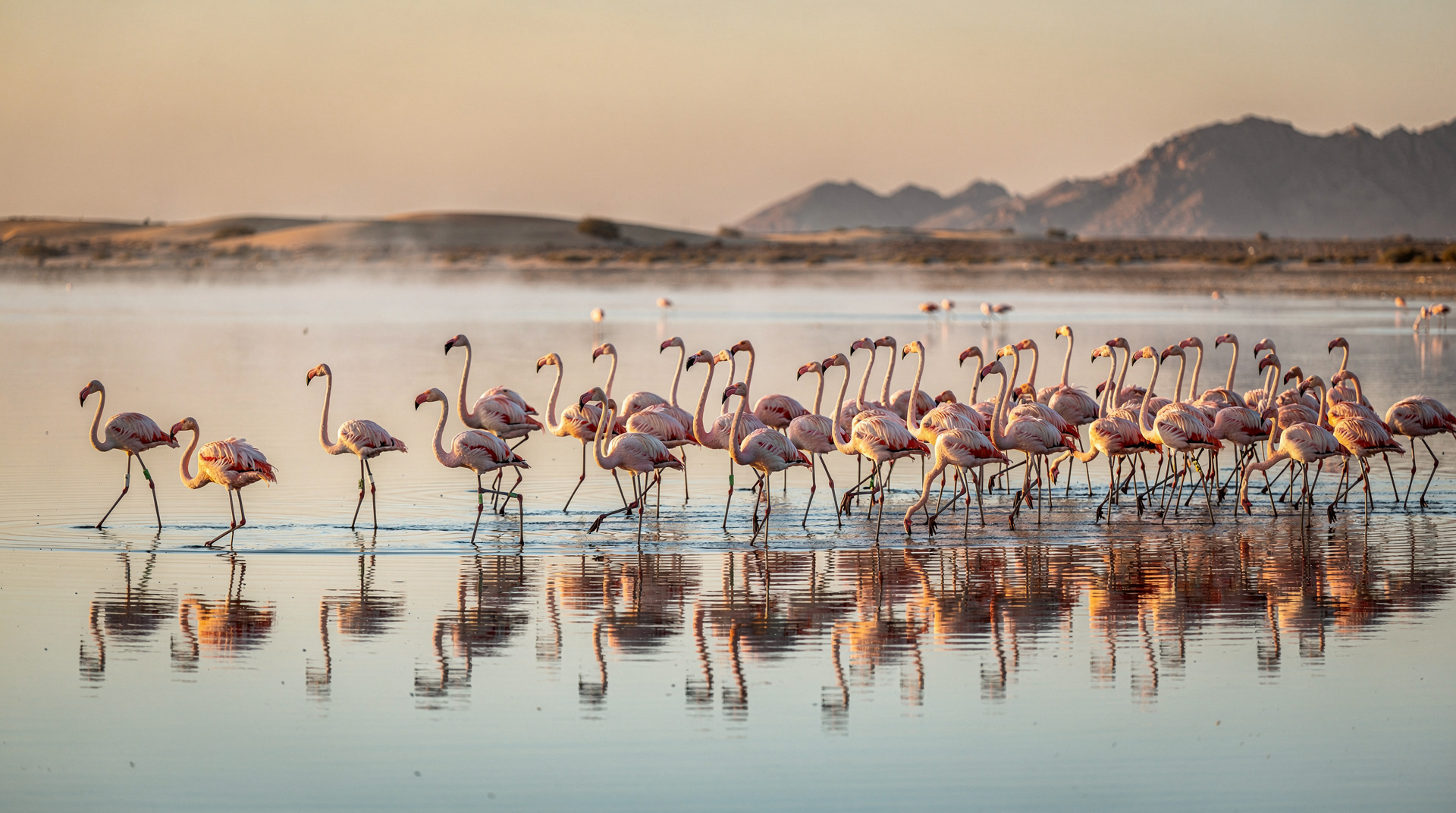
Flamingos in Barr al Hikman: The Barr al Hikman peninsula south of Muscat is one of the world’s most important wader and flamingo staging sites — tens of thousands of greater flamingos winter here. Getting close enough for satisfying images requires a 300–500mm focal length and patient stalking; the birds are wary. Dawn arrivals at the mudflats (when tidal conditions and light align) deliver the best results. See the Oman birdwatching guide for specific site details.
Drone Photography in Oman: The Legal Reality
Drone regulations in Oman have tightened significantly since 2022. The current regulatory framework (2026) requires advance permission for drone flights in most areas.
The regulatory body: The Civil Aviation Authority of Oman (CAA Oman) issues drone operating permits. All drones above 250g require registration. Commercial drone operations (photography for commercial use, social media with commercial intent) require a commercial UAV permit.
What is technically permitted without advance permit:
- Drones under 250g (DJI Mini 3 and DJI Mini 4 Pro fall under this threshold) flown below 120 metres in uncontrolled airspace, for recreational purpose only
What requires advance CAA permit:
- Any drone above 250g
- Any drone within 5 km of airports (Muscat, Salalah, Khasab — with very large exclusion zones)
- Any drone near military installations (strictly enforced — fines and confiscation)
- Any drone over populated areas or public gatherings
- Commercial photography use
Sensitive no-fly areas:
- All airport approach corridors (5 km minimum exclusion from Muscat, Salalah)
- Royal palace areas (Al Alam in Muttrah, Beit al Baraka in Al Seeb)
- Military bases (marked on CAA Oman airspace maps)
- Protected nature reserves without specific reserve permit
Practical reality: Many photographers fly DJI Mini 4 Pro (249g, under the 250g threshold) in open desert and mountain areas without incident. The Wahiba Sands, Jebel Shams plateau, and remote coastal areas outside airport exclusion zones are generally fine with appropriate situational awareness and keeping to 120 metres maximum altitude.
For commercial work or flights in sensitive areas, the CAA Oman CAYA drone permit application takes 5–10 working days and costs approximately OMR 50–150 depending on duration and category.
Downloadable airspace reference: The CAA Oman publishes regularly updated airspace restriction maps on their website (caa.gov.om). Download the PDF before departure and cross-reference with a drone flight planning app (Airmap, DJI Fly’s airspace overlay) before each flight.
Equipment Recommendations for Oman Photography
Cameras
The conditions in Oman are not extreme by camera standards, but heat and dust merit consideration:
Heat: Electronics in direct sunlight (particularly in Wahiba Sands in summer) can overheat. Keep cameras in a reflective bag when not shooting; many modern mirrorless cameras have heat management built in (Sony A7 series, Fujifilm X-T5) but benefit from shade rest periods.
Dust: The khamseen (sand-carrying wind) in the desert creates fine airborne particles. A weather-sealed body is worthwhile investment for desert-intensive itineraries. Change lenses in the shelter of a vehicle or tent with the front element pointing downward.
Best choices for Oman travel photography: Sony A7C II or A7 IV (full-frame, compact, excellent high-ISO performance for turtle beach shooting); Fujifilm X-T5 (40MP for landscape detail, excellent weather sealing); OM System OM-5 (excellent weather sealing, highly compact for wadi and mountain hiking).
Lenses
A realistic two-lens kit for most Oman photography:
- 16–35mm f/2.8 (or equivalent): desert panoramas, wadi swimming scenes, wide architectural shots in the souq
- 70–200mm f/2.8 (or equivalent): dolphin, turtle, and wildlife photography; compressing dune layers; portrait work at the markets
Optional additions:
- 100–400mm or 150–600mm equivalent: serious bird and wildlife photography (Barr al Hikman, Jebel Samhan)
- 90–105mm macro: Dhofar frankincense resin shots, traditional craft details in the souq
Filters
Circular polariser: Essential for wadi pool photography. The right angle with a CPL eliminates surface reflection from the emerald pools and reveals the depth and colour underneath — the difference is dramatic.
ND filter (6-stop or 10-stop): For long-exposure water shots (Wadi Shab waterfalls during khareef, Bimmah pool with movement blur). Also useful for restricting aperture on very bright desert days.
Storage and Power
Shoot to dual-card rigs where available (Sony and Nikon Z-series have dual slots). A quality portable hard drive (Samsung T7 Shield is excellent for rough conditions) for daily backup is worth every dirham. Power banks (minimum 20,000 mAh): hotel charging is plentiful, but remote wadi days can go 10+ hours without a socket. The DJI RC controller for Mini 4 Pro drains a power bank faster than expected on hot days.
Seasonal Photography Highlights
November–January: Best overall light quality, comfortable temperatures, clear skies, and ideal conditions for every type of photography. Peak season for landscape photography.
March–April: Rose bloom season on Jebel Akhdar — unique in Arabia. Traditional market activity peaks before Ramadan in some years. Easter travel period means more visitors.
July–September (Khareef): The green-season Salalah landscape is unique and dramatic. Waterfalls, mist, and lush mountainsides. Overcast light is soft and even — ideal for close-up frankincense grove photography and wadi-green landscape shots.
October: Post-khareef Salalah still retains green but with cleaner blue skies. Turtle hatching season at Ras al Jinz peaks. Wahiba Sands still warm but manageable.
Frequently asked questions about photography in Oman
Do I need permission to photograph in Oman?
No formal photography permit is required for personal travel photography in public places. Restricted areas (military zones, royal palaces, government buildings) prohibit photography and are usually signed. For photography inside the Sultan Qaboos Grand Mosque, follow the mosque’s own guidelines: photography is generally permitted outside prayer times in public areas; point the camera respectfully and avoid photographing worshippers.
Are drones allowed in Wahiba Sands?
The Wahiba Sands itself is outside airport exclusion zones and away from populated areas. Drones under 250g (DJI Mini 3/4 Pro) can typically be flown here without advance permit for recreational photography, staying below 120 metres. Check the CAA Oman airspace map and ensure no military activity (Masirah Island military base nearby has exclusion zones). Larger drones require a CAA Oman permit.
What is the best camera for a one-week Oman photography trip?
A mirrorless system with dual card slots, weather sealing, and good high-ISO performance gives the most flexibility across Oman’s diverse environments. The Sony A7C II, Fujifilm X-T5, and OM System OM-1 Mark II are all strong choices. For lighter packing, the Fujifilm X100VI (fixed 35mm equivalent, excellent image quality, very compact) works brilliantly for street and architecture photography.
When is Wadi Shab at its most photogenic?
The combination of maximum water flow (after winter rains, typically February–March) and good morning light makes February and March the optimal months. The water level needs to be sufficient for the swimming-into-the-cave section; this is most reliable in February–April. Summer (May–September) sees significantly reduced water levels. The emerald-green colour is most vivid in early morning light before direct overhead sun bleaches it.
How do I photograph the Muttrah Corniche at blue hour?
Position yourself on the breakwater at the eastern end of the corniche or on the high ground above Al Jalali Fort before sunset. Blue hour typically lasts 15–25 minutes after sunset in Oman’s latitude. Set up a tripod; use ISO 400–800, aperture f/8–f/11 for maximum sharpness across the scene, shutter speed 15–30 seconds (use a remote shutter release or camera timer to avoid camera shake). The Muttrah blue-hour shot is one of the most consistent and rewarding in the country.
Can I photograph inside Nizwa Fort?
Yes. Photography is permitted throughout Nizwa Fort for personal use. No tripods are allowed inside (use a mini tripod or monopod for stabilisation in low-light sections). Entrance fee in 2026: OMR 1 per adult. The tower interior staircase and rooftop view over Nizwa’s date-palm gardens is the strongest photographic element.
What are the best photography tours in Oman?
Several Muscat-based operators run photography-focused tours: Desert Discovery Tours and Zahara Tours both offer customisable itineraries with photographers in mind. Photography-specific guidance (positioning, timing, access to less-visited sites) makes these worth the premium over standard sightseeing tours. For sunset harbour photography specifically, the sunset dhow cruise in Muscat provides a moving platform with 360-degree coastal views during the best light of the day.