Musandam and Khasab: Oman's Arabian Fjords
Is Musandam worth visiting from Dubai or Abu Dhabi?
Yes. Khasab is just 2 hours from Dubai by road. A full-day dhow cruise through Musandam's fjords with dolphin watching and snorkelling is one of the Gulf's best day trips.
Arabia’s Norway: Where Mountains Meet the Sea
The designation “fjords” typically belongs to Norway, New Zealand, and the Canadian coast. That Musandam — a small Omani exclave isolated from the main body of the country by a strip of UAE territory — has earned that same description says something about what this place looks like. Limestone mountains rising 1,500 metres from the sea. Narrow channels of dark blue water cutting between vertical cliff faces. Traditional wooden dhow boats the only vessels in sight. Silence except for the wind and, often, the sound of dolphins.
The Musandam Peninsula juts into the Strait of Hormuz — the narrow passage through which 20 percent of the world’s oil supply travels daily. This strategic geography has given Musandam military importance for millennia and has also, rather improbably, helped preserve its ecology. There is no industrial development in these fjords. The fishing communities in the tiny villages perched above the waterline live much as they have for generations. And the marine life in the khors — the local name for the fjord inlets — is exceptional.
Getting to Musandam: The Logistics
From the UAE
For visitors based in Dubai or Abu Dhabi, Musandam is a more accessible day trip than most destinations within Oman itself. The drive from Dubai to Khasab town at the tip of the peninsula takes approximately two hours via the coastal road through Ras Al Khaimah. For those who prefer not to deal with the border crossing independently, the Musandam Day Trip from Dubai with Dhow Cruise handles all transport and border logistics with pickups from Dubai, Sharjah, or Ras al Khaimah — the simplest way to experience the fjords on a day trip from the UAE.
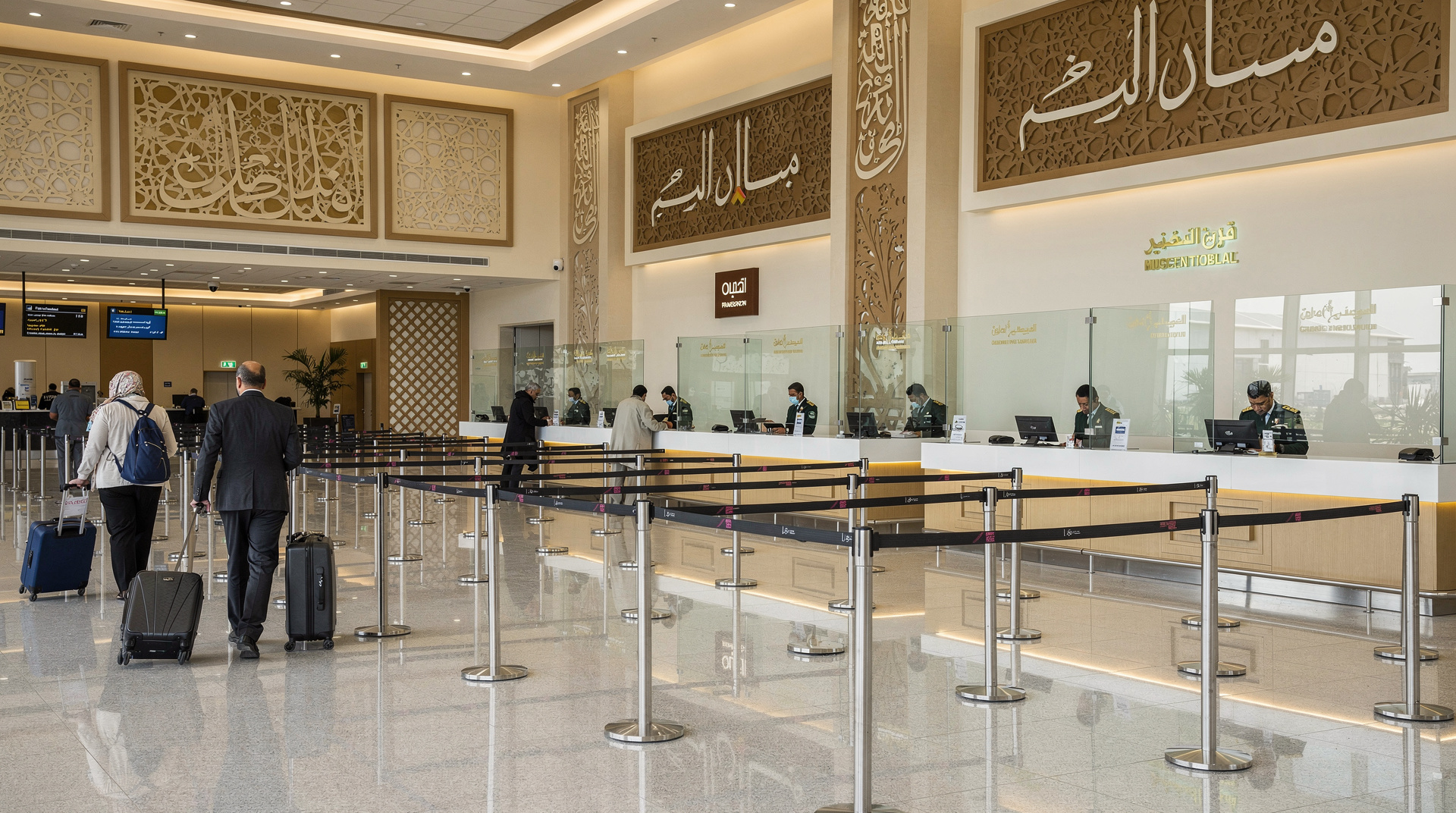
The UAE-Oman border at Tibat is the crossing point. All nationalities that require an Oman visa must have one before arrival — there is no visa-on-arrival at this land border crossing. UK, EU, and US citizens receive visa-free entry to Oman for up to 14 days, making the logistics simple. Vehicles registered in the UAE can typically cross without special documentation, but car rental agreements should explicitly permit driving into Oman.
From Muscat
From Muscat, Musandam is not accessible by direct road — the exclave is separated from mainland Oman by UAE territory. Options are a flight to Khasab (Oman Air operates regular service), or a sea route.
The flight takes approximately 45 minutes and makes Musandam a feasible add-on to a Muscat-based Oman itinerary. Booking domestic flights in advance is recommended, as seat availability on this route can be limited.
Khasab Town
Khasab is a small, quiet administrative town with a Portugese-built fort dating to the 17th century that now serves as a regional museum. The museum provides good context for the area’s history — maritime trade, the pearling economy, the Shihuh tribal people who have inhabited these mountains for centuries, and the more recent history of Omani and British involvement in the Strait of Hormuz.
The fort itself is in good condition and the views from its towers over the town and the bay beyond are worth the modest entry fee. A walk through the old fishing quarter below the fort reveals something of daily life in this remote community — the fishing boats, the nets, the smell of dried fish that pervades the lower town in the morning.
For a structured introduction to Khasab before or after your time on the water, the Khasab City Tour with Khasab Fort covers the fort museum, the old fishing quarter, and the town souq with a local guide — useful context for understanding what you are seeing both in town and on the water.
The small town souq has basic provisions and a few souvenir shops. Restaurants are limited but reliable — local Omani fish dishes are the sensible choice.
Dhow Cruises: The Essential Musandam Experience
Everything compelling about Musandam happens on the water. The fjord landscape, the dolphins, the remote beaches, and the underwater world are all accessible only by boat. The dhow cruise is not merely a nice addition to a Musandam visit — it is the experience that the visit is built around.
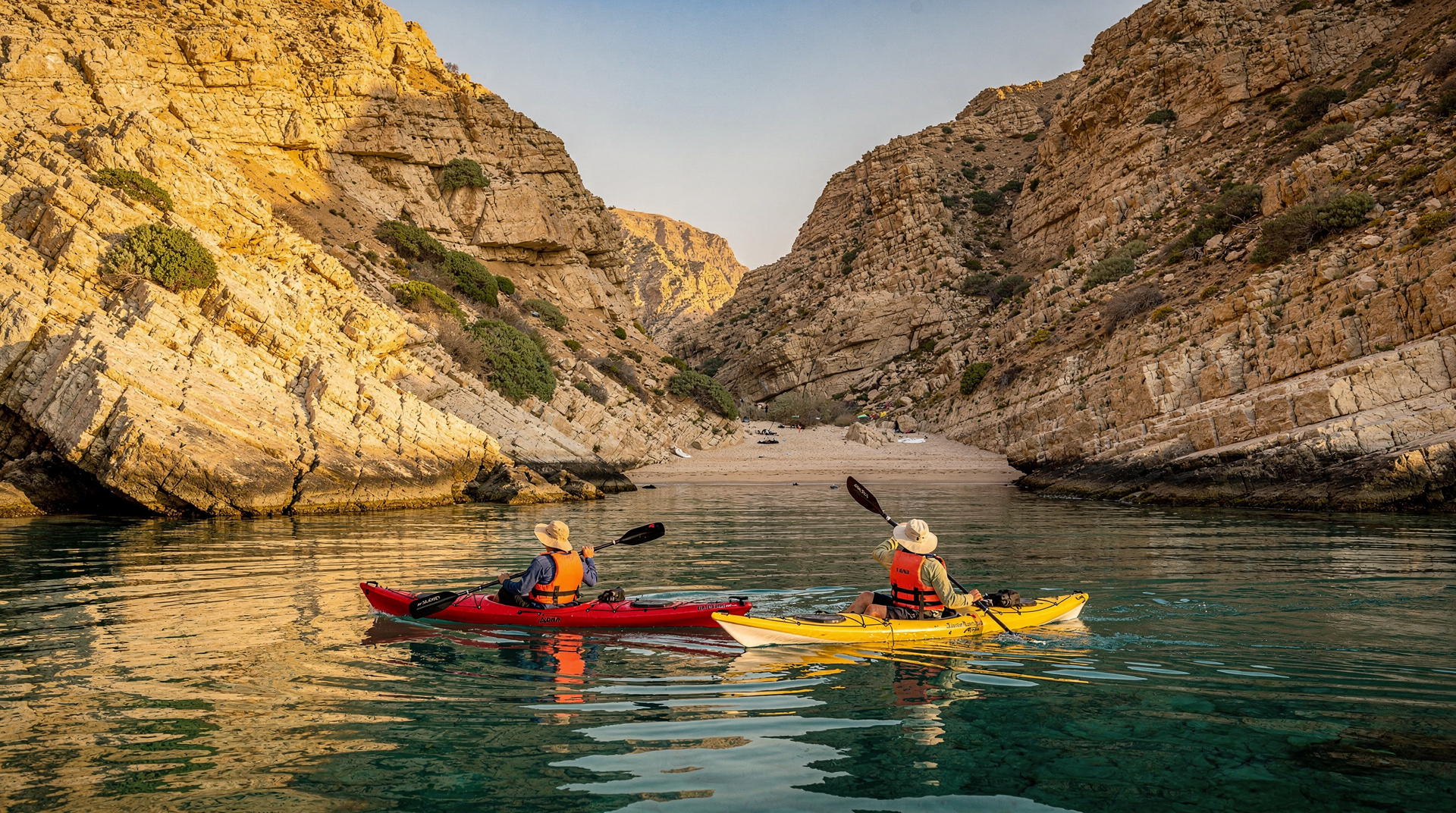
Half-day dhow cruises from Khasab cover the main fjord channels, stop at Telegraph Island for snorkelling, and include dolphin watching in the outer channels. Equipment, lunch, and a guide are typically included. The half-day format is efficient for visitors on a day trip from the UAE; a full-day cruise extends into less-visited fjords and allows more time at anchor. For the most immersive experience, the Musandam Overnight Dhow Cruise anchors inside the fjord system for the night — experiencing the khors after day-trip boats have departed, with stargazing between the cliff walls and early-morning snorkeling before the day’s heat builds.
Traditional wooden dhows — broad-beamed, stable, and with a covered deck that provides shade — are the vessel of choice. The crews are mostly from the local fishing community and know the channels, the dolphin pods’ typical locations, and the best snorkelling spots at any given time of year.
Dolphins in the Fjords
The fjords and outer channels of Musandam support resident populations of Indo-Pacific bottlenose dolphins, common dolphins, and spinner dolphins year-round. The resident bottlenose pods in particular are extremely approachable — the animals are habituated to dhow traffic and regularly bow-ride, surfacing alongside and in front of the vessel repeatedly.
During the main dolphin season from October through April, encounters are almost guaranteed on any morning cruise. Summer months see less reliable sightings, though the dolphins are present throughout the year.
What makes Musandam dolphin encounters distinctive is the setting. Watching a pod of thirty dolphins surfacing against a backdrop of 1,000-metre limestone cliffs, in absolute silence except for their exhalations, is a different quality of experience from a standard marine mammal excursion. The geography amplifies everything.
Telegraph Island (Jazirat al Maqlab)
The name alone generates curiosity. Telegraph Island sits in the middle of the Khor Ash Shamm fjord and was the site of a 19th-century British cable relay station — part of the telegraph line that connected Britain to India through the Gulf. The station operated briefly in the 1860s before being abandoned. The phrase “around the bend” reportedly entered English as a description of the mental state of the British operators posted to this remote and demanding location.
The ruins of the station are visible on the island — stone foundations and a few wall sections. More compelling than the ruins is the snorkelling. The waters around Telegraph Island have the best coral coverage and fish diversity of any accessible site in Musandam. Hard corals, sea fans, and dense populations of reef fish are immediately visible in the clear, cool water. Visibility exceeds ten metres on calm days.
The island itself has a small beach where dhows anchor for swimming and snorkelling. The clear, slightly cooler water (fed by the upwelling from the deep Strait of Hormuz) is refreshing after the open sun on the deck.
Khor Ash Shamm: The Deepest Fjord
The largest and deepest of the Musandam fjords, Khor Ash Shamm extends almost 30 kilometres from the open Gulf into the mountains. Full-day dhow cruises cover most of its length, which traverses increasingly dramatic cliff scenery as the fjord narrows. The walls of the inner sections rise so steeply and so close together that the sky narrows to a strip overhead.
The villages perched on ledges and small beaches along the fjord wall can only be reached by boat. The residents — members of the Shihuh tribal group — use fibreglass fishing boats as their transport. The traditional boat of the Shihuh was the shasha, a unique design made from palm fronds that allowed the vessel to be dragged over rocks without damage. A few examples survive in the Khasab museum.
Seabirds nest in the cliff faces throughout the fjord. Socotra cormorants, ospreys, and various tern species are common. In winter, peregrine falcons hunt along the cliff margins.
Snorkelling in Musandam
The marine environment of Musandam is among the best in the northern Arabian Gulf. The cold-water upwelling from the Strait of Hormuz depresses water temperatures relative to the shallow Gulf on the western side, and this cooler, more oxygenated water supports richer marine communities.
Coral coverage is better maintained here than in many Gulf locations. Coral bleaching events that have damaged reefs elsewhere in the region have been less severe in Musandam due to the cooler baseline temperatures. The reefs at Telegraph Island and several other sites along the fjord margins are genuinely impressive.
Fish diversity is high. Grouper, jacks, barracuda, and various reef species are common. Rays patrol the sandy bottoms between rocky sections. In winter, whale sharks occasionally appear in the outer channels, though sightings are unpredictable.
Water visibility ranges from 10 to 20 metres in good conditions. The slight green tinge from plankton productivity is evidence of the upwelling system that makes the ecosystem tick.
Khor Najd: The Overland Alternative
The only fjord in Musandam accessible by road, Khor Najd sits about 15 kilometres north of Khasab via a dramatically descending graded track that requires a 4WD vehicle with low-range gearing. The descent through switchbacks on the bare limestone mountain is spectacular — the fjord appears below as a thin strip of blue that widens as the road drops.
At the head of the fjord, a small beach and shallow bay provide swimming and snorkelling in conditions even calmer than the outer channels. The setting is visually extraordinary. This is the spot for those wanting to experience the Musandam fjord landscape without going on a boat — a short swim from the beach reveals clear water and some marine life, though the coral coverage here is less impressive than Telegraph Island.
Camping at Khor Najd is possible and popular with UAE residents who drive up for a weekend. The night sky, with minimal light pollution in any direction, is exceptional.
The Shihuh and Mountain Villages
The mountains above the fjords are inhabited by the Shihuh — a tribal people with distinct cultural practices and a traditional architecture visible in the stone villages perched on ridges throughout the peninsula. Their small stone houses and associated fortified towers, called barjeel, occupy positions of extraordinary precariousness on cliff edges and mountain spurs.
The Shihuh speak a dialect of Arabic heavily laced with ancient vocabulary that linguists find unusual. Their traditional economy combined fishing from the lower settlements with goat herding on the mountain pasture — a vertical transhumance that required intimate knowledge of paths and water sources that are not visible on any map.
Several of these mountain villages can be reached on foot from the road network, but the paths are unmarked and the terrain serious. Local guides from Khasab can be engaged for mountain walks of several hours.
Combining Musandam with a UAE Itinerary
For visitors based in Dubai or Abu Dhabi, Musandam is a natural add-on to a UAE trip that extends into the neighbouring country. The combination of a morning dhow cruise, a visit to Khasab Fort, and an afternoon drive to Khor Najd fills a full day comfortably.
For those wanting to extend into northern Oman more broadly, the drive from Khasab through the UAE border and down to Muscat can be done in about four hours, connecting Musandam to the full Omani itinerary. The guide to Muscat covers the capital end of this route, and the guide to Oman’s best beaches contextualises the coastal stops available along the way.
Practical Information
Accommodation in Khasab
Accommodation in Khasab is limited but sufficient. The Golden Tulip Khasab (currently operating as the main standard hotel option) is the primary choice for international visitors, with comfortable rooms and reliable service. Several smaller guesthouses provide budget alternatives. Booking in advance is recommended throughout the year, as Khasab’s limited room stock sells out quickly during UAE public holidays when residents flood in for weekend escapes.
Best Season
October through April. The weather is comfortable, the sea is calm for dhow cruises, and dolphin encounters are reliable. Summer months are hot and the sea can be rougher, though the spectacular scenery remains. Avoid the UAE public holiday weekends (Eid, National Day) if seeking a quieter experience.
Currency and Connectivity
Oman uses the Omani Rial throughout Musandam. UAE Dirhams are sometimes accepted but at unfavourable exchange rates. Omantel has coverage in Khasab town. Coverage in the outer fjords and mountain areas is absent. Download offline maps before arriving.
Frequently asked questions about Musandam and Khasab: Oman’s Arabian Fjords
Do I need a separate Oman visa to visit Musandam from the UAE?
Yes. Musandam is Omani territory. All visa requirements that apply to mainland Oman apply here. UK, EU, US, Australian, and most other Western nationalities receive visa-free entry for 14 days. Check the current visa-free list as it is updated periodically.
Can I drive from the UAE to Khasab in a rented UAE car?
Generally yes, provided the rental agreement explicitly permits driving into Oman. Many UAE car rentals do not allow this. Confirm before booking. The border crossing at Tibat processes vehicles and passengers in both directions.
Are the dolphins in Musandam wild or habituated to feeding?
The dolphin populations of Musandam are entirely wild. The animals are habituated to dhow traffic through years of repeated exposure but are not fed or trained in any way. Their willingness to bow-ride is natural dolphin behaviour in response to the hydrodynamic wave created by a moving vessel.
What is the water temperature for snorkelling in Musandam?
Water temperatures range from 20 to 22 degrees Celsius in winter (January and February) to 28 to 30 degrees in summer. A 3mm wetsuit is comfortable for extended snorkelling in winter months. Most visitors find a rash guard sufficient the rest of the year.
Is Musandam appropriate for children?
Dhow cruises are excellent for children — the stable vessels, dolphin sightings, and swimming stops are universally enjoyed. The mountain terrain is less suitable for young children without experience. The swimming and snorkelling at Telegraph Island is accessible to confident young swimmers. Life jackets are provided and mandatory for all water activities.
The Strait of Hormuz: Historical and Strategic Context
Musandam’s position at the Strait of Hormuz — the narrow passage between Oman and Iran through which 20 percent of the world’s oil supply passes — has given it strategic significance for millennia. Ancient maritime trade routes between Mesopotamia, India, and East Africa all passed through this strait, and the communities of Musandam lived at the crossroads of the ancient world’s most valuable trade flows.
The Portuguese, arriving in the early 16th century, recognised immediately that control of Hormuz meant control of the Indian Ocean trade. They built fortifications throughout the region — the Khasab fort is a direct product of this strategic calculation — and maintained naval dominance of the strait for over a century before Omani forces, in alliance with the Persian Safavids, expelled them in 1650.
Today the strait’s strategic importance is as high as ever, but the geopolitics are the background rather than the foreground of a visitor experience focused on wildlife and landscape. The tanker traffic visible from the outer fjords — enormous vessels queuing to transit — is a jarring but fascinating contrast to the dhow-and-dolphin intimacy of the inner fjords.
Rock Art and Ancient History
The mountains above the Musandam fjords contain rock art — petroglyphs carved into smooth rock faces — that dates to the pre-Islamic era and in some cases to the Bronze Age. These carvings, primarily depicting camels, horses, goats, and geometric forms, are found at several locations in the higher mountain areas above Khasab and are accessible on foot from the road network.
The rock art sites are not formally managed or signposted, and finding them requires either local knowledge or research through the academic literature on Musandam’s archaeological heritage. The Khasab fort museum has some documentation of these sites. A local guide who knows the mountain paths is the most reliable way to access the better-preserved examples.
The Shihuh tribe, whose relationship with this specific landscape stretches back before any documented historical record, is the community most likely to have direct knowledge of these sites. Respectful inquiry through guides with local community connections is the appropriate approach for serious historical interest.
Practical Tips for the Dhow Cruise
A few practical points make the difference between a comfortable and an uncomfortable day on the water. The dhow deck in full sun is significantly hotter than the shaded cabin area; the choice between view and shade will be made and revised multiple times during the cruise. A hat with a brim and SPF 50 or above applied before boarding are not optional between 10:00 and 15:00.
Sea sickness is rarely a significant issue on the sheltered inner fjord cruises, where the water is protected from open ocean swell. The outer channels near the Strait of Hormuz can have some motion on days when a northerly wind pushes through. Those who are prone to motion sickness should take preventive medication before boarding and choose a seat in the central section of the vessel rather than at the bow or stern.
The afternoon return from a half-day morning cruise often coincides with the hottest part of the day. The journey back has the sun in the face for north-facing passengers. Position yourself accordingly or plan to use the shaded cabin for the homeward leg.