Deep-Sea Fishing in Muscat: Complete Guide to Offshore Fishing in Oman
How is the fishing in Muscat, Oman?
Excellent. The Gulf of Oman has thriving fish populations including kingfish, tuna, barracuda, sailfish, and dorado. Private charter boats depart from Muscat early morning for 4-8 hour offshore sessions. Expect to pay 80-200 OMR for a private 4-person boat for a half-day.
Fishing in the Gulf of Oman: What Muscat Waters Deliver
The Gulf of Oman is a genuinely productive fishery. The combination of deep ocean upwellings — particularly pronounced during the khareef (monsoon) season — shallow productive coastal banks, and the meeting of Indian Ocean and Persian Gulf water masses creates an environment that supports extraordinary fish diversity and biomass.
For sport fishing visitors, Muscat offers access to pelagic species — fast-moving, hard-fighting open-water fish — at distances from the city that make a half-day charter viable without exhausting the fishing time on the outbound journey. Kingfish (wahoo) and yellowfin tuna can be encountered within 10-15 km offshore. Sailfish appear further out. The reef structure around the Daymaniyat Islands and Bandar Khayran provides bottom-fishing opportunities for grouper, snapper, and bream.
This guide covers everything you need to plan a productive fishing trip from Muscat: the target species and seasons, charter operators, what a typical fishing day involves, tackle requirements, and what happens to your catch.
Target Species: What You Can Catch
Kingfish (Wahoo — Acanthocybium solandri)
Oman’s most prized sport fish. Kingfish are Mach-2 predators of tropical oceans — sleek, toothy, capable of explosive runs that strip 100 metres of line in seconds. They typically weigh 10-35 kg, with specimens over 50 kg caught regularly in productive Omani waters. Kingfish are the reason most visiting anglers choose Muscat — the population density in the Gulf of Oman is exceptional.
Best technique: High-speed trolling with lures, or live-baiting with small reef fish. Kingfish hit at high speed and typically leave a spectacular boil on the surface that the crew watches for from elevated positions.
Best months: November through March, with December and January being the peak. The cooler, clearer water of the northeast monsoon season concentrates kingfish along temperature gradients.
Yellowfin Tuna (Thunnus albacares)
Among the most prestigious sport fish globally — powerful, deep-fighting, and genuinely delicious table fish. Yellowfin in Oman run 20-80 kg, with larger specimens possible on productive days. They are found in the deeper open water — typically 20-50 km offshore in the main fishing grounds east of Muscat.
Technique: Trolling, popper fishing on the surface when they are chasing bait, or chunking (deploying blocks of chopped fish to create an attraction slick). Yellowfin tuna fight is a gruelling straight-down battle that tests both angler fitness and tackle quality.
Best months: October through May, with November-February strongest.
Sailfish (Istiophorus platypterus)
The showstopper of offshore fishing — the sail-like dorsal fin raised during the strike, the aerial leaps, the blistering speed. Sailfish in Oman run 20-50 kg and are caught primarily on trolled surface lures. Muscat charter skippers know the offshore grounds — typically 40-80 km out — where sailfish concentrate on baitfish schools.
Responsible fishing note: sailfish are almost universally caught-and-released by serious sport anglers. These are not eating fish — they are rare, photogenic, and worth significantly more in the water than on a table. Reputable operators practice billfish release as standard.
Best months: November through March.
Spanish Mackerel (Scomberomorus commerson)
Smaller than the wahoo but faster-growing and more abundant. Spanish mackerel swarm the coastal waters in enormous numbers during peak months, providing fast, consistent action on surface lures and live bait. They are excellent table fish — firm white flesh with a clean flavour. Weights of 3-12 kg are typical.
Best months: October through March.
Dorado / Mahi-Mahi (Coryphaena hippurus)
Among the most beautiful fish in the ocean — iridescent blue-green-gold that fades disturbingly fast after capture. Dorado travel in small groups and are associated with floating debris in the open ocean. When you find them, you can expect multiple strikes on consecutive casts — they school competitively around bait.
Best months: May through October, coinciding with the monsoon season’s productivity explosion.
Grouper and Reef Species (Bottom Fishing)
The reef structures around the Daymaniyat Islands and Bandar Khayran support excellent bottom fishing. Groupers (several species, 2-20 kg), red snapper, emperor fish, and various bream species are the primary targets. Bottom fishing is less physically demanding than pelagic action and provides more guaranteed results for anglers who prefer a certainty of catch over the excitement of hunting pelagics.
Technique: Heavy bottom rigs with cut or live bait, dropped to the reef and retrieved when the tap-tap of a bite is felt through the line.
Charter Fishing from Muscat
The private deep-sea fishing boat trip from Muscat is the easiest way to access offshore fishing without organising equipment and local knowledge independently. Private charter means you have the boat exclusively — the skipper concentrates entirely on your group’s fishing rather than managing a mixed group with different experience levels.
Charter boats from Muscat range from 20-foot fiberglass speedboats for 2-3 anglers to 30-foot offshore sport fishing vessels with proper fighting chairs, rod holders, live bait wells, and full electronics. The better-equipped vessels cost more but provide significantly better fishing — the difference between a basic boat and a properly outfitted sport fishing boat matters for targeting specific species.
Recommended Operators and Charter Fishing Companies
Muscat Game Fishing Club is the most established network for serious sport fishing in Oman. Not a charter operator per se, but a community that connects visiting anglers with experienced local skippers and organises tournaments. Members can advise on which charter captains are best matched to your target species. Worth contacting ahead of a trip.
Blue Water Fishing Charters is a dedicated fishing operator running modern vessels from the Bandar Al Rowdha Marina. Their two primary vessels (25-foot and 32-foot offshore boats) are well-maintained and specifically rigged for Omani fishing conditions. Captain Ahmed Al Balushi has 15 years of offshore experience and an excellent reputation for finding fish rather than simply showing up to the general area.
Oman Fishing and Marine Services offers a broader range of boat sizes and fishing styles, including bottom-fishing trips for families and beginner groups alongside the serious offshore pelagic options. Their pricing is competitive and they offer flexible half-day and full-day packages.
Resort-based charters: If staying at the InterContinental, Grand Hyatt, or Al Bustan Palace hotels in Muscat, the concierge can arrange fishing charters through their partner operators. The convenience is excellent; pricing is typically 10-15% higher than booking directly.
What a Fishing Charter Day Looks Like
Pre-Dawn Departure
Serious fishing starts early. Kingfish, tuna, and most pelagic species are most active in the first 2-4 hours after dawn when surface light and temperature conditions trigger feeding behaviour. Most full-day charters depart from the marina at 5:30-6:30am to be at the fishing grounds by sunrise.
The drive to the marina from central Muscat in the dark — the sea invisible, the sky just lightening, the harbour smelling of salt and diesel — is part of the ritual. Arrive 20 minutes before departure to allow loading, rigging review, and a cup of coffee from the captain’s flask.
The Run Out
Speed matters for offshore fishing — boats need to cover significant distance to reach the productive offshore grounds. Most sport fishing boats cruise at 25-35 knots, meaning 15-20 km of offshore distance takes 20-30 minutes. Some skippers troll lures on the run out — which occasionally produces strikes before reaching the main grounds, a satisfying if exhausting start.
The Fishing
Trolling for kingfish and tuna is active work for the crew (keeping lures at the right depth and distance behind the boat) and intermittently intense work for anglers when a strike occurs. The period between strikes — which can be 15-20 minutes or 2-3 hours depending on conditions — involves watching lines and talking fishing with the crew. Experienced skippers use sonar to identify bait schools, temperature breaks, and current edges that concentrate predators.
When a kingfish or tuna strikes, the sequence is fast: the line peels off the reel in a scream, the captain kills the engine, the angler clips into the fighting harness (on larger fish), and the battle begins. For a 25 kg kingfish, expect 15-25 minutes of intense fighting. For a 50 kg yellowfin tuna, it could be 45 minutes to an hour of deep, sustained pressure.
Between pelagic sessions, the captain may relocate to reef structures for bottom fishing — a different pace, more consistent action, but less physical drama.
Return to Port
Most half-day charters return to port by noon. Full-day trips run until 2:00-3:00pm. The return journey is typically fast (the fish are in the cooler, photographs have been taken, conversation is easy). Port arrival involves unloading catch, cleaning the boat, and the inevitable debriefing of the day.
What Happens to Your Catch
Keeping fish: You can keep your catch for cooking or take it to one of Muscat’s restaurants that will cook your fish for you — a service several restaurants along the Corniche offer. Check local conservation regulations: some species have size and catch limits set by the Omani Ministry of Agriculture.
Catch and release: Standard practice for billfish (sailfish, marlin) among serious anglers. Some operators catch-and-release all species; others keep only eating fish above a specified size. Discuss your preferences with the operator when booking.
On the boat: Most charter boats have an ice chest for keeping fish in optimal condition.
Fishing Regulations in Oman
Oman manages its fisheries through the Ministry of Agriculture, Fisheries and Water Resources. Key regulations relevant to sport fishing:
- Spearfishing from boats is prohibited in some marine reserve areas
- Minimum sizes apply to certain species (check current regulations — operators know the current rules)
- No fishing within designated marine reserve boundaries without specific permits
- Foreign nationals fishing recreationally generally do not require a sport fishing licence for rod-and-reel fishing from charter boats, but policies should be confirmed with your operator
The Daymaniyat Islands Marine Reserve prohibits fishing within its boundaries. Charter skippers know the precise boundaries and stay outside them.
Best Months by Species
| Species | Peak Season | Second Season |
|---|---|---|
| Kingfish (Wahoo) | Nov-Feb | Mar, Oct |
| Yellowfin Tuna | Nov-Mar | Oct, Apr-May |
| Sailfish | Dec-Feb | Nov, Mar |
| Spanish Mackerel | Oct-Mar | — |
| Dorado | May-Sep | Oct |
| Grouper / Reef fish | Year-round | — |
| Barracuda | Oct-Apr | — |
2026 Pricing Guide
| Charter Type | Duration | Price Range (OMR) |
|---|---|---|
| Private half-day (up to 4 people) | 4-5 hours | 80-150 per boat |
| Private full-day (up to 4 people) | 7-8 hours | 140-250 per boat |
| Private full-day (large offshore boat) | 7-8 hours | 200-350 per boat |
| Shared fishing trip | 4-5 hours | 25-45 per person |
| Reef fishing (bottom fishing focus) | 3-4 hours | 60-100 per boat |
Tackle, bait, and basic refreshments (water, snacks) are included in charter prices. Ice for catch storage is standard. Transfer from Muscat hotels may be arranged for an additional fee (approximately 5-10 OMR).
What to Bring
Essential:
- Sunscreen (SPF 50+ and apply before departure — water reflection doubles UV exposure)
- Polarised sunglasses (essential for watching for surface activity and protecting eyes from glare)
- Hat (full brim preferred for offshore sun)
- Sea-sickness medication if prone (take before departure, not after symptoms start)
- Comfortable, non-marking shoes (light trainers or deck shoes — avoid dark-soled shoes that mark white boat decks)
Recommended:
- Light waterproof jacket (spray and wind are constant offshore)
- Gloves (thin neoprene or cotton — line and reel handles abrade hands over a full day)
- Camera (waterproof preferred, or waterproof bag for regular camera)
- Personal snacks (charter food provision varies — check when booking)
What operators provide: Rods, reels, all terminal tackle, bait (live or cut depending on targeting), life jackets, gaff, landing net, ice chest.
Combining Fishing with Other Muscat Activities
Deep-sea fishing is a morning activity — you are back in port by noon or early afternoon, leaving the rest of the day free. Natural combinations:
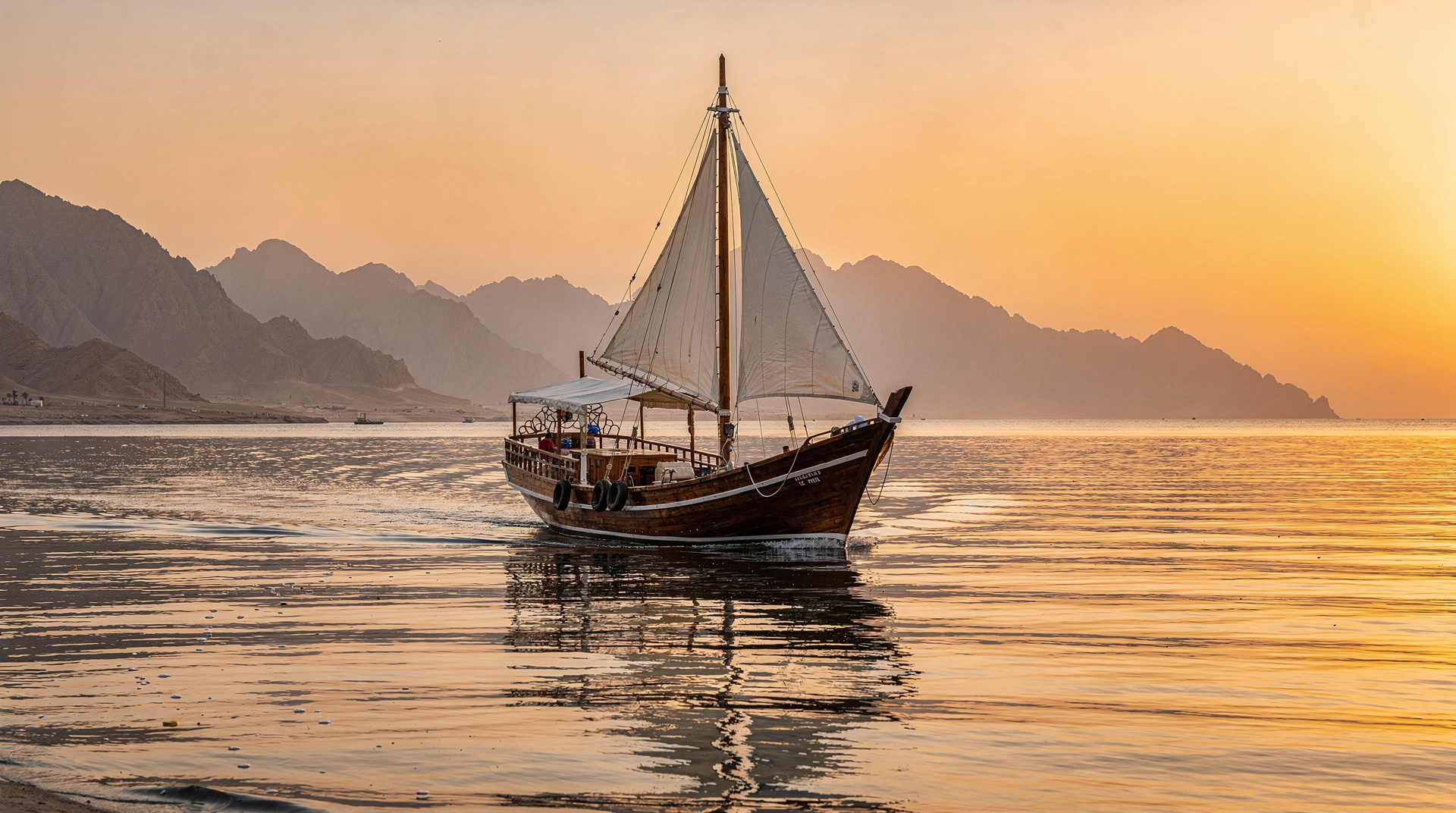
Fishing morning + Mutrah Souq afternoon + sunset dhow cruise evening: A maritime day from dawn to dusk covering three completely different experiences of Muscat’s relationship with the sea.
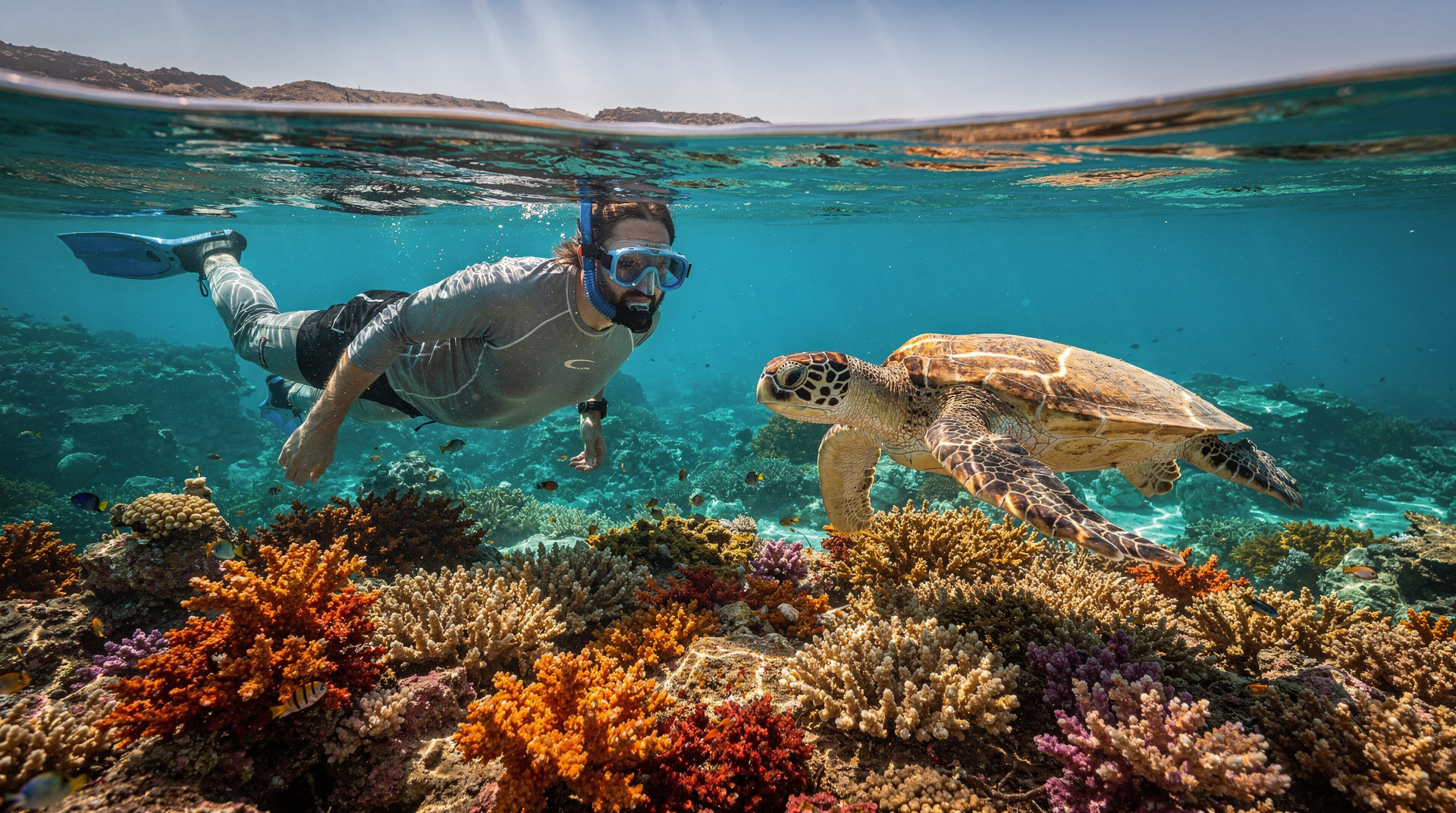
Fishing + Daymaniyat snorkeling: Some operators offer combination days — fishing in the early morning, then transitioning to snorkeling at the Daymaniyat Islands on the return journey. Check that your charter boat has snorkeling equipment if booking this combination.
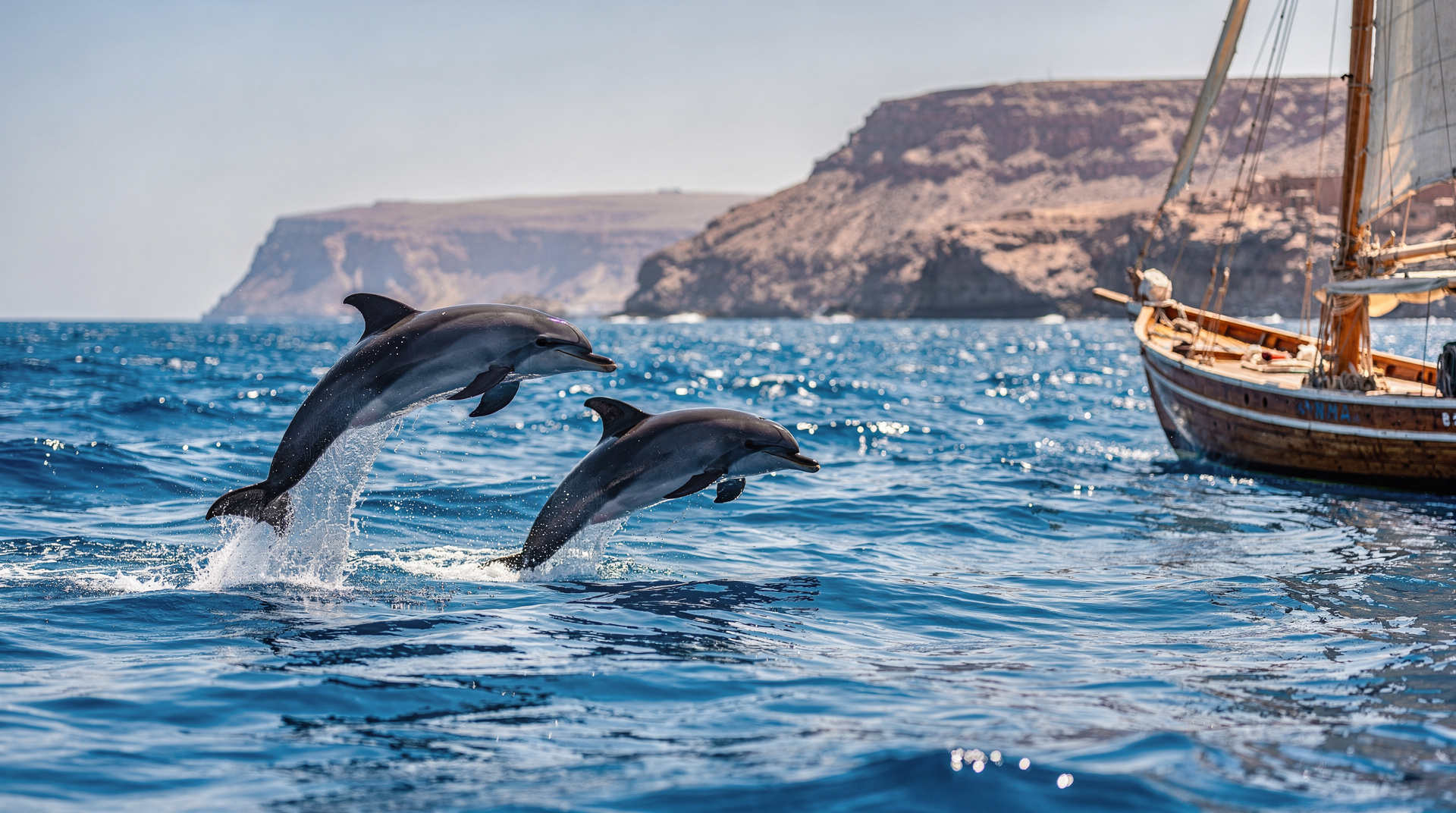
See the Daymaniyat Islands snorkeling guide for what to expect at the marine reserve, and the dolphin watching guide — dolphin encounters during fishing trips are common in the same offshore waters.
Frequently asked questions about Deep-Sea Fishing in Muscat: Complete Guide to Offshore Fishing in Oman
Do I need fishing experience to go on a charter?
No. Charter operators cater to all experience levels. Beginners are shown basic rod handling and fighting technique before departure. The crew handles all the complex parts — rigging, bait management, boat positioning, landing the fish — and guides you through the angling elements. Complete beginners often catch significant fish on their first trip.
What is the biggest fish I might catch near Muscat?
Yellowfin tuna exceeding 100 kg have been caught in Omani waters, though 20-60 kg specimens are the more typical range. Kingfish over 50 kg are caught each season. Sailfish in the 30-50 kg range are encountered regularly. The size of what you catch depends significantly on season, grounds, and how lucky the day is — but the potential is genuinely impressive.
Is deep-sea fishing available year-round?
Yes, though the target species vary significantly by season (see table above). The most sought-after months are November through March for the kingfish and tuna peak. July through September has different but still productive fishing; sea conditions can be rougher during this period.
Can I eat what I catch?
Yes. Most Omani fish species are excellent eating. Kingfish sashimi is particularly prized. Several Muscat restaurants will cook your catch for a modest preparation fee — ask the boat captain for recommendations. Alternatively, take fillets home if you have access to a kitchen.
What should I eat and drink before going out?
Eat a light breakfast 1.5-2 hours before departure — enough for energy, not enough to cause nausea. Avoid fatty or heavy foods. Stay very well hydrated the day before and the morning of — dehydration accelerates sea-sickness. Avoid alcohol the night before.
Is the sea usually calm near Muscat?
The Gulf of Oman ranges from flat-calm to moderately rough depending on season and daily conditions. October through April typically has the most consistent good-weather periods. December through February occasionally brings strong northeast winds with significant chop. Captains monitor conditions and reschedule when seas are genuinely dangerous. If you are booked and seas are rough, discuss the situation with your operator — experienced captains know which days to go and which days to stay in harbour.
Are there sharks in Muscat waters?
Yes. Several shark species inhabit the Gulf of Oman, including reef sharks and occasionally larger pelagic species. From a fishing perspective, sharks are sometimes caught and occasionally take hooked fish before they can be landed (a frustrating experience). From a safety perspective, the risk to humans in boats is negligible — this is a standard offshore fishing environment, not a shark-tourism destination.