Hidden Gems in Oman: Off-the-Beaten-Path Spots
Beyond the Tourist Trail
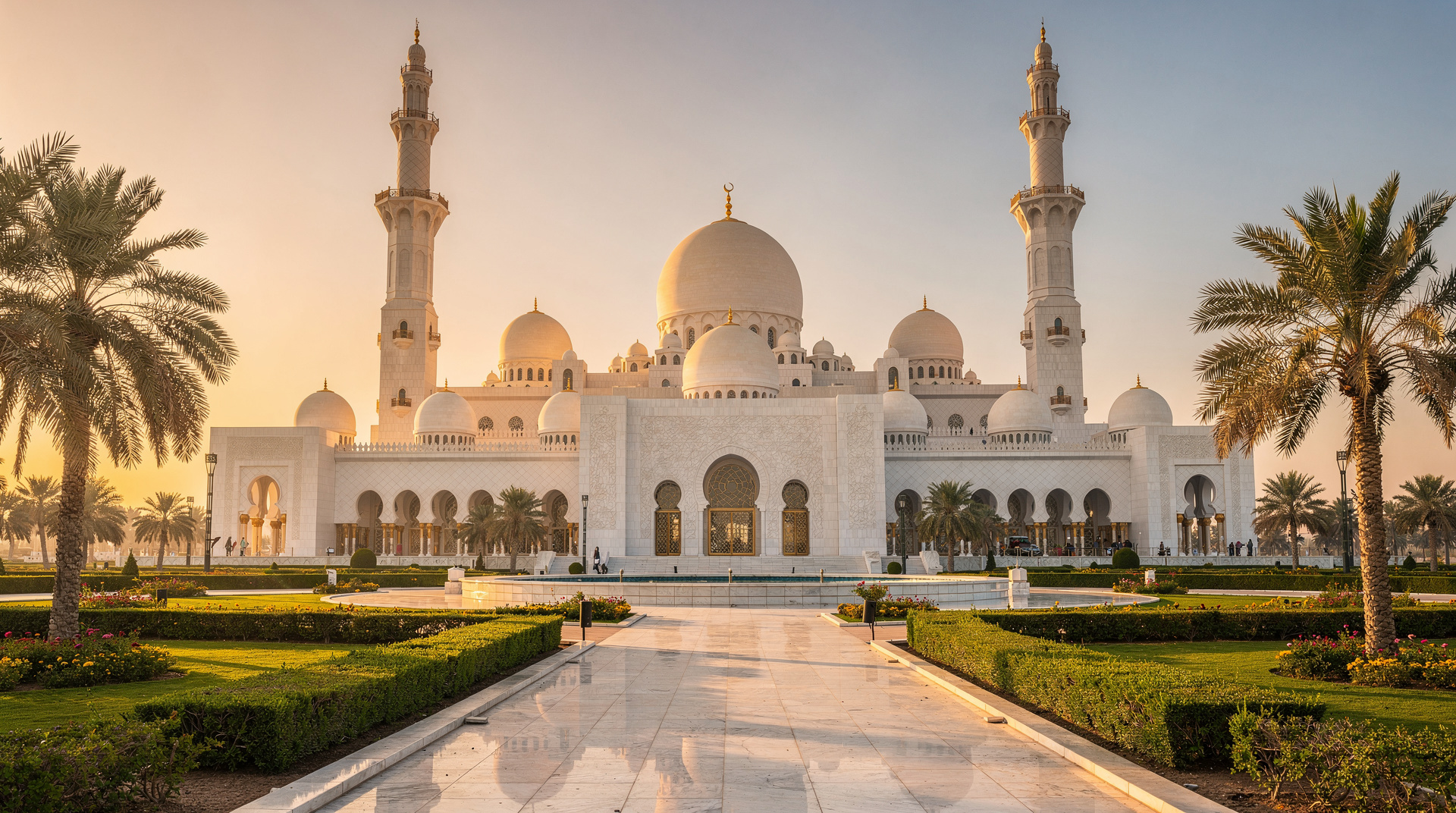
Oman is already less crowded than most comparable destinations. Even the country’s famous sites — the Wahiba Sands, the Sultan Qaboos Grand Mosque, Wadi Shab — feel uncrowded compared to equivalent attractions in Thailand, Morocco, or India. That is one of Oman’s great pleasures.
But Oman has a further layer still: places that receive almost no international visitors at all. Ancient tombs that appear on UNESCO heritage lists but see fewer than a hundred foreign visitors a week. Villages abandoned by their inhabitants but so well-preserved by the dry desert air that they look like they were evacuated yesterday. Underwater geological features that almost no tourist boat visits. Mountain roads that simply are not on most itineraries but that deliver some of the most extraordinary scenery in the country.
These are the hidden gems of Oman — not hidden because they are secret, but hidden because the combination of minimal marketing, the need for a car, and slightly more complex logistics keeps them empty.
1. The Beehive Tombs of Al Ayn
On the lower slopes of the Jebel Misht mountain near Ibri in the interior of Oman, 21 beehive-shaped stone tombs sit in a row along a ridge, overlooking a valley that has barely changed in 5,000 years. These are among the finest Bronze Age funerary monuments in the Arabian Peninsula — UNESCO-listed, extraordinarily well preserved, and visited by almost nobody.
The tombs date to the Hafit period of the third millennium BC. Their origins and the culture that built them are still not fully understood. What is immediately clear standing in front of them is that the people who built these structures were sophisticated, organised, and had a conception of death and commemoration that invested enormous effort in stone architecture at altitude.
The setting is genuinely spectacular. The mountain rises behind the tombs; the date-palm valley spreads below. At sunset, the light on the stone is extraordinary.
Getting there requires a car. The turn-off from the Muscat-Bahla road is marked but easy to miss. Allow three hours from Muscat for the drive and expect to have the site entirely to yourself.
2. Wadi Bani Habib: The Lost Village
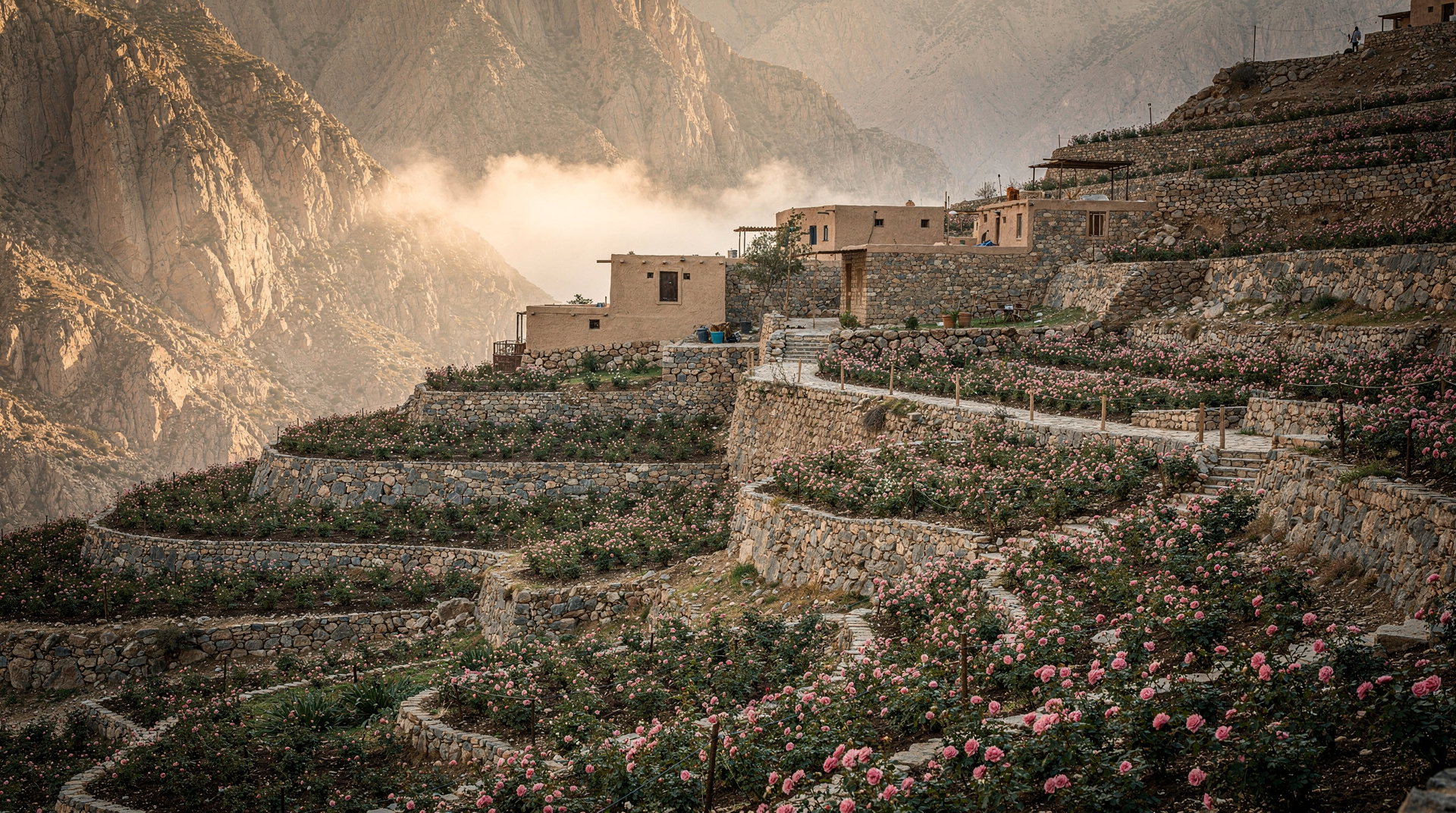
High on the plateau of Jebel Akhdar — above 2,000 metres, accessible only by 4WD — the village of Wadi Bani Habib sits in the most dramatic setting of any abandoned settlement in Oman. Stone houses tumble down a cliff face above terraced gardens. Falaj water channels, carved from the rock centuries ago, still carry water through the empty streets. Pomegranate trees grow untended in former courtyards.
The village was not destroyed or abandoned in haste — it was simply outgrown as the road to Jebel Akhdar improved and people moved to more convenient locations below. The physical fabric remains largely intact, preserved by the altitude and the dry mountain air.
Walking through the abandoned village, peering into roofless rooms where the stone furniture — shelves, alcoves, grinding stones — is still in place, produces a particular quality of melancholy that is entirely different from visiting a museum. This is a real place that real families left in living memory.
The village is a short walk from the main road through the upper Jebel Akhdar plateau. It is mentioned in a handful of travel blogs but sees almost no visitors. Take your time there.
3. Qalhat: The Forgotten City of Ibn Battuta
On the coast south of Sur, where the road curves around a headland, the ruins of the medieval port city of Qalhat spread across a plateau overlooking the Arabian Sea. Qalhat was one of the greatest ports in the medieval Indian Ocean trading world — a city that the 14th-century traveller Ibn Battuta described as large, beautiful, and prosperous, visited by merchants from India, China, and East Africa.
The city was destroyed — probably by the Portuguese in the 16th century — and never rebuilt. Today, its ruins are UNESCO World Heritage listed alongside the other Frankincense Route sites, but almost entirely unvisited. A small museum at the site provides context. The ruins themselves — the outline of buildings, the ancient mosque of Bibi Maryam with its intricate tilework, the city walls visible from the road above — are accessible on foot and completely unguarded.
Standing in the ruins of Qalhat with the sea below and the mountains above, imagining the dhows that once crowded the harbour and the merchants who walked these streets, is one of the most evocative historical experiences in Oman. The fact that you will almost certainly be alone there makes it more so.
4. The Khutm Marid Fort Area (Ibri Region)
The interior of Oman — the Dhahira region around the town of Ibri — is among the least visited parts of the country by foreign tourists. It is also where some of the most impressive and least-crowded historical sites are found.
The Rustaq area, two hours west of Muscat, is home to a fort that rivals Nizwa in scale and historical importance but receives a fraction of the visitors. The drive through the Batinah mountains to reach it passes through villages where traditional falconry, date farming, and fishing have continued unchanged for generations.
Further west, the area around Ibri itself contains multiple sites of Bronze Age settlement, medieval caravan routes, and ancient copper mines that once supplied metal to civilisations across the ancient world. The copper smelting sites at Arja and Maysar — visible from the road with minimal archaeological infrastructure around them — are extraordinary in their antiquity and accessibility.
5. Wadi Mistal: The Hidden Green Valley
While most visitors to the Jebel Akhdar area drive directly up the main road, the parallel Wadi Mistal offers an entirely different approach to the mountains. The wadi is lush — by Omani standards, extraordinarily so — with terraced gardens of date palms, lemon trees, and vegetables irrigated by the ancient falaj system.
The village of Wakan, at the upper end of Wadi Mistal, sits at over 1,000 metres and offers views across the coastal plain that extend, on clear days, to the Arabian Sea. The hiking trail from Wakan up to the Jebel Akhdar plateau is one of the finest in northern Oman — steep, well-marked, and completely without crowds.
Getting to Wadi Mistal requires a standard car (unlike the upper Jebel Akhdar road, which requires 4WD). The turnoff from the main Muscat-Nizwa road near Al Awabi is marked. Allow a full day to explore the valley properly.
6. The Sinkhole at Tawi Attair
In the Dhofar Mountains behind Salalah, the Tawi Attair — the “Well of Birds” — is one of the most dramatic geological features in Arabia. A circular sinkhole drops 211 metres straight down into the limestone, so deep that the bottom is in permanent shadow even at noon. Around its rim, the rising warm air from the cave floor supports a colony of swifts that circle continuously — hence the name.
The sinkhole is about an hour’s drive from Salalah on roads that deteriorate to graded gravel near the end. It is not signposted effectively and requires some navigation. The payoff is a geological spectacle that very few people outside Oman have ever seen.
Standing at the edge — there is no fence, which is both thrilling and mildly alarming — and looking down into the darkness 200 metres below while swifts circle around you is genuinely extraordinary. During the khareef season, the mist that fills the hole and the green hills surrounding it add another layer of drama.
7. Saiq Plateau Village Trail
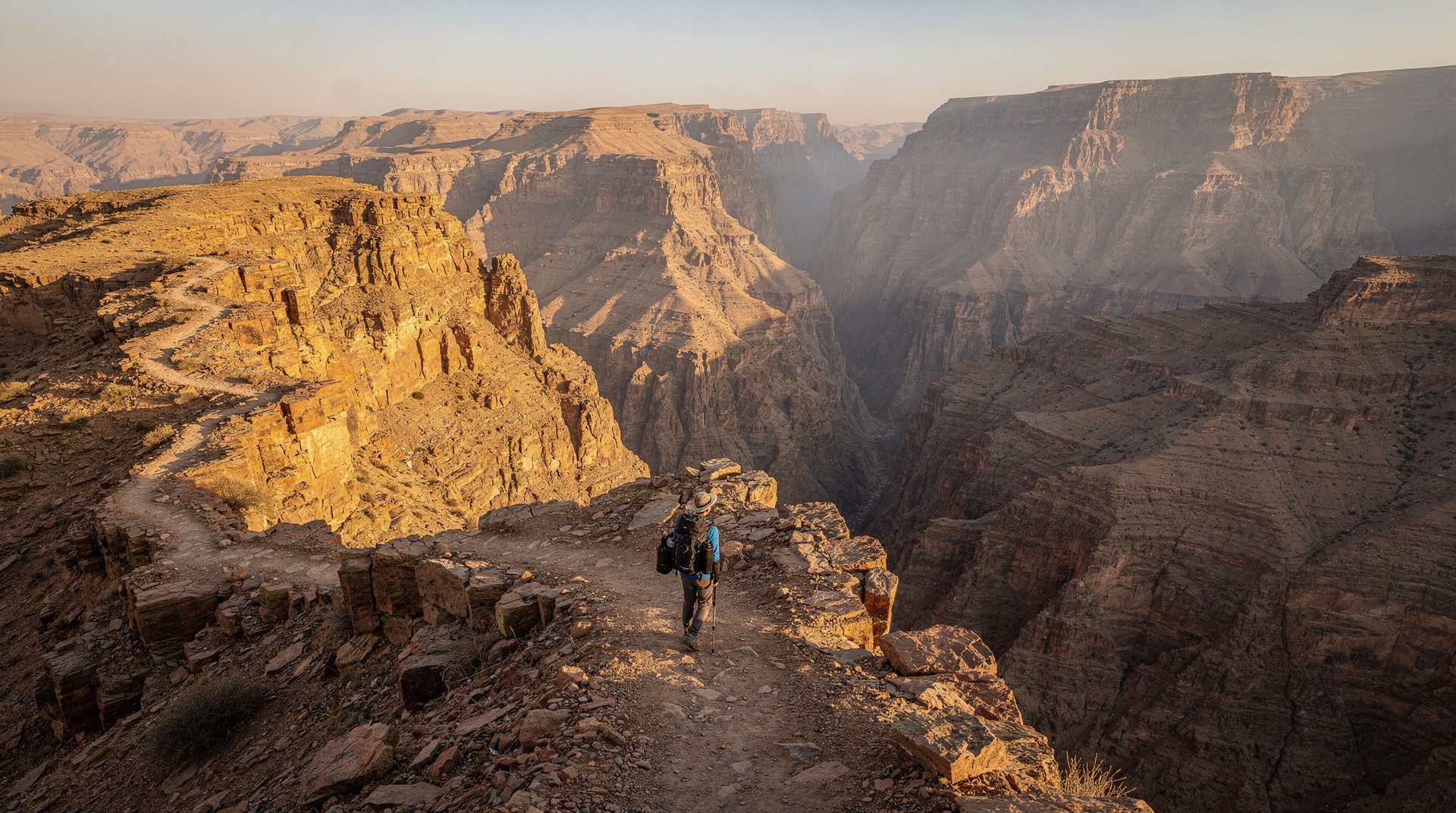
The Jebel Akhdar plateau is relatively well known as a destination for its rose water, its canyon views, and the upper village of Al Ain. Less known is the network of footpaths that connect the plateau villages — a trail system that winds between ancient terraced gardens, passes through small stone villages, and crosses irrigation channels on narrow stone bridges.
Walking between the villages of Diana, Ash Shirayjah, and Al Ain on the plateau trail takes two to three hours and passes through living agricultural landscapes that have operated continuously for hundreds of years. The views into the Wadi Nakhr canyon from the trail are among the best in northern Oman.
The trail is not formally waymarked but is clear enough to follow. Asking directions from villagers — who are invariably hospitable and happy to point the way — is part of the experience. The walk can be done independently or with a local guide arranged through one of the plateau guesthouses.
8. Al Saleel National Park
Most visitors to the Sur area focus on Wadi Shab, Wadi Bani Khalid, and the turtle beach at Ras al Jinz. Almost nobody visits Al Saleel National Park, located inland from the coast between Sur and the Wahiba Sands.
The park protects the Arabian oryx — the white antelope that became Oman’s national animal after being hunted to extinction in the wild and reintroduced through a successful captive breeding programme. Driving through the park in the early morning, you may see oryx grazing in open scrubland, gazelle picking their way through the acacia trees, and the extraordinary emptiness of a protected landscape that has been restored to something approaching its historical richness.
Entrance to the park involves a small fee and requires stopping at the ranger checkpoint. There is no formal guided experience — you drive through at your own pace. The experience is quiet and unhurried, and the possibility of seeing Arabian oryx in the wild, knowing what their story involved, makes it genuinely moving.
How to Find These Places
The common thread connecting all these hidden gems is that they require a car, some navigation, and a willingness to go slightly off-script from a standard itinerary. They will not appear prominently on travel agency tours, and they will not be crowded.
The practical tools: Google Maps (download offline maps before heading to remote areas), the Oman Tourism official app for site information, and the simple practice of asking at your guesthouse or hotel what is nearby that most tourists miss. Local knowledge is invariably the best guide to Oman’s less-visited places.
For those who want to reach genuinely remote coastal locations without solo logistics, the Overnight Beach Camping and Kayaking from Muscat (from 80 USD per person, 2026) brings you to secluded coves that most visitors never reach — sleeping on empty beaches and kayaking the following morning is as hidden-gem as Oman gets without renting your own 4WD. For adventure seekers with a head for heights, the Al Jabal Al Akhdar Via Ferrata (from 95 USD, 2026) is a completely off-mainstream-itinerary experience — a fixed-rope mountain climbing route on the canyon walls of Jebel Akhdar that very few international visitors know exists.
The reward for the extra effort is disproportionate. The famous sites of Oman are famous for good reasons. But the places that require a bit more from you tend to give back the most — moments of genuine discovery in a country that still has more undiscovered corners than most of the world suspects.